English Springer SpanielCharacteristics, history, training and care
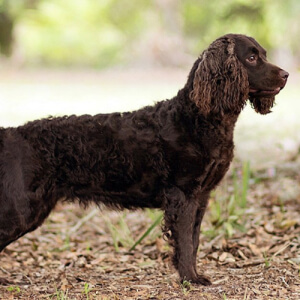
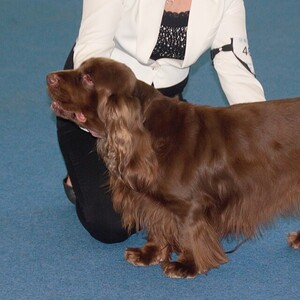
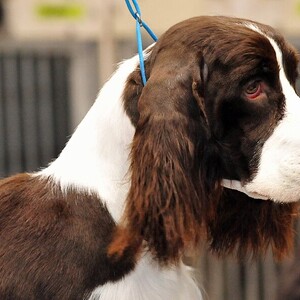
English Springer Spaniel. · State Farm / Wikimedia Commons, CC BY 2.0. Cropped and resized.
The English Springer Spaniel is a compact, strong and cheerful hunting dog, the tallest and raciest of the British land spaniels. Its name comes from “to spring”, meaning to make game leap from cover. It is friendly, happy and biddable, and today it is also widely used as a detection dog.
Quick facts
| Common name | English Springer Spaniel |
| Scientific name | Canis lupus familiaris |
| Country of origin | United Kingdom |
| Official recognition | FCI, definitively since 29 December 1954 (group 8, flushing dogs, with a working trial; standard no. 125); Kennel Club, since 1902 |
| Lifespan | 12–14 years, according to the AKC |
| Size (males) | about 51 cm at the withers; about 23 kg (AKC) |
| Size (females) | about 48 cm at the withers (AKC); about 18 kg |
| Coat type | Close, straight, weather-resistant, with moderate feathering |
| Common colours | Liver and white or black and white, with or without tan markings |
| Energy level | High |
| Suited to an apartment? | Yes, with plenty of exercise |
| Temperament | Friendly, happy, biddable |
| Tendency to aggression | Low; the standard does not accept aggression |
| Good with children | Average to good |
| Good with other animals | Good with dogs; hunting instinct towards birds |
| Genetic predispositions | Hip and elbow dysplasia, progressive retinal atrophy, ear infections |
- Primary category:Dog breeds
- Explore this animal's categories:
History and origin
The FCI standard says the breed has ancient and pure origins and is the oldest of the sporting gundogs. Originally it found game and made it spring, to be caught with a net, a falcon or a greyhound. Today it finds, flushes and retrieves game for the hunter with a gun.
Wikipedia says it descends from the Norfolk or Shropshire spaniels of the mid-19th century. Less than a century ago, Springers and Cockers were born in the same litter: the small ones hunted woodcock, while their bigger siblings flushed other birds. The Kennel Club recognised it as a separate breed in 1902.
How the breed developed
- Mid-19th century – The breed descends from the Norfolk or Shropshire spaniels.
- 1902 – The Kennel Club recognises the English Springer as a separate breed.
- 29 December 1954 – The FCI recognises the breed.
- 8 September 2026 – the current FCI standard is published.
Breed rating
| Feature | Stars |
|---|---|
| Training and intelligence | ★★★★★ |
| Easy to train | ★★★★★ |
| Intelligence | ★★★★★ |
| Independence | ★★★☆☆ |
| Stubbornness | ★★★☆☆ |
| Behaviour and temperament | ★★★★☆ |
| Affectionate with family | ★★★★★ |
| Friendly with children | ★★★☆☆ |
| Good with other dogs | ★★★★☆ |
| Good with cats and other animals | ★★★☆☆ |
| Loyalty | ★★★★★ |
| Tendency to be aggressive | ★☆☆☆☆ |
| Tendency to bark | ★★★☆☆ |
| Needs and care | ★★★★☆ |
| Shedding | ★★★☆☆ |
| Needs frequent grooming | ★★☆☆☆ |
| Activity and lifestyle | ★★★★☆ |
| Energy level | ★★★★☆ |
| Daily exercise needs | ★★★★☆ |
| Suited to apartment life | ★★★★☆ |
| Health and longevity | ★★★★☆ |
| Life expectancy | ★★★★☆ |
| Predisposition to genetic diseases | ★★★☆☆ |
| Working abilities and uses | ★★★★☆ |
| Good hunting and detection dog | ★★★★★ |
| Good companion dog | ★★★★★ |
Indicative rating: 5 stars means the highest level. It is based on the ratings the American Kennel Club gives the breed and on the FCI standard.
Physical characteristics
The standard describes it as symmetrical, compact, strong, merry and active, the highest on the leg and the raciest of the British land spaniels. The AKC says it is a tough, muscular hunter built for long days in the field.
General appearance
The ears are long and well feathered, and the kind, confident expression of the eyes is a valued feature of the breed. Wikipedia says working and show lines differ so much that they look like different breeds: working dogs have a shorter coat and less pendulous ears.
| Feature | English Springer Spaniel |
|---|---|
| Size | Medium |
| Height at the withers | about 51 cm (FCI); 48–51 cm (AKC) |
| Weight | about 18–23 kg |
| Coat | Straight, weather-resistant |
| Ears | Long, feathered |
| Expression | Kind and confident |
The standard accepts liver and white or black and white, or either of these with tan markings. Any other colour or combination is not accepted.
Training and socialisation
The standard describes it as friendly, happy and biddable; timidity or aggression are not accepted. The AKC gives it the top score for trainability.
The AKC says it is lively and very intelligent, so it needs ongoing training and gentle guidance. Early socialisation and puppy classes are important. The owner must always be in control, because the Springer eagerly explores everything around it.
Tips for effective training
- Start puppy classes. The AKC says they help it become a well-balanced dog.
- Be gentle but consistent. It is intelligent and sensitive.
- Give it nose work. It is widely used as a detection dog.
- Work on retrieving. It loves to bring back game and toys.
Activity needs and lifestyle
The AKC says it is happiest indoors with its family, but loves outdoor activities and is a great companion on long walks and hikes. With enough exercise it can also adapt to a small house or a flat, although a large, fenced yard is ideal.
| Activity | How often | Why it matters |
|---|---|---|
| Long walks or hikes | daily | High energy |
| Retrieving, including from water | several times a week | Hunting instinct |
| Scent games | weekly | Excellent nose |
Tips for a balanced life
- Check the ears after every walk.
- Keep it close to the family.
- A large, fenced yard is ideal.
Care and health
Coat and skin care
The AKC recommends brushing once a week, with tangles worked out using a slicker brush or a metal comb. The coat can be trimmed at home or at a groomer's, especially on the feet, around the head and neck and under the body.
Common health problems
The AKC says Springers are generally healthy, but a few problems can occur:
| Condition | Description | Common symptoms |
|---|---|---|
| Hip dysplasia | The hip joint forms incorrectly and, over time, arthritis develops | Limping, difficulty getting up or jumping, hip pain |
| Elbow dysplasia | The elbow joint develops incorrectly and arthritis appears | Limping on the front legs, especially after exercise |
| Progressive retinal atrophy | An inherited disease that gradually destroys the retina | Sees less and less well at night, then in the daytime too |
| Ear infections | Infections of the long ears | Scratching, bad smell, tilted head |
Other care
- Check the ears regularly.
- Brush its teeth regularly.
- Trim the nails when they start to touch the floor.
Diet and nutrition
The AKC recommends good-quality food suited to the dog's age and activity level. Too many treats lead to obesity.
Tips for a healthy diet
The table gives a starting estimate, calculated with the formula from the Merck Veterinary Manual. The first two calorie columns show the calories per day for a healthy adult dog. The last column shows what this means in dry food with 3,500–4,000 kcal per kilogram.
| Dog's weight | Calories per day (neutered) | Calories per day (not neutered) | Dry food per day (approximate) |
|---|---|---|---|
| 18 kg | 980 kcal | 1,100 kcal | 240–310 g |
| 20 kg | 1,060 kcal | 1,190 kcal | 260–340 g |
| 23 kg | 1,180 kcal | 1,320 kcal | 300–380 g |
- Give it its food in two meals a day.
- Do not give it cooked bones or fatty food.
- A dog is at the right weight when you can feel its ribs without pressing hard.
Foods to avoid
Some human foods are dangerous for dogs: chocolate, coffee, grapes and raisins, onions, garlic, xylitol (a sweetener used in chewing gum), macadamia nuts and alcohol.
Reproduction and development
Physical and emotional maturity
In dogs, sexual maturity usually comes between 6 and 12 months. Most breeds become adults at around 13–15 months.
Mating and pregnancy
Pregnancy lasts about 63 days, counted from ovulation. Mating a female on her first heat is not recommended. The FCI standard requires that only healthy dogs of typical breed appearance are used for breeding.
Caring for the puppies
In dogs, a litter has 5–6 puppies on average, and the number rises with the size of the breed. Socialisation starts in the first weeks: gentle handling, everyday noises and new people.
Interesting facts
- “To spring” means to make something leap. The name comes from the way it flushes game from cover.
- A brother of the Cocker. A century ago, Springers and Cockers were born in the same litter.
- Two breeds in one. Working and show lines have been separate for at least 70 years.
- Detection dog. It is widely used for scent detection.
- An old hunter. It helped with hunting by net, falcon or greyhound.
Frequently asked questions
What does “Springer” mean?
It comes from the English “to spring”: the dog makes game leap from cover.
How big does it get?
It measures about 48–51 cm at the withers and weighs 18–23 kg.
Is it easy to train?
Yes, the AKC gives it the top score for trainability.
How long does it live?
The AKC gives 12–14 years.