TurtleInteresting facts and information
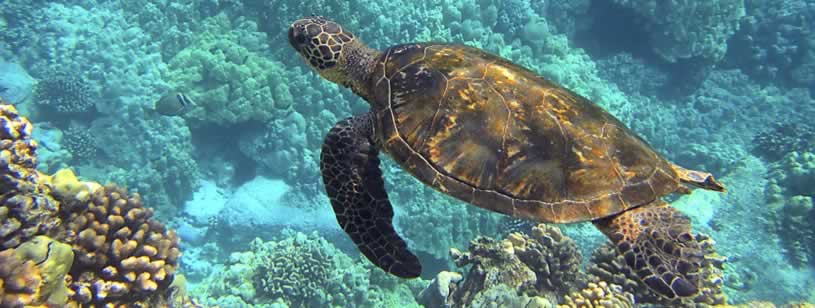
Turtles, including tortoises, are reptiles in the order Testudines. Their shell is part of the skeleton, not a removable home. Different species live on land, in freshwater or in the sea, and their diets, sizes and life spans vary greatly.
Different turtles are adapted to land, freshwater or marine life. Recognised species counts change with research, and no single diet or life span describes all of them.
Many turtle species face threats from habitat loss, harvesting, pollution and other human activities. Conservation status must be checked for each species.
Quick facts
| Common name | Turtle |
| Scientific name | Testudines |
| Typical lifespan | Often 30-100 years (some tortoises over 150 years) |
| Length | From about 6 cm to about 2 m (depending on the species) |
| Weight | From under 150 g to over 900 kg |
| Diet type | Herbivorous, carnivorous or omnivorous (depending on the species) |
| Main predators | Birds of prey, carnivorous mammals and other predators, especially for eggs and young; risk differs by species |
| Conservation status | Varies by species and population, including some Critically Endangered species |
| Distribution | On all continents except Antarctica, and in warm and temperate oceans |
| Living environment | Freshwater, seas, forests, grasslands and deserts, depending on species |
- Primary category:Reptiles
- Explore this animal's categories:
Interesting facts
- The oldest known tortoise - Jonathan, a Seychelles giant tortoise living on the island of St Helena, hatched around 1832 and is thought to be the oldest living land animal.
- Some turtles can breathe through their bottom - The Fitzroy River turtle of Australia can absorb oxygen through its cloaca, so it can stay underwater for a very long time.
- Good memory - Experiments show that tortoises can learn tasks and remember them for years.
- Temperature decides the sex of the young - In many species, warmer nests produce more females, and cooler nests produce more males.
- Turtles have no teeth - Instead, they have strong, horny beaks for biting and cutting food.
Records and remarkable features
- The leatherback sea turtle (Dermochelys coriacea) is a very large marine turtle. It is not a land tortoise.
- Some tortoises, including the speckled tortoise, remain small as adults.
- The longest-lived turtle - Jonathan, the giant tortoise of St Helena, is more than 190 years old.
- Leatherback sea turtles (Dermochelys coriacea) can migrate long distances between feeding and breeding areas.
- Swimming ability differs greatly between turtles.
- Deep diver - The leatherback can dive more than 1,000 metres deep in search of jellyfish.
Physical characteristics and adaptations
Turtles are reptiles with a unique body plan: a bony shell that is part of their skeleton and protects them from predators.
Key physical adaptations
- A hard shell - Made up of an upper part (the carapace) and a lower part (the plastron), joined at the sides; it protects the body like armour, and the backbone and ribs are fused to it.
- No teeth - Instead of teeth, turtles have a horny beak, with which they can cut plants or crush shellfish and crabs.
- Limbs suited to their habitat - Sea turtles have flippers, freshwater turtles have webbed feet, and tortoises have thick, sturdy legs for walking on land.
- Breathing - All turtles breathe with lungs, but some freshwater species can also take in oxygen through their skin or cloaca.
- Good senses - Turtles see colours well and have a keen sense of smell, which helps them find food.
What do turtles look like?
| Feature | Details |
|---|---|
| Colour | Green, brown, grey, black, often with patterns |
| Length | From about 6 cm to about 2 m (depending on the species) |
| Weight | From under 150 g to over 900 kg (record leatherback) |
| Shell | Hard and covered with horny plates (scutes) in most species; leathery in leatherbacks and softshell turtles |
| Limbs | Flippers in sea turtles, webbed feet in many freshwater turtles, and sturdy, scaly legs in tortoises |
| Beak | Horny and strong, shaped for the turtle's food |
Habits and behaviour
Turtles are mostly solitary reptiles that spend their time feeding, resting, basking and, in some species, migrating.
Daily life
- They are cold-blooded - They control their body temperature by basking in the sun or moving into the shade.
- They hide in their shells - Many species can pull their head and legs inside their shell to protect themselves.
- Winter and summer rest - Turtles in cold regions spend the winter in mud or underwater, while those in dry regions may rest underground during droughts.
- Mostly solitary - Outside the breeding season, most turtles live alone, although basking turtles may gather on the same log.
- Slow growth - Most species grow slowly and have a slow metabolism, which helps some live for a very long time.
Specific behaviours
- Sunbathing - Tortoises and freshwater turtles spend hours basking to warm up.
- Long migrations - Sea turtles can travel thousands of kilometres between nesting beaches and feeding areas.
- Fights between males - In some species, males fight for territory and mates, ramming each other or trying to flip each other over.
- Finding their way home - Sea turtles can find their way back to the region where they hatched, using the Earth's magnetic field.
Survival strategies
- The shell protects them from many predators.
- Some species, such as musk turtles, release a foul-smelling liquid to put off attackers.
- They can survive a long time without food and water.
- They bury themselves in mud or sand to hide.
Habitat and geographic distribution
Turtles live on every continent except Antarctica and in all the warm and temperate oceans, in a wide variety of habitats.
Distribution context
| Region | Notable species | Habitat examples |
|---|---|---|
| South America | Mata mata (Chelus fimbriata) | Slow rivers and swamps in tropical forests |
| North America | Alligator snapping turtle (Macrochelys temminckii) | Rivers, lakes |
| Europe | European pond turtle (Emys orbicularis) | Wetlands, rivers |
| Africa | Leopard tortoise (Stigmochelys pardalis) | Savannas, dry areas |
| Asia | Asian giant softshell turtle (Pelochelys cantorii) | Rivers, large lakes |
| Australia | Fitzroy River turtle (Rheodytes leukops) | Fast-flowing rivers |
| Oceans of the world | Green sea turtle (Chelonia mydas) | Coral reefs, seagrass meadows, tropical seas |
Habitat types
- Tortoises live on land, in savannas, deserts and forests, where they feed on plants and fruit.
- Freshwater turtles prefer lakes, rivers and marshes, where they hide among water plants.
- Sea turtles live in the oceans and come ashore only to lay their eggs.
Environmental change
- Habitat loss - Deforestation, drainage and building destroy turtle habitats and nesting beaches.
- Ocean pollution - Plastic waste and toxic substances seriously harm sea turtles.
- Rising temperatures - Warmer nests produce more females, which can unbalance populations.
- Poaching - Turtles are captured for their meat, eggs or shells, or to be sold as pets.
Diet and feeding
Turtles' diets vary with their habitat: depending on the species, they are herbivores, carnivores or omnivores.
What do turtles eat?
| Type of turtle | Diet type | Examples of food |
|---|---|---|
| Tortoises | Mainly herbivores | Leaves, grass, flowers, fruit, cactus pads |
| Freshwater turtles | Often omnivores | Fish, snails, insects, worms, water plants |
| Sea turtles | Carnivores, herbivores or omnivores | Jellyfish, seagrass, algae, sponges, crabs |
Feeding methods
- Ambush - The alligator snapping turtle lies still with its mouth open and wiggles a worm-like lure on its tongue to attract fish.
- Specialist sea turtles - Leatherbacks eat jellyfish, green turtles graze on seagrass and algae, and hawksbills eat sponges.
- Cutting with the beak - Tortoises use their sharp beaks to cut plants and fruit.
- Swallowing prey - Carnivorous species swallow small fish, snails or insects after tearing them up.
The ecological role of turtles
- Controlling populations of invertebrates and small fish.
- Spreading seeds in their droppings, which helps plants grow in new places.
- Keeping seas healthy - Green turtles keep seagrass meadows short and healthy, and hawksbills help keep sponges from taking over coral reefs.
Reproduction and life cycle
All turtles lay eggs, usually in holes they dig in the ground, even species that spend their whole lives in water.
Breeding season
- Usually in spring and summer, although in some tropical sea turtles nesting can happen all year.
- Males of some species compete for females, sometimes trying to flip their rivals over.
- Sea and freshwater turtles mate in water, while tortoises mate on land.
Laying eggs
| Stage | Duration or number | Details |
|---|---|---|
| Digging the nest | About 1-3 hours | The female digs a hole with her hind legs |
| Egg-laying | From 1 to about 200 eggs | The number depends on the species; sea turtles often lay about 100 |
| Incubation | About 45-120 days | Nest temperature decides the sex of the young in many species |
| Hatching | At the end of incubation | The young dig their way out alone and head for the water or for cover |
Adaptations for survival
- Young turtles are independent from the moment they hatch.
- Temperature decides the sex - In many species, warmer nests produce more females, and cooler nests more males.
- Many sea turtles return to the beaches where they hatched to lay their own eggs.
Name and history
Origin of the name
- The English word "turtle" probably comes from the French tortue; "tortoise" comes from the same source.
- The scientific name Testudines comes from the Latin testudo, "tortoise", from testa, "shell".
Taxonomic classification
| Classification | Name |
|---|---|
| Kingdom | Animalia |
| Phylum | Chordata |
| Class | Reptilia |
| Order | Testudines |
| Families | About 14 families |
| Species | More than 350 species |
Evolution and fossils
- Turtles have an ancient evolutionary history, with fossil relatives known from the Triassic. This does not make them older than all dinosaurs.
- Early relatives, such as Odontochelys, which lived about 220 million years ago, had only half a shell (the lower part) and still had teeth.
- Fossils of giant turtles, such as the sea turtle Archelon, more than 4 metres long, show how large some ancient turtles became.
Cultural significance and mythology
Throughout history, turtles have been powerful symbols in mythology, religion and culture, linked with long life, wisdom, stability and the creation of the world.
- The world on a turtle's back - In Hindu mythology, the god Vishnu took the form of the turtle Kurma, and many Native American peoples call North America "Turtle Island", from stories in which the land rests on a turtle's back.
- Ancient China - Turtle shells were used as "oracle bones" for telling the future, and the Black Tortoise is one of the four guardian creatures of the Chinese sky.
- Ancient Greece - According to myth, the god Hermes made the first lyre from a tortoise shell.
Conservation status and threats
Turtles are among the most threatened groups of vertebrates; many species are endangered by habitat destruction, illegal trade and pollution.
Main pressures
- Habitat loss - Deforestation, drainage and building on beaches reduce turtle breeding areas.
- Ocean pollution - Sea turtles mistake plastic bags for jellyfish, which can block their stomachs and kill them.
- Poaching and illegal trade - Turtles are hunted for meat, eggs and shells and captured for the pet trade.
- Climate change - Higher temperatures change the ratio of males to females, and rising seas flood nesting beaches.
- Industrial fishing - Sea turtles get caught in fishing nets and on hooks and drown.
Protection efforts
| Measure | Organisation / action |
|---|---|
| Protecting nesting beaches | WWF, sea turtle conservation groups |
| Captive breeding | Reserves, breeding centres and zoos |
| Fighting illegal trade | CITES Convention |
| Safer fishing | Turtle excluder devices that let turtles escape from fishing nets |
Threatened species
- Asian giant softshell turtle (Pelochelys cantorii) – Habitat loss and harvesting threaten populations; consult its current species assessment.
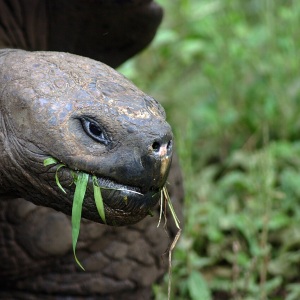
- Galápagos giant tortoises (Chelonoidis) - They were almost wiped out by hunting and introduced animals, but conservation efforts have helped many populations recover.
- Kemp’s ridley sea turtle (Lepidochelys kempii) – Accidental capture in fishing gear is a conservation threat.
Turtles in popular culture
Turtles are famous characters in films, cartoons, books and myths, often linked with wisdom, patience and calm.
Turtles in literature and art
- "The Tortoise and the Hare" (Aesop) - A classic fable showing that "slow and steady wins the race".
- Franklin (Paulette Bourgeois, from 1986) - Children's books about the adventures of a friendly young turtle.
- Yertle the Turtle (Dr. Seuss, 1958) - A story about a turtle king who stands on the backs of other turtles.
- Terry Pratchett's Discworld - The flat world of these novels rides through space on the back of a giant turtle, Great A'Tuin.
Turtles in films and cartoons
- Teenage Mutant Ninja Turtles - Since 1984, the ninja turtles Leonardo, Michelangelo, Donatello and Raphael have become pop-culture icons.
- Finding Nemo (Disney/Pixar, 2003) - Crush is a laid-back, friendly sea turtle.
- Kung Fu Panda (2008) - Master Oogway is a wise old tortoise who guides the heroes.
Turtles as symbols
- Long life - In China and Japan, turtles are symbols of long life and good health.
- Ocean protection - Sea turtles are often used in campaigns to reduce plastic pollution.
- Feng shui - Turtle figures are placed in homes to bring stability and good luck.