Saarloos WolfdogCharacteristics, history, training and care
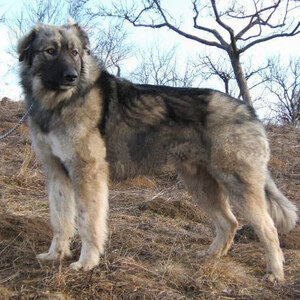
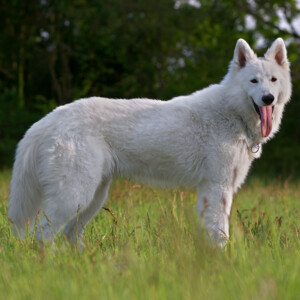
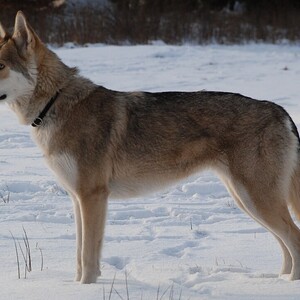
Saarloos Wolfdog. · Claudia Schröder / Wikimedia Commons, CC BY-SA 4.0. Cropped and resized.
The Saarloos Wolfdog is a large, wolf-like Dutch dog, created by Leendert Saarloos by crossing a German Shepherd with a she-wolf. The standard describes it as lively, energetic, proud and independent, obeying mainly its own will; it is very devoted and reliable towards its owner, but reserved with strangers.
Quick facts
| Common name | Saarloos Wolfdog (Saarlooswolfhond) |
| Scientific name | Canis lupus familiaris |
| Country of origin | Netherlands |
| Official recognition | FCI, definitively since 18 November 1981 (group 1, sheepdogs; standard no. 311); recognised in the Netherlands since 1975 |
| Lifespan | No published data for the breed; large breeds usually live 10–12 years |
| Size (males) | 65–75 cm at the withers |
| Size (females) | 60–70 cm at the withers |
| Coat type | Very different in summer and winter; rich in winter, with a collar |
| Common colours | Wolf grey or wolf brown, with light wolf markings |
| Energy level | High |
| Suited to an apartment? | No |
| Temperament | Lively, proud, independent, devoted to its owner |
| Tendency to aggression | Low; avoids unfamiliar situations |
| Good with children | No specific data |
| Good with other animals | Poor with small animals |
| Genetic predispositions | No breed-specific diseases are known |
- Primary category:Dog breeds
- Explore this animal's categories:
History and origin
The FCI standard says that Leendert Saarloos (1884–1969), a lover of nature and dogs, believed these dogs had become too “humanised” and wanted to bring natural qualities back into the German Shepherd Dog to obtain a better working dog. That is why he crossed the German Shepherd male Gerard van der Fransenum with Fleuri, a she-wolf of the Siberian branch (1932).
By backcrossing to the father, he obtained animals with a quarter wolf blood. Some dogs were initially used as guide dogs for blind people, but as the proportion of wolf blood increased, it became clear that the breed was suited neither to work nor to guiding. Saarloos's legacy is a dog close to nature, recognised as a breed in 1975 and named in his honour.
How the breed developed
- 1932 – Saarloos crosses the German Shepherd Gerard with the she-wolf Fleuri.
- After 1932 – An experimental phase follows, with strict selection.
- 1975 – The breed is recognised and named Saarlooswolfhond.
- 18 November 1981 – The FCI recognises the breed.
Breed rating
| Feature | Stars |
|---|---|
| Training and intelligence | ★★☆☆☆ |
| Easy to train | ★★☆☆☆ |
| Intelligence | ★★★★☆ |
| Independence | ★★★★★ |
| Stubbornness | ★★★★★ |
| Behaviour and temperament | ★★★☆☆ |
| Affectionate with family | ★★★★★ |
| Friendly with children | ★★☆☆☆ |
| Good with other dogs | ★★★☆☆ |
| Good with cats and other animals | ★★☆☆☆ |
| Loyalty | ★★★★★ |
| Tendency to be aggressive | ★★☆☆☆ |
| Tendency to bark | ★★☆☆☆ |
| Needs and care | ★★★★☆ |
| Shedding | ★★★☆☆ |
| Needs frequent grooming | ★★☆☆☆ |
| Activity and lifestyle | ★★★★☆ |
| Energy level | ★★★★☆ |
| Daily exercise needs | ★★★★★ |
| Suited to apartment life | ★☆☆☆☆ |
| Health and longevity | ★★★☆☆ |
| Life expectancy | ★★★☆☆ |
| Predisposition to genetic diseases | ★★☆☆☆ |
| Working abilities and uses | ★★★☆☆ |
| Good companion dog | ★★★☆☆ |
| Good companion dog | ★★★☆☆ |
Indicative rating: 5 stars means the highest level. The breed has no AKC profile, so the rating is based on the FCI standard.
Physical characteristics
It is a large, wolf-like dog. The standard says it was not created for any particular use, but it has the qualities of a faithful and reliable companion and house dog.
General appearance
The summer coat differs greatly from the winter coat. In winter the undercoat predominates and, together with the guard hairs, forms a rich coat with a distinct collar around the neck. In summer the guard hairs predominate.
| Feature | Saarloos Wolfdog |
|---|---|
| Size | Very large |
| Height at the withers | males: 65–75 cm; females: 60–70 cm |
| Coat | Much richer in winter |
| Colour | Wolf grey or wolf brown |
| Appearance | Wolf-like |
| Ancestors | German Shepherd and wolf |
The colours range from light to dark wolf grey (with black tips) and from light to dark brown (with brown tips). The typical wolf markings, from light cream to white, extend over the belly, the insides and backs of the legs and under the tail.
Training and socialisation
The standard describes it as a lively, energetic, proud and independent dog, known for obeying mainly its own will. Towards its owner it is very devoted and reliable.
With strangers it can be reserved and usually does not seek contact. Its reserved, wolf-like way of avoiding unfamiliar situations is typical of the breed; it needs very good socialisation and a patient owner.
Tips for effective training
- Socialise it very well. It avoids unfamiliar situations.
- Be patient. It obeys mainly its own will.
- Earn its trust. It is devoted to its owner.
- Do not force it. It does not seek contact with strangers.
Activity needs and lifestyle
As it is full of energy, it needs a lot of exercise and space every day.
| Activity | How often | Why it matters |
|---|---|---|
| Long walks | daily | Energy |
| Time in a large, fenced yard | daily | Space |
| Hiking | weekly | Stamina |
Tips for a balanced life
- It suits experienced owners.
- The fence must be high and solid.
- It copes well with cold.
Care and health
Coat and skin care
The coat should be brushed weekly, and almost daily during shedding periods, when it loses a lot of undercoat.
Common health problems
No large health studies have been published for the breed and no specific diseases are known. As with any large dog, it is worth watching for:
| Condition | Description | Common symptoms |
|---|---|---|
| Hip dysplasia | The hip joint forms incorrectly and, over time, arthritis develops | Limping, difficulty getting up or jumping, hip pain |
Other care
- Brush it often during shedding.
- Check the ears regularly.
- Trim the nails regularly.
Diet and nutrition
A large, active dog needs good-quality food suited to large breeds.
Tips for a healthy diet
The table gives a starting estimate, calculated with the formula from the Merck Veterinary Manual. The first two calorie columns show the calories per day for a healthy adult dog. The last column shows what this means in dry food with 3,500–4,000 kcal per kilogram.
| Dog's weight | Calories per day (neutered) | Calories per day (not neutered) | Dry food per day (approximate) |
|---|---|---|---|
| 35 kg | 1,610 kcal | 1,810 kcal | 400–520 g |
| 40 kg | 1,780 kcal | 2,000 kcal | 440–570 g |
| 45 kg | 1,950 kcal | 2,190 kcal | 490–630 g |
- Split the food into two meals a day.
- Do not let it run right after a meal.
- A dog is at the right weight when you can feel its ribs under the coat without pressing hard.
Foods to avoid
Some human foods are dangerous for dogs: chocolate, coffee, grapes and raisins, onions, garlic, xylitol (a sweetener used in chewing gum), macadamia nuts and alcohol.
Reproduction and development
Physical and emotional maturity
In dogs, sexual maturity usually comes between 6 and 12 months, but in large breeds it can be delayed until about two years. Very large breeds become adults only at around 2 years.
Mating and pregnancy
Pregnancy lasts about 63 days, counted from ovulation. Mating a female on her first heat is not recommended. The FCI standard requires that only healthy dogs of typical breed appearance are used for breeding.
Caring for the puppies
In large breeds, a litter has around 7 puppies on average. The puppies grow very fast, so they need growth food suited to large breeds. Socialisation starts in the first weeks.
Interesting facts
- Wolf blood. The breed began with a Siberian she-wolf, Fleuri.
- A failed guide dog. It was tried as a guide for blind people, without success.
- Named after its founder. It bears the name of Leendert Saarloos.
- Two coats. The winter coat differs greatly from the summer coat.
- It avoids the unknown. Like a wolf, it avoids new situations.
Frequently asked questions
Does it have wolf blood?
Yes, the breed began with a cross with a she-wolf.
How big does it get?
Males measure 65–75 cm, females 60–70 cm.
Is it a working dog?
No; the standard says it is not suited to work, but is a companion.
Is it suited to beginners?
Usually not, as it is very independent.