Sumatran tigerInteresting facts and information
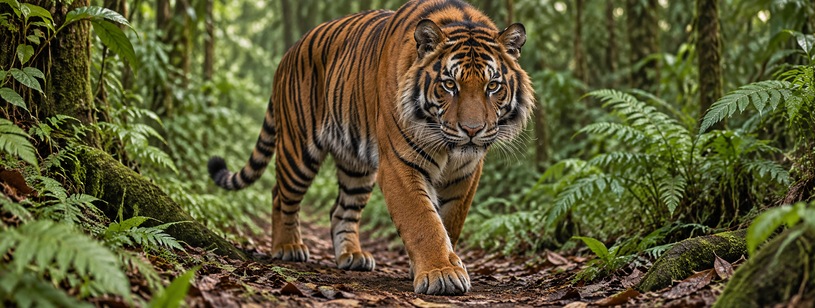
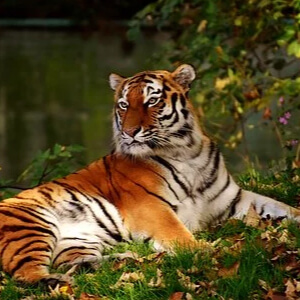
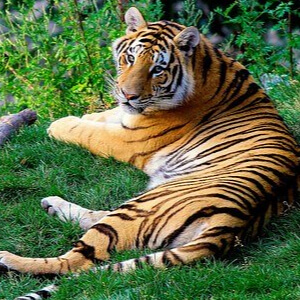
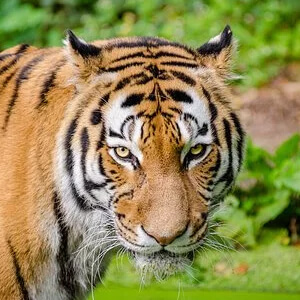
AI illustration of sumatran tiger.
The Sumatran tiger is the wild tiger of Sumatra, Indonesia. It has a smaller body than the large mainland populations, close-set stripes and dark orange fur. This carnivorous predator depends on forests, sufficient prey and undisturbed places to raise cubs.
It is the only tiger still living naturally on the Sunda Islands, following the extinction of those on Java and Bali. Forest loss and poaching threaten it severely, despite legal protection.
Quick facts
| Species | Panthera tigris |
| Traditional subspecies name | Panthera tigris sumatrae |
| Two-subspecies classification | Panthera tigris sondaica; subspecies boundaries are under review |
| Class / order / family | Mammalia / Carnivora / Felidae |
| Distribution | Sumatra, Indonesia |
| Habitat | Tropical forests, including swamp, peat and mountain forests |
| Diet | Carnivorous (mainly wild pigs and deer) |
| Size | The smallest living tiger in the traditional classification; males about 100–140 kg, females about 75–110 kg |
| Social organisation | Mainly solitary; the female raises the cubs |
| Gestation | Approximately 100–106 days |
| Independence of young | Usually around two years old, with variation |
| Conservation | Critically Endangered (IUCN) |
- Primary category:Mammals
- Explore this animal's categories:
Interesting facts
- Stripes are an individual signature. Camera traps allow researchers to recognise the same tiger in different images without capturing it.
- Water does not stop it. It can swim and cross forest waterways.
- Males often have long hair framing the cheeks. This ruff is a visible feature of Sumatran tigers.
- It is very hard to see. Dense vegetation and stripes hide it so well that researchers study it mainly with camera traps.
- Protecting it helps a wider wildlife community. Sumatra also has elephants, rhinos and orangutans, although these animals do not all occupy exactly the same places.
Records and remarkable features
The Sumatran tiger is considered the smallest living tiger in the traditional classification. A male can reach around 140 kg, while females are generally smaller. Small is a comparison between tigers: it remains a very powerful cat.
Its island distribution is another distinctive feature. All remaining wild Sunda tigers occur on Sumatra. If this population disappeared, there would be no natural population on Java or Bali to replace it.
Characteristics
The coat is orange, with closely spaced black stripes and white areas on the face and underside. Patterns differ between individuals. Colour and stripes help camouflage, particularly where leaves and branches create alternating light and shade.
Powerful forepaws and retractile claws help grasp prey. Canines hold it, while teeth farther back cut meat. The tongue has rough papillae used in grooming and removing meat from bones.
| Feature | Role |
| Muscular, flexible body | A quiet approach and short attack |
| Individual stripe patterns | Camouflage and identification in studies |
| Sensitive whiskers | Information about objects close to the muzzle |
| Long cheek hair | A characteristic appearance, more evident in males |
Males usually weigh about 100–140 kg and females about 75–110 kg, much less than mainland tigers such as the Bengal or Siberian tiger.
Habits and behaviour
Adults live mainly alone. A female with cubs is the most familiar exception. Males and females also meet during mating.
Tigers leave scent signals and scratches on trees. These convey information even when animals do not meet directly. Sounds include roars, growls and short chuffing sounds in close interactions.
They can be active at night, dawn or dusk, and also during the day. Timing depends on prey and human disturbance.
Habitat and geographic distribution
In the wild, it lives only on Sumatra. It uses lowland tropical forests, swamp forests and forested mountains. It needs vegetation cover, water and animals to hunt.
Conservation depends on large forests and connections between them. An isolated protected area may be too small for dispersing young tigers. Vegetated corridors allow movement between populations and encounters with less closely related mates.
- Intact forest provides cover and breeding sites.
- Peat forests and wetlands can form part of its habitat.
- Forest edges bring greater risks of encounters with people and domestic animals.
Tree plantations do not automatically replace natural forest. Food, low disturbance and connected habitat matter too.
Diet and feeding
Sumatran tigers eat mainly meat, including wild pigs and various deer. They can take smaller animals, but stable populations need enough suitably sized prey.
Hunting begins with a slow approach. The tiger uses vegetation as cover and attempts an attack at close range. It does not normally pursue prey for kilometres like an endurance runner.
After a kill it may move the carcass into cover and return to feed. A tiger can eat a large amount of meat at one meal and then go several days without hunting.
Excessive hunting of deer and wild pigs also affects tigers. A forest can look suitable while lacking enough food for a large predator.
Reproduction and life cycle
Gestation lasts approximately 100–106 days, as in other tigers. The female gives birth in a secluded site. Cubs are born with closed eyes and depend completely on their mother.
| Stage | What happens |
| Early weeks | Cubs nurse and remain hidden |
| Early months | Begin eating meat and exploring |
| Growth | Play and following their mother develop hunting skills |
| Around two years old | Young tigers may become independent and seek territories |
The mother provides most food and protection. Not every cub reaches adulthood: food shortages, disease and conflict can cause losses. Protecting breeding females is therefore particularly important.
Zoo breeding is coordinated to retain genetic diversity. A cub born in human care is a useful outcome, but does not replace protecting Sumatra’s forests.
Name and history
The common name identifies its home island. Many sources use the traditional name Panthera tigris sumatrae. In the two-subspecies classification it falls within Panthera tigris sondaica, alongside the extinct forms from Java and Bali.
All these names concern tigers of the species Panthera tigris. Specialists continue to review subspecies boundaries. Whatever name is used, the Sumatran tiger is the last surviving tiger of the Sunda Islands: the Bali tiger died out in the 1940s and the Javan tiger by about the 1970s–80s.
Cultural significance and mythology
Some communities in western Sumatra regard the tiger with respect and as a symbolic relative. Field research presented by WildCats Conservation Alliance mentions names such as Datuk and Inyiak, also used for respected people.
Traditions differ between communities; there is no single story for the whole island. Understanding them can support dialogue on tiger protection and human safety alongside practical conflict-reduction measures.
Conservation status and threats
The Sumatran tiger is listed as Critically Endangered by the IUCN. Estimates suggest that only a few hundred remain in the wild, but exact numbers are hard to establish in dense forest.
- Poaching targets skins and other body parts.
- Wire snares can kill tigers directly or remove their prey.
- Deforestation and fragmentation separate populations and reduce available space.
- Conflict with people can arise when tigers approach homes or attack domestic animals.
Patrols, snare removal, investigation of illegal trade and forest corridor protection work together. Local support matters, particularly when conservation includes solutions for people’s safety and livelihoods.
In popular culture
Sumatran tigers appear in educational materials and zoo exhibits. For example, Tiger Trail at San Diego Zoo Safari Park is dedicated to them and explains their rainforest connections.
In Indonesia, the tiger is called harimau, and the Sumatran tiger is a well-known symbol of the island's wildlife and of efforts to save its forests.
Discover other tigers
Read about Tiger or explore: Bengal tiger · Siberian tiger · Indochinese tiger · Malayan tiger · South China tiger.
Frequently asked questions
- Where does the Sumatran tiger live? In the wild, only on Sumatra in Indonesia, in tropical forests and other wooded habitats.
- What does it eat? It is carnivorous, feeding mainly on mammals such as wild pigs and deer, while also taking smaller animals.
- Is it the smallest tiger? It is considered the smallest living tiger in the traditional classification. A large male can reach around 140 kg.
- Why are its stripes so close together? Stripes help camouflage in vegetation. Their individual pattern also allows identification in studies.
- Can it swim? Yes. It is a capable swimmer and can cross waterways within its habitat.
- How long is gestation? Approximately 100–106 days. Cubs are born with closed eyes and are raised mainly by their mother.
- Are there still tigers on Java and Bali? Their historical natural populations are considered extinct. The remaining wild Sunda tigers live on Sumatra.
- Why is it threatened? Poaching, snares, forest loss and fragmentation, and conflict with people reduce its survival prospects.