Tibetan MastiffCharacteristics, history, training and care
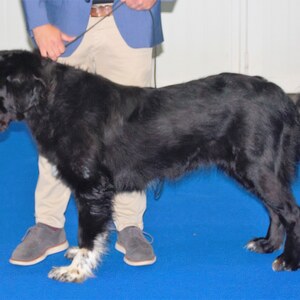
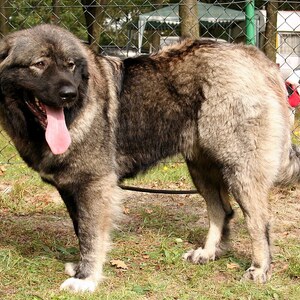
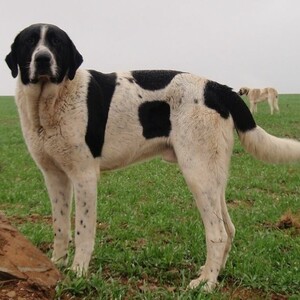
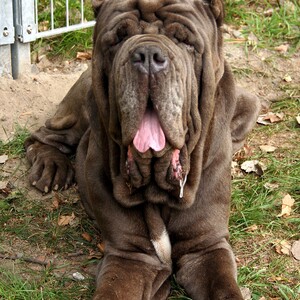
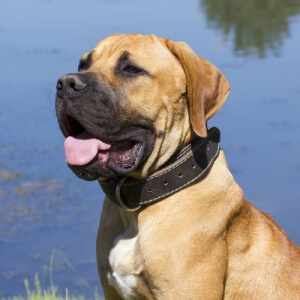
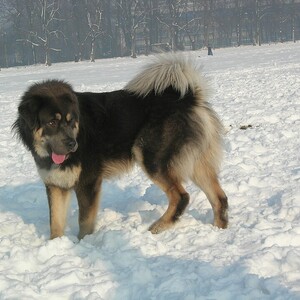
Tibetan Mastiff. · Sasni / Wikimedia Commons, CC BY-SA 3.0. Cropped and resized.
The Tibetan Mastiff (Do-Khyi) is a huge, ancient dog of the Himalayan nomads and the traditional guardian of Tibetan monasteries. The FCI standard describes it as independent, protective and commanding respect, very loyal to its family and territory, a powerful, heavy, solemn dog that matures slowly.
Quick facts
| Common name | Tibetan Mastiff (Do-Khyi) |
| Scientific name | Canis lupus familiaris |
| Country of origin | Tibet (China) |
| Official recognition | FCI, definitively since 22 August 1961 (group 2, mountain molossers; standard no. 230); also recognised by the AKC |
| Lifespan | 10–12 years, according to the AKC |
| Size (males) | at least 66 cm at the withers; 41–68 kg according to the AKC |
| Size (females) | at least 61 cm at the withers; 32–54 kg according to the AKC |
| Coat type | Harsh, thick, with a dense woolly undercoat in winter; mane on the neck |
| Common colours | Black, black and tan, blue, gold, sable |
| Energy level | Medium |
| Suited to an apartment? | No |
| Temperament | Independent, protective, loyal, dignified |
| Tendency to aggression | Moderate to high towards strangers |
| Good with children | Moderate; with supervision |
| Good with other animals | Moderate |
| Genetic predispositions | Hip and elbow dysplasia, hypothyroidism, entropion, ectropion |
- Primary category:Dog breeds
- Explore this animal's categories:
History and origin
The FCI standard says the Tibetan Mastiff is an ancient working breed of the nomadic herdsmen of the Himalayas and the traditional guardian of Tibetan monasteries, surrounded by myths since antiquity. From Aristotle (384–322 BC) to Marco Polo, who set off for Asia in 1271, every account praises its strength and the impression it makes; even its bark has been described as a unique and prized trait.
One of the first Tibetan Mastiffs to reach the West was a male sent to Queen Victoria by Lord Hardinge, Viceroy of India, in 1847. In the 1880s, the future King Edward VII took two dogs to England, and in 1898 an early registered litter was born at the Berlin Zoo.
How the breed developed
- Antiquity – Mentioned by Aristotle.
- 1271 – Marco Polo sets off for Asia and describes the dogs.
- 1847 – A male is sent to Queen Victoria.
- 1898 – An early registered litter, at the Berlin Zoo.
- 22 August 1961 – The FCI recognises the breed.
Breed rating
| Feature | Stars |
|---|---|
| Training and intelligence | ★★★☆☆ |
| Easy to train | ★★★★☆ |
| Intelligence | ★★★☆☆ |
| Independence | ★★☆☆☆ |
| Stubbornness | ★★★☆☆ |
| Behaviour and temperament | ★★★☆☆ |
| Affectionate with family | ★★★☆☆ |
| Friendly with children | ★★★☆☆ |
| Good with other dogs | ★★★★★ |
| Good with cats and other animals | ★☆☆☆☆ |
| Loyalty | ★★★☆☆ |
| Tendency to be aggressive | ★★★☆☆ |
| Tendency to bark | ★★★☆☆ |
| Needs and care | ★★★☆☆ |
| Shedding | ★★☆☆☆ |
| Needs frequent grooming | ★★★☆☆ |
| Activity and lifestyle | ★★★☆☆ |
| Energy level | ★★★☆☆ |
| Daily exercise needs | ★★★☆☆ |
| Suited to apartment life | ★★★★★ |
| Health and longevity | ★★★☆☆ |
| Life expectancy | ★★★☆☆ |
| Predisposition to genetic diseases | ★★★★☆ |
| Working abilities and uses | ★★☆☆☆ |
| Good guard dog | ★★★☆☆ |
| Good companion dog | ★★★★★ |
Indicative rating: 5 stars means the highest level. It is based on the ratings the American Kennel Club gives the breed and on the FCI standard.
Physical characteristics
The standard describes it as powerful, heavy, well built, with good bone, impressive, with a solemn, earnest look, suited to any climate. It matures slowly. The AKC says that, although massive and muscular, it moves with surprising ease.
General appearance
The coat is harsh and thick, with a dense, woolly undercoat in cold weather that thins out in summer. Males carry much more coat than females. The neck and shoulders are heavily covered, like a mane, and the tail is bushy.
| Feature | Tibetan Mastiff |
|---|---|
| Size | Giant |
| Height at the withers | males: at least 66 cm; females: at least 61 cm |
| Weight | males: 41–68 kg; females: 32–54 kg (AKC) |
| Coat | Thick, with a mane |
| Head | Broad, heavy, strong |
| Type | Mountain molosser |
The standard accepts rich black, with or without tan markings, blue, with or without tan markings, gold (from rich fawn to deep red) and sable. A white star on the chest and a little white on the feet are accepted.
Training and socialisation
The standard describes it as independent, protective and commanding respect, very loyal to its family and territory. The AKC says it does not respond well to traditional obedience training: it is very intelligent, learns quickly and sees no need to repeat what it already knows.
The AKC adds that it is not food-motivated, that it often behaves perfectly in class and then ignores commands completely at home, that its recall is unreliable and it should never be let off the lead. When in doubt, it follows its instincts, not its training.
Tips for effective training
- Do not let it off the lead. The AKC says its recall is unreliable.
- Earn its respect. It listens to those it trusts.
- Socialise it early. It is very reserved with strangers.
- Do not rely on treats. It is not food-motivated.
Activity needs and lifestyle
The AKC says it needs moderate daily exercise, but not necessarily organised: it prefers working tasks, such as patrolling its territory, to fetch. It is more active in cold weather and saves its energy until it needs it.
| Activity | How often | Why it matters |
|---|---|---|
| Walks | daily | Fitness |
| Patrolling the yard | daily | Instinct |
| Outings in cold weather | in winter | Enjoyment |
Tips for a balanced life
- It needs a large yard and a high fence.
- Not suited to beginners.
- Keep it out of the heat.
Care and health
Coat and skin care
The AKC says the coat needs little grooming for most of the year: a weekly brush and combing of the tail, mane and “trousers”. During the moult it must be brushed much more often.
Common health problems
The AKC says it is a relatively healthy breed, and responsible breeders check their dogs for:
| Condition | Description | Common symptoms |
|---|---|---|
| Hip dysplasia | The hip joint forms incorrectly and, over time, arthritis develops | Limping, difficulty getting up or jumping, hip pain |
| Elbow dysplasia | The elbow joint develops incorrectly and arthritis appears | Limping on the front legs, especially after exercise |
| Hypothyroidism | The thyroid produces too little hormone | Weight gain, tiredness, thin coat |
| Entropion and ectropion | The eyelid turns inwards or outwards | Irritated, watery eyes |
Other care
- Ask for the parents' hip and elbow tests.
- Have its thyroid checked.
- Have its eyes checked.
Diet and nutrition
The AKC says Tibetan Mastiffs eat much less than you would expect for their size.
Tips for a healthy diet
The table gives a starting estimate, calculated with the formula from the Merck Veterinary Manual. The first two calorie columns show the calories per day for a healthy adult dog. The last column shows what this means in dry food with 3,500–4,000 kcal per kilogram.
| Dog's weight | Calories per day (neutered) | Calories per day (not neutered) | Dry food per day (approximate) |
|---|---|---|---|
| 32 kg | 1,510 kcal | 1,700 kcal | 380–490 g |
| 50 kg | 2,110 kcal | 2,370 kcal | 530–680 g |
| 68 kg | 2,650 kcal | 2,980 kcal | 660–850 g |
- Do not overfeed it.
- Large-breed puppies need special food.
- A dog is at the right weight when you can feel its ribs under the coat without pressing hard.
Foods to avoid
Some human foods are dangerous for dogs: chocolate, coffee, grapes and raisins, onions, garlic, xylitol (a sweetener used in chewing gum), macadamia nuts and alcohol.
Reproduction and development
Physical and emotional maturity
In dogs, sexual maturity usually comes between 6 and 12 months, but in large breeds it can be delayed until about two years. Very large breeds become adults only at around 2 years.
Mating and pregnancy
Pregnancy lasts about 63 days, counted from ovulation. Mating a female on her first heat is not recommended. The FCI standard requires that only healthy dogs of typical breed appearance are used for breeding.
Caring for the puppies
In large breeds, a litter has around 7 puppies on average. The puppies grow very fast, so they need growth food suited to large breeds. Socialisation starts in the first weeks.
Interesting facts
- Mentioned by Aristotle. Accounts of it are ancient.
- Queen Victoria's dog. A male was sent to her in 1847.
- A prized bark. The standard says its bark is unique.
- It eats little. Much less than it looks.
- A “rug” in winter. The AKC jokes that in winter it lies stretched out like a rug.
In popular culture
Marco Polo
The FCI standard says the writings of Marco Polo, who set off for Asia in 1271, praise the strength and the impression these dogs made.
Frequently asked questions
Is it good for beginners?
No; it is independent and very protective.
Can it be let off the lead?
No; the AKC says its recall is unreliable.
Does it eat a lot?
No; much less than you would think.
How long does it live?
The AKC gives 10–12 years.