Sussex SpanielCharacteristics, history, training and care
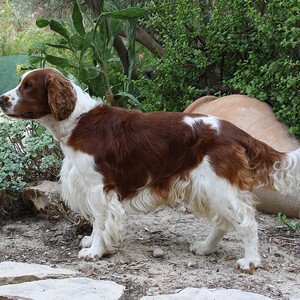
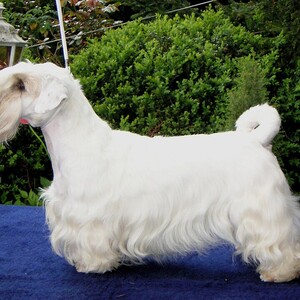
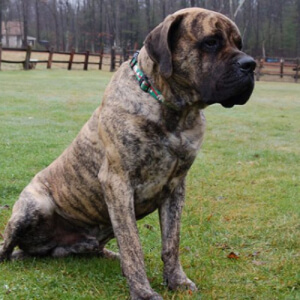
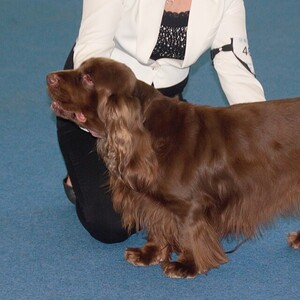
Sussex Spaniel. · Canarian / Wikimedia Commons, CC BY-SA 4.0. Cropped and resized.
The Sussex Spaniel is an English spaniel from Sussex, low, compact and strong, with an abundant golden liver coat. The FCI standard says it moves with a rolling gait, unlike any other spaniel, and describes it as gentle by nature, with no aggression. The AKC says that, although it has a serious expression, it is a cheerful, friendly dog, happy to be with its family, other animals and children.
Quick facts
| Common name | Sussex Spaniel |
| Scientific name | Canis lupus familiaris |
| Country of origin | United Kingdom (England) |
| Official recognition | FCI, definitively since 31 December 1954 (group 8, flushing dogs; standard no. 127); Kennel Club since 1872; also recognised by the AKC |
| Lifespan | 13–15 years, according to the AKC |
| Size (males) | ideally 38–41 cm at the withers; about 23 kg |
| Size (females) | ideally 38–41 cm at the withers; about 23 kg |
| Coat type | Abundant, flat, with undercoat, feathered |
| Common colours | Golden liver |
| Energy level | Medium |
| Suited to an apartment? | Not very |
| Temperament | Gentle, calm, cheerful, amusing |
| Tendency to aggression | Very low |
| Good with children | Good |
| Good with other animals | Good |
| Genetic predispositions | Heart disease, PDP1, bloat, hip dysplasia, disc herniation |
- Primary category:Dog breeds
- Explore this animal's categories:
History and origin
Wikipedia says the Sussex Spaniel was first mentioned in 1795, in East and West Sussex, at Goodwood and Rolvenden, for particular hunting conditions. It was one of the first breeds recognised by the Kennel Club, in 1872, and among the first registered by the AKC.
During the Second World War the breed almost died out, but it was restored. Today it is more popular in the United Kingdom and the United States than in any other country.
How the breed developed
- 1795 – The first mention, in Sussex.
- 1872 – Recognised by the Kennel Club.
- Second World War – It almost disappears.
- 31 December 1954 – The FCI recognises the breed.
- 2009 – “Stump” wins Best in Show at Westminster.
Breed rating
| Feature | Stars |
|---|---|
| Training and intelligence | ★★☆☆☆ |
| Easy to train | ★★★★★ |
| Intelligence | ★★★☆☆ |
| Independence | ★★★☆☆ |
| Stubbornness | ★★★☆☆ |
| Behaviour and temperament | ★★★★☆ |
| Affectionate with family | ★★★☆☆ |
| Friendly with children | ★★★☆☆ |
| Good with other dogs | ★★★☆☆ |
| Good with cats and other animals | ★★★★☆ |
| Loyalty | ★★★☆☆ |
| Tendency to be aggressive | ★★★☆☆ |
| Tendency to bark | ★★★☆☆ |
| Needs and care | ★★★☆☆ |
| Shedding | ★★★☆☆ |
| Needs frequent grooming | ★★★☆☆ |
| Activity and lifestyle | ★★★☆☆ |
| Energy level | ★★★★☆ |
| Daily exercise needs | ★★★☆☆ |
| Suited to apartment life | ★★★☆☆ |
| Health and longevity | ★★★☆☆ |
| Life expectancy | ★★★☆☆ |
| Predisposition to genetic diseases | ★★★☆☆ |
| Working abilities and uses | ★★★☆☆ |
| Good companion dog | ★★★☆☆ |
| Good companion dog | ★★★☆☆ |
Indicative rating: 5 stars means the highest level. It is based on the ratings the American Kennel Club gives the breed and on the FCI standard.
Physical characteristics
The standard describes it as strong, active and energetic, with a characteristic rolling gait. The AKC says it looks like a cross between a Cocker Spaniel and a torpedo: long, low, deep-chested and heavy-boned, although it stands only 33–38 cm according to the AKC.
General appearance
The coat is abundant and flat, with no tendency to curl, with enough undercoat for bad weather. The ears are covered with soft, wavy hair, and the legs are moderately feathered.
| Feature | Sussex Spaniel |
|---|---|
| Size | Medium |
| Height at the withers | ideally 38–41 cm |
| Weight | about 23 kg |
| Coat | Abundant, feathered |
| Colour | Golden liver |
| Gait | Rolling |
The colour is a rich golden liver, with golden tips to the hairs; gold should predominate. Dark liver is undesirable, and no other colour is accepted.
Training and socialisation
The standard describes it as gentle by nature; aggression is not accepted. The AKC calls it calm, amusing and a “gentleman”, cheerful and friendly.
The AKC says puppies grow up very strong, so early training and socialisation are important. It can be quite vocal.
Tips for effective training
- Start training early. It grows up very strong.
- Be patient. It matures slowly.
- Teach it “quiet”. It can bark a lot.
- Use rewards. It is gentle and sensitive.
Activity needs and lifestyle
The AKC says a Sussex should not do intense exercise before the age of one, as it grows slowly and too much exercise too early can damage its bones. Adults love swimming and long walks, while jumping and agility should only start after 18 months.
| Activity | How often | Why it matters |
|---|---|---|
| Long walks | daily | Fitness |
| Swimming | occasionally | Enjoyment |
| Free play (puppies) | daily | Development |
Tips for a balanced life
- No intense exercise in the first year.
- Trim the hair between the pads.
- Do not shave it.
Care and health
Coat and skin care
The AKC says grooming means bathing, brushing and combing. The hair under the feet is trimmed so that it does not slip. In neutered dogs the coat becomes fluffy, like candyfloss, and much harder to groom. It should not be shaved unless absolutely necessary.
Common health problems
The AKC says the breed is difficult to breed, and puppies are fragile until two weeks old. Responsible breeders check their dogs for:
| Condition | Description | Common symptoms |
|---|---|---|
| Heart disease | Conditions of the heart | Tiredness, coughing |
| PDP1 | Inherited metabolic disease, detected by a genetic test | Exercise intolerance |
| Gastric dilatation-volvulus (bloat) | The stomach fills with gas and may twist; this is a veterinary emergency | Swollen belly, trying to vomit without success, drooling, restlessness |
| Intervertebral disc disease | A disc between the vertebrae ruptures and presses on the spinal cord | Back or neck pain, unsteady walking on the hind legs; in severe cases, paralysis |
| Hip dysplasia | The hip joint forms incorrectly and, over time, arthritis develops | Limping, difficulty getting up or jumping, hip pain |
Other care
- Ask for the PDP1 genetic test.
- Have its heart checked.
- Keep it from jumping.
Diet and nutrition
The AKC says the Sussex grows very slowly and that unneutered dogs are almost never overweight, as they tend to eat only as much as they need.
Tips for a healthy diet
The table gives a starting estimate, calculated with the formula from the Merck Veterinary Manual. The first two calorie columns show the calories per day for a healthy adult dog. The last column shows what this means in dry food with 3,500–4,000 kcal per kilogram.
| Dog's weight | Calories per day (neutered) | Calories per day (not neutered) | Dry food per day (approximate) |
|---|---|---|---|
| 18 kg | 980 kcal | 1,100 kcal | 240–310 g |
| 21 kg | 1,100 kcal | 1,240 kcal | 280–350 g |
| 23 kg | 1,180 kcal | 1,320 kcal | 300–380 g |
- Split the food into two meals a day.
- Do not let it run right after a meal.
- A dog is at the right weight when you can feel its ribs under the coat without pressing hard.
Foods to avoid
Some human foods are dangerous for dogs: chocolate, coffee, grapes and raisins, onions, garlic, xylitol (a sweetener used in chewing gum), macadamia nuts and alcohol.
Reproduction and development
Physical and emotional maturity
In dogs, sexual maturity usually comes between 6 and 12 months. Most breeds become adults at around 13–15 months.
Mating and pregnancy
Pregnancy lasts about 63 days, counted from ovulation. Mating a female on her first heat is not recommended. The FCI standard requires that only healthy dogs of typical breed appearance are used for breeding.
Caring for the puppies
In dogs, a litter has 5–6 puppies on average, and the number rises with the size of the breed. Socialisation starts in the first weeks: gentle handling, everyday noises and new people.
Interesting facts
- Like a torpedo. The AKC compares it to a Cocker and a torpedo.
- A rolling gait. Unlike any other spaniel.
- The oldest champion. “Stump” won Westminster at the age of 10.
- Among the first breeds. Recognised by the Kennel Club in 1872.
- Almost extinct. During the Second World War.
In popular culture
“Stump” at Westminster
Wikipedia says the Sussex Spaniel “Stump” won Best in Show at the 133rd Westminster show, in 2009; at 10 years old, he was the oldest dog to win the title.
Frequently asked questions
What colour is it?
Golden liver only.
Does it need a lot of exercise?
Moderate; no intense exercise in the first year.
Is it good with children?
Yes; the AKC says it is happy with children.
How long does it live?
The AKC gives 13–15 years.