Jack Russell TerrierCharacteristics, history, training and care
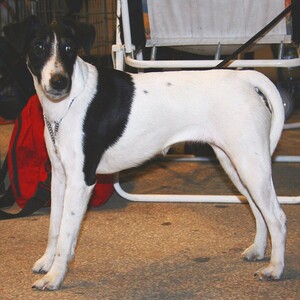
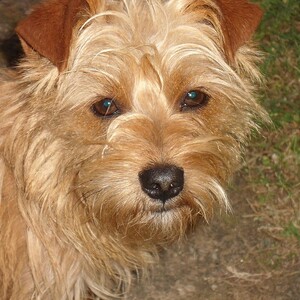
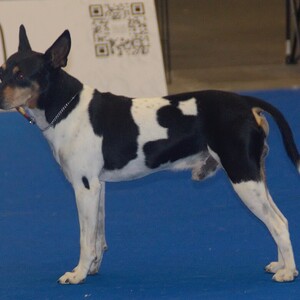
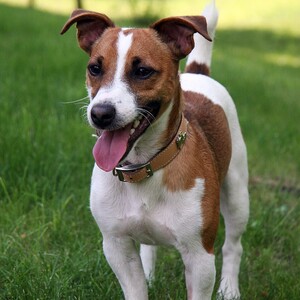
Jack Russell Terrier. · Plank / Wikimedia Commons, CC BY 3.0. Cropped and resized.
The Jack Russell Terrier is a small, strong, active and lithe terrier with a flexible body and a great deal of character. It descends from dogs bred in England in the 19th century by the Reverend John Russell for fox hunting, and was developed as a breed in Australia. It is lively, alert, brave, friendly and very energetic.
Quick facts
| Common name | Jack Russell Terrier |
| Scientific name | Canis lupus familiaris |
| Country of origin | England; country of development: Australia |
| Official recognition | FCI, definitively since 2003 (group 3, small terriers; standard no. 345) |
| Lifespan | about 13 years; a 2024 British study found 13.3 years |
| Size (males) | ideally 25–30 cm at the withers; about 1 kg for every 5 cm (5–6 kg) |
| Size (females) | ideally 25–30 cm at the withers; about 5–6 kg |
| Coat type | Smooth, “broken” or rough, weatherproof |
| Common colours | Predominantly white, with black and/or tan markings |
| Energy level | Very high |
| Suited to an apartment? | Can adapt, with a great deal of exercise |
| Temperament | Lively, alert, active, brave, friendly, self-assured |
| Tendency to aggression | Low towards people |
| Good with children | Good, with older children |
| Good with other animals | Average; strong hunting instinct |
| Genetic predispositions | No known common breed-specific diseases; luxating patella in small breeds |
- Primary category:Dog breeds
- Explore this animal's categories:
History and origin
The FCI standard says the Jack Russell Terrier originated in England in the 19th century, thanks to the efforts of the Reverend John Russell. He bred a line of Fox Terriers that could run with Foxhounds and go to ground to bolt the fox.
Two varieties with similar standards developed from this line: the taller, squarer dog became the Parson Russell Terrier, and the shorter, slightly longer one the Jack Russell Terrier. The breed was developed in Australia, and Wikipedia says it is different from the Parson Russell Terrier.
How the breed developed
- Early 19th century – The Reverend John Russell breeds terriers for fox hunting in Devon.
- 20th century – The breed is developed in Australia.
- 2003 – The FCI recognises the breed.
- 8 October 2012 – The current FCI standard is published.
Breed rating
| Feature | Stars |
|---|---|
| Training and intelligence | ★★★☆☆ |
| Easy to train | ★★★☆☆ |
| Intelligence | ★★★★★ |
| Independence | ★★★★☆ |
| Stubbornness | ★★★★☆ |
| Behaviour and temperament | ★★★★☆ |
| Affectionate with family | ★★★★★ |
| Friendly with children | ★★★★☆ |
| Good with other dogs | ★★★☆☆ |
| Good with cats and other animals | ★★☆☆☆ |
| Loyalty | ★★★★★ |
| Tendency to be aggressive | ★★☆☆☆ |
| Tendency to bark | ★★★★☆ |
| Needs and care | ★★★★☆ |
| Shedding | ★★★☆☆ |
| Needs frequent grooming | ★★☆☆☆ |
| Activity and lifestyle | ★★★★☆ |
| Energy level | ★★★★★ |
| Daily exercise needs | ★★★★★ |
| Suited to apartment life | ★★★☆☆ |
| Health and longevity | ★★★★☆ |
| Life expectancy | ★★★★★ |
| Predisposition to genetic diseases | ★★☆☆☆ |
| Working abilities and uses | ★★★★☆ |
| Good hunting dog and watchdog | ★★★★☆ |
| Good companion dog | ★★★★☆ |
Indicative rating: 5 stars means the highest level. The AKC does not recognise the Jack Russell Terrier; the rating is based on the FCI standard (“lively, alert, active, bold, friendly, self-assured”) and on Wikipedia.
Physical characteristics
The standard describes it as a strong, active, lithe working terrier of great character, with a flexible body of medium length. The dog is longer than it is tall. Its lively movement matches its keen expression.
General appearance
The skull is flat and of moderate width. The coat may be smooth, “broken” or rough and must be weatherproof. The standard says it is not stripped to appear smooth or “broken”.
| Feature | Jack Russell Terrier |
|---|---|
| Size | Small |
| Height at the withers | ideally 25–30 cm |
| Weight | about 1 kg for every 5 cm of height |
| Coat | Smooth, “broken” or rough |
| Colour | Predominantly white with markings |
| Body | Flexible, longer than tall |
White must predominate, with black and/or tan markings. The tan can range from the lightest shade to the richest chestnut.
Training and socialisation
The standard describes it as a lively, alert and active terrier with a keen, intelligent expression, bold and fearless, friendly but quietly confident.
Wikipedia says Jack Russells are an energetic breed that needs a lot of exercise and stimulation. Training must be consistent and interesting, with rewards.
Tips for effective training
- Tire it out well. Wikipedia says it needs a lot of exercise.
- Give its mind work to do. It needs a lot of stimulation.
- Check the fence. It is a terrier that digs and squeezes through gaps.
- Be careful with small animals. It was bred for fox hunting.
Activity needs and lifestyle
Wikipedia says it is an energetic dog that relies on plenty of exercise and stimulation. Every day it needs running, play and activities that keep its mind busy.
| Activity | How often | Why it matters |
|---|---|---|
| Walks and running | daily | Very high energy |
| Search games | daily | Terrier instinct |
| Agility or tricks | several times a week | Mental stimulation |
Tips for a balanced life
- It suits a very active family.
- The fence must be solid and sunk into the ground.
- Do not let it get bored: it becomes destructive.
Care and health
Coat and skin care
The smooth coat is brushed once a week. A “broken” or rough coat needs brushing more often and, from time to time, removal of dead hair.
Common health problems
Wikipedia says a 2022 British study found that the Jack Russell had the longest life expectancy of the breeds studied, 12 years and 9 months. Still, it is worth watching for:
| Condition | Description | Common symptoms |
|---|---|---|
| Patellar luxation | The kneecap slips out of place | Suddenly holds a hind leg up for a few steps, then uses it again |
| Dental problems | Tartar in small breeds | Bad breath, red gums |
Other care
- Brush its teeth regularly.
- Trim the nails when they start to touch the floor.
- Check the ears weekly.
Diet and nutrition
A small, very active terrier needs good-quality food. Adjust the portion to its activity so that it stays lithe.
Tips for a healthy diet
The table gives a starting estimate, calculated with the formula from the Merck Veterinary Manual. The first two calorie columns show the calories per day for a healthy adult dog. The last column shows what this means in dry food with 3,500–4,000 kcal per kilogram.
| Dog's weight | Calories per day (neutered) | Calories per day (not neutered) | Dry food per day (approximate) |
|---|---|---|---|
| 5 kg | 370 kcal | 420 kcal | 92–120 g |
| 6 kg | 430 kcal | 480 kcal | 110–140 g |
| 7 kg | 480 kcal | 540 kcal | 120–150 g |
- Give it its food in two meals a day.
- Training treats count towards the daily portion.
- A dog is at the right weight when you can feel its ribs without pressing hard.
Foods to avoid
Some human foods are dangerous for dogs: chocolate, coffee, grapes and raisins, onions, garlic, xylitol (a sweetener used in chewing gum), macadamia nuts and alcohol.
Reproduction and development
Physical and emotional maturity
In dogs, sexual maturity usually comes between 6 and 12 months. Small breeds become adults faster than large ones, usually at around one year.
Mating and pregnancy
Pregnancy lasts about 63 days, counted from ovulation. Mating a female on her first heat is not recommended. The FCI standard requires that only healthy dogs of typical breed appearance are used for breeding.
Caring for the puppies
In small breeds, a litter has 3–4 puppies on average. The puppies are very small and fragile in the first weeks, so they must be kept warm and handled with care. Socialisation starts early: gentle handling, everyday noises and new people.
Interesting facts
- Named after a clergyman. It bears the name of the Reverend John Russell.
- Developed in Australia. Although it originated in England, the breed was developed in Australia.
- It lives a long time. A 2022 British study found it had the longest life expectancy.
- The star of “Frasier”. Eddie, the dog in the series “Frasier”, was a Jack Russell.
- 1 kg per 5 cm. The standard calls for about 1 kg for every 5 cm of height.
In popular culture
A film and television star
Wikipedia says Jack Russells have appeared in many films and series: a Jack Russell and his son, Enzo, played Eddie in the series “Frasier”; Soccer was the star of the series “Wishbone” (1995–2001), and Uggie appeared in the films “Water for Elephants” and “The Artist” (2011).
Frequently asked questions
What is the difference between the Jack Russell and the Parson Russell?
The Parson Russell is taller and squarer; the Jack Russell is shorter and slightly longer.
How big does it get?
It ideally measures 25–30 cm at the withers and weighs about 5–6 kg.
How much exercise does it need?
A great deal: it is a very energetic breed.
How long does it live?
A 2024 British study found an average of 13.3 years.