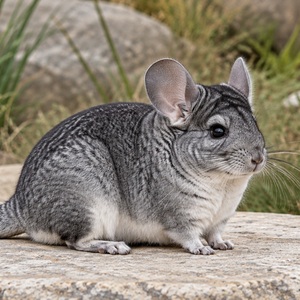
 ChinchillaChinchilla spp.
Animals with large ears
Fennec foxes, African elephants, donkeys, rabbits and hares have conspicuously large ears. Some ears are long and narrow; others spread out like broad fans.
Examples of large-eared animals
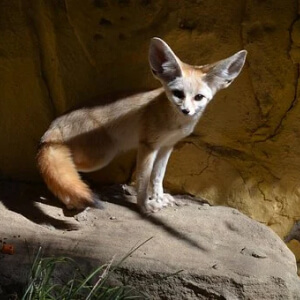
- Fennec foxes: large ears help detect prey and release body heat.
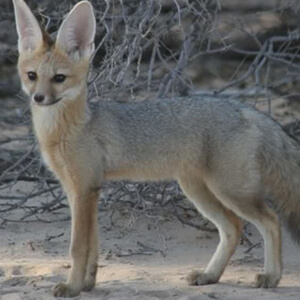
- Kit foxes and pale foxes: their ears are prominent in proportion to their heads.
- African elephants: broad ears contain many blood vessels.
- European hares and rabbits: both have elongated ears, generally longer in hares.
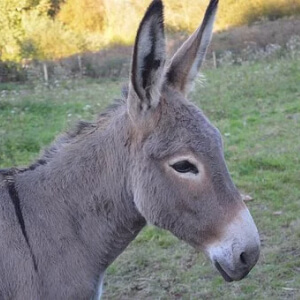
- Donkeys: their long, mobile ears can indicate alertness and aspects of their mood.
What do large ears do?
The outer ear helps collect sound. Hearing can reveal nearby predators or prey. Good hearing depends on more than ear size.
Fennec fox and elephant ears also help release heat. Blood flows through the vessels in an elephant’s ears, and flapping can help cool the body.
Different ears, different ways of life
Habitat, behaviour and body structure influence how ears are used. Large ears work alongside shade, shelter and other ways of avoiding excessive heat.
Frequently asked questions
Which animals have large ears?
Examples include fennec foxes, kit foxes, pale foxes, African elephants, donkeys, rabbits and hares.
Why are elephant ears so large?
They contribute to hearing and heat loss through their blood vessels and movement.
Do bigger ears always mean better hearing?
No. Internal ear structure, sensitivity to different frequencies and sound processing also matter.
Sources: San Diego Zoo — fennec fox · San Diego Zoo — elephants · University of Michigan — kit fox · University of Michigan — pale fox · University of Michigan — European hare · University of Michigan — rabbits and hares · University of Michigan — donkey