Pale foxInteresting facts and information
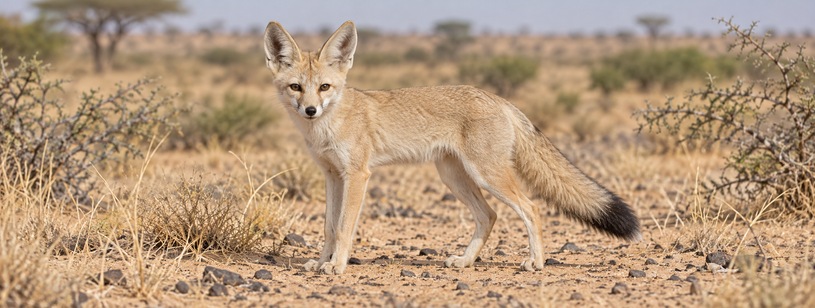
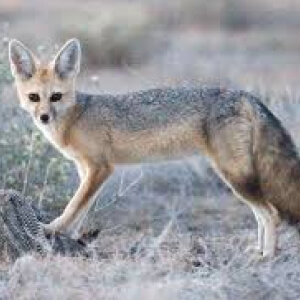
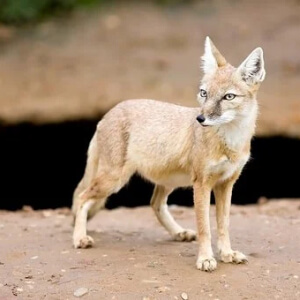
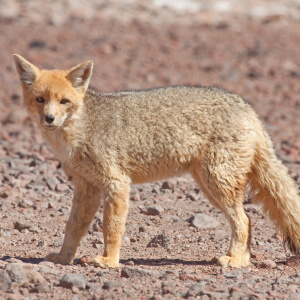
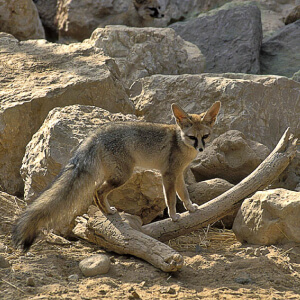
AI illustration of pale fox.
The pale fox is a small fox of Africa’s Sahel region. It has a sandy coat, slender legs, large ears and a bushy tail with a dark tip. It eats both small animals and plant food.
Its scientific name is Vulpes pallida. It is distinct from the fennec and Rüppell’s fox. It lives mainly in the dry belt south of the Sahara, rather than throughout the entire desert.
Quick facts
| Species | Vulpes pallida |
| Class / order / family | Mammalia / Carnivora / Canidae |
| Distribution | The Sahel, south of the Sahara, from western towards central Africa |
| Habitat | Arid and semi-arid ground, dry savanna and sandy or stony soils |
| Size | Approximately 2–3.6 kg; head and body around 38–55 cm |
| Diet | Omnivorous: small animals, invertebrates and plant foods such as berries |
| Reproduction | Gestation about 51–53 days (in captivity); litters of about 3–6 pups |
| Young | Born alive and raised in a den |
| Conservation | Least Concern (LC), global status |
Interesting facts
- Its name describes its appearance. The very pale coat matches the sand and dry soils of its habitat.
- The Sahel is a transition zone. It lies between the Sahara and more richly vegetated regions to the south.
- It is a separate species from the fennec. Each has its own scientific name and distribution.
- A widespread species can still be poorly studied. Information on pale fox numbers and natural history remains limited.
- Its diet is varied. Animal and plant foods allow it to use resources that change through the year.
Records and remarkable features
The pale fox is among the smaller foxes. The Canid Specialist Group describes adults of approximately 2–3.6 kg, with a head-and-body length of around 38–55 cm, excluding the tail.
One remarkable feature is how little is known about such a widespread species. There is no reliable count of all pale foxes, and their lives are less thoroughly documented than those of red foxes.
Its dens can be impressive: burrows up to about 15 m long, with chambers lined with dry plant material.
Characteristics
The coat is usually cream or sandy yellow, with a paler underside. The muzzle is elongated, and a darker area may appear to outline the eyes. The long, bushy tail has a blackish tip.
| Feature | Identification clues |
| Very pale coat | Little contrast with dry ground |
| Slender legs | A slim outline, unlike foxes with very thick winter coats |
| Large ears | A feature familiar in foxes from hot regions |
| Dark tail tip | A clue to combine with other features |
Identifying small foxes of arid regions can be difficult. Light changes the apparent coat colour, and a close photograph can exaggerate ear size. The location of a sighting matters a great deal.
The pale fox is a mammal in Canidae. It is distinct from a sand cat, although both may have pale coats and large ears. Muzzle shape, tail and body proportions help distinguish them.
Habits and behaviour
It is mainly active during cooler hours and at night. In a very hot landscape, coming out after sunset can reduce exposure to high temperatures at ground level.
It uses underground shelters. A den offers protection and more stable conditions than exposed ground. For pups, shelter matters both against predators and during their vulnerable early development.
Its social behaviour is less thoroughly documented than that of other foxes. Pairs or family groups have been described, while adults may forage separately. They do not hunt in packs like wolves.
Tracks, droppings and camera-trap images can supplement direct sightings.
Habitat and geographic distribution
The pale fox is associated with the Sahel, from western Africa towards Sudan and regions near the Red Sea. Its distribution forms a belt along the southern edge of the Sahara.
It uses semi-desert, sandy or stony ground, dry grasslands and scrub. It can also occur near crops or settlements where food is available.
- Ground suitable for digging dens provides shelter.
- Sparse vegetation can support insects and other small animals.
- Fruit and other plant resources supplement the diet.
- Fields and households bring food, alongside risks of conflict.
Conditions vary across the Sahel. Rainfall, vegetation and human activities differ between regions.
Diet and feeding
It is omnivorous. It eats insects and other invertebrates, small vertebrates and plant food, depending on availability. The menu varies between places and seasons.
It searches for food at ground level using hearing and smell. Some foods must be hunted, while fruit or other items can be collected directly. Its small size favours manageable portions and prey that do not require confrontations with large animals.
Food can also provide water. This helps it survive in dry places where water is scarce.
Pale foxes sometimes take poultry, so secure enclosures help avoid conflict with people.
Reproduction and life cycle
Little is known about pale fox reproduction in the wild. In captivity, gestation lasts about 51–53 days and litters usually have about 3–6 pups. Pups need shelter and care before they can find food independently.
Early development takes place close to the den. As pups grow, they explore and practise useful movements through play. The transition to solid food and independence is gradual.
| Stage | Main need |
| Birth and nursing | Protection, milk and quiet |
| Exploring the shelter | Safety close to the den |
| Learning to forage | Access to suitable resources |
| Independent life | Available habitat and shelter sites |
The pups are born in the den, and both parents are thought to help raise them.
Name and history
The English name pale fox describes the animal’s light colour. Its scientific name is Vulpes pallida.
It belongs to Vulpes, alongside the fennec, red fox and other foxes. Related species do not necessarily share the same distribution or habits.
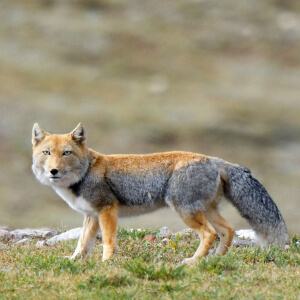
“Sand fox” can be confusing because it is used for different animals. Scientific names help distinguish the pale fox from species such as Vulpes rueppellii or the Tibetan sand fox.
Conservation status and threats
The global status is Least Concern (LC). However, the Canid Specialist Group notes that population trends and many aspects of its ecology are poorly known.
Local risks include killing in conflicts around homes and road accidents. Habitat change can alter shelter sites and food resources.
Research into distribution, long-term observations and local pressures can help. Protecting dens and limiting conflict are useful without assuming that every fox near a settlement causes damage.
The pale fox is not considered threatened, but it remains one of the least-studied foxes in the world.
Discover other foxes
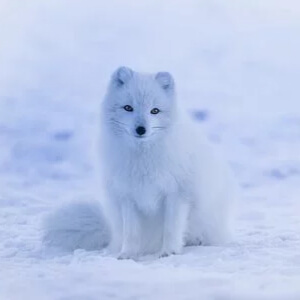
Read about Red fox or explore: Culpeo · Blanford's fox · Cape fox · Corsac fox · Tibetan sand fox · Swift fox · Kit fox · Bengal fox · Fennec fox · Arctic fox.
Frequently asked questions
- Where does the pale fox live? In the Sahel, south of the Sahara, from western towards central Africa. It uses dry, open environments, including arid savanna and sandy or stony ground.
- Is it the same species as the fennec? No. The pale fox is Vulpes pallida and the fennec is Vulpes zerda. Both are adapted to arid environments but differ in proportions, appearance and distribution.
- Why is it called pale? The name describes its light, sandy or cream-coloured coat. Appearance varies with lighting and coat condition, so identification requires several features.
- What does it eat? It is omnivorous, eating small animals, invertebrates and plant resources as available.
- How large is it? Specialists report approximately 2–3.6 kg and a head-and-body length of 38–55 cm, excluding the tail.
- Is it active at night? It is described as mainly nocturnal and uses dens. Shelter and activity timing matter in the hot, dry climate of its habitat.
- How long is gestation? In captivity, about 51–53 days; litters usually have about 3–6 pups. Little is known about breeding in the wild.
- What is its conservation status? The Canid Specialist Group gives Least Concern globally. Information on population trends is limited, while road accidents and persecution can create local problems.