Fennec foxInteresting facts and information
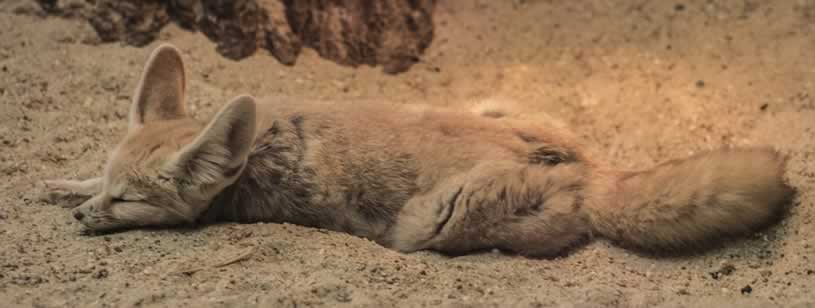
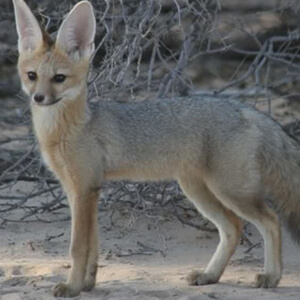
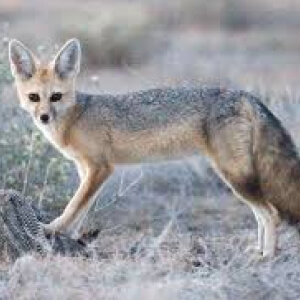
The fennec fox (Vulpes zerda) is a small fox from the deserts of North Africa and the smallest fox in the world. Its huge ears help it hear prey under the sand and get rid of excess heat. It shelters in burrows during the day and is mainly active at night.
Fennec foxes are wild animals. Their cute appearance and tolerance of people do not make them domesticated.
Although the species is not threatened, some populations are affected by trapping for the exotic pet trade and by habitat loss.
Quick facts
| Common name | Fennec fox |
| Scientific name | Vulpes zerda |
| Typical lifespan | Up to about 10 years in the wild, up to 14 years in captivity |
| Maximum speed | Not well measured; quick and agile over short distances |
| Size | About 24-40 cm long (without tail) |
| Tail length | About 18-30 cm |
| Weight | About 0.7-1.6 kg |
| Diet | Omnivore (small mammals, insects, birds, eggs, plants, fruit) |
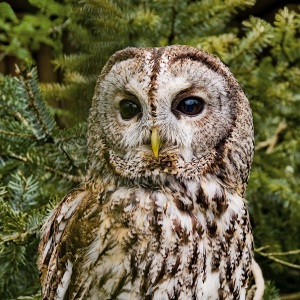
| Main predators | Eagle owls, jackals, striped hyenas, dogs, people |
| Conservation status | Least Concern (IUCN) |
| Geographic distribution | Deserts of North Africa and the Sinai Peninsula |
| Habitat | Sand dunes, sandy semi-deserts |
| Social behaviour | Lives in family groups, but usually forages alone |
| Special adaptations | Large ears, pale fur, furry feet, burrowing and very efficient use of water |
Interesting facts
- The biggest ears for its size - The fennec fox has the largest ears relative to body size of any member of the dog family; they can be up to 15 cm long, nearly half the length of its body.
- Little need to drink - Fennec foxes can go a long time without drinking, getting most of their water from their food, but they drink when water is available.
- Great jumpers - A fennec can leap about 60 cm high and over 1.2 metres forward, which helps it catch prey and escape danger.
- Active at night - It avoids the heat of the day by resting in deep burrows and comes out at night.
- Lots of sounds - Fennecs bark, whine, squeal and growl, and they have even been heard to purr like cats.
- Built for the desert - Its thick, pale fur protects it from the sun during the day and keeps it warm on cold desert nights.
Records and remarkable features
- The fennec fox (Vulpes zerda) is a small fox from the deserts of North Africa.
- It is the smallest fox in the world, weighing only about 1-1.5 kg.
- It has the largest ears relative to body size of any canid.
Characteristics
The fennec fox is a small fox that is wonderfully adapted to life in the desert, with features that help it cope with heat, cold nights and very little water.
Physical aspect
- Small and light - With a body length of about 24-40 cm and a weight of only about 0.7-1.6 kg, it is the smallest fox in the world.
- Pale fur (cream or sandy) - Gives good camouflage on the sand and reflects sunlight.
- Enormous ears (up to 15 cm long) - Used to hear prey and to get rid of excess heat.
- A long, bushy tail (about 18-30 cm) - Helps with balance and can be wrapped around the face and feet on cold nights.
- Furry feet - The soles of their feet are covered with thick fur, protecting them from hot sand and helping them walk on loose dunes.
Special adaptations
- Cooling through the ears - Blood vessels in the large ears release excess heat, helping keep the body cool.
- Saving water - Fennec foxes get most of their water from food, and their kidneys are very good at saving water.
- Expert diggers - They dig deep burrows, where it is much cooler than on the surface.
- Excellent hearing - They can hear insects and small animals moving under the sand.
- Speed and agility - They run and jump quickly to escape predators.
Habits and behaviour
The fennec fox is a nocturnal animal that often lives in small family groups, but usually hunts alone.
Social behaviour
- Family groups - A breeding pair often lives with its young, in groups of up to about 10 foxes.
- Solitary hunter - Although they live in groups, each fox usually hunts on its own.
- Very vocal - They communicate with barks, whines, squeals and growls, especially during the breeding season.
Defence and Survival
- Hiding in the den during the day - To avoid the heat and predators.
- Fast running - They run quickly and change direction suddenly to escape danger.
- Natural camouflage - Their sandy fur makes them hard to see in the desert.
- Scent marking - Males mark their territory with urine, especially during the breeding season.
Habitat and geographic distribution
The fennec fox lives in the deserts of North Africa, from Morocco and Mauritania to Egypt and Sudan, and in the Sinai Peninsula. Related profile: Desert animals.
| Region | Habitat Preferred | Population Estimate |
|---|---|---|
| Sahara (North Africa) | Sand dunes, sandy semi-deserts | Not known exactly; thought to be stable |
| Sinai Peninsula | Sandy desert | Present, but rarely studied |
| Egypt, Libya, Morocco, Tunisia, Algeria | Dry regions, around oases | Widespread in suitable sandy areas |
| Mauritania, Niger, Sudan, Chad | Remote desert areas | Hard to study; little information |
Types of Habitat
- Sand dunes - Their favourite habitat, where burrows are easy to dig.
- Semi-desert areas - With more plants and more food.
- Grassy patches among the dunes - Plants help hold the sand together around their burrows.
Human Impact and Threats
- Trapping - In some areas, fennecs are trapped for their fur or caught for the exotic pet trade.
- Habitat loss - New settlements and roads reduce their habitat in some parts of North Africa.
- Road traffic - Where roads cross the desert, foxes are sometimes hit by cars.
Diet and feeding
The fennec fox is an omnivore that eats whatever it can find in the desert. Its diet includes both animals and plants, and much of its water comes from its food.
What does the fennec fox eat?
| Type of food | How important | Benefits |
|---|---|---|
| Small rodents (gerbils, jerboas, mice) | A main food | Protein, fat and water |
| Insects (locusts, beetles and others) | A main food | Easy to catch, a source of protein and water |
| Birds and eggs | Eaten when found | Rich in nutrients |
| Lizards | Eaten when found | Protein |
| Roots, leaves and fruit | Regular part of the diet | Water, vitamins and fibre |
| Carrion | Occasional | Extra food when other food is scarce |
Methods of feeding
- Night hunting - The fennec fox hunts rodents, insects, lizards and birds at night.
- Digging for food - It listens for prey under the sand and quickly digs it out.
- Storing food - When food is plentiful, fennecs may hide some to eat later.
- Eating plants - Roots and fruit give them extra water as well as food.
Reproduction and life cycle
Fennec foxes are monogamous and usually stay with the same partner. They breed once a year, and the young are raised in a den that protects them from predators and extreme temperatures.
| Characteristic | Details |
|---|---|
| Age of sexual maturity | About 9-11 months |
| Breeding season | January - February |
| Type of reproduction | Viviparous (gives birth to live young) |
| Pregnancy period | About 50-52 days |
| Number of kits per birth | 1-4 kits |
| Birth weight | About 50 g |
| Nursing | About 8-10 weeks |
| Independence of young | From about 3-4 months |
| Lifetime | Up to about 10 years in the wild, up to 14 years in captivity |
Mating process
- Pairs - Fennecs form pairs that usually stay together for life.
- Marking territory - During the breeding season, males mark their area with urine and become aggressive towards rivals.
- Feeding the family - The male brings food to the female while she stays in the den with the kits.
Development of kits
- The kits are born blind and helpless - Their eyes open after about 8-11 days, and they start coming out of the den at about 4-5 weeks.
- Learning to hunt - As they grow, the young follow their parents and learn to find food.
- Leaving home - Young fennecs often stay with the family group for several months before finding their own territory.
Name and history
Origin and etymology of the name
- "Fennec" comes from the Arabic word fanak, meaning "fox".
- In the scientific name Vulpes zerda, Vulpes is Latin for "fox"; zerda is usually explained as coming from the Greek word for "dry", a reference to its desert home.
Discovery and Scientific Study
- The first scientific description - The German naturalist Eberhard August Wilhelm von Zimmermann described the species in 1780.
- Early observations - European travellers in the Sahara in the 18th and 19th centuries described the fennec's huge ears and desert life.
- Modern research - Scientists study how fennecs survive heat and lack of water, and their role in controlling rodents and insects.
Fennec fox in Folklore and Superstition
- Traditional hunting - Saharan peoples have long hunted fennecs for their fur and know them as clever animals that are hard to catch.
- A national symbol - The fennec is the national animal of Algeria.
Cultural significance and mythology
The fennec fox is one of the best-known animals of the Sahara and an important symbol in North Africa.
- Algeria's national animal - The national football team of Algeria is nicknamed "Les Fennecs" (The Fennecs).
- The Little Prince - The wise fox in Antoine de Saint-Exupéry's The Little Prince (1943) is often said to have been inspired by the fennecs the author saw while working in the Sahara.
- Pets and protection - Their cute look has made fennecs popular exotic pets, which increases illegal trapping in the wild.
Conservation status and threats
The fennec fox is not a threatened species and is listed as "Least Concern" by the IUCN. However, it faces some local threats.
| IUCN Status | Population Estimate | Affected Regions |
|---|---|---|
| Least Concern | Not known exactly; thought to be stable | North Africa and the Sinai Peninsula |
Main threats
- Trapping - In some regions, fennecs are trapped for their fur or captured for the exotic pet trade.
- Habitat loss - New settlements and farming reduce their habitat in some areas.
- Road traffic - In desert areas with roads, foxes are sometimes hit by cars.
- Climate change - Longer droughts may reduce the food available to them.
Conservation efforts
- Trade controls - The fennec is listed on CITES Appendix II, which controls international trade in the species.
- Legal protection - Several countries in its range protect the fennec by law.
- Research - Scientists try to learn more about fennec populations, which are hard to count in remote deserts.
In popular culture
- Zootopia (2016, Disney) - Finnick, the small fox with a very deep voice who works with Nick Wilde, is a fennec fox.
- The Little Prince (1943) - The famous fox in the book is often linked to the fennecs of the Sahara.
- The Fennec helicopter - A light military helicopter made by Eurocopter (now Airbus Helicopters) is called the Fennec.
- Firefox - "Fennec" was the code name of Mozilla's Firefox browser for mobile phones.