Lhasa ApsoCharacteristics, history, training and care
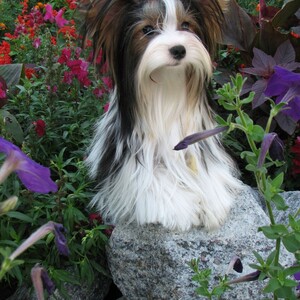
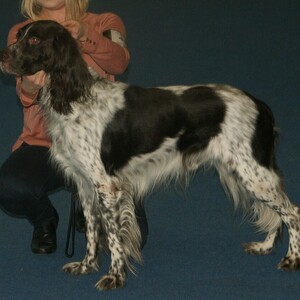
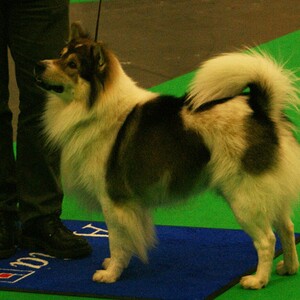
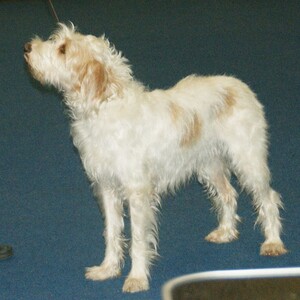
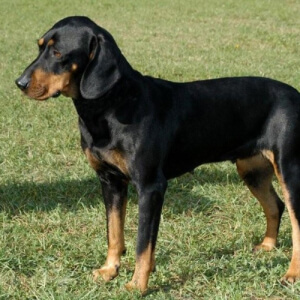
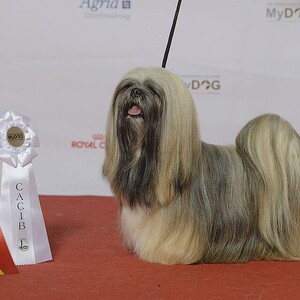
Lhasa Apso. · Svenska Mässan from Sweden / Wikimedia Commons, CC BY 2.0. Cropped and resized.
The Lhasa Apso is a small, sturdy dog from Tibet, with a long, heavy, straight coat that falls to the ground and hair falling over its eyes. Wikipedia says it was a sentinel in the palaces and monasteries of the Himalayas. The standard describes it as cheerful, self-assured, alert, but somewhat aloof with strangers.
Quick facts
| Common name | Lhasa Apso |
| Scientific name | Canis lupus familiaris |
| Country of origin | Tibet (China); patronage: United Kingdom |
| Official recognition | FCI, definitively since 19 November 1960 (group 9, Tibetan breeds; standard no. 227); AKC, since 1935 |
| Lifespan | 12–15 years, according to the AKC |
| Size (males) | ideally 25 cm at the withers; 5.5–8 kg according to the AKC |
| Size (females) | slightly smaller |
| Coat type | Long, heavy, straight, hard, with a moderate undercoat |
| Common colours | Golden, sandy, honey, grizzle, black, white, brown, parti-colour |
| Energy level | Moderate |
| Suited to an apartment? | Yes |
| Temperament | Cheerful, self-assured, alert, aloof with strangers |
| Tendency to aggression | Low; an alert sentinel |
| Good with children | Average |
| Good with other animals | Average |
| Genetic predispositions | Dry eye, “cherry eye”, patellar luxation, renal dysplasia, allergies |
- Primary category:Dog breeds
- Explore this animal's categories:
History and origin
The FCI standard says the Lhasa Apso comes from Tibet, where many dogs live at high altitudes, in a harsh climate. Its long, hard coat with a dense undercoat insulates it in winter, and the hair over its eyes protects them from wind, dust and bright light. Wikipedia says it is a breed a thousand years old, used as a sentinel in the palaces and monasteries of the Himalayas.
The first Apso dogs reached Britain in the early 1920s and were at first confused with other shaggy Tibetan dogs, all called “Lhasa Terriers”. The breed club in Britain was founded in 1933. Wikipedia says the first pair in the United States was a gift from the 13th Dalai Lama.
How the breed developed
- For a thousand years – A sentinel in Tibetan palaces and monasteries.
- Early 1920s – The first dogs reach Britain.
- 1933 – The breed club is founded in Britain; the first pair reaches the United States.
- 1935 – The AKC recognises the breed.
- 19 November 1960 – The FCI recognises the breed.
Breed rating
| Feature | Stars |
|---|---|
| Training and intelligence | ★★★☆☆ |
| Easy to train | ★★★☆☆ |
| Intelligence | ★★★★☆ |
| Independence | ★★★★☆ |
| Stubbornness | ★★★★★ |
| Behaviour and temperament | ★★★★☆ |
| Affectionate with family | ★★★★★ |
| Friendly with children | ★★★☆☆ |
| Good with other dogs | ★★★☆☆ |
| Good with cats and other animals | ★★★☆☆ |
| Loyalty | ★★★★★ |
| Tendency to be aggressive | ★★☆☆☆ |
| Tendency to bark | ★★★☆☆ |
| Needs and care | ★★★☆☆ |
| Shedding | ★☆☆☆☆ |
| Needs frequent grooming | ★★★★☆ |
| Activity and lifestyle | ★★★☆☆ |
| Energy level | ★★★☆☆ |
| Daily exercise needs | ★★★☆☆ |
| Suited to apartment life | ★★★★★ |
| Health and longevity | ★★★★☆ |
| Life expectancy | ★★★★★ |
| Predisposition to genetic diseases | ★★★☆☆ |
| Working abilities and uses | ★★★★☆ |
| Good guard dog | ★★★★☆ |
| Good companion dog | ★★★★★ |
Indicative rating: 5 stars means the highest level. It is based on the ratings the American Kennel Club gives the breed and on the FCI standard.
Physical characteristics
The AKC says it stands under 30 cm at the withers and is a small but sturdy dog with an aristocratic bearing. It is famous for its long coat, which hangs straight to the ground, parted down the middle.
General appearance
The head has abundant hair that falls over the eyes without stopping it from seeing, along with whiskers and a beard. The feathered tail curls over the back, in the style of the Tibetan breeds. The topcoat is long, heavy, straight and hard, neither woolly nor silky.
| Feature | Lhasa Apso |
|---|---|
| Size | Small |
| Height at the withers | males: ideally 25 cm; females: slightly smaller |
| Weight | 5.5–8 kg (AKC) |
| Coat | Long, down to the ground |
| Head | With hair over the eyes, whiskers and a beard |
| Tail | Curled over the back |
The accepted colours are golden, sandy, honey, dark grizzle, slate, smoke, parti-colour, black, white or brown, all equally acceptable. In fact, any colour is permitted except merle.
Training and socialisation
The AKC says the Lhasa Apso “will please you if it pleases them to please you”. It is very intelligent and is sometimes compared to a wilful toddler. It can learn almost anything if the trainer keeps things interesting.
It dislikes repetitive exercises and can become very stubborn if forced or nagged. Early socialisation helps, as it descends from old house sentinels.
Tips for effective training
- Make training interesting. It dislikes repetition.
- Do not force it. It becomes stubborn if nagged.
- Socialise it from an early age. It is aloof with strangers.
- Use rewards. It learns almost anything, “on its own terms”.
Activity needs and lifestyle
The AKC says it does not lie on the sofa all day and knows how to exercise itself: it runs around the flat, plays in a fenced yard or takes its owner for a brisk walk. Mental stimulation is just as important; it excels at agility and scent work.
| Activity | How often | Why it matters |
|---|---|---|
| Brisk walks | daily | Exercise |
| Play indoors or in the yard | daily | It exercises itself |
| Agility or scent work | weekly | Mental stimulation |
Tips for a balanced life
- It suits an apartment very well.
- Choose between a long coat and a short clip.
- Do not leave it alone for long.
Care and health
Coat and skin care
The AKC says both the long coat and the short clip need regular care. A long coat must be washed at least once every two weeks and brushed often, with the right tools and techniques. Clipped dogs also need regular brushing.
Common health problems
The AKC says it is generally a healthy breed, but the following can occur:
| Condition | Description | Common symptoms |
|---|---|---|
| Dry eye (KCS) | The eye does not produce enough tears | Red eye, sticky discharge, frequent blinking |
| “Cherry eye” | The gland of the third eyelid pops out | A red swelling in the corner of the eye |
| Patellar luxation | The kneecap slips out of place | Suddenly holds a hind leg up for a few steps, then uses it again |
| Renal dysplasia | The kidneys develop abnormally | Excessive thirst, frequent urination, weight loss |
| Allergies | Reactions to the environment or to food | Itching, red skin |
Other care
- Clean its eyes every day.
- Trim the hair between the paw pads.
- Brush its teeth regularly.
Diet and nutrition
The AKC says that, as it usually has thick skin supporting its abundant coat, it needs food with good proteins and fats; breeders recommend more than 14% fat. Most of them use their food very efficiently.
Tips for a healthy diet
The table gives a starting estimate, calculated with the formula from the Merck Veterinary Manual. The first two calorie columns show the calories per day for a healthy adult dog. The last column shows what this means in dry food with 3,500–4,000 kcal per kilogram.
| Dog's weight | Calories per day (neutered) | Calories per day (not neutered) | Dry food per day (approximate) |
|---|---|---|---|
| 5.5 kg | 400 kcal | 450 kcal | 100–130 g |
| 7 kg | 480 kcal | 540 kcal | 120–150 g |
| 8 kg | 530 kcal | 600 kcal | 130–170 g |
- Give it its food in two meals a day.
- Treats count towards the daily portion.
- Choose small kibble suited to small breeds.
Foods to avoid
Some human foods are dangerous for dogs: chocolate, coffee, grapes and raisins, onions, garlic, xylitol (a sweetener used in chewing gum), macadamia nuts and alcohol.
Reproduction and development
Physical and emotional maturity
In dogs, sexual maturity usually comes between 6 and 12 months. Small breeds become adults faster than large ones, usually at around one year.
Mating and pregnancy
Pregnancy lasts about 63 days, counted from ovulation. Mating a female on her first heat is not recommended. The FCI standard requires that only healthy dogs of typical breed appearance are used for breeding.
Caring for the puppies
In small breeds, a litter has 3–4 puppies on average. The puppies are very small and fragile in the first weeks, so they must be kept warm and handled with care. Socialisation starts early: gentle handling, everyday noises and new people.
Interesting facts
- A gift from the Dalai Lama. The first pair in the United States was a gift from the 13th Dalai Lama.
- Eyes protected by hair. The hair over its eyes protects them from wind, dust and light.
- “Lhasa Terriers”. At first, in Britain, it was confused with other Tibetan dogs.
- A debated name. Wikipedia says “apso” may mean “goat beard” or “barking sentinel”.
- Like a wilful child. The AKC compares it to a wilful toddler.
Frequently asked questions
What does “Lhasa Apso” mean?
Lhasa is the capital of Tibet; “apso” may mean “goat beard” or “barking sentinel”.
How big does it get?
Males ideally measure 25 cm; the AKC gives 5.5–8 kg.
Does it shed?
Very little, but the coat needs regular care.
How long does it live?
The AKC gives 12–15 years.