Briquet Griffon VendéenCharacteristics, history, training and care
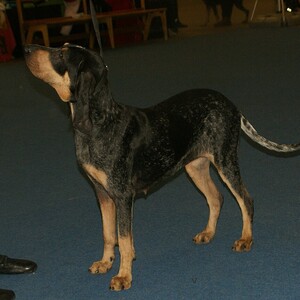
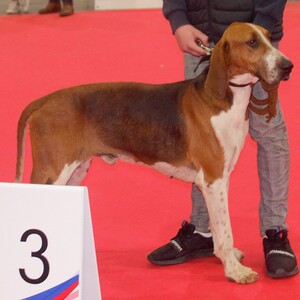
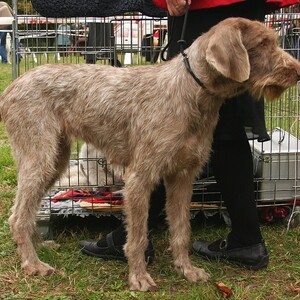
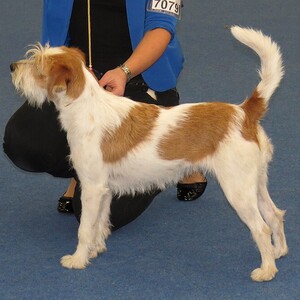
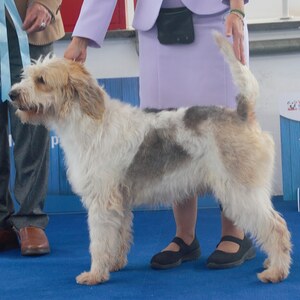
Briquet Griffon Vendéen. · Canarian / Wikimedia Commons, CC BY 4.0. Cropped and resized.
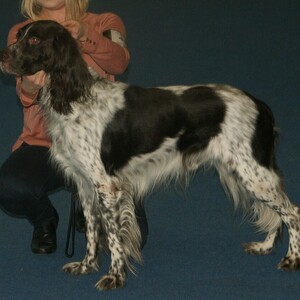
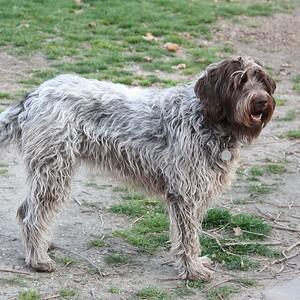
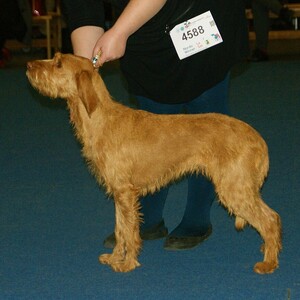
The Briquet Griffon Vendéen is a medium-sized, rough-coated French hound with bushy eyebrows, from the Vendée region. It is a smaller version of the Grand Griffon Vendéen. It is a passionate and hardy hunter, but gets on well with other dogs and with children.
Quick facts
| Common name | Briquet Griffon Vendéen |
| Scientific name | Canis lupus familiaris |
| Country of origin | France (Vendée) |
| Official recognition | FCI, definitively since 2 October 1954 (group 6, with working trial; standard no. 19) |
| Lifespan | No published data for the breed; medium-sized breeds usually live 10–13 years |
| Size (males) | 50–55 cm at the withers |
| Size (females) | 48–53 cm at the withers |
| Weight | The standard gives no figure |
| Coat type | Long without exaggeration, harsh, sometimes bushy, with a plentiful undercoat |
| Common colours | White and black, black and tan, white and orange, tricolour, fawn with black shading |
| Energy level | High |
| Suited to an apartment? | No |
| Temperament | Passionate, full of initiative, hardy, lively |
| Tendency to aggression | Low |
| Good with children | Good |
| Good with other animals | Very good with other dogs |
| Genetic predispositions | No breed-specific diseases are known |
- Primary category:Dog breeds
- Explore this animal's categories:
History and origin
It is the only breed to have kept the name “briquet”, which in French means “medium-sized dog”. Its selection began before the First World War, led by Count d’Elva, who scaled down the Grand Griffon Vendéen in harmonious proportions.
The breed was decimated several times by war. The Briquet type reappeared in 1946 at Fontenay-le-Comte, in Vendée, and Wikipedia notes that the dog show judge Hubert Dezamy played an important part in rebuilding it.
How the breed developed
- Before 1914 – Count d’Elva creates the breed from the Grand Griffon Vendéen.
- The world wars – The breed is decimated several times.
- 1946 – The Briquet type reappears at Fontenay-le-Comte.
- 2 October 1954 – The FCI recognises the breed.
- 1995 – A pack of Briquets wins the Trophée de France for roe deer hunting.
- 9 January 1999 – The current FCI standard is published.
Breed rating
| Feature | Stars |
|---|---|
| Training and intelligence | ★★☆☆☆ |
| Easy to train | ★★☆☆☆ |
| Intelligence | ★★★★☆ |
| Independence | ★★★★☆ |
| Stubbornness | ★★★★☆ |
| Behaviour and temperament | ★★★★☆ |
| Affectionate with family | ★★★★☆ |
| Friendly with children | ★★★★☆ |
| Good with other dogs | ★★★★★ |
| Good with cats and other animals | ★★☆☆☆ |
| Loyalty | ★★★★☆ |
| Tendency to be aggressive | ★☆☆☆☆ |
| Tendency to bark | ★★★★☆ |
| Needs and care | ★★★☆☆ |
| Shedding | ★★★☆☆ |
| Needs frequent grooming | ★★☆☆☆ |
| Activity and lifestyle | ★★★★☆ |
| Energy level | ★★★★★ |
| Daily exercise needs | ★★★★★ |
| Suited to apartment life | ★☆☆☆☆ |
| Health and longevity | ★★★★☆ |
| Life expectancy | ★★★★☆ |
| Predisposition to genetic diseases | ★★☆☆☆ |
| Working abilities and uses | ★★★★★ |
| Good hunting dog | ★★★★★ |
| Good companion dog | ★★★★☆ |
Indicative rating: 5 stars means the highest level. The breed has no AKC profile; the rating is based on the FCI standard and on the description of its temperament in Wikipedia.
Physical characteristics
It is a medium-sized griffon, fairly thickset and well proportioned, alert and very determined. The neck is long and elegant, and the back short and solid.
General appearance
The large, lively eyes are dark, and the well-marked eyebrows do not hide them. The supple ears, covered in long hair, are set low. The fairly short tail is carried like a sabre.
| Feature | Briquet Griffon Vendéen |
|---|---|
| Size | Medium |
| Height at the withers | males: 50–55 cm; females: 48–53 cm |
| Coat | Harsh, sometimes bushy, with a plentiful undercoat |
| Eyes | Large, lively, dark |
| Ears | Supple, with long hair, set low |
| Tail | Fairly short, carried like a sabre |
Many colours are accepted: white and black, black and tan, white and orange, tricolour and fawn with black shading. The traditional names are “hare”, “wolf”, “badger” or “wild boar” colour. Solid black or solid white is not accepted.
Training and socialisation
The standard says it is a passionate hunter with plenty of initiative, and the owner must be able to make it obey. Wikipedia adds that griffons do not like being given orders.
On the other hand, they respond well to encouragement, play and rewards. If these get them to do what the owner wants, everyone is happy.
Tips for effective training
- Use play and rewards. It prefers them to curt commands.
- Be patient. It has a strong personality and plenty of initiative.
- Practise the recall. On a trail, it is very determined.
- Work with its nose. It has a fine sense of smell and follows both old and fresh trails.
Activity needs and lifestyle
It was bred to hunt big game, usually in a small pack. It is fast, agile on rough ground and not afraid of brambles.
| Activity | How often | Why it matters |
|---|---|---|
| Long walks in nature | daily | Its stamina calls for a lot of exercise |
| Tracking games | several times a week | Uses its fine sense of smell |
| Time outdoors with the family | daily | It loves being outside with its people |
Tips for a balanced life
- Keep it on a lead outside safe areas.
- It is lively and enthusiastic, but not restless.
- It suits active families or hunters.
Care and health
Coat and skin care
The harsh coat should be brushed once a week to remove dead hair, burrs and thorns. The belly and inner thighs should be covered with hair, not bare.
Common health problems
There are no known hereditary diseases specific to the breed. The long-haired ears should be checked often, especially after hunting.
Other care
- Check the ears after every outing.
- Check the harsh coat for ticks and thorns.
- Trim the nails regularly.
Diet and nutrition
An active hound needs more energy during the hunting season. Weigh it regularly, as the standard gives no weight.
Tips for a healthy diet
The table gives a starting estimate, calculated with the formula from the Merck Veterinary Manual. The first two calorie columns show the calories per day for a healthy adult dog. The last column shows what this means in dry food with 3,500–4,000 kcal per kilogram.
| Dog's weight | Calories per day (neutered) | Calories per day (not neutered) | Dry food per day (approximate) |
|---|---|---|---|
| 18 kg | 980 kcal | 1,100 kcal | 240–310 g |
| 22 kg | 1,140 kcal | 1,280 kcal | 280–370 g |
| 26 kg | 1,290 kcal | 1,450 kcal | 320–410 g |
- Give it its food in two meals a day.
- Increase the portion on days of hard exercise.
- A dog is at the right weight when you can feel its ribs without pressing hard.
Foods to avoid
Some human foods are dangerous for dogs: chocolate, coffee, grapes and raisins, onions, garlic, xylitol (a sweetener used in chewing gum), macadamia nuts and alcohol.
Reproduction and development
Physical and emotional maturity
In dogs, sexual maturity usually comes between 6 and 12 months. Most breeds become adults at around 13–15 months.
Mating and pregnancy
Pregnancy lasts about 63 days, counted from ovulation. Mating a female on her first heat is not recommended. The FCI standard requires that only healthy dogs of typical breed appearance are used for breeding.
Caring for the puppies
In dogs, a litter has 5–6 puppies on average, and the number rises with the size of the breed. Socialisation starts in the first weeks: gentle handling, everyday noises and new people.
Interesting facts
- The only “Briquet”. It is the only breed to have kept the word “briquet”, meaning “medium-sized dog”, in its name.
- Not afraid of brambles. The standard says it goes through thorny bushes without hesitation.
- Roe deer champion. In 1995, a pack of Briquets won the Trophée de France for roe deer hunting.
- Colours named after animals. The traditional colours are called “hare”, “wolf”, “badger” and “wild boar”.
- It hunts with its nose in the wind. The standard says it hunts with its nose in the wind rather than to the ground.
Frequently asked questions
What does “briquet” mean?
In French it means “medium-sized dog”.
How big does it get?
Males measure 50–55 cm and females 48–53 cm at the withers.
Does it get on with children?
Yes. Wikipedia says it is a good companion for children and gets on well with other dogs.
Is it easy to train?
Not very. It does not like orders, but responds well to play and rewards.