TurkeyInteresting facts and information
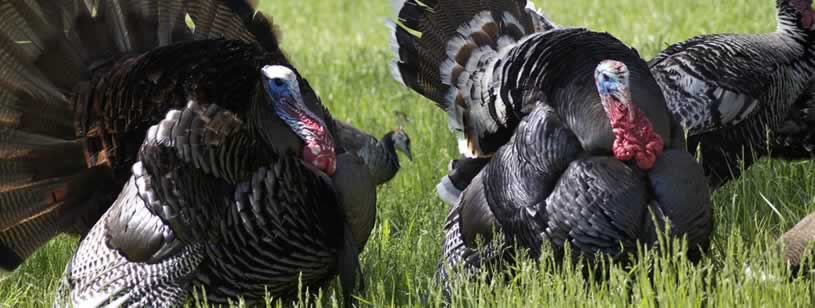
Turkeys are large birds in the genus Meleagris, native to the Americas. The wild turkey (Meleagris gallopavo) is the ancestor of domestic turkeys, while the ocellated turkey is a separate species. Wild turkeys can fly short distances; heavy domestic breeds differ in their abilities.
Wild turkeys eat a varied diet and are part of woodland and grassland food webs. Domestic turkeys have been raised by people for many generations and are associated with foods and celebrations, including Thanksgiving.
Quick facts
| Common name | Turkey |
| Scientific name | Meleagris gallopavo, Meleagris ocellata |
| Typical lifespan | 3-5 years in the wild, up to about 10 years in captivity |
| Maximum speed | About 40 km/h running; about 80 km/h in short flights |
| Height | About 90 - 120 cm (males), 70 - 90 cm (females) |
| Weight | Wild birds: 5-11 kg (males), 3-5 kg (females) |
| Diet type | Omnivore (seeds, fruit, insects, small reptiles) |
| Main predators | Foxes, bobcats, coyotes, birds of prey, humans |
| Conservation status | Varies by species; domestic breeds and wild turkey populations require different descriptions |
| Distribution | North and Central America; domestic turkeys worldwide |
| Habitat | Mixed forests, open country, farmland, wetlands |
- Primary category:Birds
- Explore this animal's categories:
Interesting facts
- Turkeys can fly, but they prefer to run - Although they look heavy, wild turkeys can fly short distances fast, reaching speeds of about 80 km/h.
- Males put on a spectacular show - In the breeding season, males "strut": they fan out their tail feathers, puff up their bodies and drag their wings to attract females.
- They are very watchful - Turkeys have excellent eyesight and notice small movements from far away, so predators find it hard to surprise them.
- The skin on a turkey's head changes colour - Depending on its mood, the bare skin can turn red, white or blue, especially in the breeding season.
- They have many calls - Turkeys gobble, cluck, purr and yelp, and they have special alarm calls for predators.
- Franklin and the turkey – Benjamin Franklin criticised the bald eagle and praised the turkey in a private letter. This was not an official proposal to replace the national bird.
- They sleep in trees - Although they are large birds, wild turkeys roost in trees at night to stay safe from predators.
- They recognise individuals - Turkeys can learn to recognise the people who feed them or frighten them.
- Domestic turkeys reached Europe from the Americas in the 16th century, spreading through Spain and other European countries.
- Males have a "snood" - This fleshy flap hangs over the beak and grows longer and redder during the breeding season.
Records and remarkable features
- Fast on foot - Wild turkeys can run at about 40 km/h, making them fast runners among birds that fly only short distances.
- Heavy domestic birds - Large domestic turkeys can weigh more than 20 kg, much heavier than their wild relatives, and are too heavy to fly.
- Population recovery – Conservation and reintroduction efforts helped restore wild turkeys in parts of North America. Current numbers vary by region and survey.
- The smaller species - The ocellated turkey (Meleagris ocellata) of Central America weighs only about 3-5 kg and has more colourful plumage.
Characteristics
Turkeys are large, sturdy birds with a distinctive appearance, thanks to their size, colourful feathers and the unusual bare skin on their heads. Males are larger and more colourful than females and have special features for attracting mates and warning off rivals.
Main physical features:
- Size - Wild males weigh about 5-11 kg, while females are smaller, at about 3-5 kg.
- Varied plumage - Wild turkeys have brown, green and bronze feathers with a metallic sheen, while domestic turkeys are often white.
- Bare skin on the head and neck - The skin can change colour with the bird's mood, from bright red to blue or white.
- Snood and caruncles - The snood is a fleshy flap that hangs over the male's beak and swells during courtship. Caruncles are red, fleshy bumps on the head and neck.
- A broad, rounded tail - Males fan out their tails in an impressive display during courtship.
- Long, strong legs - Built for running, with three toes pointing forward and one back; males also have spurs.
- A strong, slightly curved beak - Ideal for pecking seeds, fruit and insects.
Special adaptations for survival:
- Camouflage - Their mottled feathers help them hide in woods and tall grass.
- Excellent eyesight - Turkeys see much more sharply than people and can also see ultraviolet light.
- Short bursts of flight - Although they are not long-distance flyers, they can take off quickly to escape predators.
- Strength and agility - They run fast and can fly up into trees for safety.
Habits and behaviour
Turkeys are social birds with a clear hierarchy within their groups. They use many sounds and movements to communicate.
Social behaviour:
- They live in flocks - Wild turkeys form large flocks, especially outside the breeding season, for protection against predators.
- A pecking order - Dominant males control access to food and females, and rivals compete by displaying and sometimes fighting.
- Varied communication - Turkeys have many different calls, including alarm calls, contact calls and courtship sounds.
Breeding season:
- It takes place in spring, usually between March and May, depending on the region.
- Males strut and gobble loudly - This attracts females and warns other males away.
- Females choose their mates - A longer snood and an impressive display are signs of a strong, healthy male.
Defence and survival methods:
- Running - Turkeys can run at about 40 km/h to escape predators.
- Short, powerful flights - When threatened, they can burst into the air and fly a few hundred metres to safety.
- Roosting in trees - Turkeys sleep on branches to avoid night-time predators.
Habitat and geographic distribution
Turkeys are adaptable and live in many habitats, from forests to farmland and wetlands. They prefer areas with a mix of woods and open ground, where they can find food and safe places to roost.
Habitat types:
- Deciduous and mixed forests - Provide varied food and protection from predators.
- Fields and meadows - Important feeding areas, especially in summer.
- Wetlands and rivers - Provide water and safe nesting places.
- Farmland - Wild turkeys often visit farms to eat seeds and grain.
Geographic distribution and estimated population:
| Region | Species | Population |
|---|---|---|
| North America | Meleagris gallopavo | Population estimates depend on region, year and survey method |
| Central America (Yucatán Peninsula) | Meleagris ocellata | Smaller and declining in places |
| Worldwide (domestic) | Meleagris gallopavo (domestic form) | Raised on farms |
Impact of climate change and human activities:
- Habitat loss - Deforestation reduces turkey breeding and feeding areas.
- Hunting - Wild turkeys are hunted for meat, but careful management has allowed them to recover in many areas.
- Farming - Some populations benefit from crops as an extra source of food.
Turkeys are very resilient and have adapted well to people, even thriving close to villages and towns.
Diet and feeding
Turkeys are opportunistic omnivores that eat many different foods depending on the season and what is available. They help spread seeds and control insect numbers.
Main food:
- Seeds and grain - Maize, wheat, oats, sunflower seeds, acorns.
- Fruit and plants - Berries, apples, grapes, leaves, grasses.
- Insects and other invertebrates - Crickets, ants, caterpillars, snails, spiders.
- Small reptiles and amphibians - Lizards, frogs.
- Food from farms and gardens - Wild turkeys sometimes visit farmland to eat crops.
Diet by season:
| Season | Main food |
|---|---|
| Spring | Insects, larvae, fresh green plants |
| Summer | Berries, seeds, small reptiles |
| Autumn | Acorns, nuts, grain, roots |
| Winter | Leftover crops, dormant insects, grain |
Feeding methods:
- Scratching - Turkeys scratch the ground with their feet to uncover seeds and insects.
- Swallowing grit - Small stones in the gizzard help grind up food.
- Feeding in groups - Turkeys feed together for safety and warn each other of danger.
Reproduction and life cycle
Turkeys breed once a year and have complex courtship behaviour. Males compete hard for females, and chicks are very vulnerable in their first weeks.
Mating:
- Breeding season - About March to May.
- Courtship - Males fan their tails, puff up their chests and gobble to attract females.
- Several mates - A dominant male may mate with several females.
Egg-laying and incubation:
- Number of eggs - About 8-15 eggs per clutch.
- The nest - On the ground, hidden in vegetation.
- Incubation - About 25-28 days, during which the female stays close to the nest.
How the chicks develop:
- Chicks, called poults, hatch covered in down and are active straight away - Within hours, they start feeding themselves.
- The first two weeks are critical - Many poults are taken by predators.
- At about 2-3 weeks, they can make short flights, and by about 6 weeks they can fly well, which improves their chances of survival.
- At several months old, young turkeys become independent and join other flocks.
Lifespan:
- In the wild - Usually 3-5 years.
- In captivity - Up to about 10 years.
Name and history
Turkeys have been domesticated for about 2,000 years, and their name reflects an interesting historical mix-up.
Origin of the name:
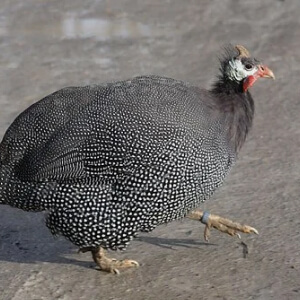
- The English name "turkey" comes from the "turkey-cock", an old name for the guineafowl, which reached Europe through the Ottoman Empire. When Europeans saw the American bird, they confused it with the guineafowl and gave it the same name.
- The scientific name Meleagris gallopavo comes from Greek and Latin: meleagris was the ancient Greek name for the guineafowl, and gallopavo means "chicken-peacock".
Taxonomic classification:
| Taxonomic rank | Name |
|---|---|
| Kingdom | Animalia |
| Phylum | Chordata |
| Class | Aves |
| Order | Galliformes |
| Family | Phasianidae |
| Genus | Meleagris |
| Species | Meleagris gallopavo, Meleagris ocellata |
Discovery and documentation:
- Domestication in Mesoamerica - People in Mexico domesticated turkeys about 2,000 years ago and raised them for meat and feathers.
- To Europe - The Spanish brought turkeys to Europe in the 16th century, and they spread quickly across the continent.
- Back to North America - European settlers brought domestic turkeys to North America, where they met their wild relatives.
The turkey in culture and history:
- Thanksgiving in the USA - Turkey is the traditional main dish of this holiday.
- A historical letter – Franklin's remarks about the turkey are often retold as a proposal for a national symbol, which misrepresents the context.
The turkey has had a significant impact on history, as a source of food and as an important cultural symbol.
Cultural significance and mythology
The turkey has had a significant cultural impact, especially among Indigenous peoples of the Americas and later among European settlers. It is often a symbol of plenty, prosperity and the cycle of the seasons.
- Aztec religion - The god Chalchiuhtotolin, the "Jewelled Turkey", was linked with disease and with sorcery.
- Indigenous North America - Many peoples used turkey feathers in clothing, blankets and ceremonies.
What the turkey symbolises:
- Plenty and prosperity - Because of its link with harvest festivals in autumn.
- Offerings and ritual - In some Mesoamerican cultures, turkeys were offered in ceremonies.
Conservation status and threats
Wild turkeys are not at risk of extinction, but they went through severe declines in the past because of overhunting and habitat loss.
Conservation status
- Wild turkey (Meleagris gallopavo) - Least Concern; numbers recovered thanks to successful reintroduction programmes.
- Ocellated turkey (Meleagris ocellata) - Near Threatened, because of deforestation and hunting.
- Domestic turkeys - Raised in huge numbers for meat, but selective breeding has caused health problems in some commercial breeds.
Main threats:
- Habitat loss - Deforestation and the spread of towns affect wild turkey populations.
- Overhunting - In the 19th and early 20th centuries, uncontrolled hunting caused wild turkey numbers in the USA to fall drastically.
- Bird diseases - Domestic turkeys are vulnerable to infections such as avian influenza, which can also affect wild birds.
- Climate change - Rising temperatures and changing habitats can affect breeding and food supply.
Conservation efforts:
- Restoring populations - Programmes in the USA and Canada have brought wild turkeys back to large areas.
- Hunting rules - Hunting seasons are carefully controlled to keep populations healthy.
- Protecting forests - Preserving woodland is essential for healthy wild turkey populations.
- Disease monitoring - Animal health organisations watch for the spread of bird diseases to protect domestic and wild turkeys.
In popular culture
The turkey is one of the best-known birds in American culture and appears in books, films, cartoons and traditions.
Turkeys in literature:
- Franklin's letter – His comparison of the turkey and the bald eagle was made in private correspondence, not in a campaign to name a national bird.
- A Christmas Carol (Charles Dickens, 1843) - The reformed Scrooge buys a huge prize turkey for the Cratchit family's Christmas dinner.
- Folk tales - Turkeys often appear in humorous animal stories because of their comical strut.
Turkeys in film and television:
- Free Birds (2013) - An animated film about two turkeys who travel back in time to get turkey taken off the Thanksgiving menu.
- Cartoons - Turkeys often appear in Thanksgiving-themed cartoons as funny, naive or cunning characters.
Turkeys in traditions:
- "Turkey trots" - Running races held on Thanksgiving morning in many American towns.
- The presidential turkey pardon - Every year, the President of the United States "pardons" a turkey, which is spared and sent to live on a farm.
Turkeys in art:
- Children's crafts - The "hand turkey", drawn by tracing around a hand, is a popular Thanksgiving craft in the USA.
- Paintings - Turkeys often appear in American art inspired by country life.