Old English SheepdogCharacteristics, history, training and care
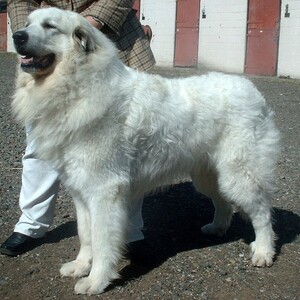
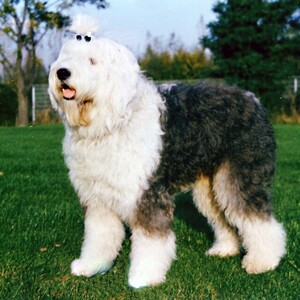
Old English Sheepdog. · Mona / Wikimedia Commons, CC BY-SA 3.0. Cropped and resized.
The Old English Sheepdog (also called the Bobtail) is a large, strong and compact dog, covered in a very profuse, shaggy coat, grey or blue with white. The standard describes it as obedient, steady, brave, faithful and trustworthy, with no trace of nervousness or aggression.
Quick facts
| Common name | Old English Sheepdog (Bobtail) |
| Scientific name | Canis lupus familiaris |
| Country of origin | United Kingdom |
| Official recognition | FCI, definitively since 25 November 1963 (group 1, sheepdogs; standard no. 16); also recognised by the AKC |
| Lifespan | 10–12 years, according to the AKC |
| Size (males) | From 61 cm upwards; 27–45 kg according to the AKC |
| Size (females) | From 56 cm upwards; 27–45 kg according to the AKC |
| Coat type | Very profuse, harsh, shaggy, with a waterproof undercoat |
| Common colours | Grey, grizzle or blue, with white |
| Energy level | Moderate |
| Suited to an apartment? | Not really |
| Temperament | Obedient, steady, brave, faithful |
| Tendency to aggression | Low |
| Good with children | Very good, according to the AKC |
| Good with other animals | Average |
| Genetic predispositions | Hip dysplasia, eye diseases, autoimmune thyroiditis, deafness, cerebellar ataxia |
- Primary category:Dog breeds
- Explore this animal's categories:
History and origin
The FCI standard says that, although it is registered as a British breed, its ancestors were probably European sheepdogs of the Ovtcharka and Bergamasco type, crossed with the herding dogs of Great Britain. Today it is considered a British breed and is often called the Bobtail.
It is essentially a country dog, intelligent and friendly, with a particularly loud bark that can frighten any intruder. The AKC says that it is not actually a very old breed and that it was a dog that drove cattle, not sheep, so it is unclear where the name comes from.
How the breed developed
- In the past – European sheepdogs mix with British herding dogs.
- 25 November 1963 – The FCI recognises the breed.
- Today – It is considered a British breed.
Breed rating
| Feature | Stars |
|---|---|
| Training and intelligence | ★★★★☆ |
| Easy to train | ★★★★☆ |
| Intelligence | ★★★★★ |
| Independence | ★★★☆☆ |
| Stubbornness | ★★★☆☆ |
| Behaviour and temperament | ★★★★★ |
| Affectionate with family | ★★★★★ |
| Friendly with children | ★★★★★ |
| Good with other dogs | ★★★☆☆ |
| Good with cats and other animals | ★★★☆☆ |
| Loyalty | ★★★★★ |
| Tendency to be aggressive | ★☆☆☆☆ |
| Tendency to bark | ★★★☆☆ |
| Needs and care | ★★★☆☆ |
| Shedding | ★★★★★ |
| Needs frequent grooming | ★★★☆☆ |
| Activity and lifestyle | ★★★☆☆ |
| Energy level | ★★★☆☆ |
| Daily exercise needs | ★★★☆☆ |
| Suited to apartment life | ★☆☆☆☆ |
| Health and longevity | ★★★☆☆ |
| Life expectancy | ★★★★☆ |
| Predisposition to genetic diseases | ★★★☆☆ |
| Working abilities and uses | ★★★☆☆ |
| Good herding dog | ★★★★☆ |
| Good companion dog | ★★★★★ |
Indicative rating: 5 stars means the highest level. It is based on the ratings the American Kennel Club gives the breed and on the FCI standard.
Physical characteristics
The standard describes it as a strong, square-looking dog, very symmetrical and sound, thickset and muscular, covered all over with profuse hair. The AKC says that, under the double coat, it is a compact cattle-driving dog with strong bones and a large rump.
General appearance
The skull is capacious and rather square; the AKC standard says it leaves “plenty of room for brains”. The coat is profuse and harsh, not straight but shaggy, free from curl, with a waterproof undercoat. The eyes (when they can be seen) are dark brown, blue or one of each.
| Feature | Old English Sheepdog |
|---|---|
| Size | Large |
| Height at the withers | males: from 61 cm; females: from 56 cm |
| Weight | 27–45 kg (AKC) |
| Coat | Profuse, shaggy |
| Eyes | Dark brown, blue or one of each |
| Bark | Loud |
The colour is any shade of grey, grizzle or blue on the body and hindquarters, usually with white on the head, neck, forelegs and belly.
Training and socialisation
The standard describes it as an obedient, steady, brave, faithful and trustworthy dog, with no nervousness or unprovoked aggression.
The AKC says that most are fairly intelligent and obedient and that, once they have learnt something, they do not forget it. However, they get bored with repetitive exercises, so training must be varied and fun.
Tips for effective training
- Vary the exercises. It gets bored with repetition.
- Use rewards. It is obedient and learns well.
- Give it a job. It does well at obedience and herding.
- Socialise it as a puppy. That way it grows up well balanced.
Activity needs and lifestyle
The AKC says it is a strong athlete that needs exercise and a task. It does well at obedience, agility and herding.
| Activity | How often | Why it matters |
|---|---|---|
| Long walks | daily | Exercise |
| Play in the yard | daily | Energy |
| Dog sports | weekly | It needs a task |
Tips for a balanced life
- Set aside time for coat care.
- In summer, keep it out of the heat.
- It suits active families.
Care and health
Coat and skin care
The AKC says the coat takes a lot of work: future owners must be prepared to make time for brushing or to pay a groomer, several times a month, for the dog's whole life. Short clips are a good option, but they also need brushing between baths and trims.
Common health problems
The AKC says it is generally healthy, and responsible breeders screen their dogs for:
| Condition | Description | Common symptoms |
|---|---|---|
| Hip dysplasia | The hip joint forms incorrectly and, over time, arthritis develops | Limping, difficulty getting up or jumping, hip pain |
| Eye diseases | Progressive retinal atrophy and hereditary cataract | Sees less and less well, “milky” eyes |
| Autoimmune thyroiditis | The body attacks the thyroid gland | Tiredness, weight gain, thin coat |
| Hereditary deafness | Loss of hearing | Does not react to sounds |
| Cerebellar ataxia | A serious brain disease, detected by a DNA test | Unsteady gait, poor coordination |
Other care
- Ask for the parents' DNA tests.
- Keep the hair between the toes short.
- Clean the eyes and ears regularly.
Diet and nutrition
The AKC says some dogs gain weight easily, so calories and weight should be watched.
Tips for a healthy diet
The table gives a starting estimate, calculated with the formula from the Merck Veterinary Manual. The first two calorie columns show the calories per day for a healthy adult dog. The last column shows what this means in dry food with 3,500–4,000 kcal per kilogram.
| Dog's weight | Calories per day (neutered) | Calories per day (not neutered) | Dry food per day (approximate) |
|---|---|---|---|
| 27 kg | 1,330 kcal | 1,490 kcal | 330–430 g |
| 36 kg | 1,650 kcal | 1,850 kcal | 410–530 g |
| 45 kg | 1,950 kcal | 2,190 kcal | 490–630 g |
- Split the food into two meals a day.
- Do not let it run right after a meal.
- A dog is at the right weight when you can feel its ribs under the coat without pressing hard.
Foods to avoid
Some human foods are dangerous for dogs: chocolate, coffee, grapes and raisins, onions, garlic, xylitol (a sweetener used in chewing gum), macadamia nuts and alcohol.
Reproduction and development
Physical and emotional maturity
In dogs, sexual maturity usually comes between 6 and 12 months, but in large breeds it can be delayed until about two years. The body also reaches its adult form later than in small breeds.
Mating and pregnancy
Pregnancy lasts about 63 days, counted from ovulation. Mating a female on her first heat is not recommended. The FCI standard requires that only healthy dogs of typical breed appearance are used for breeding.
Caring for the puppies
In large breeds, a litter has around 7 puppies on average. Socialisation starts in the first weeks: gentle handling, everyday noises and new people.
Interesting facts
- A misleading name. The AKC says it is not really that old and it drove cattle, not sheep.
- Odd eyes. It may have one brown eye and one blue eye.
- A loud bark. Its bark can frighten any intruder.
- “Bobtail”. Wikipedia says the nickname comes from the traditionally docked tail.
- It does not forget. The AKC says it does not forget what it has learnt.
Frequently asked questions
Why is it called the Bobtail?
Wikipedia says the nickname comes from the traditionally docked tail.
How big does it get?
Males measure from 61 cm upwards, females from 56 cm; the AKC gives 27–45 kg.
Is it hard to groom?
Yes. The coat needs a lot of brushing or visits to the groomer.
How long does it live?
The AKC gives 10–12 years.