Polish GreyhoundCharacteristics, history, training and care
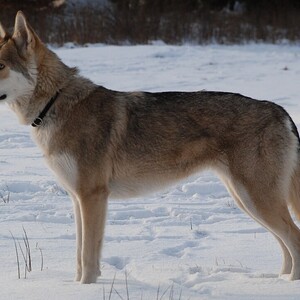
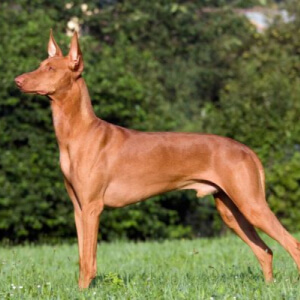
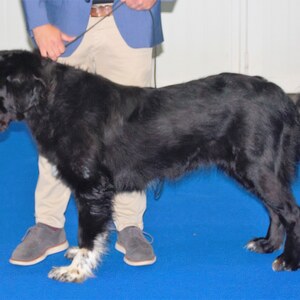
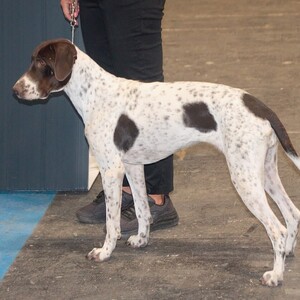
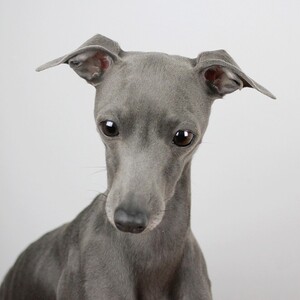
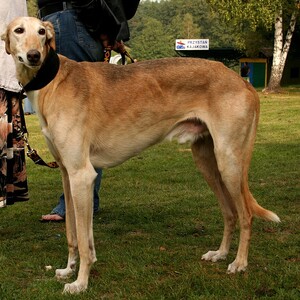
Polish Greyhound. · Pleple2000 / Wikimedia Commons, CC BY-SA 3.0. Cropped and resized.
The Polish Greyhound (Chart Polski) is a large, powerful and muscular sighthound with a harsh coat, once used for hunting hares, foxes, roe deer, bustards and even wolves. Its presence in Poland has been documented since the 13th century. The standard describes it as self-assured, reserved and brave.
Quick facts
| Common name | Polish Greyhound (Chart Polski) |
| Scientific name | Canis lupus familiaris |
| Country of origin | Poland |
| Official recognition | FCI, provisionally since 1989, definitively since 1 March 2001 (group 10, short-haired sighthounds; standard no. 333) |
| Lifespan | No published data for the breed; very large breeds live 8–13 years on average |
| Size (males) | Ideally 70–80 cm at the withers |
| Size (females) | Ideally 68–75 cm at the withers |
| Coat type | Springy, fairly harsh, of varying lengths |
| Common colours | All colours |
| Energy level | High |
| Suited to an apartment? | No |
| Temperament | Self-assured, reserved, brave, tireless |
| Tendency to aggression | Low; aggressive dogs are disqualified |
| Good with children | No specific data |
| Good with other animals | Poor with small animals; sighthound instinct |
| Genetic predispositions | No breed-specific diseases are known |
- Primary category:Dog breeds
- Explore this animal's categories:
History and origin
The FCI standard says the presence of the Chart Polski in Poland has been documented since the 13th century and that the breed probably descends from Asian sighthounds of the Saluki type. Because the Borzoi was not known before the reign of Ivan the Terrible, the standard rejects the idea that it resulted from the Greyhound and the Borzoi.
Wikipedia says it was the favourite dog of the Polish nobility, bred for hunting bustards and wolves. After the Second World War, its breeding almost disappeared, and in the 1970s enthusiasts, led by Stanisław Czerniakowski, rebuilt the breed.
How the breed developed
- 13th century – The first record in Poland.
- After 1945 – Breeding of the breed almost disappears.
- 1970s – The rebuilding of the breed begins.
- 13 June 1989 – The FCI accepts the breed provisionally.
- 1 March 2001 – The FCI recognises the breed definitively.
Breed rating
| Feature | Stars |
|---|---|
| Training and intelligence | ★★★☆☆ |
| Easy to train | ★★★☆☆ |
| Intelligence | ★★★★☆ |
| Independence | ★★★★☆ |
| Stubbornness | ★★★☆☆ |
| Behaviour and temperament | ★★★★☆ |
| Affectionate with family | ★★★★☆ |
| Friendly with children | ★★★☆☆ |
| Good with other dogs | ★★★☆☆ |
| Good with cats and other animals | ★☆☆☆☆ |
| Loyalty | ★★★★★ |
| Tendency to be aggressive | ★★☆☆☆ |
| Tendency to bark | ★★☆☆☆ |
| Needs and care | ★★★☆☆ |
| Shedding | ★★☆☆☆ |
| Needs frequent grooming | ★☆☆☆☆ |
| Activity and lifestyle | ★★★★☆ |
| Energy level | ★★★★☆ |
| Daily exercise needs | ★★★★★ |
| Suited to apartment life | ★☆☆☆☆ |
| Health and longevity | ★★★☆☆ |
| Life expectancy | ★★★☆☆ |
| Predisposition to genetic diseases | ★★☆☆☆ |
| Working abilities and uses | ★★★★☆ |
| Good hunting dog | ★★★★★ |
| Good companion dog | ★★★☆☆ |
Indicative rating: 5 stars means the highest level. The breed has no AKC profile, so the rating is based on the FCI standard.
Physical characteristics
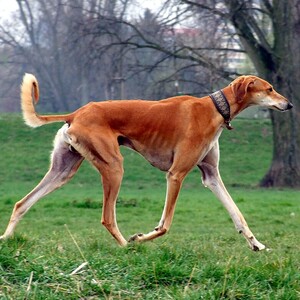
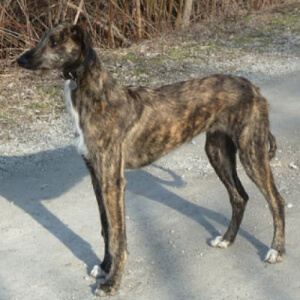
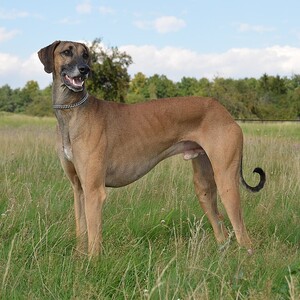
It is a large, powerful and muscular sighthound, with long legs and a slender body. The head is strong, lean and long.
General appearance
The coat is springy to the touch, fairly harsh, but neither wiry nor silky, and varies in length on the body: longer on the withers and on the underside of the tail, where it forms “breeches” and a brush, and shortest on the chest and legs.
| Feature | Polish Greyhound |
|---|---|
| Size | Very large |
| Height at the withers | males: 70–80 cm; females: 68–75 cm |
| Coat | Harsh, springy |
| Head | Strong, long |
| Type | Sighthound |
| Colour | Any colour |
All colours are permitted. The eye rims and nose are black or dark; in lighter colours, blue or beige, the nose is the colour of the coat.
Training and socialisation
The standard describes it as self-assured, confident, reserved and brave. When hunting, it is fast, very skilful and tireless, and reacts quickly and hard.
As a large, independent sighthound, it needs early socialisation and a calm, consistent owner.
Tips for effective training
- Keep it on the lead. It sets off after anything that runs.
- Let it run safely. Only in fully fenced areas.
- Socialise it from an early age. It is reserved by nature.
- Be calm and consistent. It is independent.
Activity needs and lifestyle
As a large, tireless sighthound, it needs long walks every day and, from time to time, free running in a safe place.
| Activity | How often | Why it matters |
|---|---|---|
| Long walks | daily | Stamina |
| Free running in a fenced area | several times a week | Speed |
| Coursing | occasionally | Sighthound instinct |
Tips for a balanced life
- The fence must be high.
- Do not leave it unsupervised with small animals.
- It suits experienced owners.
Care and health
Coat and skin care
The harsh coat is brushed once a week.
Common health problems
No health studies have been published for the breed and no specific diseases are known. As with any very large sighthound, it is worth watching for:
| Condition | Description | Common symptoms |
|---|---|---|
| Gastric dilatation-volvulus (bloat) | The stomach fills with gas and may twist; this is a veterinary emergency | Swollen belly, trying to vomit without success, drooling, restlessness |
| Running injuries | Scratches, cuts and strains | Limping, blood on the paws |
Other care
- Check its paws after running.
- Check for ticks after outings in nature.
- Trim the nails regularly.
Diet and nutrition
A very large, active sighthound needs good-quality food suited to its level of exertion.
Tips for a healthy diet
The table gives a starting estimate, calculated with the formula from the Merck Veterinary Manual. The first two calorie columns show the calories per day for a healthy adult dog. The last column shows what this means in dry food with 3,500–4,000 kcal per kilogram.
| Dog's weight | Calories per day (neutered) | Calories per day (not neutered) | Dry food per day (approximate) |
|---|---|---|---|
| 25 kg | 1,250 kcal | 1,410 kcal | 310–400 g |
| 32 kg | 1,510 kcal | 1,700 kcal | 380–490 g |
| 40 kg | 1,780 kcal | 2,000 kcal | 440–570 g |
- Split the food into two meals a day to reduce the risk of bloat.
- Do not let it run right after a meal.
- In sighthounds the ribs are easy to see; what matters is that it is not too thin.
Foods to avoid
Some human foods are dangerous for dogs: chocolate, coffee, grapes and raisins, onions, garlic, xylitol (a sweetener used in chewing gum), macadamia nuts and alcohol.
Reproduction and development
Physical and emotional maturity
In dogs, sexual maturity usually comes between 6 and 12 months, but in large breeds it can be delayed until about two years. Very large breeds become adults only at around 2 years.
Mating and pregnancy
Pregnancy lasts about 63 days, counted from ovulation. Mating a female on her first heat is not recommended. The FCI standard requires that only healthy dogs of typical breed appearance are used for breeding.
Caring for the puppies
In large breeds, a litter has around 7 puppies on average. The puppies grow very fast, so they need growth food suited to large breeds. Socialisation starts in the first weeks.
Interesting facts
- It hunted wolves too. It was also used for wolf hunting.
- The dog of nobles. It was the favourite of the Polish nobility.
- Not related to the Greyhound. Wikipedia says that, despite its name, it is not a direct relative of the Greyhound.
- Recorded since the 13th century. It has been present in Poland for more than 700 years.
- Painted by Kossak. Juliusz Kossak painted it hunting in 1890.
In popular culture
Juliusz Kossak's painting
Wikipedia shows an 1890 painting by Juliusz Kossak in which Adam Mickiewicz and Sadyk Pasha hunt with Polish Greyhounds.
Frequently asked questions
Is it related to the Greyhound?
Not directly, despite its English name.
How big does it get?
Males ideally measure 70–80 cm, females 68–75 cm.
What did it hunt?
Hares, foxes, roe deer, bustards and wolves.
What colours does it come in?
All colours are permitted.