Lakeland TerrierCharacteristics, history, training and care
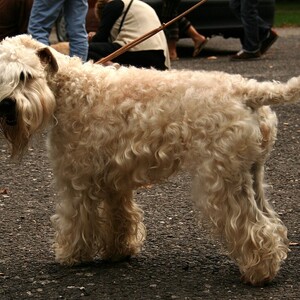
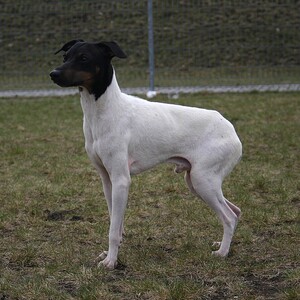
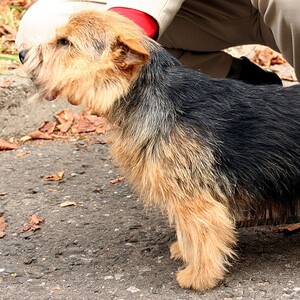
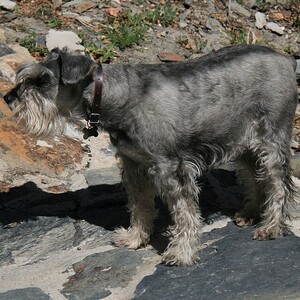
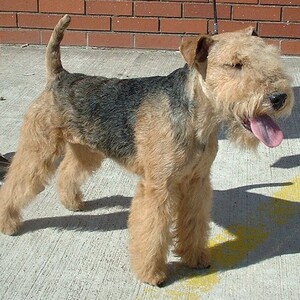
Lakeland Terrier. · sannse / Wikimedia Commons, CC BY-SA 3.0. Cropped and resized.
The Lakeland Terrier is a small, compact and strong English terrier with a dense, harsh coat, from the Lake District, a mountainous, rocky region of north-west England. It was bred to hunt foxes in their dens. The standard describes it as gay, fearless, friendly and self-confident.
Quick facts
| Common name | Lakeland Terrier |
| Scientific name | Canis lupus familiaris |
| Country of origin | United Kingdom (Lake District, England) |
| Official recognition | FCI, definitively since 14 October 1954 (group 3, large and medium-sized terriers; standard no. 70); also recognised by the AKC |
| Lifespan | 12–15 years, according to the AKC |
| Size (males) | at most 37 cm at the withers; 7.7 kg |
| Size (females) | at most 37 cm at the withers; 6.8 kg |
| Coat type | Dense, harsh, weather-resistant, with a good undercoat |
| Common colours | Black and tan, blue and tan, red, wheaten, red grizzle, liver, blue, black |
| Energy level | Moderate to high |
| Suited to an apartment? | Yes, with daily exercise |
| Temperament | Cheerful, fearless, friendly, self-confident |
| Tendency to aggression | Low |
| Good with children | Average |
| Good with other animals | Poor with small animals; hunting instinct |
| Genetic predispositions | Very few specific problems, all rare |
- Primary category:Dog breeds
- Explore this animal's categories:
History and origin
Wikipedia says the Lakeland is one of the oldest terriers, known since the 18th century and descended from the old black and tan English terriers and the Fell terriers. The name comes from the Lake District, the region of England where it originated.
In the Lake District, the mountainous, rocky terrain made fox hunting on horseback impossible, so foxes were hunted on foot. Unlike other terriers, which only drive the quarry out or signal it by barking, the Lakeland had to be able to kill the fox in its den. Wikipedia says that in Britain the Kennel Club now considers it a vulnerable breed.
How the breed developed
- 18th century – Terriers appear in the Lake District.
- 14 October 1954 – The FCI recognises the breed.
- Today – The Kennel Club considers it a vulnerable breed.
Breed rating
| Feature | Stars |
|---|---|
| Training and intelligence | ★★★☆☆ |
| Easy to train | ★★★☆☆ |
| Intelligence | ★★★★☆ |
| Independence | ★★★★☆ |
| Stubbornness | ★★★★☆ |
| Behaviour and temperament | ★★★★☆ |
| Affectionate with family | ★★★★★ |
| Friendly with children | ★★★☆☆ |
| Good with other dogs | ★★★☆☆ |
| Good with cats and other animals | ★★☆☆☆ |
| Loyalty | ★★★★★ |
| Tendency to be aggressive | ★★☆☆☆ |
| Tendency to bark | ★★★☆☆ |
| Needs and care | ★★★☆☆ |
| Shedding | ★★☆☆☆ |
| Needs frequent grooming | ★★☆☆☆ |
| Activity and lifestyle | ★★★☆☆ |
| Energy level | ★★★★☆ |
| Daily exercise needs | ★★★★☆ |
| Suited to apartment life | ★★★★☆ |
| Health and longevity | ★★★☆☆ |
| Life expectancy | ★★★★★ |
| Predisposition to genetic diseases | ★☆☆☆☆ |
| Working abilities and uses | ★★★☆☆ |
| Good hunting dog | ★★★★☆ |
| Good companion dog | ★★★★☆ |
Indicative rating: 5 stars means the highest level. It is based on the ratings the American Kennel Club gives the breed and on the FCI standard.
Physical characteristics
The standard describes it as smart, workmanlike, well balanced and compact. The AKC says it has a deep, fairly narrow body, so it can squeeze into dens among the rocks, and legs long enough to move easily over rough ground.
General appearance
The neck is long, the withers high and the tail set high. The coat is dense, harsh and weather-resistant, with a good undercoat.
| Feature | Lakeland Terrier |
|---|---|
| Size | Small |
| Height at the withers | at most 37 cm |
| Weight | males: 7.7 kg; females: 6.8 kg |
| Coat | Dense, harsh |
| Body | Compact, narrow |
| Tail | Set high |
The accepted colours are black and tan, blue and tan, red, wheaten, red grizzle, liver, blue and black. Small white tips on the feet and chest are tolerated.
Training and socialisation
The standard describes it as gay and fearless, with a keen expression, friendly and self-confident, but not aggressive. The AKC says it has a natural tendency to chase small animals, dig and tunnel.
The AKC says puppies train very well if you give them inventive challenges. When its energy is well channelled, it is a friendly, adaptable dog.
Tips for effective training
- Be inventive. New challenges keep it focused.
- Give it something to dig. It loves digging.
- Keep it on the lead. It chases small animals.
- Be consistent. It is independent.
Activity needs and lifestyle
The AKC says it is as ready for a day of activity as for a quiet afternoon beside its owner. It needs daily walks and play.
| Activity | How often | Why it matters |
|---|---|---|
| Walks | daily | Exercise |
| Play and challenges | daily | Mental stimulation |
| Earthdog (den trials) | occasionally | Terrier instinct |
Tips for a balanced life
- The fence must be set into the ground.
- Do not leave it unsupervised with small animals.
- It also suits city life.
Care and health
Coat and skin care
The AKC says the coat can be hand-stripped or clipped; after clipping, it becomes softer and the colour fades. Dead hairs stay caught in the coat, so it is considered a non-shedding dog.
Common health problems
The AKC says there are very few breed-specific diseases and none is common. As with all breeds, the ears should be checked regularly for infections and the teeth brushed often.
Other care
- Check the ears regularly.
- Brush its teeth often, with dog toothpaste.
- Trim the nails regularly.
Diet and nutrition
The AKC says some dogs gain weight easily, so calories and weight should be watched.
Tips for a healthy diet
The table gives a starting estimate, calculated with the formula from the Merck Veterinary Manual. The first two calorie columns show the calories per day for a healthy adult dog. The last column shows what this means in dry food with 3,500–4,000 kcal per kilogram.
| Dog's weight | Calories per day (neutered) | Calories per day (not neutered) | Dry food per day (approximate) |
|---|---|---|---|
| 6.8 kg | 470 kcal | 530 kcal | 120–150 g |
| 7.2 kg | 490 kcal | 550 kcal | 120–160 g |
| 7.7 kg | 520 kcal | 580 kcal | 130–170 g |
- Give it its food in two meals a day.
- Treats count towards the daily portion.
- A dog is at the right weight when you can feel its ribs under the coat without pressing hard.
Foods to avoid
Some human foods are dangerous for dogs: chocolate, coffee, grapes and raisins, onions, garlic, xylitol (a sweetener used in chewing gum), macadamia nuts and alcohol.
Reproduction and development
Physical and emotional maturity
In dogs, sexual maturity usually comes between 6 and 12 months. Small breeds become adults faster than large ones, usually at around one year.
Mating and pregnancy
Pregnancy lasts about 63 days, counted from ovulation. Mating a female on her first heat is not recommended. The FCI standard requires that only healthy dogs of typical breed appearance are used for breeding.
Caring for the puppies
In small breeds, a litter has 3–4 puppies on average. The puppies are very small and fragile in the first weeks, so they must be kept warm and handled with care. Socialisation starts early: gentle handling, everyday noises and new people.
Interesting facts
- Hunting on foot. In the Lake District mountains, foxes were hunted on foot, not on horseback.
- Slipping between the rocks. Its narrow body helps it get into dens.
- It does not shed. Dead hairs stay caught in the coat.
- A vulnerable breed. Few puppies are born in Britain.
- Working relatives. Wikipedia says the working type is known as the Fell Terrier or Patterdale Terrier.
Frequently asked questions
Where does the name come from?
From the Lake District, the mountainous region of England.
How big does it get?
It measures at most 37 cm; males weigh 7.7 kg, females 6.8 kg.
Does it shed?
The AKC says it is considered a non-shedding dog.
How long does it live?
The AKC gives 12–15 years.