Portuguese PointerCharacteristics, history, training and care
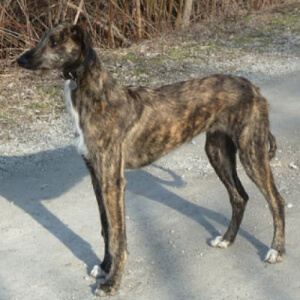
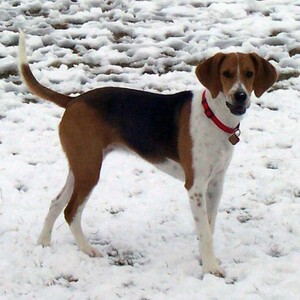
Portuguese Pointer. · Canarian / Wikimedia Commons, CC BY-SA 4.0. Cropped and resized.
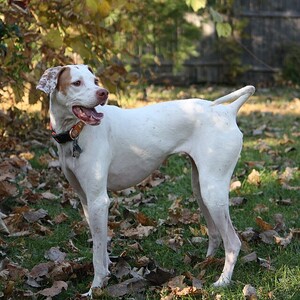
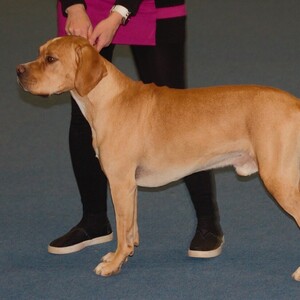
The Portuguese Pointer (Perdigueiro Português) is a medium-sized pointing dog, powerful and harmonious, with a short yellow coat in light or dark shades. The name comes from “perdiz”, partridge. The standard describes it as extremely gentle and affectionate, hardy, calm and very sociable, but a little haughty with other dogs.
Quick facts
| Common name | Portuguese Pointer (Perdigueiro Português) |
| Scientific name | Canis lupus familiaris |
| Country of origin | Portugal |
| Official recognition | FCI, definitively since 13 July 1955 (group 7, continental pointing dogs, with working trial; standard no. 187); also recognised by the AKC |
| Lifespan | about 14 years, according to the AKC |
| Size (males) | 56 cm at the withers (±4 cm); 20–27 kg |
| Size (females) | 52 cm at the withers (±4 cm); 16–22 kg |
| Coat type | Short, hard, dense, without undercoat |
| Common colours | Light, medium or dark yellow, with or without white patches |
| Energy level | Very high |
| Suited to an apartment? | Not really |
| Temperament | Very gentle, affectionate, calm, sociable |
| Tendency to aggression | Low; a little haughty with other dogs |
| Good with children | Very good, according to the AKC |
| Good with other animals | Average |
| Genetic predispositions | No breed-specific diseases; breeders screen for seizures, hip dysplasia and autoimmune diseases |
- Primary category:Dog breeds
- Explore this animal's categories:
History and origin
The FCI standard says the breed comes from the Iberian Peninsula, from the old peninsular pointer, the common ancestor of other pointing breeds, and that its presence in Portugal is documented since at least the 12th century. In the 14th century it was known as the “podengo de mostra” and already pointed game; it was bred in royal and noble kennels and used in falconry.
In the 16th century, by then called “perdigueiro” (from “perdiz”, partridge), it was also widely used by ordinary people. Its present-day features were fixed in the first quarter of the 20th century. The AKC says Portuguese navigators took it aboard their ships in the Age of Discovery.
How the breed developed
- 12th century – First documented in Portugal.
- 14th century – The “podengo de mostra”, in the royal kennels.
- 16th century – It becomes the “perdigueiro”, the partridge dog.
- 1939 – The first standard, according to Wikipedia.
- 13 July 1955 – The FCI recognises the breed.
Breed rating
| Feature | Stars |
|---|---|
| Training and intelligence | ★★★★★ |
| Easy to train | ★★★★☆ |
| Intelligence | ★★★★☆ |
| Independence | ★★★☆☆ |
| Stubbornness | ★★☆☆☆ |
| Behaviour and temperament | ★★★★★ |
| Affectionate with family | ★★★★★ |
| Friendly with children | ★★★★★ |
| Good with other dogs | ★★★☆☆ |
| Good with cats and other animals | ★★★☆☆ |
| Loyalty | ★★★★★ |
| Tendency to be aggressive | ★☆☆☆☆ |
| Tendency to bark | ★★★☆☆ |
| Needs and care | ★★★☆☆ |
| Shedding | ★☆☆☆☆ |
| Needs frequent grooming | ★☆☆☆☆ |
| Activity and lifestyle | ★★★★★ |
| Energy level | ★★★★★ |
| Daily exercise needs | ★★★★☆ |
| Suited to apartment life | ★★☆☆☆ |
| Health and longevity | ★★★★★ |
| Life expectancy | ★★★★☆ |
| Predisposition to genetic diseases | ★★☆☆☆ |
| Working abilities and uses | ★★★☆☆ |
| Good hunting dog | ★★★★★ |
| Good companion dog | ★★★★★ |
Indicative rating: 5 stars means the highest level. It is based on the ratings the American Kennel Club gives the breed and on the FCI standard.
Physical characteristics
The standard describes it as a medium-sized, straight, pointer-type dog, powerful yet harmonious, with great suppleness of movement.
General appearance
The coat is short, hard, dense and even, without undercoat; on the head and especially on the ears it is finer and has a velvety look. The AKC says the hard coat sheds dirt well.
| Feature | Portuguese Pointer |
|---|---|
| Size | Medium to large |
| Height at the withers | males: 56 cm; females: 52 cm (±4 cm) |
| Weight | males: 20–27 kg; females: 16–22 kg |
| Coat | Short, hard |
| Ears | Velvety |
| Colour | Yellow |
The colour is yellow, in light, medium or dark shades, solid or with white patches on the head, neck, chest, lower legs and tip of the tail.
Training and socialisation
The standard describes it as extremely gentle and affectionate, hardy, with great working ability and devotion. It is calm and very sociable, but a little haughty with other dogs. It is curious by nature and works with perseverance and liveliness, always close to the hunter.
The AKC gives it top marks for ease of training and for its need for mental stimulation.
Tips for effective training
- Use rewards. It learns very easily.
- Keep its mind busy. It has a great need for mental stimulation.
- Let it run safely. The AKC says free, safe exercise makes it happy.
- Socialise it with other dogs. It can be haughty with them.
Activity needs and lifestyle
The AKC says it loves to run and hunt, even if it is only “pointing” butterflies in the yard or running on a hike. It has kept strong hunting instincts, so free but safe exercise is the key to a happy dog.
| Activity | How often | Why it matters |
|---|---|---|
| Free running in a safe place | daily | Very high energy |
| Hiking | weekly | Stamina |
| Search games | daily | Mental stimulation |
Tips for a balanced life
- It suits active families.
- It needs a fenced yard.
- In winter, a coat with no undercoat does not protect it from the cold.
Care and health
Coat and skin care
The AKC says the short, tight coat needs very little grooming, but it enjoys a session with a rubber brush, which also removes dead hair. It does not need frequent baths. The nails, teeth and ears should be cared for regularly.
Common health problems
The AKC says it is a very hardy, healthy breed, with no breed-specific diseases. Breeders still screen the parents for:
| Condition | Description | Common symptoms |
|---|---|---|
| Seizures | Neurological seizures | Trembling, convulsions |
| Hip dysplasia | The hip joint forms incorrectly and, over time, arthritis develops | Limping, difficulty getting up or jumping, hip pain |
| Autoimmune diseases | The body attacks its own tissues | Varied signs |
Other care
- Check the ears regularly.
- Trim the nails regularly.
- Brush its teeth often.
Diet and nutrition
The AKC says some dogs gain weight easily, so calories and weight should be watched.
Tips for a healthy diet
The table gives a starting estimate, calculated with the formula from the Merck Veterinary Manual. The first two calorie columns show the calories per day for a healthy adult dog. The last column shows what this means in dry food with 3,500–4,000 kcal per kilogram.
| Dog's weight | Calories per day (neutered) | Calories per day (not neutered) | Dry food per day (approximate) |
|---|---|---|---|
| 16 kg | 900 kcal | 1,010 kcal | 220–290 g |
| 21 kg | 1,100 kcal | 1,240 kcal | 280–350 g |
| 27 kg | 1,330 kcal | 1,490 kcal | 330–430 g |
- Split the food into two meals a day.
- Do not let it run right after a meal.
- A dog is at the right weight when you can feel its ribs without pressing hard.
Foods to avoid
Some human foods are dangerous for dogs: chocolate, coffee, grapes and raisins, onions, garlic, xylitol (a sweetener used in chewing gum), macadamia nuts and alcohol.
Reproduction and development
Physical and emotional maturity
In dogs, sexual maturity usually comes between 6 and 12 months, but in large breeds it can be delayed until about two years. The body also reaches its adult form later than in small breeds.
Mating and pregnancy
Pregnancy lasts about 63 days, counted from ovulation. Mating a female on her first heat is not recommended. The FCI standard requires that only healthy dogs of typical breed appearance are used for breeding.
Caring for the puppies
In large breeds, a litter has around 7 puppies on average. Socialisation starts in the first weeks: gentle handling, everyday noises and new people.
Interesting facts
- The partridge dog. “Perdigueiro” comes from “perdiz”, partridge.
- On board ship. The AKC says Portuguese navigators took it aboard their ships.
- In falconry. In the Middle Ages it was used in falconry.
- Velvet ears. The hair on its ears is fine, like velvet.
- It points butterflies too. The AKC says it may even “point” butterflies in the yard.
Frequently asked questions
Where does the name come from?
From “perdiz”, Portuguese for partridge.
How big does it get?
Males measure 56 cm (±4 cm) and weigh 20–27 kg; females measure 52 cm and weigh 16–22 kg.
Is it good with children?
The AKC gives it top marks for being good with children.
How long does it live?
The AKC gives about 14 years.