Miniature American ShepherdCharacteristics, history, training and care
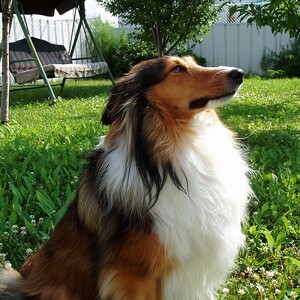
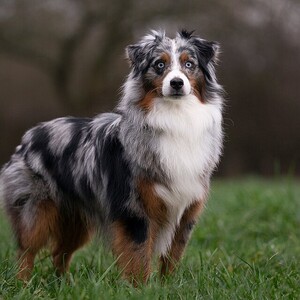
Miniature American Shepherd. · Laneyclark / Wikimedia Commons, CC BY-SA 4.0. Cropped and resized.
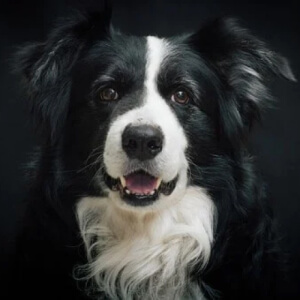
The Miniature American Shepherd is a small to medium-sized herding dog, developed in California from small Australian Shepherds. It looks like the Australian Shepherd, but on a smaller scale, and has the same energy and intelligence. The standard describes it as intelligent, versatile, easy to train and an exceptional companion.
Quick facts
| Common name | Miniature American Shepherd (formerly Miniature Australian Shepherd) |
| Scientific name | Canis lupus familiaris |
| Country of origin | United States |
| Official recognition | FCI, provisionally accepted since September 2019 (group 1, sheepdogs; standard no. 367); AKC, since 2015 |
| Lifespan | 12–13 years, according to the AKC |
| Size (males) | 35.5–46 cm at the withers |
| Size (females) | 33–43.5 cm at the withers |
| Weight | 9–18 kg, according to the AKC |
| Coat type | Double, of medium length, straight or wavy |
| Common colours | Black, blue merle, red, liver, red merle |
| Energy level | Very high |
| Suited to an apartment? | Yes, with plenty of exercise |
| Temperament | Intelligent, versatile, easy to train, reserved with strangers |
| Tendency to aggression | Low |
| Good with children | Very good, according to the AKC |
| Good with other animals | Very good with other dogs, according to the AKC |
| Genetic predispositions | Hip dysplasia, hereditary cataract, retinal atrophy, drug sensitivity (MDR1), neuroaxonal dystrophy |
- Primary category:Dog breeds
- Explore this animal's categories:
History and origin
The FCI standard says the breed was developed in California in the late 1960s by breeding small Australian Shepherds. The aim was to keep their small size, active nature and intelligence. It was first registered in 1980 under the name “Miniature Australian Shepherd”.
By the early 1990s it had become popular throughout America. The first breed club was founded in 1990, and in May 2011 the breed entered the AKC Foundation Stock Service under the name Miniature American Shepherd. Wikipedia says the AKC recognised it in 2015 as its 186th breed, and the FCI accepted it in September 2019.
How the breed developed
- Late 1960s – Small Australian Shepherds are bred in California.
- 1980 – First registration, as the “Miniature Australian Shepherd”.
- 1990 – The first breed club is founded.
- 2015 – The AKC recognises the breed.
- September 2019 – The FCI provisionally accepts the breed.
Breed rating
| Feature | Stars |
|---|---|
| Training and intelligence | ★★★★★ |
| Easy to train | ★★★★★ |
| Intelligence | ★★★★★ |
| Independence | ★★★☆☆ |
| Stubbornness | ★★☆☆☆ |
| Behaviour and temperament | ★★★★☆ |
| Affectionate with family | ★★★★★ |
| Friendly with children | ★★★★★ |
| Good with other dogs | ★★★★★ |
| Good with cats and other animals | ★★★☆☆ |
| Loyalty | ★★★★★ |
| Tendency to be aggressive | ★☆☆☆☆ |
| Tendency to bark | ★★★☆☆ |
| Needs and care | ★★★☆☆ |
| Shedding | ★★★☆☆ |
| Needs frequent grooming | ★★★☆☆ |
| Activity and lifestyle | ★★★★★ |
| Energy level | ★★★★★ |
| Daily exercise needs | ★★★★★ |
| Suited to apartment life | ★★★☆☆ |
| Health and longevity | ★★★★☆ |
| Life expectancy | ★★★★☆ |
| Predisposition to genetic diseases | ★★★☆☆ |
| Working abilities and uses | ★★★☆☆ |
| Good herding dog | ★★★★★ |
| Good companion dog | ★★★★★ |
Indicative rating: 5 stars means the highest level. It is based on the ratings the American Kennel Club gives the breed and on the FCI standard.
Physical characteristics
The AKC says it shares many physical traits with its ancestor, the Australian Shepherd, only on a smaller scale. Despite its size, it is a true herding dog: energetic, versatile, sturdy and very clever.
General appearance
The coat is of medium texture, straight or wavy, weather-resistant and of medium length; the undercoat varies with the climate. The hair is short on the head and the front of the legs, with moderate feathering on the backs of the legs. It has a moderate mane, more abundant in males.
| Feature | Miniature American Shepherd |
|---|---|
| Size | Small to medium |
| Height at the withers | males: 35.5–46 cm; females: 33–43.5 cm |
| Weight | 9–18 kg (AKC) |
| Coat | Double, medium |
| Ancestor | The Australian Shepherd |
| Use | Farm and herding dog |
The recognised colours, in no order of preference, are black, blue merle, red, liver, and red or liver merle. Merle may appear in any amount, as marbling or patches. There may be tan and white markings.
Training and socialisation
The standard describes it as intelligent, primarily a working dog, with strong herding and guarding instincts. It is an exceptional, versatile companion, easy to train, that does its job with style and enthusiasm. It is reserved with strangers, but not shy.
The AKC says that, being intelligent and eager to please, it is very easy to train and reaches its full potential when it learns at least basic obedience. Early socialisation and puppy classes are recommended.
Tips for effective training
- Start early. Socialisation and puppy classes.
- Give it a job. It has a great need for mental activity.
- Use rewards. It is eager to please.
- Try dog sports. It excels at agility, flyball and herding.
Activity needs and lifestyle
The AKC says it is active and athletic, needs a moderate amount of exercise and adapts well to family life. It can also live in town if it gets enough exercise, and it enjoys outings that keep both mind and body busy.
| Activity | How often | Why it matters |
|---|---|---|
| Walks or running | daily | Very high energy |
| Dog sports | several times a week | Intelligence |
| Training games | daily | Mental activity |
Tips for a balanced life
- It suits active families.
- It can also live in town, with plenty of exercise.
- Do not let it get bored.
Care and health
Coat and skin care
The AKC says it has a double coat, with a longer topcoat and a woolly undercoat, which sheds quite a lot, especially once or twice a year. It is brushed weekly, and daily during the shedding season.
Common health problems
The AKC says it is generally healthy, and responsible breeders test their dogs for:
| Condition | Description | Common symptoms |
|---|---|---|
| Hip dysplasia | The hip joint forms incorrectly and, over time, arthritis develops | Limping, difficulty getting up or jumping, hip pain |
| Hereditary cataract | The lens becomes cloudy (HSF4 gene) | “Milky” eye, increasingly poor sight |
| Progressive retinal atrophy | The retina gradually degenerates | Has trouble seeing at night, then sees less and less well |
| Drug sensitivity (MDR1) | Some common medicines can be toxic | Trembling, weakness after treatment |
| Neuroaxonal dystrophy | Inherited nerve disease | Unsteady gait, poor coordination |
Other care
- Tell the vet the result of the MDR1 test.
- Go for regular check-ups and parasite treatments.
- Trim the nails regularly.
Diet and nutrition
The AKC says some dogs gain weight easily, so calories and weight should be watched.
Tips for a healthy diet
The table gives a starting estimate, calculated with the formula from the Merck Veterinary Manual. The first two calorie columns show the calories per day for a healthy adult dog. The last column shows what this means in dry food with 3,500–4,000 kcal per kilogram.
| Dog's weight | Calories per day (neutered) | Calories per day (not neutered) | Dry food per day (approximate) |
|---|---|---|---|
| 9 kg | 580 kcal | 650 kcal | 140–190 g |
| 13 kg | 770 kcal | 860 kcal | 190–250 g |
| 18 kg | 980 kcal | 1,100 kcal | 240–310 g |
- Give it its food in two meals a day.
- Training treats count towards the daily portion.
- A dog is at the right weight when you can feel its ribs under the coat without pressing hard.
Foods to avoid
Some human foods are dangerous for dogs: chocolate, coffee, grapes and raisins, onions, garlic, xylitol (a sweetener used in chewing gum), macadamia nuts and alcohol.
Reproduction and development
Physical and emotional maturity
In dogs, sexual maturity usually comes between 6 and 12 months. Small breeds become adults faster than large ones, usually at around one year.
Mating and pregnancy
Pregnancy lasts about 63 days, counted from ovulation. Mating a female on her first heat is not recommended. The FCI standard requires that only healthy dogs of typical breed appearance are used for breeding.
Caring for the puppies
In small breeds, a litter has 3–4 puppies on average. The puppies are very small and fragile in the first weeks, so they must be kept warm and handled with care. Socialisation starts early: gentle handling, everyday noises and new people.
Interesting facts
- “Mini Aussie”. It was first registered as the Miniature Australian Shepherd.
- Breed number 186. Wikipedia says it was the 186th breed recognised by the AKC.
- No order of colours. The standard does not prefer any colour.
- Created in California. The breed appeared in the late 1960s.
- Good at everything. It excels at herding, agility, obedience and flyball.
Frequently asked questions
Is it a small Australian Shepherd?
It descends from small Australian Shepherds, but it is now a separate breed.
How big does it get?
Males measure 35.5–46 cm and females 33–43.5 cm; the AKC gives 9–18 kg.
Is it good with children?
The AKC gives it top marks for being good with children.
How long does it live?
The AKC gives 12–13 years.