TunaInteresting facts and information
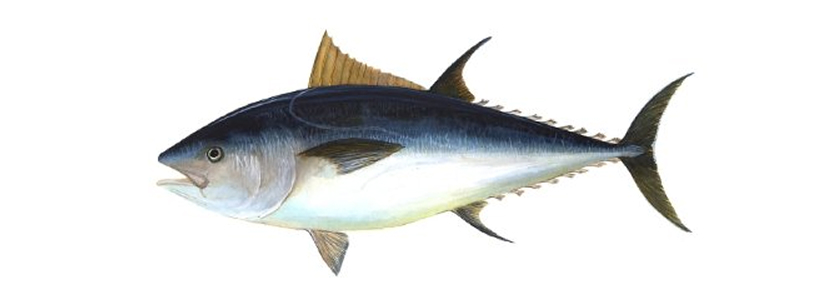
Tunas are marine fishes in the tribe Thunnini, within the mackerel family. They are active swimmers that feed on fish and other marine animals. Size, range, lifespan and conservation status differ between species.
Tunas can travel long distances. They feed on smaller fishes, crustaceans and cephalopods, with feeding habits differing between species.
Fishing pressure and environmental changes affect tuna populations. Assessments must distinguish species and individual fishery stocks.
Quick facts
| Common name | Tuna |
| Scientific name | Thunnini (within Scombridae) |
| Typical lifespan | A few years to 40 years or more (depending on species) |
| Maximum speed | Often quoted as up to about 70 km/h in short bursts |
| Size | About 50 cm to 3-4 metres (depending on species) |
| Weight | A few kg to more than 600 kg (record Atlantic bluefin about 679 kg) |
| Diet type | Carnivore (small fish, crustaceans, cephalopods) |
| Main predators | Sharks, orcas, billfish, larger tunas, humans (intensive fishing) |
| Conservation status | Assess separately by species and population; different taxa and regions have different needs |
| Distribution | Atlantic, Pacific and Indian Oceans, Mediterranean |
| Habitat | Open ocean, from the surface to several hundred metres deep |
- Primary category:Fish
- Explore this animal's categories:
Interesting facts
- Fast swimmers - Tunas are among the fastest fish; burst speeds of 60-75 km/h are often quoted for species such as the yellowfin tuna (Thunnus albacares).
- Warm-bodied fish - Unlike most fish, tunas keep their muscles warmer than the surrounding water, thanks to a heat-exchange system of blood vessels.
- Long migrations - Atlantic bluefin tuna (Thunnus thynnus) can cross the Atlantic Ocean, travelling thousands of kilometres between feeding and spawning areas.
- Deep divers - Some tunas regularly dive several hundred metres deep, and bluefin tuna have been recorded below 1,000 metres.
- Always swimming - Tunas must keep swimming with their mouths open to push water over their gills; if they stop, they cannot breathe.
- A very valuable fish - In 2019, a single 278 kg Pacific bluefin tuna sold in Tokyo for about 3 million US dollars at the New Year auction.
Records and remarkable features
- Tunas are marine fishes in the tribe Thunnini, within the mackerel family. They are active swimmers that feed on fish and other marine animals. Size, range, lifespan and conservation status differ between species.
- The largest tuna on record was an Atlantic bluefin caught off Nova Scotia, Canada, in 1979; it weighed about 679 kg.
Characteristics
Tunas are built for speed and endurance, with a torpedo-shaped body that lets them swim efficiently over long distances. Unlike most fish, they can keep their bodies warmer than the water.
Main physical characteristics:
| Characteristic | Details |
|---|---|
| Length | About 50 cm (small species) to about 3-4 metres (Atlantic bluefin) |
| Weight | A few kilograms to more than 600 kg, depending on species |
| Body shape | Torpedo-shaped and streamlined |
| Maximum speed | Often quoted as up to about 70 km/h in short bursts |
| Body temperature | Muscles can be much warmer than the surrounding water, especially in bluefin tuna |
| Fins | Two dorsal fins, followed by a row of small finlets |
| Tail | Stiff and crescent-shaped, ideal for fast, efficient swimming |
| Teeth | Small, sharp teeth |
Special adaptations:
- Keeping warm - A network of blood vessels called the rete mirabile keeps heat in the muscles, so tunas can stay active in cold water.
- Red muscles - Tunas have a lot of dark red muscle, rich in oxygen, which gives them great endurance.
- Ram ventilation - Tunas breathe by swimming with their mouths open, so they must keep moving.
- Streamlined body - Fins that fold into grooves and a smooth body reduce drag; some species, such as skipjack tuna, have no swim bladder.
- Efficient swimming - The tail does most of the work while the body stays almost still, saving energy on long journeys.
Habits and behaviour
Tunas are pelagic fish, which means they live in the open ocean. Many species migrate long distances between feeding and spawning areas.
Social behaviour:
- Schools - Tunas usually travel in schools, often of fish of similar size.
- Long migrations - Atlantic bluefin tuna travel between feeding areas in the North Atlantic and spawning areas in the Gulf of Mexico and the Mediterranean.
- Changing depth - They move up and down in the water depending on temperature and food.
Feed and hunting techniques:
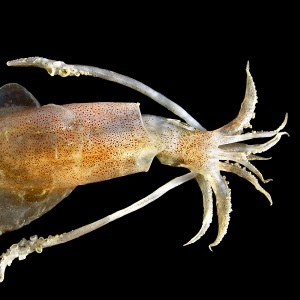
- Fast predators - Tunas feed on smaller fish, squid and crustaceans.
- Group hunting - Schools of tuna can drive shoals of small fish towards the surface.
- Big appetites - Because they are so active, tunas need to eat a lot of food.
Adaptations for survival:
- Speed - Fast swimming helps them escape predators such as sharks, orcas and large billfish.
- Diving - Many species can dive several hundred metres deep to find food.
- Opportunistic feeding - They eat whatever suitable prey is most abundant in each area and season.
Habitat and geographic distribution
Tunas live in all the world's oceans, mainly in tropical and temperate waters; bluefin tunas also enter cold waters.
Habitats:
| Habitat | Species predominant |
|---|---|
| Tropical and subtropical waters | Yellowfin tuna (Thunnus albacares), skipjack tuna (Katsuwonus pelamis) |
| Temperate and cold seas | Atlantic bluefin tuna (Thunnus thynnus), Pacific bluefin tuna (Thunnus orientalis), southern bluefin tuna (Thunnus maccoyii) |
| Open ocean | All tuna species |
| Deeper waters (more than 200 m) | Bigeye tuna (Thunnus obesus), albacore (Thunnus alalunga) |
Geographical distribution:
- The Atlantic Ocean - The Atlantic bluefin tuna lives in the North Atlantic and the Mediterranean.
- The Pacific Ocean - Yellowfin, bigeye, skipjack and albacore tunas are widespread, and the Pacific bluefin migrates between Japan and California.
- The Indian Ocean - Tropical tunas are widespread and heavily fished.
- The Mediterranean - Atlantic bluefin tuna come here to spawn, and other species such as albacore and little tunny also live here.
Impact of climate change and human activities:
- Overfishing - Heavy fishing caused severe declines in bluefin tuna in the past.
- Ocean warming - Changing temperatures shift tuna migration routes and spawning areas.
- Changes in the food web - Ocean changes can affect the small fish and squid that tunas eat.
- Mercury - Large tunas build up mercury in their bodies, so health authorities advise limits on eating some kinds of tuna.
Diet and feeding
Tunas are predators that eat small fish, squid and crustaceans. Their high metabolism means they need plenty of food.
Food types consumed:
| Food type | Examples |
|---|---|
| Small fish | Sardines, anchovies, mackerel, herring |
| Cephalopods | Squid, octopus |
| Crustaceans | Shrimps, krill, crab larvae |
| Plankton (young tuna) | Zooplankton and fish larvae |
Method of feeding:
- Group hunting - Tunas use speed and teamwork to attack schools of small fish.
- Fast attacks - They rush at their prey and swallow it whole.
- Eating often - Tunas need to eat frequently to fuel their fast swimming.
- Deep hunting - Species such as bigeye tuna dive deep to catch squid and fish.
Tunas are important predators in the open ocean and food for larger predators and people.
Reproduction and life cycle
Tunas release millions of eggs into the water, where they are fertilised. Only a tiny fraction of the larvae survive to adulthood.
Life cycle stages:
| Stage | Approximate duration | Characteristics |
|---|---|---|
| Spawning | Seasonal, in warm waters | Females release millions of eggs. |
| Hatching | About 1-2 days | The tiny larvae feed on plankton and are very vulnerable. |
| Juvenile | Months to years | Young tunas grow quickly and start hunting small fish and crustaceans. |
| Sexual maturity | About 1-2 years (skipjack) to about 8-12 years (bluefin) | Depends on the species. |
| Lifespan | A few years to 40 years or more | Bluefin tunas are among the longest-lived; skipjack live only a few years. |
Reproductive behaviour:
- Spawning in warm waters - Tunas travel to warm areas to spawn, such as the Gulf of Mexico and the Mediterranean for Atlantic bluefin.
- Many eggs - Large females can release millions of eggs in a season.
- Different strategies - Skipjack tuna mature in about 1-2 years and spawn often, while bluefin tuna mature late.
Because many tunas gather in the same spawning areas, they can be caught in large numbers there, which makes fishing rules important.
Name and history
Tunas have been fished by people for thousands of years and were important in the ancient Mediterranean world.
Origin and etymology of the name:
- "Tuna" comes, through Spanish and Latin, from the Greek thynnos, related to a verb meaning "to rush" or "to dart".
- The scientific name Thunnini is the tribe of the mackerel family (Scombridae) that includes the tunas.
- The genus Thunnus includes the large tunas, such as bluefin, yellowfin, bigeye and albacore.
Taxonomic classification:
| Taxonomic category | Name |
|---|---|
| Kingdom | Animalia |
| Phylum | Chordata |
| Class | Actinopterygii |
| Order | Scombriformes |
| Family | Scombridae |
| Tribe | Thunnini |
Tuna in history and culture:
- Ancient times - Phoenicians, Greeks and Romans caught tuna in coastal traps and preserved it in salt; tuna appeared on ancient coins of Cádiz in Spain.
- Japan - Bluefin tuna (maguro) is a prized sushi and sashimi fish, especially its fatty belly meat, called toro.
- Industrial fishing - Since the 1950s, global demand for tuna has grown enormously, leading to the decline of some stocks.
Cultural significance and mythology
Tuna has been an important food and a symbol of the sea's riches since ancient times, especially around the Mediterranean and in Japan.
- The almadraba - In southern Spain, tuna have been caught for thousands of years with a maze of nets called the almadraba, a tradition dating back to the Phoenicians.
- The mattanza - In Sicily and Sardinia, the traditional tuna trap (tonnara) ended in the dramatic "mattanza", when trapped tuna were hauled from the water.
- New Year auctions - In Tokyo, the first bluefin tuna auction of the year is a famous event, with record prices that make headlines.
Conservation status and threats
Tunas are top predators of the open ocean, but intensive fishing has greatly reduced some species. Better management has helped several stocks recover.
Conservation status
| Species | Status (IUCN, 2021) |
|---|---|
| Atlantic bluefin tuna (Thunnus thynnus) | Least Concern (improved thanks to fishing quotas) |
| Southern bluefin tuna (Thunnus maccoyii) | Endangered |
| Pacific bluefin tuna (Thunnus orientalis) | Near Threatened |
| Bigeye tuna (Thunnus obesus) | Vulnerable |
| Yellowfin tuna (Thunnus albacares) | Least Concern |
| Skipjack tuna (Katsuwonus pelamis) | Least Concern, but heavily fished |
Main threats:
- Overfishing - Bluefin tunas were heavily overfished, especially for the sushi market.
- Catching young fish - Purse-seine nets and fish aggregating devices catch many young tunas before they can breed.
- Illegal fishing - Unreported catches undermine fishing limits.
- Climate change - Ocean warming may affect spawning areas and migration patterns.
- Pollution - Tunas build up mercury and other pollutants.
Conservation efforts:
- Fishing quotas - Organisations such as ICCAT (International Commission for the Conservation of Atlantic Tunas) set catch limits.
- Closed seasons and minimum sizes - Some areas are closed to fishing at certain times, and small fish must be released.
- Tuna farming - Researchers in Japan have bred Pacific bluefin tuna in captivity to reduce pressure on wild fish.
- Sustainable fishing - Certification schemes such as the Marine Stewardship Council encourage responsible fishing.
Tuna conservation and stock condition differ between species, regions and fisheries. A broad common name should not be assigned a single global threat ranking.
In popular culture
Tuna in advertising and media
- Charlie the Tuna - The cartoon mascot of the StarKist brand, created in 1961, became one of the best-known advertising characters in the USA.
- Television - Programmes such as "Wicked Tuna" (from 2012) follow fishermen catching giant bluefin tuna off New England.
Tuna as a cultural symbol
- Food - Canned tuna is one of the most widely eaten fish products in the world.
- Japan - Bluefin tuna is a symbol of high-quality sushi and Japanese cuisine.