SlothInteresting facts and information
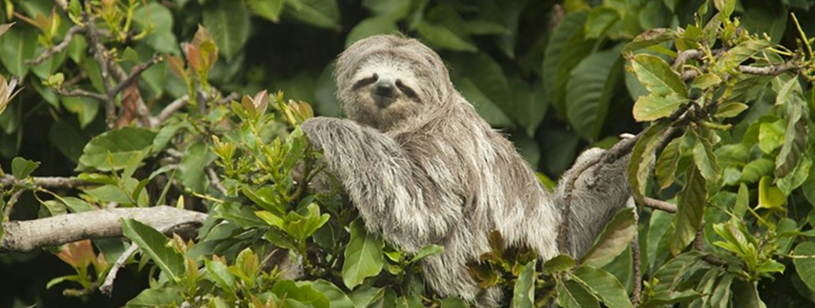
Sloths are tree-dwelling mammals native to Central and South America. Living sloths include two-toed and three-toed groups. Their slow movements and specialised digestion are adaptations to their way of life.
Two-toed sloths (Choloepus) are larger and eat a more varied diet, while three-toed sloths (Bradypus) are smaller and eat mainly leaves.
Sloths are an important part of rainforest ecosystems: their fur is home to algae, moths and other small organisms, and they help recycle nutrients in the forest.
Quick facts
| Common name | Sloth |
| Scientific name | Folivora |
| Typical lifespan | About 10-20 years or more in the wild; over 40 years in captivity |
| Maximum speed | Varies with species or individual, distance and conditions |
| Size | About 45 - 80 cm long |
| Weight | About 2.5 - 9 kg, by species |
| Diet type | Herbivore (leaves, shoots, fruits; two-toed sloths sometimes eat small animals) |
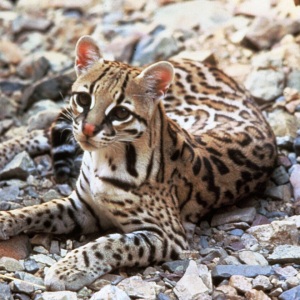
| Main predators | Jaguars, ocelots, harpy eagles, snakes |
| Conservation status | Assess separately by species and population; different taxa and regions have different needs |
| Habitat | Tropical forests in Central and South America |
| Distribution (Continents) | South America, Central America |
- Primary category:Mammals
- Explore this animal's categories:
Interesting facts
- Green fur - Sloths move so slowly that algae grow in their fur, giving them a greenish tint that helps them hide in the treetops.
- Very slow digestion - Food can take from about a week to a month to pass through a sloth's body.
- A weekly trip to the ground - Three-toed sloths climb down about once a week to defecate at the foot of their tree, which exposes them to predators.
- Good swimmers - Sloths swim surprisingly well and can slow their heart rate to stay underwater for a long time; up to 40 minutes is often reported.
- A flexible neck - Three-toed sloths have extra neck vertebrae and can turn their heads about 270 degrees.
Records and remarkable features
- Sloths are tree-dwelling mammals native to Central and South America. Living sloths include two-toed and three-toed groups. Their slow movements and specialised digestion are adaptations to their way of life.
- Giant relatives - Extinct ground sloths, such as Megatherium, were as large as elephants and lived until about 10,000 years ago.
Physical characteristics and adaptations
Sloths have many adaptations for life hanging upside down in rainforest trees, where camouflage and saving energy matter more than speed.
Distinguishing physical appearance
- Shaggy fur - Sloth hairs have grooves or cracks in which algae grow, and their fur is also home to moths and other tiny animals.
- Long limbs and curved claws - Claws up to about 8-10 cm long let sloths hang from branches with very little effort.
- A "smiling" face - The shape of the face and dark eye markings of three-toed sloths make them look as if they are smiling.
- Extra neck bones - Three-toed sloths have 8-10 neck vertebrae instead of the usual 7 of mammals, while two-toed sloths have fewer.
Adaptations for survival
- A very slow metabolism - Sloths use very little energy, which suits their low-energy diet of leaves.
- Hard to notice - Their slow movements make them hard for predators such as eagles and jaguars to spot.
- A chambered stomach - Their large, multi-chambered stomach, full of microbes, slowly breaks down tough leaves.
- Variable body temperature - Their body temperature can change with the surrounding air, and they bask in the sun to warm up.
- Hanging without effort - Special tendons in their hands and feet let them hang for hours, even while asleep.
Habits and behaviour
Sloths are solitary animals that live almost entirely in trees, where they move slowly and quietly.
Life mode and daily routine
- Life in the trees - Sloths eat, sleep, mate and give birth while hanging in trees.
- Sleep - In the wild, sloths sleep about 9-10 hours a day; in captivity they may sleep much longer.
- Activity - Two-toed sloths are mainly active at night, while three-toed sloths can be active by day and night.
Social behaviour and interactions
- Solitary - Apart from mothers with young and during mating, sloths usually live alone.
- Calls - Three-toed sloths make a high-pitched "ah-ee" call, especially females ready to mate and young calling their mothers.
- Shared trees - Several sloths may use the same area or even the same tree at different times.
Defence strategies
- Camouflage - Their algae-covered fur and slow movements help them stay hidden in the canopy.
- Staying quiet - Sloths move slowly and silently, so predators that hunt by sight and sound may not notice them.
- Claws - If attacked, a sloth can slash with its long claws, and two-toed sloths can also bite.
Habitat and geographic distribution
Sloths live in tropical forests of Central and South America, from Honduras to northern Argentina.
Geographical distribution
| Country | Presence |
|---|---|
| Brazil | Yes (Amazon and Atlantic Forest; the maned sloth lives only in Brazil) |
| Costa Rica | Yes (two-toed and three-toed sloths) |
| Panama | Yes (including the pygmy three-toed sloth on the island of Escudo de Veraguas) |
| Colombia | Yes (wet forests) |
| Venezuela | Yes (Amazon and other forests) |
| Ecuador | Yes (Amazon and coastal forests) |
| Peru | Yes (Amazon region and mountain forests) |
Habitats
- Rainforests - Sloths prefer humid tropical forests with plenty of leaves and tall trees.
- Mangroves - The pygmy three-toed sloth lives in the red mangroves of a small Panamanian island.
- Mountain and cloud forests - Some sloths live in cooler mountain forests.
Habitat threats
- Deforestation - Sloths are badly affected by forest loss because they depend on trees for everything.
- Fragmentation - Roads and farms force sloths to cross open ground, where they are hit by cars or attacked by dogs.
- Power lines - Sloths are often electrocuted when they climb on power lines.
- Wildlife trade - Sloths are taken from the wild for photos with tourists and as pets, which often kills them.
Diet and feeding
Sloths are mainly leaf-eaters. Three-toed sloths eat almost only leaves, while two-toed sloths also eat fruit, flowers and sometimes small animals.
What do sloths eat?
| Food type | Examples |
|---|---|
| Leaves | Leaves of Cecropia and many other trees and vines |
| Shoots and buds | Tender young shoots |
| Fruit | Wild fruits (mainly two-toed sloths) |
| Flowers | Tropical flowers |
| Small animals (occasionally) | Insects, eggs or small lizards (two-toed sloths) |
Food behaviour
- Slow digestion - It can take weeks for a meal to pass through a sloth's gut.
- Favourite trees - Each sloth usually feeds on a limited number of tree species, often learned from its mother.
- Little drinking - Sloths get most of their water from the leaves they eat.
- Feeding while hanging - They eat hanging from branches, pulling leaves to their mouths with their claws or lips.
Reproduction and life cycle
Sloths breed slowly: a female usually has a single baby every year or two and carries it for many months.
Breeding and birth
| Characteristic | Details |
|---|---|
| Sexual maturity | About 2-5 years |
| Breeding season | All year round in many areas |
| Gestation | About 6 months (three-toed) to about 11-12 months (two-toed) |
| Number of young | 1 baby per birth |
| Nursing period | About 1-2 months, then the baby starts eating leaves |
| Independence | About 6-12 months |
Breeding behaviour
- Calling for a mate - Female three-toed sloths ready to mate make loud, high-pitched calls.
- Mating in the trees - Sloths mate and give birth while hanging in trees.
- Clinging babies - The baby clings to its mother's fur for months and learns from her which leaves to eat.
- Inheriting a home - When the young becomes independent, it often stays in part of its mother's home range.
Longevity
- In the wild, sloths probably live about 10-20 years or more.
- In captivity, some have lived more than 40 years.
Name and history
Origin of the name "Sloth"
- The English name "sloth" means "laziness" or "slowness"; in many other languages, such as Portuguese (preguiça) and Romanian (leneș), the name also means "lazy".
- The scientific name of the group, Folivora, means "leaf-eaters".
Taxonomic Classification
| Kingdom | Animalia |
|---|---|
| Phylum | Chordata |
| Class | Mammalia |
| Order | Pilosa |
| Suborder | Folivora |
| Families | Bradypodidae (three-toed sloths) and Choloepodidae (two-toed sloths, formerly placed in Megalonychidae) |
History and fossils
- Giant ground sloths - Extinct relatives such as Megatherium reached about 6 metres in length and several tonnes in weight and died out about 10,000 years ago.
- Two separate paths - Two-toed and three-toed sloths are not closely related and adapted to life in trees independently.
- Relatives - Sloths are related to anteaters and, more distantly, to armadillos.
Cultural significance and mythology
Sloths have become one of the most popular animals in the world, and they are a symbol of a slow, calm way of life.
Sloths in culture and tradition
- European explorers - Early European visitors to South America were amazed by sloths and described them as the slowest and strangest of animals.
- Sloth sanctuaries - In Costa Rica and other countries, rescue centres care for injured and orphaned sloths and release them back into the forest.
- International Sloth Day - Celebrated on 20 October to raise awareness of sloth conservation.
The symbolism of sloth in the modern world
| Context | Meaning |
|---|---|
| Everyday language | "Sloth" also means laziness and is one of the seven deadly sins |
| Slow living | A symbol of calm, patience and taking life slowly |
| Conservation | A symbol of the threatened rainforests of Latin America |
| Memes and pop culture | Associated with relaxing and a carefree lifestyle |
Conservation status and threats
Some sloth species are still common, but others are threatened by habitat loss and other human pressures.
Main threats
- Deforestation - Sloths depend on large trees, and habitat loss leads to many deaths.
- Fragmentation - Roads and farms force sloths to come down to the ground, where they are vulnerable.
- Illegal trade - Sloths are taken from the wild for the pet trade and for tourist photos.
- Dogs and power lines - Many sloths are killed by domestic dogs and by electric shocks from power lines.
Conservation status (IUCN)
| Species | Status |
|---|---|
| Bradypus pygmaeus (pygmy three-toed sloth) | Critically Endangered |
| Bradypus torquatus (maned sloth) | Vulnerable |
| Choloepus hoffmanni (Hoffmann's two-toed sloth) | Least Concern |
| Bradypus variegatus (brown-throated three-toed sloth) | Least Concern |
Conservation efforts
- Wildlife corridors - Rope bridges and protected strips of forest let sloths cross roads and move between forest patches.
- Rescue centres - In Costa Rica, Colombia and elsewhere, rescue centres care for injured and orphaned sloths.
- Education - Campaigns ask tourists not to pay for photos with sloths, to reduce illegal trade.
In popular culture
Sloths in movies and animations
- "Zootopia" (2016) - Flash, the very slow sloth who works at the vehicle registration office, became a favourite character.
- "Ice Age" (2002) - Sid, a clumsy and funny ground sloth, is one of the stars of the series.
Sloths in video games and digital culture
- "Animal Crossing" - Leif, a friendly sloth, sells plants and gardening goods.
- Memes and GIFs - Sloths are popular online symbols of relaxing and taking things slowly.
- Viral videos - Videos of sloths in rescue centres have been watched by millions of people.
Sloths as a modern symbol
- Slow living - The sloth has become a symbol of slowing down and enjoying the moment.