Great white sharkInteresting facts and information
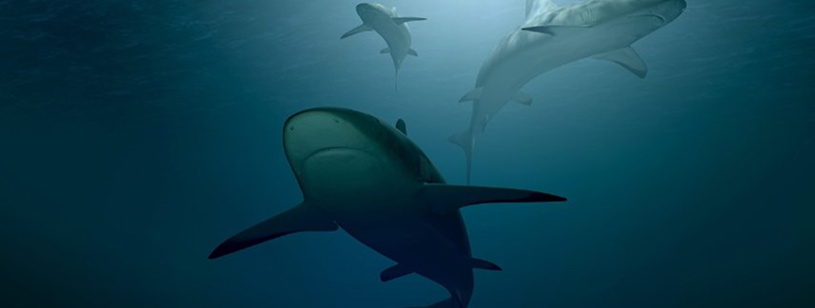
The great white shark (Carcharodon carcharias) is a large predatory fish found in temperate and subtropical seas. Its diet changes with age and size. It is a distinct species within the much larger group of sharks.
Fishing, accidental capture and habitat changes can affect white sharks. Their portrayal in films should be distinguished from scientific evidence about their behaviour around people.
Quick facts
| Common name | Great white shark |
| Scientific name | Carcharodon carcharias |
| Typical lifespan | 70 years or more |
| Maximum speed | Usually slow; about 40-55 km/h in short bursts |
| Size | Adults can reach about 6 m in length; larger alleged records require reliable measurement evidence. |
| Weight | Large adults can weigh around 2,000 kg; mass varies with sex, age and condition. |
| Diet type | Carnivore (fish, marine mammals, turtles) |
| Main predators | Orcas; humans |
| Conservation status | Vulnerable (IUCN); Critically Endangered in the Mediterranean |
| Distribution | Temperate and subtropical seas worldwide, near coasts and in the open ocean |
| Habitat | Surface waters and depths of more than 1,000 m |
- Primary category:Fish
- Explore this animal's categories:
Interesting facts
- A powerful bite - Computer models suggest that a large great white shark can bite with a force of up to about 18,000 newtons, one of the strongest bites of any living animal.
- Sensing electric fields - Like other sharks, it uses ampullae of Lorenzini to detect the weak electric fields of nearby prey.
- Leaping out of the water - Off South Africa, great whites hunting seals sometimes leap completely out of the water.
- A long life - Studies of shark vertebrae suggest that great whites can live for 70 years or more.
- Warm-bodied - Unlike most sharks, the great white keeps its muscles, stomach, eyes and brain warmer than the surrounding water, which helps it hunt in cold seas.
Records and remarkable features
- The great white shark (Carcharodon carcharias) is a large predatory fish found in temperate and subtropical seas. Its diet changes with age and size. It is a distinct species within the much larger group of sharks.
- Long journeys - A tagged female great white, nicknamed Nicole, swam from South Africa to Australia and back in about nine months, a trip of about 20,000 km.
Characteristics
The great white shark (Carcharodon carcharias) is one of the largest predatory fish in the sea, with a powerful, streamlined body, strong jaws and excellent senses.
Main physical characteristics:
| Characteristic | Details |
|---|---|
| Body shape | Torpedo-shaped and streamlined |
| Size | Adults usually about 3.5-5 m; females up to about 6 m |
| Weight | Usually about 600-1,100 kg; large females around 2,000 kg |
| Colour | Grey on the back, white on the belly (countershading) |
| Dorsal fins | A large, triangular first dorsal fin and a tiny second one |
| Teeth | About 300 large, triangular, serrated teeth in several rows |
| Bite | Estimated force of up to about 18,000 newtons in large sharks |
| Speed | Usually cruises slowly; about 40-55 km/h in short bursts |
| Body temperature | Parts of the body are kept warmer than the water |
Special adaptations:
- Replaceable teeth - Great whites lose teeth regularly, and new ones move forward from the rows behind.
- Countershading - Its grey back and white belly make it hard to see from above or below.
- Warm muscles - A network of blood vessels keeps heat in its muscles, which allows fast swimming in cold water.
- Keen senses - It has an excellent sense of smell and can detect vibrations and electric fields in the water.
- A powerful tail - Its crescent-shaped tail gives it fast acceleration.
Habits and behaviour
The great white shark usually lives alone but may meet other sharks at feeding sites. It is a curious animal and often investigates unfamiliar objects, including boats.
Social behaviour:
- Mostly solitary - Great whites usually hunt alone but may gather around whale carcasses or seal colonies.
- Size rules - At feeding sites, larger sharks usually dominate smaller ones.
- Body language - They communicate with body postures, swimming patterns and gaping jaws.
Feed and hunting methods:
- Carnivores - Adults feed on fish, seals, sea lions, dolphins, turtles and other sharks.
- Surprise attacks - They often attack seals from below, rising quickly from deeper water.
- Leaping - Off South Africa, some sharks leap completely out of the water while attacking seals.
- Test bites - Sharks sometimes bite unfamiliar objects to investigate them, which explains some bites on people.
Defence and survival strategies:
- Fear of orcas - Orcas can kill great white sharks; after orca attacks, sharks often leave an area for months.
- Sensitive senses - They detect even small vibrations in the water.
- Leaving - When threatened, a great white can swim away quickly and return later.
Habitat and geographic distribution
The great white shark lives in temperate and subtropical seas around the world, both near coasts and in the open ocean.
Habitats:
| Habitat | Prevalent regions |
|---|---|
| Coastal waters near seal colonies | South Africa, Australia, California, Mexico (Guadalupe Island) |
| Open ocean | For example the "White Shark Café", an area of the Pacific between Mexico and Hawaii |
| Continental shelves | North-west Atlantic, Mediterranean, Japan |
| Deep water | Dives to more than 1,000 m have been recorded |
Geographical distribution:
- The Americas - Along the coasts of North and South America, from Canada and California to Chile.
- South Africa - One of the best-known populations, especially around Gansbaai and False Bay.
- Australia and New Zealand - Large great whites are regularly seen here.
- Mediterranean - A small, rare population.
Impact of climate change and human activities:
- Fishing - Great whites are caught as bycatch and, illegally, for their fins, jaws and teeth.
- Ocean warming - Changing water temperatures shift where great whites and their prey are found.
- Recovery of prey - In some places, such as Cape Cod, the recovery of seal populations has brought more great whites near the coast.
Diet and feeding
The great white shark is an opportunistic predator. Young sharks eat mainly fish, while larger ones also hunt marine mammals.
Food types consumed:
| Food type | Examples |
|---|---|
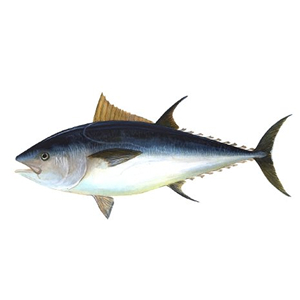
| Fish | Tuna, mackerel, rays and other fish |
| Cephalopods | Squid, octopus |
| Marine mammals | Seals, sea lions, dolphins |
| Turtles | Sea turtles |
| Whale carcasses | An important source of food when available |
| Other sharks | Smaller sharks |
Method of feeding:
- Ambush - The shark approaches from below and behind and attacks quickly.
- Investigating - It may bite something unfamiliar to find out what it is.
- Leaping attacks - Near seal colonies, it may leap out of the water while attacking.
- Scavenging - It feeds on dead whales, sometimes with several sharks at the same carcass.
As a top predator, the great white shark helps keep marine ecosystems in balance.
Reproduction and life cycle
The great white shark breeds slowly, with a long pregnancy and late maturity, which makes it vulnerable to population decline.
Life cycle stages:
| Stage | Approximate duration | Characteristics |
|---|---|---|
| Mating | Seasonal; rarely observed | Bite scars on females suggest that males hold them with their teeth. |
| Pregnancy | Probably about 12-18 months | The young develop inside the mother. |
| Birth | Usually 2-10 pups | Pups are about 1.2-1.5 m long at birth. |
| Juvenile | Many years | Young sharks live in coastal nursery areas and feed on fish. |
| Sexual maturity | About 26 years (males), about 33 years (females), according to recent studies | They start to reproduce. |
| Lifespan | 70 years or more | Growth slows down with age. |
Reproductive behaviour:
- Internal fertilisation - Males use claspers, extensions of the pelvic fins, to mate.
- Live birth - Females give birth to live young that have developed inside their bodies.
- Developing white sharks feed on unfertilised eggs in the uterus, a process called oophagy. Eating eggs is different from consuming smaller developing embryos.
Because they reproduce slowly and mature late, great white sharks are very vulnerable to overfishing and need strong protection.
Name and history
The great white shark has long been both feared and admired. Its reputation as a man-eater grew especially in the 20th century.
Origin and etymology of the name:
- "Great white shark" - The name refers to its white belly and large size.
- The scientific name Carcharodon carcharias comes from Greek: karcharos means "jagged" and odous means "tooth", referring to its serrated teeth.
- Other names - It is also called the white shark or "white pointer", especially in Australia.
Taxonomic classification:
| Taxonomic category | Name |
|---|---|
| Kingdom | Animalia |
| Phylum | Chordata |
| Class | Chondrichthyes (cartilaginous fish) |
| Order | Lamniformes |
| Family | Lamnidae |
White shark in history and culture:
- Scientific description - Carl Linnaeus described the species in 1758.
- Relatives - Its closest relatives are the mako sharks; the giant extinct megalodon belonged to a different lineage.
- 1916 - A series of shark attacks off New Jersey in the USA caused panic and is often linked with the later novel "Jaws".
- Modern research - Tracking has shown that great whites make long migrations and are more complex animals than once believed.
Cultural significance and mythology
The great white shark is one of the most famous and feared animals in the world, and it has become a powerful symbol of the ocean's dangers and of shark conservation.
- "Jaws" - Peter Benchley's 1974 novel and Steven Spielberg's 1975 film made the great white a symbol of terror; Benchley later worked to protect sharks.
- Shark tourism - Cage diving with great whites in South Africa, Australia and Mexico attracts visitors from around the world.
- Public fear - Bites on people are rare, but they receive great media attention, which shapes how people see sharks.
Conservation status and threats
The great white shark is listed as Vulnerable by the IUCN. Some populations have declined, while others have started to recover thanks to protection.
Conservation status
| Region | Status |
|---|---|
| Global | Vulnerable (IUCN) |
| Mediterranean | Critically Endangered (regional assessment) |
| Australia and New Zealand | Protected |
| USA and South Africa | Protected; trends vary between populations |
Main threats:
- Fishing - Great whites are caught as bycatch and illegally for their fins, jaws and teeth.
- Shark nets and drumlines - In some places, nets and baited hooks set to protect beaches kill great whites.
- Ocean warming - Rising temperatures change their migrations and the distribution of their prey.
- Pollution - Mercury and other pollutants build up in their bodies.
- Slow breeding - Their late maturity means populations recover slowly.
Conservation efforts:
- Legal protection - The great white is protected in Australia, the USA, South Africa, Mexico and other countries.
- Trade controls - International trade has been controlled under CITES since 2004.
- Tracking - Researchers use satellite and acoustic tags to study shark migrations.
- Awareness - Documentaries such as "Sharkwater" (2006) and conservation groups educate the public about sharks.
Protection has helped some populations, but great white sharks still need careful management.
In popular culture
Great white sharks in books and films
- "Jaws" (1975) - Steven Spielberg's film, based on Peter Benchley's novel, became one of the most successful films ever and changed how people saw sharks.
- "Finding Nemo" (2003) - Bruce, a friendly great white shark, leads a group of sharks trying to stop eating fish.
- "The Meg" (2018) - A film about a giant megalodon, a distant relative of the great white.
Great white sharks on television
- "Shark Week" - Since 1988, this television event has shown many programmes about great whites.
- Nature documentaries - Films of great whites leaping out of the water off South Africa are among the most famous wildlife footage.