SchipperkeCharacteristics, history, training and care
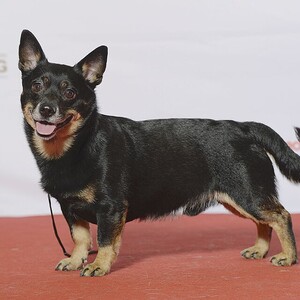
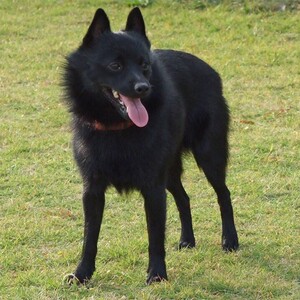
Schipperke. · 鏑木對馬守 / Wikimedia Commons, public domain. Cropped and resized.
The Schipperke is a small, solid black Belgian dog with an abundant coat around the neck and a square build. In Flemish dialect, its name means “the little shepherd”. The standard describes it as an excellent little watchdog with exceptional alertness, full of vitality, tireless, always curious and very gentle with children.
Quick facts
| Common name | Schipperke |
| Scientific name | Canis lupus familiaris |
| Country of origin | Belgium |
| Official recognition | FCI, definitively since 27 October 1954 (group 1, herding dogs; standard no. 83); also recognised by the AKC |
| Lifespan | 12–16 years, according to the AKC |
| Size (males) | 28–33 cm at the withers according to the AKC; 3–9 kg (ideally 4–7 kg) |
| Size (females) | 25–30 cm at the withers according to the AKC; 3–9 kg (ideally 4–7 kg) |
| Coat type | Abundant, thick, straight, harsh, with a ruff and a dense undercoat |
| Common colours | Solid black |
| Energy level | High |
| Suited to an apartment? | Yes |
| Temperament | Lively, tireless, curious, gentle with children, aloof with strangers |
| Tendency to aggression | Low; may bite if you touch what it is guarding |
| Good with children | Very good, according to the standard |
| Good with other animals | Poor with rodents |
| Genetic predispositions | MPS IIIB, patellar luxation, Legg-Calvé-Perthes disease, eye and thyroid diseases |
- Primary category:Dog breeds
- Explore this animal's categories:
History and origin
The FCI standard says the common ancestor of the Belgian Shepherds and the Schipperke was probably a sheepdog called the Leuvenaar, usually small and black. Around 1690, the Schipperke was the favourite dog of the workers and shoemakers of the Saint-Géry quarter in Brussels, who held contests to show off their dogs' worked brass collars. It was renowned for catching mice, rats and moles.
It was first shown in 1882, at Spa, and became fashionable thanks to Queen Marie-Henriette of Belgium. It reached Britain and the United States in 1887, and the first standard was written in 1888.
How the breed developed
- 17th century – The first Schipperkes appear.
- Around 1690 – The favourite dog of the Brussels shoemakers.
- 1882 – First show, at Spa.
- 1887 – It reaches Britain and the United States.
- 1888 – The first standard and the first breed club.
Breed rating
| Feature | Stars |
|---|---|
| Training and intelligence | ★★★★☆ |
| Easy to train | ★★★★☆ |
| Intelligence | ★★★★☆ |
| Independence | ★★★★☆ |
| Stubbornness | ★★★★☆ |
| Behaviour and temperament | ★★★★☆ |
| Affectionate with family | ★★★★★ |
| Friendly with children | ★★★★☆ |
| Good with other dogs | ★★★☆☆ |
| Good with cats and other animals | ★★☆☆☆ |
| Loyalty | ★★★★★ |
| Tendency to be aggressive | ★★☆☆☆ |
| Tendency to bark | ★★★★☆ |
| Needs and care | ★★★☆☆ |
| Shedding | ★★★☆☆ |
| Needs frequent grooming | ★★☆☆☆ |
| Activity and lifestyle | ★★★★☆ |
| Energy level | ★★★★☆ |
| Daily exercise needs | ★★★★☆ |
| Suited to apartment life | ★★★★☆ |
| Health and longevity | ★★★★★ |
| Life expectancy | ★★★★☆ |
| Predisposition to genetic diseases | ★★☆☆☆ |
| Working abilities and uses | ★★★★★ |
| Good guard dog | ★★★★☆ |
| Good companion dog | ★★★★★ |
Indicative rating: 5 stars means the highest level. It is based on the ratings the American Kennel Club gives the breed and on the FCI standard.
Physical characteristics
The AKC says that although it stands no more than 33 cm, it is a small dog made for hard work. Its strong jaws, neck and chest, together with its stealthy, cat-like way of hunting, made it ideal for catching rats. It is square in build.
General appearance
The topcoat is abundant, thick, straight and fairly harsh, with a soft, dense undercoat. It is very short on the ears, short on the head and front of the legs, and much longer around the neck, where it forms a ruff.
| Feature | Schipperke |
|---|---|
| Size | Small |
| Height at the withers | 25–33 cm (AKC) |
| Weight | 3–9 kg (ideally 4–7 kg) |
| Coat | Abundant, with a ruff |
| Colour | Solid black |
| Body | Square |
The colour is solid black. The undercoat may also be dark grey, provided it is completely covered by the topcoat. A little grey on the muzzle due to age is tolerated.
Training and socialisation
The standard describes it as an excellent little watchdog with exceptional alertness, full of vitality, aloof with strangers, active, agile, tireless and always interested in what is going on around it. It may bite if someone comes near the things it is guarding, but it is very gentle with children.
The AKC says that, because of its watchdog instinct, it can become a barker unless taught otherwise. It should learn to come when called as early as possible, as it has the instinct to chase small animals.
Tips for effective training
- Teach the recall early. It chases small animals.
- Teach it not to bark at everything. It is a natural watchdog.
- Go to obedience classes. The AKC recommends them.
- Keep it on a lead. It can only run free in fenced areas.
Activity needs and lifestyle
The AKC says it is a very active, energetic little dog that always keeps busy. A brisk daily walk or play in a fenced yard is enough. It loves to play and explore and does just as well in a flat as in a house with a large yard.
| Activity | How often | Why it matters |
|---|---|---|
| Brisk walk | daily | Energy |
| Play and exploring | daily | Curiosity |
| Training | several times a week | Keeps it attentive |
Tips for a balanced life
- It can also live in an apartment.
- Keep it on a lead outside the yard.
- Teach it to be quiet from an early age.
Care and health
Coat and skin care
The AKC says the coat should be brushed once a week, but it sheds once or twice a year, when brushing should be more frequent. The nails should be trimmed regularly.
Common health problems
The AKC says it is generally healthy, and good breeders screen their dogs for:
| Condition | Description | Common symptoms |
|---|---|---|
| MPS IIIB | A fatal inherited disease, detected by a DNA test | Balance problems, usually at 2–4 years |
| Patellar luxation | The kneecap slips out of place | Suddenly holds a hind leg up for a few steps, then uses it again |
| Legg-Calvé-Perthes disease | The head of the thigh bone deteriorates | Limping, hip pain |
| Eye and thyroid diseases | Inherited conditions | Poor vision, tiredness, weight gain |
Other care
- Ask for the DNA test for MPS IIIB.
- Trim the nails regularly.
- Brush its teeth often.
Diet and nutrition
The AKC recommends good-quality food suited to its age and activity level.
Tips for a healthy diet
The table gives a starting estimate, calculated with the formula from the Merck Veterinary Manual. The first two calorie columns show the calories per day for a healthy adult dog. The last column shows what this means in dry food with 3,500–4,000 kcal per kilogram.
| Dog's weight | Calories per day (neutered) | Calories per day (not neutered) | Dry food per day (approximate) |
|---|---|---|---|
| 4 kg | 320 kcal | 360 kcal | 80–103 g |
| 5.5 kg | 400 kcal | 450 kcal | 100–130 g |
| 7 kg | 480 kcal | 540 kcal | 120–150 g |
- Give it its food in two meals a day.
- Treats count towards the daily portion.
- A dog is at the right weight when you can feel its ribs under the coat without pressing hard.
Foods to avoid
Some human foods are dangerous for dogs: chocolate, coffee, grapes and raisins, onions, garlic, xylitol (a sweetener used in chewing gum), macadamia nuts and alcohol.
Reproduction and development
Physical and emotional maturity
In dogs, sexual maturity usually comes between 6 and 12 months. Small breeds become adults faster than large ones, usually at around one year.
Mating and pregnancy
Pregnancy lasts about 63 days, counted from ovulation. Mating a female on her first heat is not recommended. The FCI standard requires that only healthy dogs of typical breed appearance are used for breeding.
Caring for the puppies
In small breeds, a litter has 3–4 puppies on average. The puppies are very small and fragile in the first weeks, so they must be kept warm and handled with care. Socialisation starts early: gentle handling, everyday noises and new people.
Interesting facts
- “The little shepherd”. That is what Schipperke means in Flemish.
- Brass collars. The Brussels shoemakers competed over their dogs' collars.
- The queen's dog. Queen Marie-Henriette made it fashionable.
- It hunts like a cat. The AKC says it hunts stealthily, like a cat.
- Related to the Belgian Shepherds. They share a common ancestor, the Leuvenaar.
Frequently asked questions
What does “Schipperke” mean?
“The little shepherd”, in Flemish dialect.
How much does it weigh?
Between 3 and 9 kg; ideally 4–7 kg.
Is it good with children?
The standard says it is very gentle with children.
How long does it live?
The AKC gives 12–16 years.