Soft Coated Wheaten TerrierCharacteristics, history, training and care
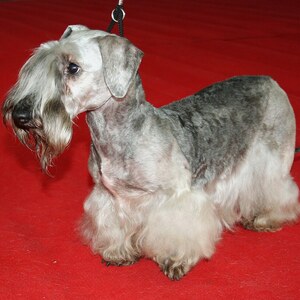
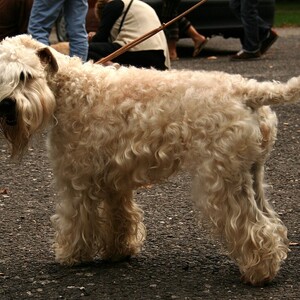
Soft Coated Wheaten Terrier. · Pleple2000 / Wikimedia Commons, CC BY-SA 3.0. Cropped and resized.
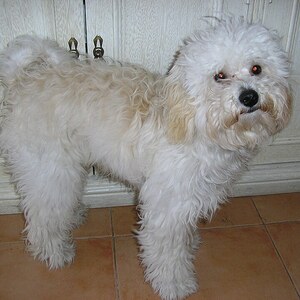
The Soft Coated Wheaten Terrier is a medium-sized Irish terrier with a soft, silky, wheat-coloured coat. For a long time it was the dog of small farmers, used to catch vermin and help on the farm. The FCI standard describes it as spirited and game, good-tempered, most affectionate and loyal to its owners, highly intelligent, a trusty companion that defends without aggression.
Quick facts
| Common name | Soft Coated Wheaten Terrier (Wheaten) |
| Scientific name | Canis lupus familiaris |
| Country of origin | Ireland |
| Official recognition | FCI, definitively since 26 February 1957 (group 3, terriers; standard no. 40); Irish Kennel Club since 1937; also recognised by the AKC |
| Lifespan | 12–14 years, according to the AKC |
| Size (males) | 46–48 cm at the withers; 18–20.5 kg |
| Size (females) | slightly smaller |
| Coat type | Single, soft, silky, gently waving, with no undercoat |
| Common colours | Wheaten, from light to golden reddish |
| Energy level | High |
| Suited to an apartment? | Yes, with enough exercise |
| Temperament | Cheerful, affectionate, loyal, intelligent, brave |
| Tendency to aggression | Low; defends without aggression |
| Good with children | Very good, according to the AKC |
| Good with other animals | Moderate |
| Genetic predispositions | Protein-losing nephropathy and enteropathy, Addison's disease, renal dysplasia |
- Primary category:Dog breeds
- Explore this animal's categories:
History and origin
The FCI standard says the breed's history is somewhat obscured by its closeness to the other Irish terrier breeds, but the Wheaten is probably the oldest of the four. Its existence for at least 200 years is shown by texts that mention “soft-coated” dogs. It was used by small farmers to catch vermin and help on the farm, but also for the hard work of hunting badgers and otters.
Wikipedia says it was an all-round farm dog: it drove livestock, guarded them and hunted vermin. Despite its long history, it was officially recognised by the Irish Kennel Club only in 1937, and since then it has become known all over the world.
How the breed developed
- More than 200 years ago – The “soft-coated” dog of Irish farmers.
- 1937 – Recognition by the Irish Kennel Club.
- 26 February 1957 – The FCI recognises the breed.
Breed rating
| Feature | Stars |
|---|---|
| Training and intelligence | ★★★★☆ |
| Easy to train | ★★★★★ |
| Intelligence | ★★★★★ |
| Independence | ★★★★☆ |
| Stubbornness | ★★★★☆ |
| Behaviour and temperament | ★★★☆☆ |
| Affectionate with family | ★★★★☆ |
| Friendly with children | ★★★☆☆ |
| Good with other dogs | ★★★★☆ |
| Good with cats and other animals | ★★★☆☆ |
| Loyalty | ★★★★☆ |
| Tendency to be aggressive | ★☆☆☆☆ |
| Tendency to bark | ★★★★☆ |
| Needs and care | ★★★☆☆ |
| Shedding | ★★★★☆ |
| Needs frequent grooming | ★★★☆☆ |
| Activity and lifestyle | ★★★☆☆ |
| Energy level | ★★★★☆ |
| Daily exercise needs | ★★★★☆ |
| Suited to apartment life | ★★★☆☆ |
| Health and longevity | ★★★★☆ |
| Life expectancy | ★★★★☆ |
| Predisposition to genetic diseases | ★★☆☆☆ |
| Working abilities and uses | ★★☆☆☆ |
| Good companion dog | ★★★★☆ |
| Good companion dog | ★★★☆☆ |
Indicative rating: 5 stars means the highest level. It is based on the ratings the American Kennel Club gives the breed and on the FCI standard.
Physical characteristics
The standard describes it as a hardy, active, short-backed, well-built dog that gives an impression of strength, neither too tall nor too low. The AKC says it stands out for its soft, silky, gently waving coat in a warm wheaten colour and for its very steady disposition.
General appearance
It has a single coat, soft and silky to the touch, not harsh. On the head, the hair falls forward and shades the eyes. In puppies and adolescents, the wavy adult coat is not yet visible. Trimming is permitted.
| Feature | Soft Coated Wheaten Terrier |
|---|---|
| Size | Medium |
| Height at the withers | males: 46–48 cm; females: slightly less |
| Weight | males: 18–20.5 kg |
| Coat | Soft, silky |
| Colour | Wheaten |
| Type | Terrier |
The colour is a clear wheaten, in shades from light wheaten to golden reddish. Wikipedia says its Irish name, “An Brocaire Buí”, means “the yellow terrier”.
Training and socialisation
The standard describes it as spirited and game, good-tempered, most affectionate and loyal, highly intelligent, a trusty companion that defends without aggression. Wikipedia says it is usually friendly and playful and gets on well with children and other dogs.
Like any terrier, it needs consistent, reward-based training and early socialisation.
Tips for effective training
- Use rewards. It is sensitive and affectionate.
- Be consistent. It has a terrier's spirit.
- Teach it not to jump up at people. It shows its joy with enthusiasm.
- Keep it on the lead. It may run after small animals.
Activity needs and lifestyle
It is an energetic terrier that needs daily walks and play. It does well at agility and obedience.
| Activity | How often | Why it matters |
|---|---|---|
| Walks | daily | Fitness |
| Play | daily | Energy |
| Agility or obedience | weekly | Keeps its mind busy |
Tips for a balanced life
- Be ready for daily brushing.
- Keep it on a lead in the street.
- Check the ears often.
Care and health
Coat and skin care
The AKC says the soft, silky coat needs a fair amount of grooming: daily brushing with a pin brush or a slicker brush, then combing with a medium and fine metal comb. Tangles are worked out with the brush, the comb and the fingers. The AKC gives it 1 out of 5 for shedding.
Common health problems
The AKC says Wheatens are generally healthy, and responsible breeders check their dogs for:
| Condition | Description | Common symptoms |
|---|---|---|
| Protein-losing nephropathy | Kidney disease | Great thirst, weight loss, swelling |
| Protein-losing enteropathy | Digestive diseases | Diarrhoea, vomiting, weight loss |
| Addison's disease | Failure of the adrenal glands | Weakness, vomiting |
| Renal dysplasia | Abnormally developed kidneys | Excessive thirst and urination |
Other care
- Have yearly urine and blood tests done.
- Check the ears regularly.
- Ask for the parents' health tests.
Diet and nutrition
The AKC recommends good-quality food suited to the dog's age, and attention to its weight.
Tips for a healthy diet
The table gives a starting estimate, calculated with the formula from the Merck Veterinary Manual. The first two calorie columns show the calories per day for a healthy adult dog. The last column shows what this means in dry food with 3,500–4,000 kcal per kilogram.
| Dog's weight | Calories per day (neutered) | Calories per day (not neutered) | Dry food per day (approximate) |
|---|---|---|---|
| 16 kg | 900 kcal | 1,010 kcal | 220–290 g |
| 18 kg | 980 kcal | 1,100 kcal | 240–310 g |
| 20.5 kg | 1,080 kcal | 1,210 kcal | 270–350 g |
- Treats count towards the daily portion.
- Split the food into two meals a day.
- A dog is at the right weight when you can feel its ribs under the coat without pressing hard.
Foods to avoid
Some human foods are dangerous for dogs: chocolate, coffee, grapes and raisins, onions, garlic, xylitol (a sweetener used in chewing gum), macadamia nuts and alcohol.
Reproduction and development
Physical and emotional maturity
In dogs, sexual maturity usually comes between 6 and 12 months. Most breeds become adults at around 13–15 months.
Mating and pregnancy
Pregnancy lasts about 63 days, counted from ovulation. Mating a female on her first heat is not recommended. The FCI standard requires that only healthy dogs of typical breed appearance are used for breeding.
Caring for the puppies
In dogs, a litter has 5–6 puppies on average, and the number rises with the size of the breed. Socialisation starts in the first weeks: gentle handling, everyday noises and new people.
Interesting facts
- “The yellow terrier”. That is what its Irish name means.
- The oldest Irish terrier. The standard considers it probably the oldest of the four.
- A coat with no undercoat. It has a single, soft coat.
- Recognised late. Only in 1937, in Ireland.
- A farm dog. It drove livestock, guarded and hunted vermin.
Frequently asked questions
Does it shed?
Very little; the AKC gives it 1 out of 5.
Is it good with children?
Yes; the AKC gives it the top score.
How often does it need brushing?
Every day.
How long does it live?
The AKC gives 12–14 years.