BoaInteresting facts and information
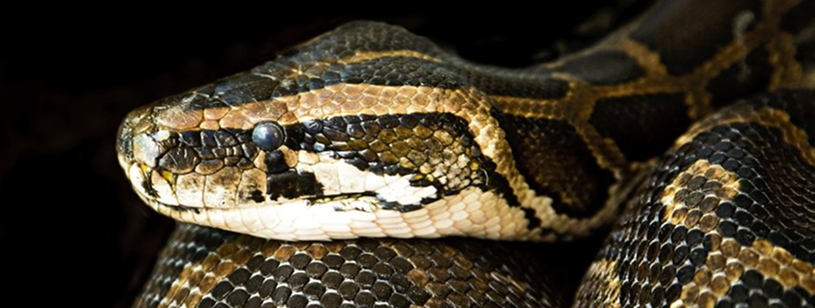
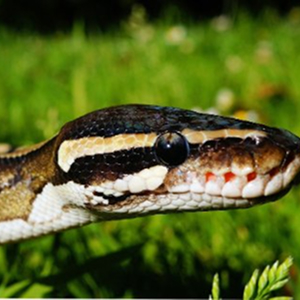
Boas are non-venomous snakes that capture prey with their mouths and may kill it by constriction, compressing the body and disrupting circulation. This profile focuses on Boa constrictor and distinguishes it from related boas whose scientific names have changed.
Boa constrictor gives birth to live young. Live birth also occurs in many other snakes, so it is not unique to boas.
The following names appear in older classifications. Several related boas are now treated as separate species; names should be checked against a current taxonomic reference.
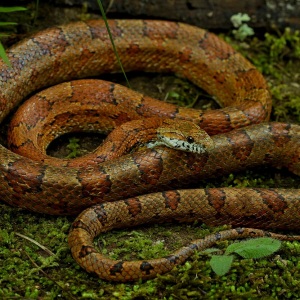
- Boa constrictor constrictor - Typical species, encountered in Amazon, with patterns of reddish spots.
- Boa imperator – A related boa now commonly treated as a separate species, rather than simply a subspecies of Boa constrictor.
- Argentine boa – Often named Boa constrictor occidentalis in older or regional classifications; treatment differs between references.
- Boa constrictor amarali - Found in Bolivia and Brazil, more compact and muscular.
Boas are kept in captivity, but they are strong predators requiring specialist husbandry. A calm appearance does not remove bite or handling risks.
Quick facts
| Common name | Boa constrictor |
| Scientific name | Boa constrictor |
| Typical lifespan | About 20-30 years (wild), up to about 40 years (captive) |
| Length | Usually a few metres long; size varies by sex, age and taxon |
| Weight | Mass varies with size and condition; no verified exceptional weight record is assigned here |
| Maximum speed | Varies with species or individual, distance and conditions |
| Diet type | Carnivore (mammals, birds, reptiles) |
| Main predators | Jaguars, caimans, birds of prey (young), people |
| Conservation status | Assess the named taxon and population separately; collection and habitat loss affect some populations |
| Habitat | Tropical forests, dry forests, savannas and semi-deserts of Central and South America |
- Primary category:Types of snakes
- Explore this animal's categories:
Interesting facts
- Constriction – A boa compresses prey and disrupts blood circulation. It does not normally kill by deliberately breaking the prey’s bones.
- Shedding skin - Like all snakes, the boa sheds its skin regularly as it grows, usually in one piece.
- Feeding intervals – Digestion and feeding needs depend on size, age and temperature. Unsupported prolonged-fasting claims should not guide husbandry.
- Finding prey – Boas use several senses, including chemical cues detected with the tongue; the heat-sensing pits of other snakes should not be assumed for Boa constrictor.
- Boas are nonvenomous snakes, but they can bite and cause injury. Their curved teeth help them hold prey.
- Bigger females - Female boas are usually larger and heavier than males.
Records and remarkable features
- Length - Most adult boas are about 1.5-3 metres long; large females can reach about 4 metres, and longer reports are rare and hard to verify.
- Female boas are often larger than males; mass depends on size, age and condition.
- Long lives - In captivity, some boas have lived about 40 years.
- Virgin birth - In 2010, scientists reported that a captive female boa constrictor had produced young without mating with a male.
Physical characteristics and adaptations
The boa constrictor is a large, powerful snake with a sturdy body and many adaptations that make it an effective ambush predator.
Distinguishing physical appearance
- A thick, muscular body - The boa has a heavy body covered with small, smooth scales and moves well both on the ground and in trees.
- Camouflage colours - Its pattern of brown, grey and reddish "saddles" helps it blend in with leaves and branches; the markings near the tail are often reddest.
- Head shape – Head shape alone cannot reliably tell people whether an unfamiliar snake is venomous.
- Grasping with the tail – Some boas use the tail to support movement and grip; Boa imperator is commonly treated separately from Boa constrictor.
Adaptations for survival
- Sensing prey - Boas find prey mainly with their tongue and sense of smell, and also by sight and vibrations.
- Constriction restricts circulation in prey; it should not be described as a method of breaking bones.
- Flexible jaws - The jaw bones are linked by stretchy ligaments, so it can swallow prey much wider than its head.
- Spurs - Boas have two small claw-like spurs near the tail, the remains of hind legs, which males use during courtship.
Habits and behaviour
The boa is a solitary snake that spends much of its time hidden, waiting for prey to come close.
Hunting behaviour
- Ambush - The boa does not usually chase its prey; it waits hidden and strikes when an animal passes by.
- Constriction - After grabbing prey, it wraps its body around it and squeezes, stopping the blood flow.
- Swallowing - It swallows the prey whole, which can take from minutes to more than an hour depending on its size.
Interaction with other animals
- People - Boas are not usually aggressive towards people, and serious injuries are rare.
- Defence - When threatened, a boa hisses loudly and may bite, but it has no venom.
- Avoiding predators - Boas usually try to hide or escape from large predators such as jaguars.
Cycles of activity
- Mostly active at night - Boas hunt mainly at dusk and at night.
- Hiding by day - During the day, they often rest in burrows, hollow logs or dense vegetation.
- Swimming - Boas are not water snakes, but they can swim well.
Habitat and geographic distribution
The boa constrictor is one of the most adaptable snakes in the Americas and lives in tropical forests, dry forests, savannas and semi-desert areas.
Geographical distribution
| Region | Boas present |
|---|---|
| Amazon basin and northern South America | Boa constrictor constrictor |
| Southern Brazil, Bolivia and Paraguay | Boa constrictor amarali |
| Argentina and Paraguay (dry Chaco) | Boa constrictor occidentalis (Argentine boa) |
| Mexico and Central America | Boa imperator (Central American boa) |
| West of the Andes (Colombia, Ecuador, Peru) | Boas of the Boa imperator group |
Habitats
- Tropical forests - Boas often live in dense forests, hiding among roots, leaves and branches.
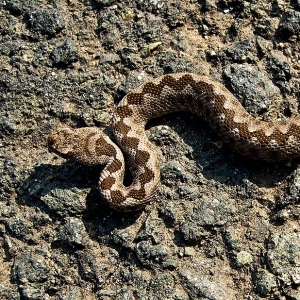
- Dry forests and savannas - The Argentine boa lives in drier habitats and often uses burrows.
- Semi-desert areas - Some boas live in areas with little rainfall.
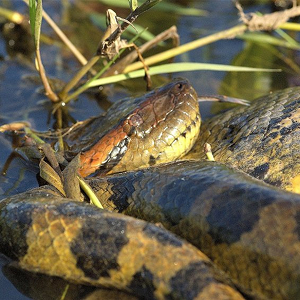
- Near water - Boas are also found near rivers, streams and wetlands, where prey is plentiful.
Habitat threats
- Deforestation - Cutting forests reduces the places where boas can live.
- Collection for the pet trade - Boas are caught and sold as exotic pets, which can affect wild populations.
- Fear can lead people to kill boas. Being nonvenomous does not make a large snake harmless to handle.
- Roads - Many boas are killed by traffic.
Diet and feeding
The boa is a carnivorous predator that eats many kinds of animals, depending on its size and habitat. It grabs prey with its teeth and kills it by constriction before swallowing it whole.
What does the boa eat?
| Type of prey | Examples |
|---|---|
| Small mammals | Mice, rats, opossums, bats |
| Medium-sized mammals | Agoutis, small monkeys, young peccaries, ocelots (rarely) |
| Birds | Parrots, pigeons, chickens and other birds |
| Reptiles | Iguanas and other lizards |
| Amphibians | Large frogs (mainly young boas) |
Hunting and feeding methods
- Ambush and camouflage - The boa waits hidden among leaves or branches.
- Constriction - After grabbing its prey with its curved teeth, it wraps around it and squeezes, stopping the blood circulation.
- Swallowing whole - Its stretchy jaws let it swallow animals wider than its head.
- Digestion - After a large meal, a boa may not eat again for several weeks.
Reproduction and life cycle
The boa gives birth to live young, which develop inside the mother's body.
Breeding and birth
| Characteristic | Details |
|---|---|
| Sexual maturity | About 2-3 years (males), 3-4 years (females) |
| Breeding season | Usually the cooler, drier part of the year |
| Gestation | About 5-8 months |
| Number of young | Usually about 10-60 per litter |
| Size at birth | About 35-60 cm |
| Independence of young | Immediately after birth |
Reproduction
- Females release scents that attract males, and several males may court the same female.
- During courtship, males use their spurs to stroke the female.
- The young develop inside the female and are born alive, in thin membranes from which they soon break free.
Development of young
- No parental care - The young are independent from birth.
- High mortality - Many young boas are eaten by birds of prey, mammals and other snakes.
- Fast growth - Young boas grow quickly in their first years.
Longevity
- In the wild, boas probably live about 20-30 years.
- In captivity, some have lived about 40 years.
Name and history
Origin of the name "Boa"
- The word "boa" comes from Latin, where it was the name of a large snake; an old story claimed that it sucked milk from cows (bos in Latin).
- The scientific name Boa constrictor refers to the way it kills its prey by constriction.
Taxonomic Classification
| Kingdom | Animalia |
|---|---|
| Phylum | Chordata |
| Class | Reptilia |
| Order | Squamata |
| Family | Boidae |
| Genus | Boa |
| Species | Boa constrictor |
History and documentation
- Boa constrictor has a long history of scientific study.
- Carl Linnaeus described the boa constrictor scientifically in 1758.
- Boas have long been known to the peoples of Central and South America; in Mexico, the Nahuatl name for the boa, mazacoatl, means "deer snake".
Cultural significance and mythology
The boa constrictor is one of the best-known snakes in the world, both in the Americas, where it lives, and in books and films.
- Mesoamerica - The Aztecs called the boa mazacoatl, "deer snake", and large snakes appear often in Mesoamerican art and myths.
- Pest control - In some rural areas of the Americas, boas are welcomed because they eat rats and mice.
- Fashion - A feather scarf called a "boa" is named after the snake because it is long and wraps around the neck.
Conservation status and threats
The boa constrictor is widespread and not considered endangered, but some populations are affected by habitat loss, collection for the pet trade and killing out of fear.
Main threats
- Deforestation - Loss of habitat reduces the areas where boas can hide and hunt.
- Pet trade - Boas are often caught and sold as pets.
- Killing out of fear - In many regions, people kill boas because they believe they are dangerous.
- Roads - Many boas are killed by cars.
Protection status
| Boa | Status |
|---|---|
| Boa constrictor | Widespread; international trade controlled under CITES Appendix II |
| Boa imperator | Widespread in Central America; trade controlled under CITES |
| Boa constrictor occidentalis (Argentine boa) | Listed in CITES Appendix I, the highest level of trade protection |
Conservation efforts
- Protected areas - Reserves in Central and South America protect boa habitats.
- Trade rules - International trade in boas is controlled, and trade in Argentine boas is banned.
- Education - Campaigns aim to reduce fear of snakes and to explain the role of boas in controlling rodents.
In popular culture
Because of its size and its way of killing prey, the boa constrictor appears in books, films and everyday language.
Boa in literature
- In Antoine de Saint-Exupéry’s The Little Prince, the narrator draws a boa that has swallowed an elephant.
- "Harry Potter and the Philosopher's Stone" (J. K. Rowling, 1997) - At the zoo, Harry talks to a boa constrictor from Brazil and accidentally sets it free; in the 2001 film, the snake is a Burmese python.
Boa in movies and television
- Nature documentaries often show boas hunting and swallowing prey.
- Boas are among the snakes most often seen in zoos and educational shows.