CuckooInteresting facts and information
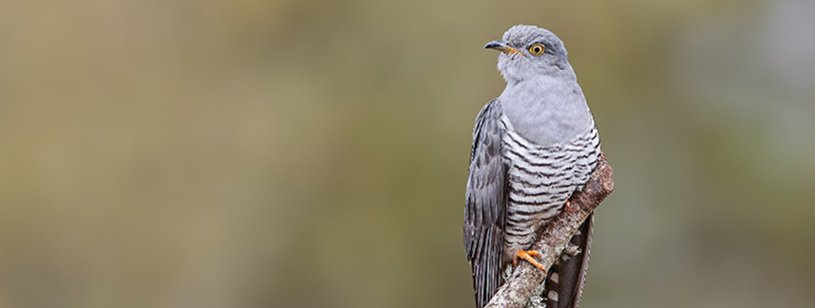
The common cuckoo (Cuculus canorus) is known for laying its eggs in the nests of other birds. Those host birds raise its young, a reproductive strategy called brood parasitism. Not every bird in the cuckoo family has this way of reproducing.
The common cuckoo is a migratory bird that feeds largely on invertebrates. Its call is familiar in many regions, but it is not a songbird in the taxonomic sense of a passerine.
It is still widespread, but declines in insects and in host birds, together with climate change, are affecting its migration and breeding in some areas.
Quick facts
| Common name | Common cuckoo |
| Scientific name | Cuculus canorus |
| Typical lifespan | Usually a few years in the wild |
| Length | About 32-34 cm |
| Wingspan | About 54-60 cm |
| Weight | About 95-130 g |
| Diet type | Insectivore (insects, especially hairy caterpillars) |
| Main predators | Sparrowhawks, falcons and other birds of prey; cats and other predators |
| Conservation status | Least Concern (IUCN); declining in some European countries |
| Distribution | Breeds in Europe and Asia; winters in Africa and southern Asia |
| Living environment | Woodland, forest edges, grassland, heaths, reed beds, moorland |
Interesting facts
- It never raises its own chicks - The common cuckoo lays its eggs in other birds' nests, and the cuckoo chick pushes the host's eggs or chicks out of the nest.
- Copying host eggs - Different female cuckoos specialise in different host species, and their eggs often look very like those of their hosts.
- Only the male calls "cuckoo" - The famous two-note call is made by the male; the female has a bubbling call.
- A long migration - Cuckoos from Europe spend the winter in central Africa, flying many thousands of kilometres each way.
- It looks like a hawk - Its grey colour, long tail and barred underparts make it look like a sparrowhawk, which may help the female get close to host nests.
Records and remarkable features
- A common cuckoo lays eggs in host nests; the resulting chick is raised by another bird species.
Physical characteristics and adaptations
The common cuckoo (Cuculus canorus) is a slim, long-tailed bird that looks rather like a small bird of prey, especially a sparrowhawk.
Key physical adaptations
- A slim, long body - Allows fast, direct flight.
- Hawk-like plumage - The grey upperparts and barred underparts resemble a sparrowhawk, which may scare small birds away from their nests for a short time.
- A slightly curved bill - Suited to catching insects and caterpillars, its main food.
- Short legs and zygodactyl feet - Two toes point forward and two backward, giving a good grip on branches.
- Yellow eyes and eye-ring - Help give it a hawk-like appearance.
Dimensions and variations between sexes
| Characteristic | Males | Females |
|---|---|---|
| Body length | About 32-34 cm | About 32-34 cm |
| Weight | About 110-130 g | About 95-120 g |
| Wingspan | About 54-60 cm | Similar to the male |
| Plumage colour | Blue-grey above, barred below | Usually grey like the male; some females are rufous-brown with strong barring |
Habits and behaviour
The common cuckoo is a solitary bird with unusual breeding behaviour: it does not build a nest or raise its young.
Daily life
- Active by day - It spends much of its time searching for insects, and females spend a lot of time watching host birds build their nests.
- Solitary - Cuckoos do not form lasting pairs, and males and females may mate with several partners.
- Mobile - Females move around their area to lay eggs in different nests.
- Migratory - It breeds in Europe and Asia and spends the winter in Africa or southern Asia.
Communication
- The male's "cuckoo" call - Used to attract females and mark territory.
- The female's bubbling call - Research suggests it sounds like a sparrowhawk, which may distract host birds.
- Begging calls of the chick - A reed warbler-raised cuckoo chick makes calls that sound like a whole brood of host chicks, so the hosts bring more food.
Survival strategies
- Brood parasitism - It lays eggs in other birds' nests and leaves the hosts to raise its young.
- Speed - A female can lay an egg in a host nest in about ten seconds.
- Removing competition - Soon after hatching, the cuckoo chick pushes the host's eggs and chicks out of the nest.
Habitat and geographic distribution
The common cuckoo is a widespread migratory bird that lives wherever its host birds and plenty of insects are found.
Distribution context
| Region | Population information | Trends |
|---|---|---|
| Western Europe | Widespread, but declining in some countries | In Britain, numbers have fallen sharply since the 1980s |
| Central and Eastern Europe | Common | Declining in some farmland areas |
| Central and East Asia | Widespread | Not well known |
| Africa and southern Asia (wintering areas) | European cuckoos winter mainly in central Africa | Affected by habitat loss |
Habitat types
- Woodland and forest edges - Provide many host nests and plenty of caterpillars.
- Grassland, heaths and farmland - Used by cuckoos that lay in the nests of meadow pipits and other open-country birds.
- Reed beds and wetlands - Where cuckoos lay their eggs in reed warbler nests.
- Moorland and mountains - Cuckoos are also found in uplands, where meadow pipits are common hosts.
Environmental change
- Fewer host birds - Pesticides and habitat loss reduce the number of host nests.
- Timing - Climate change makes some host birds breed earlier, while cuckoos return from Africa at about the same time, so they may arrive too late.
- Fewer insects - Large caterpillars and other insects, its main food, have declined in many areas.
Diet and feeding
The common cuckoo eats mainly insects, especially large hairy caterpillars that many other birds avoid.
What does the cuckoo eat?
| Food group | Examples and context |
|---|---|
| Insects | Beetles, grasshoppers, crickets, dragonflies |
| Caterpillars (including hairy ones) | Hairy caterpillars of tiger moths, eggar moths and others |
| Other invertebrates | Spiders, worms, small snails |
| Eggs (occasionally) | Females sometimes eat a host egg when they lay their own |
Feeding methods
- Picking from leaves - It searches trees and bushes for caterpillars.
- Feeding on the ground - It drops from a perch to catch insects on the ground.
- Eating hairy caterpillars - The cuckoo can eat hairy caterpillars; it removes many of the hairs and regularly sheds the lining of its stomach where hairs collect.
- Seasonal diet - It feeds heavily before migration to build up fat reserves.
Reproduction and life cycle
The common cuckoo is a brood parasite: it lays its eggs in the nests of other birds, which then raise its young.
Breeding season
- It usually lasts from late April to July in Europe.
- Males give their famous "cuckoo" call to attract females.
- Females watch host birds building their nests to find the right moment to lay.
Nest Parasitism
| Characteristic | Details |
|---|---|
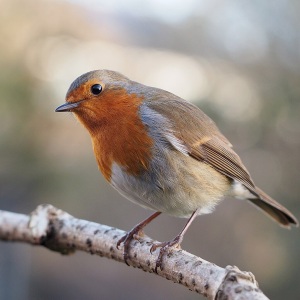
| Common host species | Reed warblers, meadow pipits, dunnocks, robins, pied wagtails |
| Number of eggs | A female can lay up to about 20-25 eggs a season, each in a different nest |
| Quick laying | The cuckoo lays its egg in about ten seconds, often taking one host egg away |
| Egg mimicry | Cuckoo eggs often match the colour and pattern of the host's eggs, which reduces rejection |
| Behaviour of the chick | Within a day or two of hatching, the cuckoo chick pushes the other eggs and chicks out of the nest |
Raising young
- A cuckoo chick stimulates host adults to feed it. In many host nests it removes competing eggs or chicks; feeding is not simply a rule that the largest chick always wins.
- It grows quickly and soon becomes much bigger than its foster parents.
- It leaves the nest at about 17-21 days old and is fed by the hosts for a few more weeks.
- Young cuckoos migrate to Africa alone, weeks after the adults, without ever being shown the way.
Name and history
Origin of the name
- The name "cuckoo" imitates the male's call, as do the names in many other languages.
- The scientific name Cuculus canorus comes from Latin: cuculus means "cuckoo" and canorus means "melodious".
- In other languages: German - "Kuckuck"; French - "coucou"; Romanian - "cuc".
Taxonomic classification
| Classification | Name |
|---|---|
| Kingdom | Animalia |
| Phylum | Chordata |
| Class | Aves |
| Order | Cuculiformes |
| Family | Cuculidae |
| Genus | Cuculus |
| Species | Cuculus canorus |
Evolution and fossils
- The cuckoo family includes about 150 species around the world.
- Only some cuckoos are brood parasites; many, such as roadrunners and coucals, raise their own young.
- Brood parasitism evolved several separate times within the cuckoo family.
Cultural significance and mythology
The cuckoo is one of the most symbolic birds in European folklore: it is the herald of spring, but also linked with trickery and unfaithfulness.
The cuckoo in myths and symbolism
- Herald of spring - In many European cultures, the first cuckoo call of the year is a sign that spring has arrived.
- Foretelling the future - In Romanian and other European folklore, the number of cuckoo calls is said to show how many years a person still has to live.
- A symbol of unfaithfulness - Because it leaves its eggs in other birds' nests, the cuckoo is linked with deception; the English word "cuckold", for a man whose wife is unfaithful, comes from "cuckoo".
- Japan - The call of the lesser cuckoo (hototogisu) is a famous theme in Japanese poetry.
- Greek mythology - According to legend, Zeus turned himself into a cuckoo to win the love of Hera.
Cuckoo in popular traditions
- In Romania and elsewhere in Europe, people say that you should have money in your pocket when you hear the first cuckoo of spring, so that you will have money all year.
- In Romanian tradition, the cuckoo is said to stop calling around Sânziene (24 June).
- In Germany and Switzerland, the cuckoo gave its name to the famous cuckoo clock.
Conservation status and threats
The common cuckoo (Cuculus canorus) is listed as Least Concern by the IUCN, but its numbers have fallen in some parts of Europe.
Conservation status
| Region | Population information | Trends |
|---|---|---|
| Western Europe | Declining in places | Affected by habitat loss and fewer insects |
| Central and Eastern Europe | Common | Stable in some places, declining in others |
| Central and East Asia | Widespread | Not well known |
| Africa (wintering areas) | Important for European cuckoos | Affected by habitat change |
Main pressures
- Decline of host birds - Intensive agriculture and pesticides affect the small birds that raise cuckoo chicks.
- Habitat change - Loss of woodland, reed beds and rough grassland reduces breeding areas.
- Climate change - Changes in host breeding times make it harder for cuckoos to time their egg-laying.
- Fewer insects - Declines in large caterpillars reduce the cuckoo's food.
- Migration hazards - Drought in the Sahel and loss of stopover habitats can affect survival on migration.
Protection measures
- Protecting habitats - Preserving woodland, reed beds and wetlands helps both cuckoos and their hosts.
- Reducing pesticides - Helps protect the insects that cuckoos eat.
- Tracking - Scientists have fitted cuckoos with satellite tags to follow their migration to Africa.
- Awareness - Surveys of the first cuckoo calls each spring help follow population changes.
In popular culture
Thanks to its distinctive call and unusual behaviour, the cuckoo appears in literature, music and films.
Cuckoo in literature
- "Sumer is icumen in" - A 13th-century English song that celebrates spring with the words "Lhude sing cuccu" ("Sing loudly, cuckoo").
- "To the Cuckoo" (1807) - A poem by William Wordsworth.
- "One Flew Over the Cuckoo's Nest" (1962) - Ken Kesey's novel; here "cuckoo" means "crazy".
Cuckoo in music
- "Le coucou" (1735) - A famous harpsichord piece by Louis-Claude Daquin that imitates the cuckoo's call.
- "The Cuckoo and the Nightingale" - An organ concerto by George Frideric Handel.
- "On Hearing the First Cuckoo in Spring" (1912) - An orchestral piece by Frederick Delius.
- Beethoven's "Pastoral" Symphony and Saint-Saëns's "The Carnival of the Animals" also imitate the cuckoo.
Cuckoo in movies and animations
- "One Flew Over the Cuckoo's Nest" (1975) - The film of Kesey's novel, starring Jack Nicholson, won five Oscars.
- Cuckoo clocks often appear in cartoons to mark the passing of time or for comic effect.
The cuckoo as symbol and mascot
- Cuckoo clocks - Clocks with a cuckoo that calls the hours were made in the Black Forest in Germany from the 18th century.
- Trickery - The cuckoo is often used in stories as a symbol of cunning.
- Spring - The cuckoo's call is used in poetry and music as a sign of spring.