SealInteresting facts and information
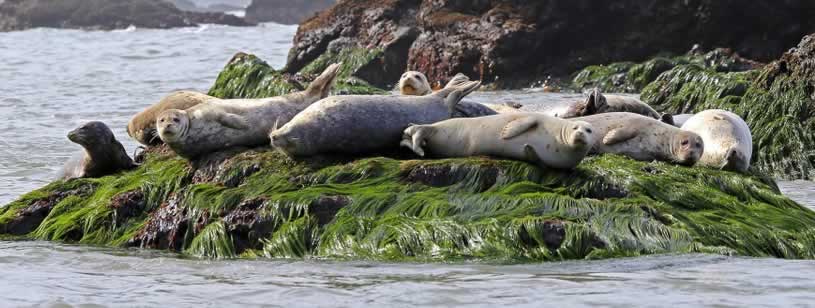
True seals belong to the family Phocidae. They are mammals adapted to life in water, but they return to land or ice to rest and give birth. They differ from sea lions, which have visible external ear flaps.
Seals are excellent hunters that use their sensitive whiskers to detect the water movements of prey such as fish, crustaceans and squid. Some species, such as elephant seals, can stay underwater for up to about two hours. Although they are well adapted to the sea, seals come onto land or ice to rest, breed and moult. They play an important role in marine ecosystems as predators of fish and other sea animals.
Quick facts
| Common name | Seal |
| Scientific name | Phocidae |
| Typical lifespan | About 20-35 years in the wild, depending on species |
| Maximum speed | Up to about 30-35 km/h in water in some species |
| Dimensions | About 1.1 - 6 m long (depending on species) |
| Weight | About 50 - 3,700 kg |
| Diet type | Carnivore (fish, crustaceans, squid and octopus) |
| Main predators | Polar bears, sharks, orcas, humans |
| Conservation status | Varies by species; some are Endangered |
| Distribution | Arctic, Antarctic, Atlantic, Pacific, Mediterranean |
| Habitat | Cold and temperate seas, coasts, sea ice, islands |
- Primary category:Mammals
- Explore this animal's categories:
Interesting facts
- The southern elephant seal is the largest true seal - Males can grow to about 6 metres long and weigh up to about 3,700 kg, much heavier than a polar bear.
- Seals "see" with their whiskers - Their sensitive whiskers detect water movements made by prey, helping them hunt even in total darkness.
- They can stay underwater for a long time - Elephant seals can dive for up to about 2 hours, and Weddell seals slow their metabolism to save oxygen.
- Some mothers fast while nursing - Harp seal and hooded seal mothers feed their pups extremely rich milk, with up to about 50-60% fat, while eating little or nothing themselves.
- Seals can sleep in the water - Some species sleep floating at the surface or resting underwater for short periods, often with only part of the brain asleep.
- Some colonies are enormous - Grey seals, elephant seals and harp seals gather in large breeding colonies, and harp seals can number hundreds of thousands in one area.
- They are deep divers - Weddell seals dive to about 600 metres, and elephant seals to more than 1,500 metres.
- They are built for the cold - A layer of blubber up to about 10 cm thick keeps them warm in cold Arctic and Antarctic waters.
Records and remarkable features
- True seals belong to the family Phocidae. They are mammals adapted to life in water, but they return to land or ice to rest and give birth. They differ from sea lions, which have visible external ear flaps.
Characteristics
Seals are semi-aquatic mammals specialised for life in water. Their long, streamlined bodies let them swim fast and efficiently. Unlike sea lions, true seals have no external ear flaps and swim mainly by moving their bodies and hind flippers.
Main physical features:
| Feature | Details |
|---|---|
| Length | About 1.1 - 6 m (depending on species) |
| Weight | About 50 - 3,700 kg |
| Blubber | Up to about 10 cm thick, for insulation |
| Top speed in water | Up to about 30-35 km/h in some species |
| Front flippers | Small, used for steering |
| Hind flippers | Strong, used for swimming |
| Fur colour | Grey, brown, black, white or spotted (depending on species) |
Special adaptations:
- Waterproof fur and a thick layer of blubber - Protect against low temperatures.
- Special blood and muscles - Store large amounts of oxygen, which allows long dives.
- Very sensitive whiskers - Detect water movements and prey in the dark.
- No external ears - Reduce drag and help them swim and dive efficiently.
- Slowing the heart - Seals can lower their heart rate to save oxygen during long dives.
Habits and behaviour
Seals range from very social to mostly solitary, depending on the species. They spend most of their time in water but come onto land or ice to rest, breed and moult.
Social behaviour:
- Colonial species - Elephant seals, grey seals and harp seals gather in large colonies, sometimes with thousands of animals.
- Solitary species - Leopard seals and hooded seals usually hunt and live alone.
- Communication with sounds and movement - Especially in the breeding season, males use calls, postures and fights to show dominance.
Feeding and hunting:
- Specialised carnivores - Seals eat fish, crustaceans, squid and octopus.
- Hunting techniques - Some species, such as the leopard seal, actively chase their prey; others wait in ambush and attack quickly; Weddell seals can stay underwater for more than an hour.
Breeding and raising young:
- Breeding seasons vary - Most species give birth on ice or on sandy and rocky beaches.
- Many pups have thick fur - It keeps them warm until they build up a layer of blubber.
- Very rich milk - Pups grow quickly, gaining up to about 2 kg a day in some species.
Habitat and geographic distribution
Most seals are adapted to cold waters, but some species live in temperate or even tropical seas. They prefer coasts, remote islands and polar regions, where they find plenty of food and safe places to breed.
Habitat types:
| Habitat | Common species |
|---|---|
| Arctic regions | Ringed seal (Pusa hispida), harp seal (Pagophilus groenlandicus) |
| Antarctic regions | Weddell seal (Leptonychotes weddellii), leopard seal (Hydrurga leptonyx) |
| Temperate areas | Grey seal (Halichoerus grypus), harbour seal (Phoca vitulina) |
| Tropical waters | Hawaiian monk seal (Neomonachus schauinslandi) |
Geographic distribution:
- The Arctic and Southern Oceans - Dominated by cold-adapted species with thick blubber and dense fur.
- The North Atlantic and North Pacific - Home to grey seals and harbour seals.
- The Mediterranean - Home to the rare Mediterranean monk seal.
Impact of climate change and human activities:
- Melting sea ice - Reduces breeding areas for ice-dependent species.
- Overfishing - Reduces the food available to seals.
- Water pollution - Toxic substances harm seal health and can shorten their lives.
- Hunting and disturbance - Some species, such as monk seals, are threatened by human activities.
Seals are important indicators of ocean health, and declines in their numbers can signal serious problems in marine ecosystems.
Diet and feeding
Seals are carnivorous marine predators that eat mainly fish, crustaceans and cephalopods. Many species change their diet with the seasons and the food available, and they use different hunting techniques.
Types of food:
| Food group | Seals that eat it |
|---|---|
| Fish (salmon, herring, cod, mackerel) | Grey seal, harbour seal, ringed seal |
| Squid and octopus | Elephant seal, Weddell seal, leopard seal |
| Crustaceans (shrimps, crabs, krill) | Crabeater seal, ringed seal |
| Penguins and other seals | Leopard seal, the main seal predator of penguins |
Feeding methods:
- Active hunting - Species such as the leopard seal chase their prey and attack quickly and precisely.
- Hunting under the ice - Weddell seals hunt fish in the dark under the Antarctic sea ice.
- Deep diving - Some species, such as elephant seals, dive to depths of 1,500 metres or more to find food.
- Sensing vibrations - Sensitive whiskers detect water movements, which is essential when visibility is poor.
- Swallowing prey whole - Seals usually swallow prey whole or tear it into pieces, because their teeth are not adapted for chewing.
Reproduction and life cycle
Seals have varied mating systems. In some species, dominant males mate with many females. Pups are born on land or ice and are fed extremely rich milk, so they grow quickly.
Life cycle stages:
| Stage | Approximate timing | What happens |
|---|---|---|
| Pregnancy | About 9 - 12 months | Many species delay implantation so that pups are born at the best time of year. |
| Birth | Usually spring or summer | Many pups are born with thick fur that keeps them warm. |
| Nursing | From about 4 days to several weeks | The milk contains about 40-60% fat, so pups grow fast. |
| Independence | Soon after weaning | Weaned pups are left alone and must learn to hunt. |
| Maturity | About 3 - 8 years | Mature males compete for females. |
Mating and breeding behaviour:
- Dominant males defend harems - In species such as the elephant seal, a single male may mate with dozens of females.
- Females give birth on land or ice - Pups need to stay safe from predators while they build up a layer of blubber.
- Pups grow fast on rich milk - In some species, a pup can double its weight in the first couple of weeks.
- Mothers leave after weaning - Once the pups are weaned, they must fend for themselves.
Name and history
People have known and hunted seals for thousands of years, and seals play an important role in mythology, folklore and the history of exploration. Scientists began classifying them in the 18th century.
Origin of the name:
- The English word "seal" comes from Old English seolh and has relatives in other Germanic languages.
- The scientific name Phocidae comes from the Greek phōkē, "seal", and is used for true seals, as opposed to sea lions, fur seals and walruses, which belong to other families.
Taxonomic classification:
| Taxonomic rank | Name |
|---|---|
| Kingdom | Animalia |
| Phylum | Chordata |
| Class | Mammalia |
| Order | Carnivora |
| Family | Phocidae (true seals) |
| Genera and species | About 14 genera and 18-19 living species |
Seals in history and culture:
- Arctic peoples (Inuit, Sámi, Aleuts and others) - Seals were a vital source of food, clothing and materials for tools.
- Vikings and northern explorers - Hunted seals for their blubber, which was used for lamp oil, and for their skins.
- Commercial sealing - From the 18th century, Europeans and Americans hunted seals heavily for oil and fur, which caused severe declines; the Caribbean monk seal was last seen in 1952 and is now extinct.
Scientific discovery and classification:
- Carl Linnaeus (1758) - Included seals in his scientific classification of animals.
- James Cook's voyages (1772-1775) - Reported large seal colonies in the far south, which soon attracted seal hunters.
- Modern research - Shows the importance of seals in marine food webs.
Seals remain symbols of endurance and adaptation to extreme environments and have great cultural and ecological importance worldwide.
Cultural significance and mythology
In the myths and cultures of many peoples, seals are symbols of mystery and adaptability, living between the sea and the land. Throughout history, they have been respected, feared or seen as supernatural beings.
Seals in mythology and folklore:
- Inuit mythology - Seals were hunted with respect to keep the balance between people and the sea. In the legend of Sedna, the sea goddess, her severed fingers become the seals and other sea animals.
- Scottish, Irish and Faroese legends - Selkies are creatures that can shed their sealskin and take human form; if someone steals the skin, the selkie cannot return to the sea.
- North Pacific peoples - For the Aleuts and other peoples of the region, seals are important animals in stories about the spirits of the sea.
What seals symbolise:
- Plenty - In some cultures, seals were a symbol of good fortune and successful fishing.
- A link between worlds - Because they live both in water and on land, seals symbolise transition and adaptability.
- The souls of the drowned - In some traditions, seals were thought to be the souls of people lost at sea, so sailors treated them with respect.
Conservation status and threats
Seals are indicators of the health of marine ecosystems. Over the past centuries, overhunting, climate change and pollution have affected seal populations, and some species are at risk of extinction.
Conservation status
| Species | Status (IUCN) |
|---|---|
| Mediterranean monk seal (Monachus monachus) | Vulnerable (recently improved from Endangered) |
| Hawaiian monk seal (Neomonachus schauinslandi) | Endangered |
| Ringed seal (Pusa hispida) | Least Concern overall, but some subspecies are threatened |
| Southern elephant seal (Mirounga leonina) | Least Concern |
| Leopard seal (Hydrurga leptonyx) | Least Concern |
Main threats:
- Climate change - Melting sea ice reduces breeding areas for seals, especially in the Arctic.
- Habitat loss - Coastal development and tourism disturb the places where seals rest and give birth.
- Overfishing - Reduces the food available to seals and creates conflict with fishermen.
- Accidental capture in fishing nets - Many seals become trapped in nets and drown.
- Pollution - Plastic waste, oil and toxic chemicals harm seals and their prey.
Conservation efforts:
- Hunting restrictions - Many countries have banned or restricted seal hunting, and trade in seal products is limited in places such as the EU.
- Protected areas - Marine protected areas help conserve seal populations.
- Rescue and rehabilitation - Rescue centres in many countries treat seals injured by pollution, nets and accidents.
- Monitoring - Scientists use satellite images, aerial surveys and drones to study seal colonies.
Seals are essential for the balance of marine ecosystems, and protecting them is a priority for many international organisations.
In popular culture
Seals in literature:
- Seal Morning (Rowena Farre, 1957) - A memoir about a girl's friendship with a seal in the Scottish Highlands.
- Children's books - Seals are common characters in stories about sea life and protecting nature.
Seals in film and television
- Happy Feet (2006) - A leopard seal appears as a menacing hunter, showing the harsh side of the Antarctic food chain.
Seals in cartoons and video games:
- Pokémon - Seel and Dewgong are based on seals and sea lions.
The seal as a cultural symbol:
- Art - In many cultures, seals appear in art as symbols of protection and a connection with nature.
- Logos - Some environmental organisations use seals in their campaigns to protect marine life.