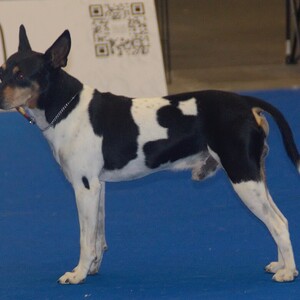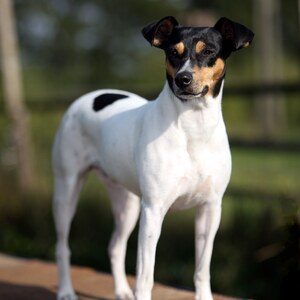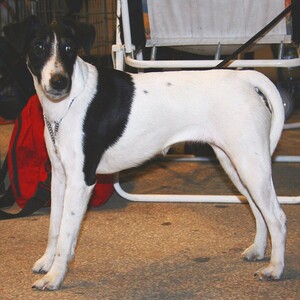
Glen of Imaal TerrierCharacteristics, history, training and care
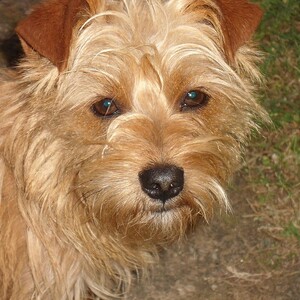
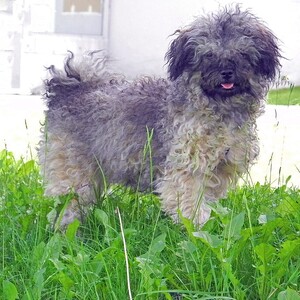
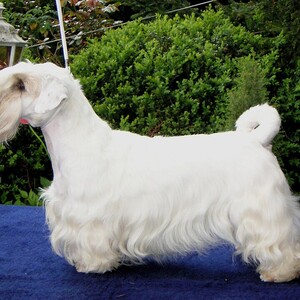
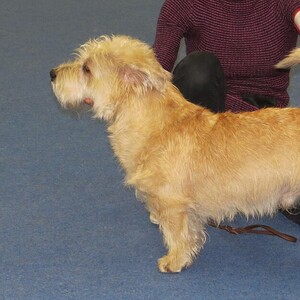
Glen of Imaal Terrier. · Томасина / Wikimedia Commons, CC BY-SA 3.0. Cropped and resized.
The Glen of Imaal Terrier is a rare Irish terrier from the Glen of Imaal valley, in County Wicklow. It is a “big dog on short legs”: low to the ground, strong, with slightly bowed front legs. It is brave when needed, but otherwise gentle and docile, calmer than most terriers and very affectionate.
Quick facts
| Common name | Glen of Imaal Terrier (Glen) |
| Scientific name | Canis lupus familiaris |
| Country of origin | Ireland (Wicklow) |
| Official recognition | FCI, definitively since 17 September 1975 (group 3, large and medium-sized terriers; standard no. 302); Irish Kennel Club, since 1934; AKC, since 2004 |
| Lifespan | 10–15 years, according to the AKC |
| Size (males) | maximum 35.5 cm at the withers; about 16 kg |
| Size (females) | slightly smaller and lighter |
| Coat type | Medium-length, harsh, with a soft undercoat |
| Common colours | Blue brindle or wheaten (from light wheaten to golden red) |
| Energy level | Moderate |
| Suited to an apartment? | Yes |
| Temperament | Brave, gentle, docile, affectionate, calm |
| Tendency to aggression | Low |
| Good with children | Average to good |
| Good with other animals | Average; does not make friends easily with other dogs |
| Genetic predispositions | Hip dysplasia, cone-rod dystrophy (an eye disease) |
- Primary category:Dog breeds
- Explore this animal's categories:
History and origin
The FCI standard says the Glen of Imaal is an old breed, long overlooked, linked to the harsh land of the Glen of Imaal valley. The farmers there, descendants of soldiers who had been given land in the 16th and 17th centuries as payment for their service to the British Crown, needed a dog that would earn its keep.
The dog turned the spit wheel for hours on end and was once made to fight other dogs, customs that have since disappeared. The Irish Kennel Club recognised the breed in 1934. Wikipedia says it came close to disappearing and was rebuilt in the 20th century; today there are about 3,100 dogs in the world.
How the breed developed
- 16th–17th centuries – Soldiers receive land in the Glen of Imaal; the dogs work on farms.
- 1934 – The Irish Kennel Club recognises the breed.
- 17 September 1975 – The FCI recognises the breed.
- 2004 – The AKC recognises the breed.
- 2017 – The Canadian Kennel Club votes for full recognition.
Breed rating
| Feature | Stars |
|---|---|
| Training and intelligence | ★★★☆☆ |
| Easy to train | ★★★☆☆ |
| Intelligence | ★★★★☆ |
| Independence | ★★★★☆ |
| Stubbornness | ★★★★☆ |
| Behaviour and temperament | ★★★★☆ |
| Affectionate with family | ★★★★★ |
| Friendly with children | ★★★☆☆ |
| Good with other dogs | ★★★☆☆ |
| Good with cats and other animals | ★★☆☆☆ |
| Loyalty | ★★★★★ |
| Tendency to be aggressive | ★★☆☆☆ |
| Tendency to bark | ★★☆☆☆ |
| Needs and care | ★★★★☆ |
| Shedding | ★★☆☆☆ |
| Needs frequent grooming | ★★★☆☆ |
| Activity and lifestyle | ★★★★☆ |
| Energy level | ★★★☆☆ |
| Daily exercise needs | ★★★☆☆ |
| Suited to apartment life | ★★★★☆ |
| Health and longevity | ★★★★☆ |
| Life expectancy | ★★★★☆ |
| Predisposition to genetic diseases | ★★★☆☆ |
| Working abilities and uses | ★★★☆☆ |
| Good watchdog | ★★★★☆ |
| Good companion dog | ★★★★★ |
Indicative rating: 5 stars means the highest level. It is based on the ratings the American Kennel Club gives the breed and on the FCI standard.
Physical characteristics
Wikipedia describes it as a “big dog on short legs”, a breed with achondroplastic dwarfism, more solid than it looks in photographs. The AKC says it has a broad head, slightly bowed front legs and a wiry, single coat.
General appearance
The ears are rose or half-pricked. The topline is straight and rises slightly towards the tail. Wikipedia says a Glen may need up to four years to mature fully.
| Feature | Glen of Imaal Terrier |
|---|---|
| Size | Small but sturdy |
| Height at the withers | maximum 35.5 cm |
| Weight | about 16 kg (males) |
| Coat | Harsh, medium-length, with an undercoat |
| Legs | Short, the front ones slightly bowed |
| Ears | Rose or half-pricked |
The accepted colours are blue brindle (not reaching black) and wheaten, from light wheaten to golden red. Puppies may be born blue, wheaten or red, and the light ones often have a blue mask that fades with age.
Training and socialisation
The standard describes it as active, agile and silent when working, brave when needed, but otherwise gentle and docile. Its loyal, affectionate nature makes it a very suitable house dog. It is less excitable than other terriers.
The AKC says Glens are versatile, easy to train and very clever, but they are still terriers: brave, sometimes stubborn and very interested in small animals. They love people, but usually do not make friends easily with other dogs.
Tips for effective training
- Be patient. It can be stubborn, like any terrier.
- Be careful with rodents. It sees them as natural prey.
- Introduce it carefully to other dogs. It does not make friends with them easily.
- Do not push it as a puppy. The AKC says to avoid long walks for puppies with bowed legs.
Activity needs and lifestyle
The AKC says it is more laid-back than the typical terrier and needs moderate exercise. As a dwarf breed with bowed front legs, puppies should not be pushed into long walks on the lead.
| Activity | How often | Why it matters |
|---|---|---|
| Short, cheerful walks | daily | Moderate exercise |
| Search games | several times a week | Terrier instinct |
| Obedience exercises | daily | Reward-based training |
Tips for a balanced life
- Avoid jumps from a height.
- It adapts well to family life.
- Keep it on the lead near small animals.
Care and health
Coat and skin care
The AKC says the double coat should be brushed moderately every week, so the soft hair around the ears, neck, legs and belly does not tangle, and stripped two or three times a year. That way it sheds very little.
Common health problems
The AKC says Glens are generally healthy, but breeders test for:
| Condition | Description | Common symptoms |
|---|---|---|
| Hip dysplasia | The hip joint forms incorrectly and, over time, arthritis develops | Limping, difficulty getting up or jumping, hip pain |
| Cone-rod dystrophy | An inherited disease of the retinal cells | Gradually worsening eyesight, especially in adulthood |
Other care
- Brush its teeth regularly.
- Trim the nails when they start to touch the floor.
- Check the ears weekly.
Diet and nutrition
The AKC recommends good-quality food suited to its age and activity level. Extra weight puts a strain on its front legs.
Tips for a healthy diet
The table gives a starting estimate, calculated with the formula from the Merck Veterinary Manual. The first two calorie columns show the calories per day for a healthy adult dog. The last column shows what this means in dry food with 3,500–4,000 kcal per kilogram.
| Dog's weight | Calories per day (neutered) | Calories per day (not neutered) | Dry food per day (approximate) |
|---|---|---|---|
| 13 kg | 770 kcal | 860 kcal | 190–250 g |
| 15 kg | 850 kcal | 960 kcal | 210–270 g |
| 16 kg | 900 kcal | 1,010 kcal | 220–290 g |
- Training treats count towards the daily portion.
- Give it its food in two meals a day.
- A dog is at the right weight when you can feel its ribs under the coat without pressing hard.
Foods to avoid
Some human foods are dangerous for dogs: chocolate, coffee, grapes and raisins, onions, garlic, xylitol (a sweetener used in chewing gum), macadamia nuts and alcohol.
Reproduction and development
Physical and emotional maturity
In dogs, sexual maturity usually comes between 6 and 12 months. Small breeds become adults faster than large ones, usually at around one year.
Mating and pregnancy
Pregnancy lasts about 63 days, counted from ovulation. Mating a female on her first heat is not recommended. The FCI standard requires that only healthy dogs of typical breed appearance are used for breeding.
Caring for the puppies
In small breeds, a litter has 3–4 puppies on average. The puppies are very small and fragile in the first weeks, so they must be kept warm and handled with care. Socialisation starts early: gentle handling, everyday noises and new people.
Interesting facts
- It turned the spit. It was made to turn the spit wheel for hours on end.
- One of the four Irish terriers. It is one of the four native Irish terrier breeds.
- Rare. Wikipedia estimates the world population at about 3,100 dogs.
- It matures late. It may need four years to become an adult.
- Silent at work. The standard says it works in silence.
Frequently asked questions
Where does the Glen of Imaal Terrier come from?
From the Glen of Imaal valley, County Wicklow, Ireland.
How big does it get?
Males measure at most 35.5 cm and weigh about 16 kg; females are slightly smaller.
Does it bark a lot?
No, it is calmer than most terriers.
How long does it live?
The AKC gives 10–15 years.