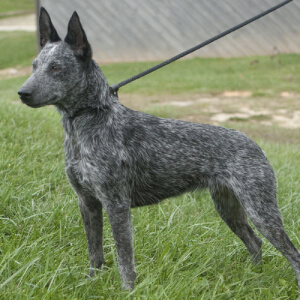
Australian Stumpy Tail Cattle DogCharacteristics, history, training and care
Quick facts
| Common name | Australian Stumpy Tail Cattle Dog |
| Scientific name | Canis lupus familiaris |
| Country of origin | Australia |
| Official Recognition | Recognised by ANKC and FCI |
| Typical lifespan | About 12-15 years |
| Dimensions (Male) | About 46-51 cm / 17-23 kg |
| Dimensions (Female) | About 43-48 cm / 15-20 kg |
| Coat type | Short, dense, weather-resistant |
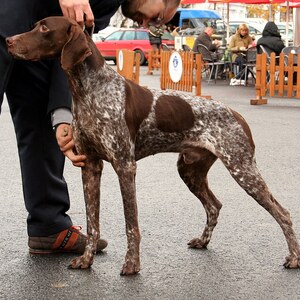
| Common colours | Blue speckle or red speckle, with or without darker patches |
| Energy Level | Very high |
| Suitable for apartment? | Suitability depends on exercise, training, safe management and the individual dog |
| Temperament | Independent, hard-working, devoted |
| Behaviour towards unfamiliar people and dogs | Individual temperament varies; socialisation and careful management around livestock matter |
| Compatibility with children | Depends on the individual; adult supervision and suitable handling are essential |
| Compatibility with other animals | Depends on socialisation, herding drive and the animals involved |
| Genetic predispositions | Congenital deafness, hip dysplasia, eye problems |
- Primary category:Dog breeds
- Explore this animal's categories:
History and Origin
The Australian Stumpy Tail Cattle Dog is a herding breed developed in the 19th century to work cattle over long distances and rough country in Australia. It comes from crosses between British working dogs and dingoes.
Evolution of the breed
- The 19th century - Australian cattlemen needed a tough dog that could handle half-wild cattle on long drives in a hot, harsh climate.
- Origins - British drovers' dogs, such as the old Smithfield, were crossed with the dingo to create a hardier, more independent dog; the same early crosses also led to the Australian Cattle Dog.
- Natural short tail – The breed’s tail is naturally short. This does not establish that tail length guarantees protection against injuries.
- Official recognition - The ANKC (Australian National Kennel Council) recognises the Stumpy Tail as a breed separate from the Australian Cattle Dog, and the FCI has also recognised it.
Breed Evaluation
The Australian Stumpy Tail Cattle Dog is an independent, intelligent working dog, best suited to farmers and very active people. These are general editorial ratings, not measured scores; individual dogs vary.
| Characteristic | Stars |
|---|---|
| Training and Intelligence | ★★★★★ |
| Easy to train | ★★★★☆ |
| Intelligence | ★★★★★ |
| Level of independence | ★★★★★ |
| Level of stubbornness | ★★★★☆ |
| Behavior and Temperament | ★★★★☆ |
| Affectionate with family | ★★★★☆ |
| Friendly with children | ★★★☆☆ |
| Compatible with other dogs | ★★★☆☆ |
| Compatible with Cat and other animals | ★★☆☆☆ |
| Degree of loyalty | ★★★★★ |
| Tendency to be aggressive | ★★★☆☆ |
| Tendency to bark | ★★★★☆ |
| Needs and Care | ★★★★☆ |
| Shedding level | ★★★☆☆ |
| Requires frequent care | ★★☆☆☆ |
| Activity and Lifestyle | ★★★★★ |
| Energy level | ★★★★★ |
| Daily exercise requirement | ★★★★★ |
| Suitable for apartment living | ★☆☆☆☆ |
| Health and Longevity | ★★★★☆ |
| Life expectancy | ★★★★★ |
| Predisposition to genetic diseases | ★★★☆☆ |
| Work and Utility Features | ★★★★★ |
| He's a good herding dog. | ★★★★★ |
| Good companion dog | ★★★☆☆ |
Physical Characteristics
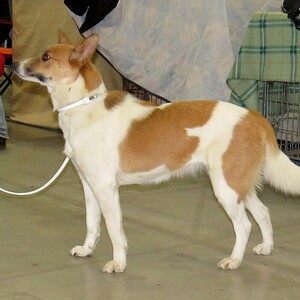
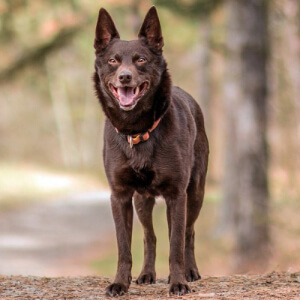
The Australian Stumpy Tail Cattle Dog is a medium-sized, muscular dog with a square, leggy outline, built for agility and endurance.
General appearance
- A strong, athletic body, about as long as it is tall, and slightly leaner and leggier than the Australian Cattle Dog.
- A short, dense, weather-resistant double coat that protects it from rain, heat and cold.
- A broad head with medium-sized, pricked ears, giving it an alert expression.
- A naturally short "stumpy" tail, no longer than about 10 cm.
- Dark brown, oval eyes with an alert, intelligent expression.
| Characteristic | Australian Stumpy Tail Cattle Dog |
|---|---|
| Size | Medium (about 43-51 cm at the shoulder) |
| Weight | About 15-23 kg |
| Coat | Short, dense, weather-resistant |
| Muzzle | Strong, medium length |
| Shedding tendency | Moderate |
| Build | Strong, square, agile |
This breed combines strength, agility and intelligence, and is a very effective cattle dog.
Training and Socialization
The Australian Stumpy Tail Cattle Dog is very intelligent but independent, which can make training a challenge for inexperienced owners. It was bred to work on its own and make quick decisions, so training must be clear and consistent.
Tips for effective training
- Early socialisation - Without early socialisation, it can become very wary of strangers. Meeting different places, people and animals helps it develop a balanced temperament.
- Reward-based training - The Stumpy Tail responds best to positive training with praise, food rewards and play.
- Regular obedience training - Commands such as "stay", "leave it" and "come" are important, as its strong herding instinct may lead it to nip at the heels of children or other animals.
- Clear rules - A calm, consistent owner who sets clear rules will have a more balanced, obedient dog.
- Avoiding boredom - It gets bored easily, so training should be varied and challenging.
The Australian Stumpy Tail Cattle Dog learns quickly, but it needs an experienced owner who can give it structure and mental stimulation.
Activity and Lifestyle Needs
The Australian Stumpy Tail Cattle Dog is a very active breed that needs daily physical and mental exercise to stay healthy and balanced.
| Activity | Recommended duration |
|---|---|
| Daily walks and runs | At least 60-90 min |
| Training (herding, agility, obedience) | A few hours a week |
| Interactive games | About 30 min |
| Mental stimulation exercises | About 20-30 min/day |
Recommendations for a balanced lifestyle
- Not ideal for apartments - As a very active breed, it needs plenty of space to run.
- Needs a job - Without a clear task, it may become destructive; it suits farms, large properties or very active families.
- Daily exercise is a must - If it is inactive for long, it can become anxious and frustrated.
- Dog sports - It does well in herding trials, agility, flyball and obedience.
The Australian Stumpy Tail Cattle Dog needs an active life and regular stimulation, ideally with an owner who can offer a busy, structured routine.
Care and Health
The Australian Stumpy Tail Cattle Dog is a hardy breed, but it has some inherited problems that should be monitored.
Fur and skin care
- Weekly brushing - Removes dirt and dead hair from the short coat.
- Baths only when needed - Frequent washing can remove the natural oils that protect the coat.
- Ear and claw checks - Ears should be checked regularly and claws trimmed to prevent tearing.
Common health problems
| Condition | Description | Common symptoms |
|---|---|---|
| Congenital deafness | Occurs in the breed, as in the Australian Cattle Dog; puppies can be tested (BAER test) | No reaction to sounds |
| Hip dysplasia | Abnormal development of the hip joint | Lameness, difficulty getting up |
| Eye problems | Including progressive retinal atrophy | Loss of vision, especially at night |
Other aspects of care
- Regular veterinary checks - Important for monitoring the joints, hearing and eyes.
- Healthy weight - A balanced diet helps prevent obesity and joint problems.
- Protection from heat - On hot days, it should not stay in the sun for long and should have shade and water.
Diet and Nutrition
The Australian Stumpy Tail Cattle Dog is an active dog that needs a balanced diet with good-quality protein to support its energy.
Recommendations for a healthy diet
Choose a complete, balanced diet for the dog’s age, size and health. Plan home-prepared diets and supplements with a qualified veterinarian. Good protein sources in complete dog foods include chicken, beef and turkey.
| Food type | Daily Amount (Adults) | Frequency |
|---|---|---|
| Premium dry food | Individual amount; follow complete-food guidance and veterinary advice | 2 meals/day |
| Home cooked food | Individual amount; follow a complete diet’s guidance and veterinary advice | 2 meals/day |
| Raw food: bacterial contamination is a concern | Individual amount; follow a complete diet’s guidance and veterinary advice | 2 meals/day |
Forbidden foods
Chocolate, grapes and raisins, onions and xylitol - toxic to dogs. / Cooked bones - can splinter and cause intestinal blockage. / Fatty and processed foods - can cause digestive problems. / One large meal a day - increases the risk of bloat and digestive problems.
The Australian Stumpy Tail Cattle Dog must be fed properly to keep its energy and avoid joint and digestive problems.
Reproduction and Development
Breeding can involve health risks. Responsible breeders use appropriate health screening, including hearing tests, and veterinary advice rather than assuming that a breed is free of reproductive problems.
Physical and emotional maturity
- Physical maturity: It reaches adult size at about 12-16 months, but continues to fill out until about 2 years.
- Emotional maturity: It usually becomes calmer and easier to manage only at about 2-3 years.
Mating and Gestation
- Breeding decisions - A veterinarian should assess health, maturity and relevant screening. A fixed age alone does not establish that a dog should be bred.
- Duration of gestation: Approximately 58-68 days, usually about 63 days.
- Average number of puppies: Usually about 4-8 puppies.
Puppy care
- The first 3 weeks: Puppies stay close to their mother and need warmth and milk.
- Between 4-8 weeks: They begin to eat solid food and learn social behaviour from their littermates and mother.
- Moving to a new home - Timing depends on health, development and local requirements. Continue careful socialisation and veterinary care.
The Australian Stumpy Tail Cattle Dog needs careful raising and responsible breeding, as it can inherit some diseases.
Curiosities and Interesting Facts
- One of Australia's oldest breeds - It dates back to the 19th century and was developed for handling half-wild cattle.
- Born with a short tail - Its stumpy tail is natural, not docked; it is caused by a natural gene, and some puppies are born with longer tails.
- Rarer than the Australian Cattle Dog - Although the two breeds look alike, the Stumpy Tail is much less common, especially outside Australia.
- No tan markings - Unlike the Australian Cattle Dog, the Stumpy Tail does not have tan markings; it is blue speckled or red speckled.
- Not for beginners - As a very independent, intelligent dog, it can be hard to manage without good training.
- Strong herding instinct - It may try to "herd" people, children or other animals.
Dog in Popular Culture
The Australian Stumpy Tail Cattle Dog is little known worldwide, but it is part of Australia's rural heritage.
The importance in Australian culture
- Valued by cattle farmers - Thanks to its working ability, it is still used on Australian cattle properties, where the animals can be hard to control.
- A rare heritage breed - Breed clubs in Australia work to keep this old working dog alive and healthy.