AphidsPlant-feeding insects and their life cycles
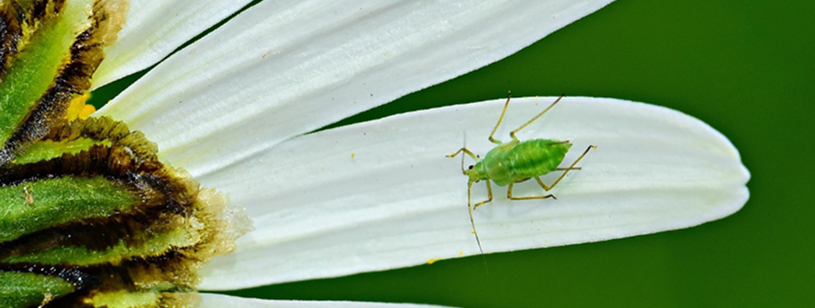
Aphids include many species; a green colour alone does not identify one.
Aphids are small insects that feed on plant sap. They belong to the superfamily Aphidoidea; most familiar garden species are placed in Aphididae. Many have both winged and wingless forms.
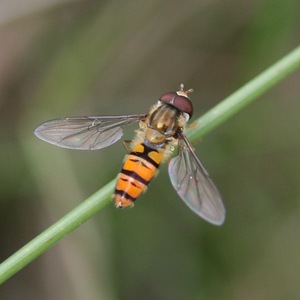
Some aphids damage crops or spread plant viruses. They also support food webs: ladybirds, lacewing larvae and the larvae of some hoverflies eat them, while tiny parasitoid wasps use them as hosts.
Quick facts
| Common names | Aphids; greenfly, blackfly and plant lice |
| Scientific group | Aphidoidea; most familiar species belong to Aphididae |
| Lifespan | Adults commonly live for weeks; species and conditions vary |
| Movement | Wingless forms move on plants; winged adults can disperse |
| Size | Usually a few millimetres; many garden species are 1–7 mm |
| Diet | Plant sap |
| Natural enemies | Ladybirds, lacewing and hoverfly larvae, parasitoid wasps and others |
| Conservation | No single assessment applies to all aphids |
| Habitats | Wild plants, gardens, crops, trees and protected growing environments |
| Distribution | Widespread; each species depends on suitable hosts and conditions |
- Primary category:Insects
- Explore this animal's categories:
Interesting facts
- Many can reproduce without mating. During part of the life cycle, females of many species give birth to live young through parthenogenesis. Other generations may reproduce sexually and lay eggs.
- They produce honeydew, not honey. This sugar-rich liquid is waste from processing plant sap. Ants, flies and other insects may feed on it.
- Some ants protect them. Ants collecting honeydew may drive away an aphid's enemies. The association varies between species and colonies.
- Wings are not universal. One species may have both winged and wingless adults. Crowding, plant condition and seasonal changes can influence which form develops.
- Small does not mean unimportant. Aphids are food for many animals, while some also damage crops or spread plant viruses.
Records and remarkable features
- Rapid generations: warm conditions can allow some species to mature and reproduce quickly. Development slows or changes when temperature and food are less suitable.
- A large example: the giant willow aphid (Tuberolachnus salignus) is about 5 mm long and is one of Britain's largest aphids.
- Conspicuous colonies: many small individuals can gather on a shoot or stem. Colony size changes with reproduction, dispersal, weather and natural enemies.
- Important virus vectors: the green peach aphid (Myzus persicae) can transmit plant viruses. Its importance depends on the crop and the particular virus involved.
Physical characteristics and adaptations
Aphids are soft-bodied insects, often with a pear-shaped outline, slender legs and long antennae. Many familiar garden species are only a few millimetres long.
Recognising an aphid
- Colour varies: green, black, yellow, brown, pink and other colours occur. Colour alone is not a reliable species identification.
- Mouthparts pierce plants: fine feeding structures reach into plant tissues to obtain sap.
- Cornicles: many aphids have two small tubes towards the rear of the abdomen. Their size and shape vary, and in some aphids they are inconspicuous or absent.
- Waxy coverings: woolly aphids produce wax that can make colonies look white or fluffy.
- Winged forms: adults with wings disperse to other feeding sites; wind can carry these small insects over considerable distances.
Defence and survival
Cornicles can release defensive substances and chemical alarm signals. Other aphids may respond by moving away or dropping from the plant. These structures do not produce honeydew, which leaves the digestive tract through the anus.
Protective wax, seasonal changes in reproduction and associations with ants help some aphids survive. No one defence works in every species or against every enemy.
Habits and behaviour
Aphids often feed in colonies, especially on tender shoots or the undersides of leaves. A typical garden colony does not have the queen-and-worker organisation of an ant colony.
How colonies develop
- A female reaching a suitable plant can begin producing offspring.
- Young aphids feed near adults, so several generations may occur together.
- Some adults remain wingless, while winged forms can move to new plants.
- Predators, parasitoids and unsuitable weather can reduce the colony.
Communication and escape
Alarm chemicals released during an attack can trigger escape responses. Aphids may also kick, walk away or drop from a leaf. Not every species responds in the same way.
Relationships with other organisms
Ladybirds, lacewing larvae and the larvae of some hoverflies eat aphids. Small parasitoid wasps work differently: their young develop in or on a host and eventually kill it. A swollen, discoloured aphid “mummy” can be evidence of this process.
Ants collecting honeydew may protect aphids from these natural enemies. The result can be a larger aphid colony, even though the ants are not feeding on the plant themselves.
Habitat and geographic distribution
Aphids occur widely around the world on wild and cultivated plants. A particular species' distribution depends on its host plants, climate and ability to reach new areas.
Examples of habitats
| Setting | Where aphids may feed |
|---|---|
| Temperate gardens | Rose shoots, flower buds, shrubs and trees |
| Arable fields | Cereals and other crops, depending on aphid species |
| Vegetable plots | Young leaves, stems and growing points |
| Orchards and woody habitats | Leaves, shoots, bark or roots of suitable hosts |
| Greenhouses and indoor plants | Soft growth protected from some outdoor conditions |
Host plants matter
Some aphids feed on only a narrow range of plants. Others, including the green peach aphid, use many different hosts. Finding aphids on one plant does not mean that every neighbouring plant is equally suitable for them.
Environmental influences
Temperature affects development and seasonal activity, but warming does not benefit every aphid under every condition. Extreme heat can reduce some populations. Rain, plant condition and the abundance of natural enemies also influence what happens to a colony.
Diet and feeding
Aphids feed on plant sap. Many take phloem sap, the sugary fluid carried through tissues that distribute products of photosynthesis around a plant.
Examples of foods and hosts
| Plant group | Examples of feeding sites |
|---|---|
| Garden flowers | Tender rose shoots and flower buds |
| Vegetables | Young leaves and stems of suitable crops |
| Fruit trees | Leaves and growing shoots |
| Trees and shrubs | Foliage, bark or roots, depending on the species |
| Grasses and cereals | Leaves and stems used by grass-feeding aphids |
What happens during feeding?
The aphid inserts its slender feeding structures into plant tissue. Saliva is involved in feeding, and some plant viruses can pass between aphids and plants during these interactions.
Excess sugar-rich material is excreted as honeydew. Dark sooty moulds can grow on it. This surface growth is different from a virus infection, even though both may occur on an aphid-infested plant.
Effects on plants
Large colonies can distort leaves, stunt shoots or reduce plant growth. Small colonies often cause little lasting harm to a healthy garden plant. Virus transmission can be important even when aphid numbers are low, so the situation matters more than the simple presence of insects.
Reproduction and life cycle
Aphid life cycles vary. Many temperate species alternate between generations of females reproducing without mating and a sexual generation that produces overwintering eggs.
Stages and adult forms
| Stage or form | Timing | What happens |
|---|---|---|
| Egg | Often persists through winter in species with a sexual cycle | Hatches when conditions become suitable |
| Nymph | Development varies with species and temperature | Feeds, grows and moults before adulthood |
| Wingless adult | Often lives for several weeks | May produce live young on a suitable host |
| Winged adult | Another adult form, not a separate life stage | Can disperse or move between seasonal hosts |
Different routes through the cycle
- Parthenogenesis: females produce offspring without mating. In many species these offspring are born alive.
- Sexual reproduction: some generations produce males and females whose mating results in eggs.
- Host alternation: some species move between a woody winter host and another summer host.
- Exceptions: some populations remain active without an egg stage, particularly in mild conditions or protected environments.
Lifespan and colony renewal
Adults commonly live for weeks, with substantial variation. A colony can persist much longer than any one adult because new generations replace older individuals. A single lifespan or fixed daily birth rate cannot describe all aphids.
Name and history
Common and scientific names
“Greenfly”, “blackfly” and “plant lice” are familiar names for aphids. They are insects in the true-bug order Hemiptera; they are not the lice that live on birds or mammals.
Classification
| Rank | Group |
|---|---|
| Kingdom | Animalia |
| Phylum | Arthropoda |
| Class | Insecta |
| Order | Hemiptera |
| Superfamily | Aphidoidea |
| Family containing most familiar species | Aphididae; details of family classification differ between taxonomic treatments |
Why researchers study them
Their host relationships, seasonal forms and reproductive cycles make aphids useful subjects for biological research. Agricultural studies also investigate feeding damage, plant viruses and ways to manage pests while protecting beneficial insects.
Conservation status and agricultural impacts
Aphids include thousands of species, with different ranges and ecological roles. They have no single conservation category. Being described as a pest says something about an effect on a crop, not about extinction risk.
Natural enemies and other pressures
Predatory insects and parasitoids can reduce aphid populations. Insecticides can also affect the animals that provide this natural control, and resistance to particular products can evolve in aphid populations.
Examples relevant to crops
| Aphid | Example of agricultural relevance |
|---|---|
| Green peach aphid (Myzus persicae) | Feeds on many hosts and can transmit plant viruses |
| Melon or cotton aphid (Aphis gossypii) | Occurs on cotton, cucurbits and other hosts |
| Potato aphid (Macrosiphum euphorbiae) | Can occur on potatoes, tomatoes and other plants |
| Cabbage aphid (Brevicoryne brassicae) | Feeds on cabbage and related plants; colonies have a greyish waxy covering |
Managing a colony thoughtfully
- Check the plant: identify the insects and look for actual damage before choosing a response.
- Allow natural control: healthy outdoor plants often tolerate some aphids while their enemies catch up.
- Use simple measures where appropriate: a stream of water can dislodge colonies from sturdy plants.
- Protect beneficial insects: broad insecticide use can disrupt predators and pollinators. Follow current local guidance if treatment is needed.
In popular culture
Aphids in video games
In Obsidian's Grounded, players can tame an aphid as a pet. This is a fictional game mechanic: it does not mean that real aphids behave like trained companion animals.