CaterpillarInteresting facts and information
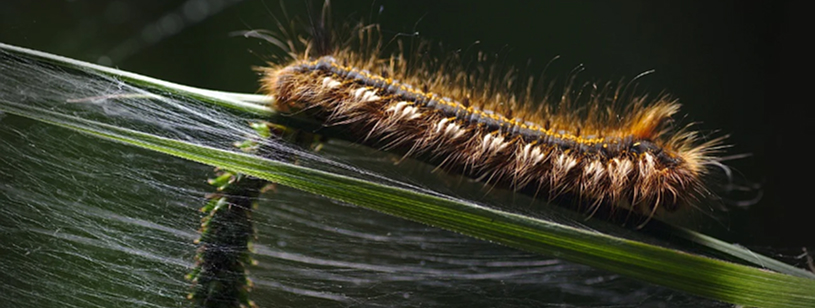
A caterpillar is the larval stage of a butterfly or moth in the order Lepidoptera. Caterpillars grow and moult before becoming pupae. Many eat plants and are themselves food for birds and other animals.
Caterpillars are among the most varied insect larvae, with many thousands of species of different shapes, colours and habits. Most are harmless, but some are crop pests, and others have hairs or spines that can irritate the skin or cause allergic reactions in people.
Quick facts
| Common name | Caterpillar |
| Scientific name | Lepidoptera (larval stage) |
| Typical lifespan | Usually a few weeks to a few months as a caterpillar; several years in some Arctic species |
| Length | About 1 mm - 12 cm (depending on species) |
| Weight | From a few milligrams to several grams |
| Diet type | Mostly plant-eating (leaves, flowers, fruit, seeds) |
| Main predators | Birds, parasitic wasps and flies, ants, spiders, bats, reptiles |
| Conservation status | Assess separately by species and population; different taxa and regions have different needs |
| Distribution | Every continent except Antarctica |
| Living environment | Forests, gardens, grasslands, farmland, tropical regions, tundra |
- Primary category:Insects
- Explore this animal's categories:
Interesting facts
- Caterpillar colours and patterns differ between species and can help with camouflage. Not every caterpillar actively changes colour to match its surroundings.
- Special defence organs - Swallowtail caterpillars, such as those of Papilio machaon, can push out a forked organ called an osmeterium, which gives off an unpleasant smell.
- Thousands of muscles - In the 18th century, the naturalist Pierre Lyonet counted about 4,000 muscles in a goat moth caterpillar; a human has about 650.
- Not all caterpillars become butterflies - Most caterpillars actually turn into moths, and many never reach adulthood because they are eaten or parasitised.
- A dangerous caterpillar - The spines of the South American moth caterpillar Lonomia obliqua contain a venom that can cause serious, sometimes fatal bleeding in people.
Records and remarkable features
- A caterpillar is the larval stage of a butterfly or moth in the order Lepidoptera. Caterpillars grow and moult before becoming pupae. Many eat plants and are themselves food for birds and other animals.
Physical characteristics and unique adaptations
Caterpillars vary greatly in shape, colour and size, and have many adaptations that help them survive until they become adults.
Essential physical adaptations
- A soft, segmented body - A caterpillar has a head followed by 13 body segments: 3 in the thorax and 10 in the abdomen.
- True legs and prolegs - Three pairs of jointed true legs on the thorax are used to hold food, while up to five pairs of fleshy prolegs on the abdomen, with tiny hooks, grip the surface.
- Hairs and spines - Many caterpillars are hairy or spiny; in some species, such as processionary caterpillars and Lonomia, the hairs or spines can irritate or harm people.
- Camouflage or warning colours - Many caterpillars are green or brown to blend in, while poisonous ones often have bright warning colours.
- Defence glands - Swallowtail caterpillars have an osmeterium that releases a bad smell when they are disturbed.
- Simple eyes - Caterpillars have small simple eyes called stemmata, usually six on each side of the head, which detect light and shapes.
- Strong jaws - Their chewing mouthparts are made for cutting and chewing leaves.
Dimensions and variations between species
| Characteristic | Small caterpillars (e.g. leaf-mining micro-moths) | Large caterpillars (e.g. Attacus atlas) |
|---|---|---|
| Body length | A few millimetres | About 10-12 cm |
| Weight | A few milligrams | Several grams or more |
| Time as a caterpillar | A few weeks | Several weeks; in some Arctic species, several years |
Habits and behaviour
Caterpillars spend most of their time eating and growing, and they have many ways of avoiding predators.
Life Mode
- Many feed during the day, but others feed mainly at night to avoid predators.
- They move with wave-like contractions of the body, gripping with their prolegs; inchworms loop their bodies as they move.
- Shelters - Some roll or tie leaves together with silk, and others spin silk webs or tents.
Social organisation
- Most caterpillars live alone.
- Processionary caterpillars live in groups and travel in long lines, head to tail.
- Some caterpillars of blue butterflies (Lycaenidae) live with ants, which protect them in exchange for sweet secretions.
Communication and defence methods
- Camouflage - Green and brown caterpillars blend in with leaves and bark; some look like twigs or bird droppings.
- Warning colours - Poisonous species often have bright colours (red, yellow, black) to warn predators.
- Snake mimicry - Some caterpillars, such as those of the elephant hawk-moth, have eyespots and swell their front end to look like a small snake.
- Toxins - Some species have poisonous hairs or store toxins from their food plants; monarch caterpillars, for example, store toxins from milkweed.
Habitat and geographic distribution
Caterpillars live on every continent except Antarctica and are found in almost every kind of land habitat.
Population distribution
| Region | Species predominant |
|---|---|
| Tropical forests (Americas, Southeast Asia) | Caterpillars of Morpho butterflies (Americas) and atlas moths (Asia) |
| Temperate forests (Europe, North America) | Swallowtail butterfly caterpillars and moth caterpillars, depending on the species |
| Savannas and grasslands (Africa, Asia) | Plain tiger butterfly caterpillar (Danaus chrysippus) |
| Arctic (Greenland, northern Canada) | Gynaephora groenlandica, the Arctic woolly bear, which can survive being frozen |
| Urban and agricultural areas | Large white butterfly caterpillar (Pieris brassicae) and other plant-feeding caterpillars |
Habitats
- Forests and jungles - The greatest variety of species, hidden in dense foliage.
- Gardens, fields and orchards - Common in cultivated areas, where some species damage crops and fruit trees.
- Dry areas - Some caterpillars live in deserts and dry grasslands, feeding on hardy plants.
- Polar regions - The Arctic woolly bear spends several years as a caterpillar, freezing in winter and feeding only in the short summer.
Impact of environmental change
- Warmer temperatures can make caterpillars hatch earlier, sometimes out of step with their food plants or the birds that eat them.
- Pesticides kill many caterpillars, and also affect birds and other animals that feed on them.
- Loss of forests and meadows leads to the disappearance of rare butterflies and moths.
Diet and feeding
Caterpillars are eating machines: most of their life is spent feeding, and some grow to hundreds of times their weight at hatching. They play a major role in ecosystems, both as plant-eaters and as food for other animals.
What do caterpillars eat?
| Food type | Specific examples |
|---|---|
| Leaves | Oak, willow, nettle, cabbage, grasses |
| Flowers and buds | Many species eat flowers and seeds as well as leaves |
| Fruit and seeds | Apples, pears, pea pods (for example, codling moth caterpillars in apples) |
| Lichens, wool and other foods | Footman moth caterpillars eat lichens; clothes moth caterpillars eat wool |
| Other insects (rarely) | Some Hawaiian Eupithecia caterpillars catch flies; large blue caterpillars eat ant larvae |
Method of feeding
- Eating leaves - Most caterpillars chew leaves from the edge inwards.
- Boring into plants - Some, such as the fall armyworm (Spodoptera frugiperda), also bore into maize cobs and other plant parts.
- Leaf mining - Tiny caterpillars of some moths live and feed inside leaves, leaving winding trails.
- Feeding at night - Some species feed only at night to avoid predators.
Caterpillars are a key food for birds feeding their chicks, but some species can cause serious damage to crops and forests.
Reproduction and life cycle
Caterpillars are the larval stage of butterflies and moths, which go through complete metamorphosis with four stages.
The life cycle of a caterpillar
| Stage | Characteristics |
|---|---|
| Egg | Laid on or near the food plant; usually hatches within days to a few weeks |
| Larva (caterpillar) | Intense feeding and fast growth; usually lasts weeks to months |
| Pupa (chrysalis or cocoon) | Transformation into the adult; can last from a few days to several years |
| Adult (butterfly or moth) | Mating and egg-laying; usually lives days to weeks, some for months |
Metamorphosis process
- Caterpillars usually moult 4-5 times as they grow.
- At the end of the larval stage, the caterpillar finds a safe place and turns into a pupa; many moth caterpillars first spin a silk cocoon.
- Inside the pupa, most of the caterpillar's body breaks down and is rebuilt into the adult butterfly or moth.
Duration of metamorphosis
| Species | Duration of the complete cycle |
|---|---|
| Monarch butterfly (Danaus plexippus) | About 4-6 weeks from egg to adult |
| Swallowtail butterfly (Papilio machaon) | About 6-8 weeks in summer, longer if the pupa overwinters |
| Arctic woolly bear moth (Gynaephora groenlandica) | Several years, mostly as a caterpillar |
Some species can remain as pupae for years, waiting for good conditions to emerge.
Name and history
Origin of name
- The English word "caterpillar" probably comes from Old North French catepelose, meaning "hairy cat", because of the hairs of some species.
- Scientists usually call caterpillars "larvae" of Lepidoptera, a name meaning "scale wings".
Taxonomic Classification
| Classification | Details |
|---|---|
| Kingdom | Animalia |
| Phylum | Arthropoda |
| Class | Insecta |
| Order | Lepidoptera |
| Family | Varies by species |
Evolution and fossils
- The oldest known fossils of moths, tiny wing scales, are about 200 million years old.
- Fossil caterpillars are rare; some of the best are preserved in amber.
- Moths appeared before flowering plants, so the first caterpillars probably fed on mosses, ferns or conifers.
Cultural significance and mythology
Because of their amazing transformation, caterpillars have long been seen as symbols of change and new life.
Caterpillar in myths and symbolism
- Ancient Greece - The Greek word psyche meant both "soul" and "butterfly", linking metamorphosis with the soul.
- China - According to legend, the empress Leizu discovered silk from the cocoon of the silkworm, the caterpillar of the silk moth, thousands of years ago.
- Food - Caterpillars are eaten in many parts of the world, such as mopane worms in southern Africa and witchetty grubs (moth larvae) in Australia.
- North American folklore - The width of the brown band on woolly bear caterpillars is said to predict how hard the winter will be; it has no scientific basis.
The caterpillar in modern symbolism
- Personal transformation - The caterpillar turning into a butterfly is a popular image of growth and change.
- Patience - The long metamorphosis is a symbol of patience and hope.
- Biodiversity - Conservation groups use caterpillars to show the importance of native plants and insects.
Conservation status and threats
Most caterpillar species are not threatened, but some rare and well-known butterflies and moths are declining sharply.
Conservation status
| Species | IUCN status | Trends |
|---|---|---|
| Migratory monarch butterfly (Danaus plexippus plexippus) | Vulnerable | Declining |
| Apollo butterfly (Parnassius apollo) | Near Threatened | Declining |
| Large blue butterfly (Phengaris arion; formerly Maculinea arion) | Threatened in many European countries | Became extinct in Britain in 1979 and was later reintroduced |
| Atlas moth (Attacus atlas) | Not evaluated | Widespread in Southeast Asia |
Main threats
- Habitat loss - Deforestation, intensive farming and building reduce the host plants caterpillars need.
- Pesticides - Insecticides used in agriculture kill many caterpillars.
- Climate change - Unusual temperatures can upset the timing of caterpillar development.
- Invasive species - Introduced predators, parasites and plants can harm native species.
- Light pollution - Artificial light disturbs adult moths, which can reduce the number of eggs and caterpillars.
Protection measures
- Planting host plants - Native plants such as nettles and milkweed in gardens and parks provide food for caterpillars.
- Fewer pesticides - Organic and wildlife-friendly farming helps caterpillars survive.
- Protected habitats - Nature reserves protect rare butterflies and moths.
- Monitoring - Volunteers count butterflies and moths, and some monarchs are tagged to follow their migration.
In popular culture
Caterpillars are popular characters in books, films and cartoons, often as symbols of growth and change.
Caterpillar in movies and cartoons
- "A Bug's Life" (1998) - Heimlich, a funny, always-hungry caterpillar, dreams of becoming a butterfly.
- "Alice in Wonderland" (Disney, 1951) - The hookah-smoking Caterpillar asks Alice, "Who are you?"
- Pokémon - Caterpie is a caterpillar Pokémon that evolves into the butterfly Butterfree.
Caterpillar in literature
- "The Very Hungry Caterpillar" (Eric Carle, 1969) - One of the best-loved children's picture books, showing a caterpillar eating its way to becoming a butterfly.
- "Alice's Adventures in Wonderland" (Lewis Carroll, 1865) - The Caterpillar sitting on a mushroom is one of the book's best-known characters.
The caterpillar as mascot and symbol
- Transformation - The caterpillar is used in psychology and personal development to represent change.
- Caterpillar Inc. - The American machinery company is named after the caterpillar-like movement of its crawler tracks.
- Education - Schools often raise caterpillars so children can watch metamorphosis.