MothInteresting facts and information
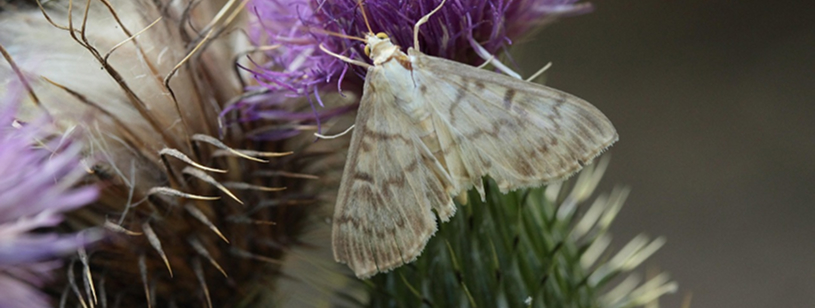
Moths are insects in the order Lepidoptera, which also includes butterflies. Many are active at night, but some fly by day. Their colours, sizes, feeding habits and life cycles vary greatly between species.
Some adult moths carry pollen between flowers. Clothes moths such as Tineola bisselliella are another example: their larvae can damage textiles made from animal fibres. These habits do not apply to all moths.
Moths comprise many families and species, from very small insects to the Atlas moth (Attacus atlas), one of the largest. Some are nocturnal and others fly in the day.
Quick facts
| Common name | Moth |
| Scientific name | Lepidoptera (moths from several families) |
| Typical lifespan | Usually days to weeks as an adult; up to a few years as a larva (depending on species) |
| Length | About 2-150 mm wingspan, depending on species |
| Weight | From a fraction of a milligram to a few grams |
| Diet type | Larvae mostly eat plants; adults drink nectar and other liquids or do not feed |
| Main predators | Birds, bats, spiders, parasitic wasps |
| Conservation status | Assess separately by species and population; different taxa and regions have different needs |
| Distribution | Every continent except Antarctica, from the tropics to the Arctic |
| Living environment | Forests, grasslands, deserts, mountains, gardens and homes |
- Primary category:Insects
- Explore this animal's categories:Animals of AfricaAnimals of AsiaAnimals of AustraliaAnimals of EuropeAnimals of North AmericaAnimals of RomaniaAnimals of Romania’s gardens and parksAnimals of South AmericaArthropodsEgg-laying animalsFlying animalsHerbivoresInsectsInsects of RomaniaInvertebratesMNectar-feeding animalsPollinating insects
Interesting facts
- The Atlas moth (Attacus atlas) is a very large moth. Maximum size comparisons depend on whether wingspan, wing area or body size is measured.
- Night pollinators - Many moths visit flowers at night and carry pollen, and some plants, such as yuccas, depend entirely on moths for pollination.
- Adult feeding differs between species - Many adult moths consume nectar. Adults of some species, such as Attacus atlas, do not feed and use accumulated reserves as larvae.
- Evolution in action - During the Industrial Revolution in Britain, dark forms of the peppered moth (Biston betularia) became common on soot-covered trees, a famous example of natural selection.
- Listening for bats - Many moths can hear the ultrasound calls of bats and dodge them; some tiger moths even make clicks that may jam bat sonar.
Records and remarkable features
- Moths are insects in the order Lepidoptera, which also includes butterflies. Many are active at night, but some fly by day. Their colours, sizes, feeding habits and life cycles vary greatly between species.
Physical characteristics and unique adaptations
Moths are very varied insects with many special adaptations. Compared with butterflies, they often have hairier bodies, feathery antennae and duller colours, but there are many exceptions.
Essential physical adaptations
- Wings covered in tiny scales - The scales create colours and patterns and can help with camouflage.
- Sensitive antennae - Males of many species have feathery antennae that can detect the scent (pheromones) of females from far away.
- A hairy body - Many moths have a thick covering of hair-like scales that helps keep them warm on cool nights.
- A long, coiled tongue - Most adult moths have a proboscis, a flexible tube for drinking nectar, which is rolled up when not in use; some species have no working mouthparts.
- Hearing organs - Many moths have "ears" on the body that can detect the high-pitched calls of bats.
Differences between moths and butterflies
| Characteristic | Moths | Butterflies |
|---|---|---|
| Activity | Usually at night, but many fly by day | By day |
| Antennae | Thread-like or feathery | Thin, with a club at the tip |
| Colours | Often brown, grey or beige, but some are very colourful | Often bright and colourful |
| Wings at rest | Often held flat or folded like a tent over the body | Usually held upright, closed over the back |
| Body | Often thicker and hairier | Usually slimmer |
Habits and behaviour
Most moths live alone, although the caterpillars of some species live in groups. Many are active at night and use scent to find partners.
Life Mode
- Attraction to light - Many moths fly around artificial lights; recent research suggests that lights confuse their sense of which way is up.
- Camouflage - Many species have colours and patterns like bark, lichen or dead leaves.
- Night pollinators - Research on adult moths has documented the transport of pollen from several plant families. Their role complements the activity of daily pollinators; not all species of moth pollinate.
Defence behaviour
- Dodging bats - Moths that hear bat calls can suddenly change direction, loop or drop to the ground.
- Poisonous caterpillars - Some species, such as Lonomia obliqua from South America, have caterpillars with venomous spines.
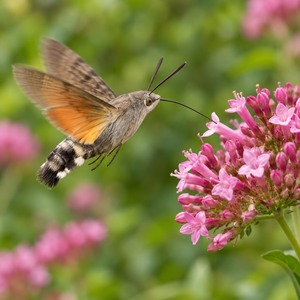
- Mimicry - Clearwing moths look like wasps, and some moths have eyespots that startle predators.
Habitat and geographic distribution
Moths live on every continent except Antarctica, from tropical forests to deserts, mountains and the Arctic.
Population distribution
| Region | Estimated population | Favourite habitat |
|---|---|---|
| Europe | Thousands of species; many declining | Forests, meadows, gardens, towns |
| North America | More than 10,000 species | Forests, grassland, farmland, wetlands |
| Asia | Very many species | Tropical forests, mountains |
| South America | Very many species | Tropical forests, savannas |
| Africa | Very many species | Savannas, deserts, equatorial forests |
| Australia | Many species, including the migrating Bogong moth | Forests, coasts, deserts, mountains |
Habitats
- Forests and meadows - Most moths need plants on which their caterpillars can feed.
- Homes - Some species, such as the common clothes moth (Tineola bisselliella), live in houses, where their larvae eat wool and other animal fibres.
- Arctic regions and mountains - Species such as the Arctic woolly bear moth (Gynaephora groenlandica) survive extreme cold.
Impact of environmental change
- Light pollution disturbs moths' flight, feeding and mating.
- Deforestation and habitat loss reduce the food plants of caterpillars.
- Pesticides have caused declines in many species.
Diet and feeding
The diet of moths depends on their life stage. Caterpillars often specialise in particular plants or materials, while adults drink nectar and other liquids or do not feed at all.
What do moths eat?
| Life stage | Food type |
|---|---|
| Larvae | Leaves, seeds, fruit, wool, feathers, stored grain, wood, lichens |
| Adults | Nectar, tree sap, juice from rotting fruit, or nothing (some species do not feed) |
Method of feeding
- Caterpillars chew leaves, fibres or other food with strong jaws.
- Adult moths that feed suck liquids through their long proboscis.
- Some moths drink salty liquids from mud, animal sweat or even the tears of animals, a behaviour called lachryphagy.
Reproduction and life cycle
Moths go through complete metamorphosis, with four stages: egg, larva (caterpillar), pupa and adult.
Breeding season
- In many species, males find females by following their scent, sometimes from far away.
- Mating can last from a few minutes to several hours.
- Some species, such as the giant peacock moth (Saturnia pyri), live only a few days as adults and do not feed; their only purpose is to breed.
Egg laying and larvae development
| Stage | Duration | Characteristics |
|---|---|---|
| Eggs | Usually days to weeks; some overwinter | Laid on food plants, fabrics or other suitable places |
| Larva (caterpillar) | 2 weeks to several years | Feeds intensively and grows |
| Pupa | Weeks to months, sometimes years | Changes into an adult, often in a silk cocoon or in the soil |
| Adult | Usually days to weeks | Mates and lays eggs |
Survival strategies
- Clothes moths lay their eggs in dark places with suitable food for the larvae, such as woollen clothes and carpets.
- The caterpillars of some species look like twigs or leaves.
- Many species can pause their development (diapause) to survive winter or dry seasons.
Name and history
Origin of name
- The English word "moth" comes from Old English moððe, a word linked with insects that eat cloth.
- The order name Lepidoptera means "scale wings", from the scales that cover the wings.
Taxonomic Classification
| Classification | Name |
|---|---|
| Kingdom | Animalia |
| Phylum | Arthropoda |
| Class | Insecta |
| Order | Lepidoptera |
| Groups | "Moths" is a traditional name for several groups of the order Lepidoptera, not the name of a single species |
Evolution and fossils
- The oldest known fossils of moths, tiny wing scales, are about 200 million years old.
- Butterflies evolved from moths, so butterflies are really a specialised group within the moths.
- There are about 160,000 known species of moths, many times more than the number of butterfly species.
Cultural significance and mythology
Moths have often been linked with night, death and the soul. Unlike butterflies, which are symbols of beauty, moths have often had a darker reputation, also because some of them damage clothes.
Moth in myths and symbolism
- A symbol of the soul - In several cultures, moths flying at night are linked with the souls of the dead.
- The death's-head hawkmoth - The skull-like pattern on its back made it an omen of death in European folklore.
- The black witch moth - In Mexico, the large, dark Ascalapha odorata is called "mariposa de la muerte" (butterfly of death) and is linked with death.
- The moth and the flame - The image of a moth drawn to a candle flame has long been used as a symbol of fatal attraction.
Moth in popular traditions
- Silk - The domesticated silk moth (Bombyx mori) has been raised in China for thousands of years to produce silk.
- Food - In Australia, Aboriginal people traditionally ate Bogong moths, which gather in huge numbers in mountain caves.
- Household pests - Clothes moths have been a problem in homes for centuries, which is why people used to store clothes with mothballs or cedar wood.
Conservation status and threats
Most moth species are not assessed, but studies show that moth numbers have fallen in many countries, for example by about a third in Britain since the late 1960s.
Main threats
- Light pollution - Artificial lights disturb moths' flight, feeding and mating.
- Deforestation and habitat loss - Many species lose their food plants and breeding sites.
- Pesticides - Insecticides used in agriculture harm both larvae and adults.
- Climate change - Changes in temperature and rainfall affect their life cycles and ranges.
Protection measures
- Reducing light pollution with shielded, warmer-coloured lights that are switched off when not needed.
- Protecting habitats where moths and their food plants live.
- Limiting the use of pesticides in agriculture and gardens.
- Monitoring - Volunteers count moths in light traps to follow population trends.
Moth in popular culture
Because of their mysterious look and link with darkness, moths have inspired literature, films and art.
Moth in literature
- "The Death of the Moth" (1942) - A famous short essay by Virginia Woolf about a moth dying on a windowsill.
- "Moth Smoke" (2000) - Mohsin Hamid's novel uses the moth drawn to a flame as a metaphor for desire and self-destruction.
- Poems - The moth often appears in poems about short lives and dangerous attraction.
Moth in movies and animations
- "Mothra" (1961) - A giant moth monster from Japanese cinema, often seen alongside Godzilla.
- "The Silence of the Lambs" (1991) - The death's-head hawkmoth plays an important role in the story and appears on the film's poster.
- "Pokémon" - Some Pokémon, such as Venomoth and Dustox, are inspired by moths.
Moth as symbol
- Attraction to light - Used as a metaphor for obsession, as in the phrase "like a moth to a flame".
- Transformation - Like the butterfly, the moth is also a symbol of metamorphosis and change.
- Mothman - A legendary winged creature said to have been seen in West Virginia in the 1960s, the subject of the film "The Mothman Prophecies" (2002).