Monarch butterflyDanaus plexippus — habitat, diet and reproduction
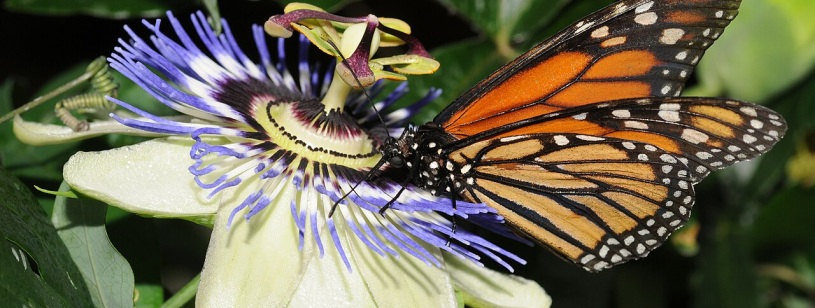
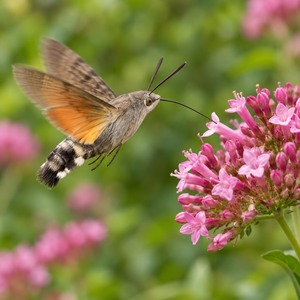
Monarch butterfly (Danaus plexippus) on a passion flower. · Thomas Bresson / CC BY 2.0 (https://creativecommons.org/licenses/by/2.0). Cropped and resized.
The monarch butterfly is a large butterfly with orange wings crossed by black veins and black borders with white dots. It is famous for its migration: in autumn, millions of monarchs fly from Canada and the United States to the mountains of Mexico, thousands of kilometres away. Its bright colours warn birds that it is poisonous.
Quick facts
| Common name | Monarch butterfly |
| Scientific name | Danaus plexippus |
| Lifespan | A few weeks; the migrating generation lives up to 8–9 months |
| Length | Wingspan about 8.9–10.2 cm |
| Diet | Caterpillars: milkweed leaves (Asclepias); adults: nectar |
| Predators | Few, thanks to toxins; some birds and insects |
| Conservation status | The migratory North American population is declining |
| Distribution | North and South America; introduced to Australia, New Zealand, Iberia and the Canaries |
| Habitat | Meadows, fields, flower gardens; Mexican fir forests in winter |
| Family | Nymphalidae |
| Migration | Up to about 4,000 km in autumn |
- Primary category:Insects
- Explore this animal's categories:
Interesting facts
- The autumn generation lives up to 8–9 months, far longer than summer monarchs.
- No single monarch makes the full round trip; the cycle closes only after several generations.
- Caterpillars collect poisons from milkweed and keep them as adults.
- In winter, millions of monarchs cover fir trunks in the mountains of Mexico.
Characteristics
The monarch has orange wings with thick black veins and black borders dotted with white. Males have a small black spot on each hindwing, absent in females.
The caterpillar has yellow, black and white stripes and two soft “feelers” at each end. The chrysalis is pale green with gold dots.
Behaviour
Monarchs fly by day and bask in the sun before setting off. In autumn, the generation born in late summer does not breed immediately but heads south.
Eastern North American monarchs fly to the mountains of central Mexico, where they winter in huge colonies. In spring they head north, and their children and grandchildren continue the journey.
Habitat and distribution
The species lives in North, Central and South America. With wind and people it has reached Australia, New Zealand, Iberia and the Canary Islands.
It does not normally live in central Europe or Romania; very rarely, vagrant or released individuals appear in western Europe.
Diet and feeding
Caterpillars eat almost only milkweed leaves (genus Asclepias), plants with toxic milky sap. They store the poisons, making them distasteful to birds.
Adults drink nectar from many flowers and help pollinate them. Before migrating, they drink a lot of nectar to build fat for the journey.
Reproduction and life cycle
The female lays eggs singly on the underside of milkweed leaves, 300–500 in total. A small caterpillar hatches and moults five times.
It then hangs head-down and becomes a chrysalis. In warm weather, egg to butterfly takes about 25 days; in cool weather, up to seven weeks.
Name and history
The name “monarch” may honour King William of Orange, monarch of England, whose colour was orange. The scientific name Danaus plexippus comes from Greek mythology.
The American viceroy butterfly looks very similar. Birds avoid both because they taste unpleasant.
Conservation and threats
The migratory North American population has declined sharply in recent decades because of milkweed loss to herbicides, logging in the Mexican wintering forests and climate change.
Many American schools and gardens plant milkweed for monarchs, and the Monarch Butterfly Biosphere Reserve in Mexico is a UNESCO World Heritage Site.
Frequently asked questions
Where do monarchs migrate?
Eastern North American monarchs fly in autumn to the mountains of central Mexico, thousands of kilometres away.
Does the monarch live in Romania?
Not normally. It lives in the Americas and has reached a few warm regions such as Iberia and the Canaries.
Why don’t birds eat monarchs?
Caterpillars store poisons from milkweed, which make them taste unpleasant.
What does the monarch eat?
Caterpillars eat milkweed leaves, and adults drink flower nectar.