HamsterInteresting facts and information
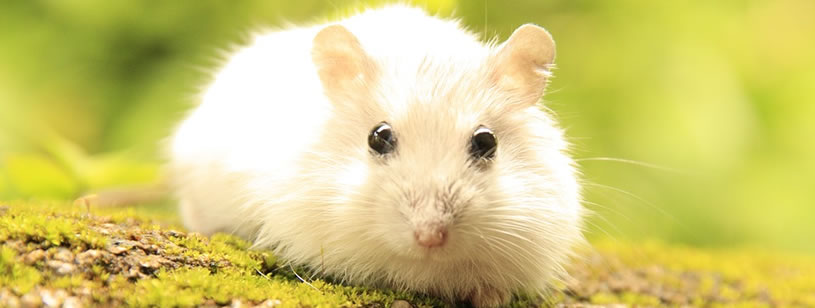
Hamsters are small rodents in the subfamily Cricetinae, with about 19 species. They have stretchy cheek pouches for carrying food, and many store food in their burrows. Wild species and pet hamsters should be told apart when describing their habits and conservation.
Most hamsters are active at dusk and at night and live alone. In the wild, they dig burrows where they sleep, store food and raise their young. They eat mainly seeds and grains, along with plants, fruit and insects.
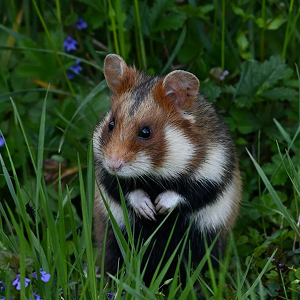
Hamsters are very popular pets, but some wild species are threatened; the European hamster (Cricetus cricetus) is now Critically Endangered because of habitat loss and modern farming.
Quick facts
| Common name | Hamster |
| Scientific name | Cricetinae (subfamily) |
| Typical lifespan | 1.5 - 3 years (depending on species) |
| Maximum speed | Not well measured; they move in short, quick bursts |
| Dimensions | About 5 - 34 cm (depending on species) |
| Weight | About 20 - 500 g |
| Diet type | Omnivore (seeds, grains, plants, fruit, insects) |
| Main predators | Owls, birds of prey, snakes, foxes, weasels, cats and dogs |
| Conservation status | Varies by species: European hamster Critically Endangered, Syrian hamster Vulnerable |
| Distribution | Europe, the Middle East and Asia (wild); kept as pets worldwide |
| Habitat | Steppes, grasslands, farmland, semi-deserts |
- Primary category:Mammals
- Explore this animal's categories:
Interesting facts
- Built-in shopping bags - Hamsters have stretchy cheek pouches that reach back to their shoulders; they fill them with food and carry it to their burrow.
- Tireless runners - Pet hamsters can run several kilometres a night on an exercise wheel; they are active mainly at dusk and at night.
- Expert diggers - Wild hamsters dig burrows with separate chambers for sleeping, storing food and as a toilet; European hamster burrows can go down 1-2 metres in winter.
- Teeth that never stop growing - Like all rodents, hamsters have incisors that keep growing, so they must gnaw hard food to wear them down.
- The smallest hamster - The Roborovski hamster is only about 4.5-5 cm long, very fast and hard to catch.
- Poor eyesight, sharp senses - Hamsters see poorly but have an excellent sense of smell and hearing, and can hear ultrasonic sounds.
- Sleeping through the cold - The European hamster hibernates in winter, and some other hamsters can drop into a short torpor when it is cold.
Records and remarkable features
- Hamsters are rodents in the subfamily Cricetinae. They have cheek pouches used to carry food, and many store food in burrows. Wild species and domestic pets should be distinguished when describing their habits and conservation.
Characteristics
Hamsters are small, sturdy rodents with short tails, stretchy cheek pouches and soft fur. There are about 19 species, which differ in size, colour and fur.
Main physical characteristics:
| Characteristic | Details |
|---|---|
| Size | About 5-34 cm (depending on species) |
| Weight | About 20-500 g (the European hamster is the largest) |
| Lifespan | Usually 1.5-3 years |
| Eyesight | Poor; they are short-sighted |
| Hearing | Very good, including high-pitched ultrasonic sounds |
| Smell | Very sensitive; used to find food and recognise territory and other hamsters |
Special adaptations:
- Cheek pouches - Hamsters can fill their cheek pouches with food, then carry it away and store it in their burrows.
- Teeth that grow continuously - Like all rodents, hamsters have incisors that never stop growing, so they need to gnaw hard things.
- Digging paws - Although small, hamsters dig long tunnels with their strong claws.
- Winter coat - The Djungarian (winter white) hamster can turn almost white in winter for camouflage in the snow.
Habits and behaviour
Hamsters are mostly nocturnal or active at dusk, and most species live alone. They spend the day sleeping in their burrows and come out at night to look for food.
Social behaviour:
- Syrian hamsters live alone - Adults do not tolerate other hamsters and may fight seriously if kept together.
- Some dwarf hamsters are more tolerant - Campbell's and Roborovski hamsters can sometimes live in pairs or small groups, but fights can still happen.
- Scent marking - Hamsters have scent glands that they use to mark their territory and communicate.
Activity and exploration:
- Very energetic - Hamsters travel long distances when foraging, and pets use exercise wheels to stay active.
- Excellent diggers - In the wild, they build burrows with tunnels and separate chambers for sleeping and storing food.
- Finding their way by smell - Because their eyesight is poor, they rely on smell, hearing and their whiskers.
Self-defense and survival techniques:
- Hiding quickly - When in danger, hamsters run into their burrows or freeze to avoid being noticed.
- Biting when frightened - Hamsters are not naturally aggressive, but they may bite if they are startled or feel threatened.
- Hibernation and torpor - In cold weather, some hamsters hibernate or enter short periods of torpor, slowing their body down to save energy.
Habitat and geographic distribution
Wild hamsters live in Europe and Asia, mainly in dry, open places such as steppes, grasslands, farmland and semi-deserts.
Habitat types:
| Habitat | Example species |
|---|---|
| Steppes, meadows and farmland | European hamster (Cricetus cricetus) |
| Deserts and semi-deserts | Roborovski hamster (Phodopus roborovskii) |
| Dry steppes of Central Asia and Siberia | Djungarian hamster (Phodopus sungorus) |
| Farmland and dry hills | Syrian hamster (Mesocricetus auratus) |
Geographic distribution:
- Europe and Asia - Wild hamsters live from Western Europe and Romania across Russia and Kazakhstan to Mongolia and China.
- The Middle East - The Syrian hamster is native to a small area of northern Syria and southern Turkey.
- The rest of the world - Hamsters are not native to the Americas, Africa or Australia; there they are found only as pets.
Impact of climate change and human activities:
- Habitat loss - Intensive farming and urban growth reduce the areas where wild hamsters live.
- Pest control - In some regions, hamsters have been treated as crop pests and killed by farmers.
- Many pets, few wild animals - Hamsters are very common as pets, even though some wild species are threatened.
Hamsters are well adapted to harsh environments, but some species, such as the European hamster, are now endangered because of human activity.
Diet and feeding
Hamsters are omnivores. They eat mainly seeds and grains, along with plants, fruit and insects. They are known for carrying food in their cheek pouches and storing it in their burrows to eat later.
Types of food consumed:
| Food group | Examples |
|---|---|
| Seeds and cereals | Sunflower seeds, wheat, oats, millet |
| Vegetables | Carrots, broccoli, cucumber |
| Fruit | Apples, bananas, pears (in small amounts, because of the sugar) |
| Insects and animal protein | Mealworms, crickets, boiled egg |
| Nuts | Almonds, walnuts, peanuts (only occasionally) |
Feeding methods:
- Carrying food in their cheeks - They use their cheek pouches to take food safely back to the burrow.
- Storing for later - Hamsters hoard food in their burrows; wild European hamsters can store several kilograms of grain for winter.
- Choosing rich food - When offered a choice, hamsters often pick seeds and foods rich in fat and protein.
- Constant gnawing - Hard food helps wear down their ever-growing incisors.
Reproduction and life cycle
Hamsters breed quickly. A female can give birth to a litter of usually about 4-12 young, and the young grow so fast that they become independent within a few weeks.
Life cycle stages:
| Stage | Approximate duration | Characteristics |
|---|---|---|
| Gestation | 16 - 22 days | One of the shortest pregnancies among mammals. |
| Newborn | 0 - 10 days | The young are born blind and hairless and depend completely on their mother. |
| Juvenile | 2 - 4 weeks | They open their eyes, start eating solid food and become active. |
| Young adult | 4 - 6 weeks | They become independent and leave their mother. |
| Adult | From about 2 months | They become sexually mature and can start breeding. |
Reproductive behavior:
- Females can be aggressive towards males after mating - If the two are not separated, the female may attack the male.
- A strong instinct to protect the young - If disturbed, a mother may move her young to another place, and under stress she may even abandon or eat them.
- Young grow very fast - In about four weeks, they are completely independent.
Thanks to their fast development and several litters a year, hamsters have a high breeding rate.
Name and history
Hamsters were studied by scientists relatively late, and their name comes from German.
Origin and etymology of the name:
- The English word "hamster" comes from German Hamster, from Old High German hamustro. The German verb hamstern, "to hoard", comes from the animal's habit of storing food.
- The subfamily name Cricetinae comes from Cricetus, the genus of the European hamster; it belongs to the rodent family Cricetidae.
Taxonomic classification:
| Taxonomic category | Name |
|---|---|
| Kingdom | Animalia |
| Phylum | Chordata |
| Class | Mammalia |
| Order | Rodentia |
| Family | Cricetidae |
| Subfamily | Cricetinae |
| Main genera | Mesocricetus, Phodopus, Cricetus, Cricetulus |
Hamster in history and research:
- First scientific description - The Syrian hamster (Mesocricetus auratus) was described in 1839, but it then remained almost unknown for nearly a century.
- Rediscovery - In 1930, the zoologist Israel Aharoni found a mother and her young near Aleppo, in Syria; almost all pet Syrian hamsters today descend from them.
- Research - Hamsters have been used in medical research, for example in studies of infectious diseases and hibernation.
- Popular pets - From the 1940s and 1950s, Syrian hamsters became very popular pets in Europe and North America, especially for children.
Hamsters have gone from little-known wild rodents to some of the most popular pets in the world.
Cultural significance and mythology
Hamsters do not appear in ancient myths, but they have become well-known animals in modern culture, linked to hoarding, energy and comfort.
Hamsters in popular culture and beliefs:
- A symbol of hoarding - Because they store food, hamsters are linked to saving; in German, hamstern means "to stockpile".
- A symbol of energy - Their busy behaviour, especially at night, makes them a symbol of endless energy.
- A first pet - For many children, a hamster is the first pet they look after.
Modern interpretations:
- "Being on a hamster wheel" - A popular expression for a busy, repetitive routine that goes nowhere.
- A symbol of comfort and care - As much-loved pets, hamsters are associated with affection and responsibility.
Conservation status and threats
Pet hamsters are very common, but some wild species are threatened by habitat loss, modern farming and climate change.
Conservation status
| Species | Status (IUCN) |
|---|---|
| European hamster (Cricetus cricetus) | Critically Endangered |
| Syrian hamster (Mesocricetus auratus) | Vulnerable |
| Roborovski hamster (Phodopus roborovskii) | Least Concern |
| Campbell's dwarf hamster (Phodopus campbelli) | Least Concern |
Main threats:
- Habitat loss - Intensive farming and urban growth destroy the natural homes of wild hamsters.
- Changes in farming - Large single-crop fields and early harvests leave European hamsters without enough food and cover.
- Pest control - In some regions, hamsters have been treated as pests and killed.
- Small, isolated populations - When populations are split up, they lose genetic diversity and become more vulnerable.
Conservation efforts:
- Legal protection - The European hamster is a strictly protected species in the European Union.
- Breeding and release - In France, Germany and the Netherlands, European hamsters are bred in captivity and released into the wild.
- Hamster-friendly farming - Farmers are paid to leave strips of crops unharvested to give hamsters food and shelter.
Although hamsters are common as pets, some wild hamster populations need urgent help to avoid extinction.
In popular culture
Hamsters in literature:
- Humphrey series (Betty G. Birney, from 2004) - Children's books about Humphrey, a classroom hamster, starting with The World According to Humphrey.
- Books about pets - Hamsters are often featured in children's books about caring for pets.
Hamsters in cinematography and television:
- Bolt (2008, Disney) - Rhino, a brave and enthusiastic hamster in a plastic ball, is one of the main characters.
- Hamtaro (2000-2006) - A popular Japanese anime about a little hamster and his friends.
Hamsters in cartoons and video games:
- Overwatch (2018) - The character Wrecking Ball is a hamster called Hammond, who pilots a combat robot.
- Hamtaro games - Several video games based on the anime were released for Nintendo consoles.
Hamster as a cultural symbol:
- The hamster wheel - A symbol of running constantly without getting anywhere.
- Internet culture - The "Hampster Dance" (1998), a web page full of dancing hamsters, was one of the first internet memes.