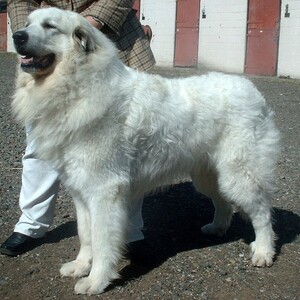
Fila BrasileiroCharacteristics, history, training and care
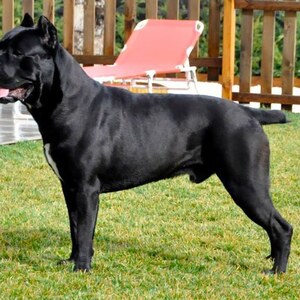
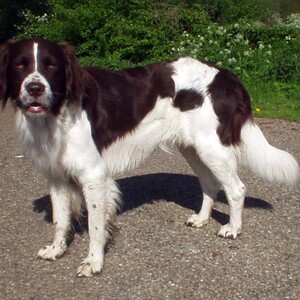
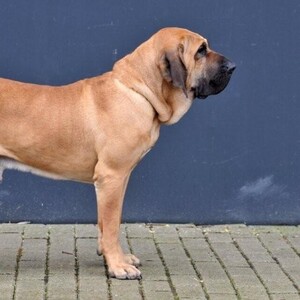
Fila Brasileiro. · Doglover / Wikimedia Commons, CC BY 3.0. Cropped and resized.
The Fila Brasileiro is a giant Brazilian molosser, used as a guard dog, for herding and for hunting large animals. It is brave, determined and extraordinarily loyal: with its family it is docile and very tolerant of children, but it is naturally reserved with strangers. It is a breed for very experienced owners and is banned or restricted in several countries.
Quick facts
| Common name | Fila Brasileiro (Brazilian Mastiff) |
| Scientific name | Canis lupus familiaris |
| Country of origin | Brazil |
| Official recognition | FCI, definitively since 1960 (group 2, molossoid breeds, mastiff type; standard no. 225) |
| Lifespan | No published data for the breed; giant breeds live on average 9–11 years |
| Size (males) | 65–75 cm at the withers; at least 50 kg |
| Size (females) | 60–70 cm at the withers; at least 40 kg |
| Coat type | Short, smooth, dense and close-lying |
| Common colours | Brindle, fawn or black, with or without a black mask |
| Energy level | Moderate |
| Suited to an apartment? | No |
| Temperament | Brave, determined, very loyal, reserved with strangers |
| Tendency to aggression | High towards strangers; a formidable guard dog |
| Good with children | Very tolerant of the family's children, according to the standard |
| Good with other animals | Average; with socialisation |
| Genetic predispositions | No breed-specific diseases are known; as in all very large dogs, hip dysplasia and bloat |
- Primary category:Dog breeds
- Explore this animal's categories:
History and origin
Wikipedia says the Fila Brasileiro probably descends from European dogs brought to Brazil in colonial times, with very little influence from indigenous dogs. It was bred on the large plantations and cattle ranches, where it guarded, rounded up cattle and hunted jaguars. In the 18th century, when slavery was still legal in Brazil, it was also used to catch runaway slaves.
The name comes from the Portuguese verb “filar”, meaning to hold tight, to seize: a dog that bites and does not let go. The first written standard appeared in 1946, and Paulo Santos Cruz, considered the “father of the breed”, began breeding it systematically. Today there are several standards in Brazil, belonging to different clubs.
How the breed developed
- Colonial period – European dogs arrive in Brazil.
- 18th century – The dogs work on plantations and cattle ranches.
- 1946 – The first written breed standard appears.
- 1960 – The FCI recognises the breed.
- 29 September 2016 – The current FCI standard is published.
Breed rating
| Feature | Stars |
|---|---|
| Training and intelligence | ★★★☆☆ |
| Easy to train | ★★★☆☆ |
| Intelligence | ★★★★☆ |
| Independence | ★★★★★ |
| Stubbornness | ★★★★☆ |
| Behaviour and temperament | ★★★★☆ |
| Affectionate with family | ★★★★★ |
| Friendly with children | ★★★★☆ |
| Good with other dogs | ★★☆☆☆ |
| Good with cats and other animals | ★★☆☆☆ |
| Loyalty | ★★★★★ |
| Tendency to be aggressive | ★★★★★ |
| Tendency to bark | ★★★☆☆ |
| Needs and care | ★★★★☆ |
| Shedding | ★★☆☆☆ |
| Needs frequent grooming | ★☆☆☆☆ |
| Activity and lifestyle | ★★★★☆ |
| Energy level | ★★★☆☆ |
| Daily exercise needs | ★★★☆☆ |
| Suited to apartment life | ★☆☆☆☆ |
| Health and longevity | ★★★★☆ |
| Life expectancy | ★★★☆☆ |
| Predisposition to genetic diseases | ★★☆☆☆ |
| Working abilities and uses | ★★★★★ |
| Good guard dog | ★★★★★ |
| Good companion dog | ★★☆☆☆ |
Indicative rating: 5 stars means the highest level. The breed has no AKC profile; the rating is based on the FCI standard (“courage, determination, proverbial loyalty, natural reserve towards strangers”).
Physical characteristics
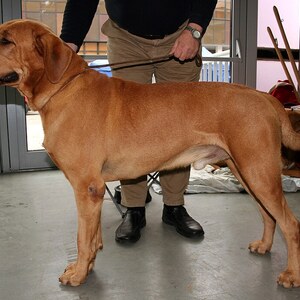
Wikipedia says it is a rectangular, massive dog, yet with natural agility. Unlike most dogs, the croup is higher than the withers. The legs have very strong bones.
General appearance
The head is large and heavy, with a deep muzzle. The large, thick ears hang down or fold back, depending on the dog's mood. The thick, loose skin forms a pronounced dewlap on the neck, which in some dogs continues down to the chest and belly.
| Feature | Fila Brasileiro |
|---|---|
| Size | Very large |
| Height at the withers | males: 65–75 cm; females: 60–70 cm |
| Weight | males: at least 50 kg; females: at least 40 kg |
| Coat | Short, smooth, dense |
| Skin | Thick and loose, with a dewlap on the neck |
| Croup | Higher than the withers |
The FCI standard accepts brindle, fawn and black, with or without a black mask. White markings are allowed on the feet, chest and tail tip; on other parts of the body they are a fault.
Training and socialisation
The standard says courage, determination and bravery are part of its character. With its owners and family it is docile, obedient and extremely tolerant of children, and its loyalty is proverbial: it always seeks its owner's company.
It is calm, self-confident and not startled by noises or new situations. One of its traits is a natural reserve towards strangers, especially on its own territory. It needs a very experienced owner and intensive socialisation from the first months.
Tips for effective training
- Socialise it intensively as a puppy. It is naturally reserved with strangers.
- Work with an experienced trainer. Such a powerful dog requires firm control.
- Check the law. The breed is banned or restricted in some countries.
- Do not leave it unsupervised with visitors. It is a very serious guard dog.
Activity needs and lifestyle
It is a calm guard dog at rest, but agile and powerful. It needs daily walks and a large, very securely fenced yard.
| Activity | How often | Why it matters |
|---|---|---|
| Walks on the lead | daily | Exercise and controlled socialisation |
| Time in a fenced yard | daily | It guards its territory |
| Obedience exercises | daily | Control over a very powerful dog |
Tips for a balanced life
- It is not a breed for beginners.
- The fence must be very solid and high.
- Find out about local laws before getting a puppy.
Care and health
Coat and skin care
The short, smooth coat is easy to care for, with one brushing a week. The skin folds on the neck should be checked and cleaned regularly.
Common health problems
The sources used contain no published health studies for the breed. As with any very large dog, the following are worth watching:
| Condition | Description | Common symptoms |
|---|---|---|
| Hip dysplasia | The hip joint forms incorrectly and, over time, arthritis develops | Limping, difficulty getting up or jumping, hip pain |
| Elbow dysplasia | The elbow joint develops incorrectly and arthritis appears | Limping on the front legs, especially after exercise |
| Gastric dilatation-volvulus (bloat) | The stomach fills with gas and may twist; this is a veterinary emergency | Swollen belly, trying to vomit without success, drooling, restlessness |
Other care
- Clean the skin folds regularly.
- Check the ears and teeth weekly.
- Trim the nails regularly.
Diet and nutrition
For such a heavy dog, the portion should be set according to its actual weight. Puppies should grow slowly, on food for giant breeds.
Tips for a healthy diet
The table gives a starting estimate, calculated with the formula from the Merck Veterinary Manual. The first two calorie columns show the calories per day for a healthy adult dog. The last column shows what this means in dry food with 3,500–4,000 kcal per kilogram.
| Dog's weight | Calories per day (neutered) | Calories per day (not neutered) | Dry food per day (approximate) |
|---|---|---|---|
| 40 kg | 1,780 kcal | 2,000 kcal | 440–570 g |
| 50 kg | 2,110 kcal | 2,370 kcal | 530–680 g |
| 60 kg | 2,410 kcal | 2,720 kcal | 600–780 g |
- Split the food into two meals a day to reduce the risk of bloat.
- Do not let it run right after a meal.
- A dog is at the right weight when you can feel its ribs without pressing hard.
Foods to avoid
Some human foods are dangerous for dogs: chocolate, coffee, grapes and raisins, onions, garlic, xylitol (a sweetener used in chewing gum), macadamia nuts and alcohol.
Reproduction and development
Physical and emotional maturity
In dogs, sexual maturity usually comes between 6 and 12 months, but in large breeds it can be delayed until about two years. Very large breeds become adults only at around 2 years.
Mating and pregnancy
Pregnancy lasts about 63 days, counted from ovulation. Mating a female on her first heat is not recommended. The FCI standard requires that only healthy dogs of typical breed appearance are used for breeding.
Caring for the puppies
In large breeds, a litter has around 7 puppies on average. The puppies grow very fast, so they need growth food suited to large breeds. Socialisation starts in the first weeks.
Interesting facts
- “Filar” means to seize. The name describes a dog that bites and does not let go.
- A higher croup. Unlike most dogs, the croup is higher than the withers.
- Several standards. In Brazil there are different standards, belonging to different clubs.
- It hunted jaguars. On the ranches it was also used to hunt jaguars.
- Banned in some countries. In the United Kingdom, Norway and Australia it cannot be owned without an exemption from a court.
Frequently asked questions
Is the Fila Brasileiro banned?
Wikipedia says that in Fiji, the United Kingdom, Norway, Australia, Hong Kong and Cyprus it cannot be owned without an exemption from a court, and in Turkey it is banned. Check your local laws.
How big does it get?
Males measure 65–75 cm and weigh at least 50 kg; females measure 60–70 cm and weigh at least 40 kg.
Is it good with the family?
The standard says it is docile and very tolerant of the family's children, but reserved with strangers.
Is it suitable for a first-time owner?
No. It needs a very experienced owner.