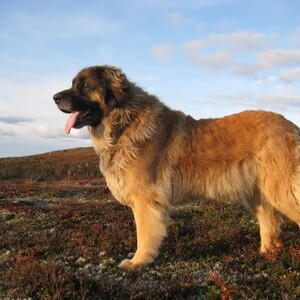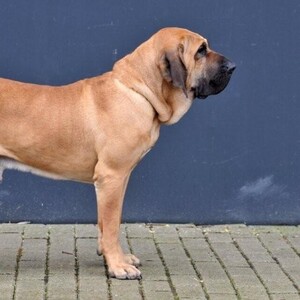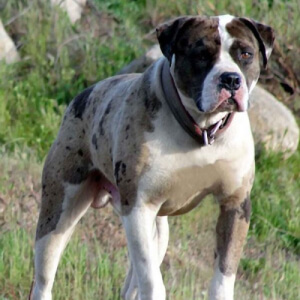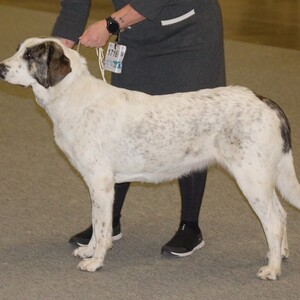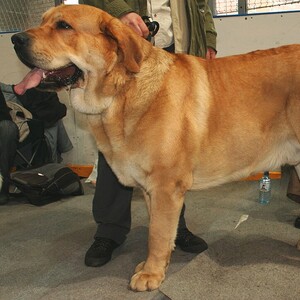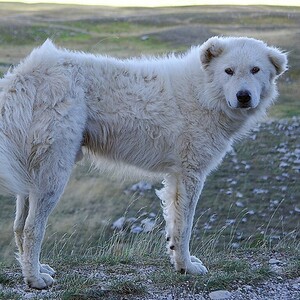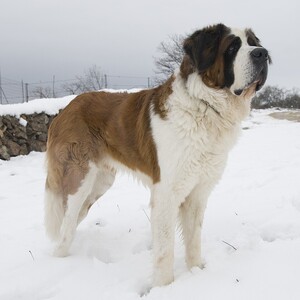
Cane CorsoCharacteristics, history, training and care
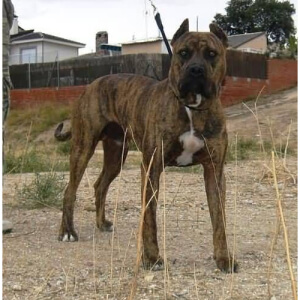
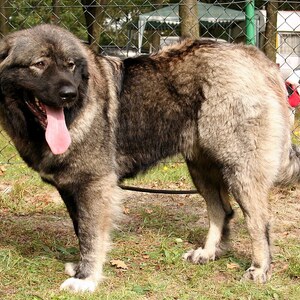
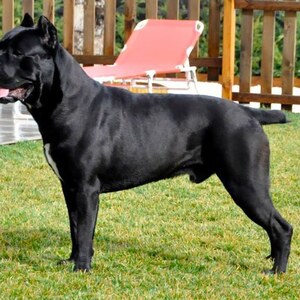
Cane Corso. · Marta García, juan Manuel Morato / Wikimedia Commons, CC BY-SA 2.1 es. Cropped and resized.
The Cane Corso is a large, muscular and elegant Italian molossoid, a descendant of the old Roman molossers. The name comes from the Latin “cohors”, meaning guardian of the courtyard. It is calm, self-confident, very protective and devoted to its family, but needs an experienced owner.
Quick facts
| Common name | Cane Corso (Cane Corso Italiano) |
| Scientific name | Canis lupus familiaris |
| Country of origin | Italy (Apulia) |
| Official recognition | FCI, definitively since 21 May 2007 (group 2, molossoid breeds, mastiff type, with working trial; standard no. 343); AKC, since 2010 |
| Lifespan | 9–12 years |
| Size (males) | 64–68 cm at the withers (±2 cm); 45–50 kg |
| Size (females) | 60–64 cm at the withers (±2 cm); 40–45 kg |
| Coat type | Short, glossy, very dense, with little undercoat |
| Common colours | Black, grey (blue), fawn, stag red, dark wheaten, brindle |
| Energy level | High |
| Suited to an apartment? | Not really; it needs a lot of exercise |
| Temperament | Calm, self-confident, protective, wilful |
| Tendency to aggression | Low with the family; very protective towards strangers |
| Good with children | Average; with supervision |
| Good with other animals | Average; needs socialisation |
| Genetic predispositions | Hip dysplasia, idiopathic epilepsy, demodicosis, eyelid problems, bloat |
- Primary category:Dog breeds
- Explore this animal's categories:
History and origin
The breed's direct ancestor is the old Roman molosser. It was once widespread throughout Italy, but in the recent past it survived only in Apulia and the neighbouring regions of the south.
After Italy's traditional farming system (the mezzadria) broke down in the 1960s, the dogs became rare. The modern breed was rebuilt, from around 1980, from a few remaining dogs.
How the breed developed
- Antiquity – Its ancestors are the Roman molossers.
- 1960s – The breed becomes rare.
- Around 1980 – Rebuilding of the breed begins from a few remaining dogs.
- 1983 – The breed society, the Società Amatori Cane Corso, is founded.
- 1994 – The Italian Kennel Club recognises the breed.
- 1996 – The FCI accepts it provisionally.
- 21 May 2007 – The FCI recognises it definitively.
- 2010 – The American Kennel Club recognises it.
Breed rating
| Feature | Stars |
|---|---|
| Training and intelligence | ★★★★☆ |
| Easy to train | ★★★★☆ |
| Intelligence | ★★★★☆ |
| Independence | ★★★★☆ |
| Stubbornness | ★★★★☆ |
| Behaviour and temperament | ★★★★☆ |
| Affectionate with family | ★★★★☆ |
| Friendly with children | ★★★☆☆ |
| Good with other dogs | ★★★☆☆ |
| Good with cats and other animals | ★★☆☆☆ |
| Loyalty | ★★★★★ |
| Tendency to be aggressive | ★★★☆☆ |
| Tendency to bark | ★★★☆☆ |
| Needs and care | ★★☆☆☆ |
| Shedding | ★☆☆☆☆ |
| Needs frequent grooming | ★★☆☆☆ |
| Activity and lifestyle | ★★★★☆ |
| Energy level | ★★★★☆ |
| Daily exercise needs | ★★★★☆ |
| Suited to apartment life | ★★☆☆☆ |
| Health and longevity | ★★★☆☆ |
| Life expectancy | ★★★☆☆ |
| Predisposition to genetic diseases | ★★★☆☆ |
| Working abilities and uses | ★★★★★ |
| Good guard dog | ★★★★★ |
| Good companion dog | ★★★★☆ |
Indicative rating: 5 stars means the highest level. It is based on the ratings the American Kennel Club gives the breed and on the FCI standard.
Physical characteristics
It is a medium to large dog, sturdy and solid, yet with a certain elegance. The muscles are lean and powerful. The body is slightly longer than it is tall.
General appearance
The head is broad, with medium-sized eyes as dark as possible. The triangular ears hang, and the standard asks that they not be cropped. The natural tail, very broad at the base, is carried high in movement, but neither upright nor curled.
| Feature | Cane Corso |
|---|---|
| Size | Large |
| Height at the withers | males: 64–68 cm; females: 60–64 cm (±2 cm) |
| Weight | males: 45–50 kg; females: 40–45 kg |
| Coat | Short, glossy, very dense |
| Ears | Triangular, hanging, uncropped |
| Tail | Natural, broad at the base |
The accepted colours are black, lead grey, slate grey and light grey (blue), light fawn, dark fawn, stag red, dark wheaten and brindle in black or grey. In fawn and brindle dogs, the black or grey mask should not go beyond the line of the eyes. A small white patch on the chest, toes or nose is accepted.
Training and socialisation
The AKC gives it a good score for trainability, but the Cane Corso is wilful and very protective. For such a large, powerful dog, early socialisation and puppy classes are very important.
It was bred to work and is happiest when it has a job. Without physical and mental activity, it may develop unwanted behaviours.
Tips for effective training
- Start socialising it as a puppy. New people, dogs, noises and places, all the time.
- Be calm and firm. It needs a confident owner, not a harsh one.
- Give it a job. Agility, obedience, dock diving, protection sports or tracking.
- Do not leave it unsupervised with young children. It is very strong, even when playing.
Activity needs and lifestyle
The AKC says it needs serious exercise: a brisk walk or, better still, a run of at least 1.6 km in the morning and another in the evening. It is a good companion on long walks, hikes or bike rides.
| Activity | How often | Why it matters |
|---|---|---|
| Brisk walk or run | twice a day, at least 1.6 km | Keeps it healthy and muscular |
| Hikes or bike rides | weekly | Burns off energy |
| Training or dog sports | daily | Mental activity |
Tips for a balanced life
- The yard must have a solid fence.
- In summer, avoid exertion in the hottest hours.
- It suits experienced owners.
Care and health
Coat and skin care
The short coat has an undercoat that sheds all year round, especially in spring. Brush it weekly, and daily during the moult, with a medium brush, a rubber mitt or a hound glove.
Common health problems
The AKC says the breed is generally healthy, and responsible breeders test their dogs for:
| Condition | Description | Common symptoms |
|---|---|---|
| Hip dysplasia | The hip joint forms incorrectly and, over time, arthritis develops | Limping, difficulty getting up or jumping, hip pain |
| Idiopathic epilepsy | Repeated neurological seizures with no cause found | Trembling, convulsions, loss of consciousness |
| Demodicosis | A skin disease caused by Demodex mites | Patchy hair loss, red skin |
| Eyelid problems | Eyelids turned inwards or outwards | Watering, irritated eyes |
| Gastric dilatation-volvulus (bloat) | The stomach fills with gas and may twist; this is a veterinary emergency | Swollen belly, trying to vomit without success, drooling, restlessness |
Other care
- Check the ears regularly for signs of infection.
- Brush its teeth often.
- Trim the nails regularly; overly long nails hurt it when walking.
Diet and nutrition
The AKC warns that some dogs put on weight easily. For such a heavy dog, extra kilos put a strain on the joints.
Tips for a healthy diet
The table gives a starting estimate, calculated with the formula from the Merck Veterinary Manual. The first two calorie columns show the calories per day for a healthy adult dog. The last column shows what this means in dry food with 3,500–4,000 kcal per kilogram.
| Dog's weight | Calories per day (neutered) | Calories per day (not neutered) | Dry food per day (approximate) |
|---|---|---|---|
| 40 kg | 1,780 kcal | 2,000 kcal | 440–570 g |
| 45 kg | 1,950 kcal | 2,190 kcal | 490–630 g |
| 50 kg | 2,110 kcal | 2,370 kcal | 530–680 g |
- Split the food into two meals a day to reduce the risk of bloat.
- Do not let it run right after a meal.
- A dog is at the right weight when you can feel its ribs without pressing hard.
Foods to avoid
Some human foods are dangerous for dogs: chocolate, coffee, grapes and raisins, onions, garlic, xylitol (a sweetener used in chewing gum), macadamia nuts and alcohol.
Reproduction and development
Physical and emotional maturity
In dogs, sexual maturity usually comes between 6 and 12 months, but in large breeds it can be delayed until about two years. The body also reaches its adult form later than in small breeds.
Mating and pregnancy
Pregnancy lasts about 63 days, counted from ovulation. Mating a female on her first heat is not recommended. The FCI standard requires that only healthy dogs of typical breed appearance are used for breeding.
Caring for the puppies
In large breeds, a litter has around 7 puppies on average. Socialisation starts in the first weeks: gentle handling, everyday noises and new people.
Interesting facts
- The name comes from Latin. “Cohors” meant guardian of the courtyard.
- A descendant of the Roman molossers. The standard considers it the direct descendant of the old Roman molosser.
- Saved from a handful of dogs. The modern breed started, around 1980, from a few remaining dogs.
- Related to the Mastino Napoletano. Wikipedia says it is closely related to the Neapolitan Mastiff.
- Thousands of puppies a year in Italy. Between 2011 and 2019, between 3,000 and 4,250 puppies were registered each year in Italy.
Frequently asked questions
What does “Cane Corso” mean?
“Cane” means dog, and “Corso” comes from the Latin “cohors”, guardian of the courtyard.
How big does it get?
Males measure 64–68 cm and weigh 45–50 kg; females measure 60–64 cm and weigh 40–45 kg.
Is it suitable for a beginner?
Usually not. It is strong and protective and needs an experienced owner.
How much exercise does it need?
A lot: at least a run or brisk walk of 1.6 km in the morning and in the evening.
How long does it live?
Its life expectancy is 9–12 years.