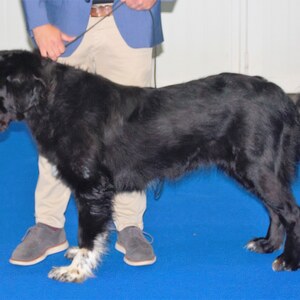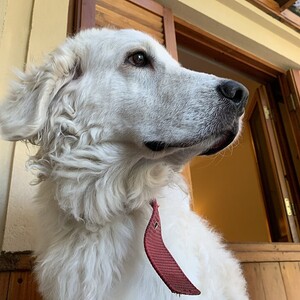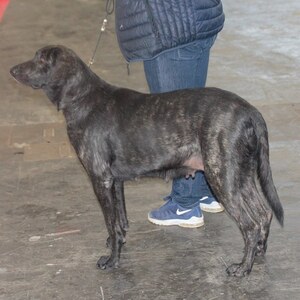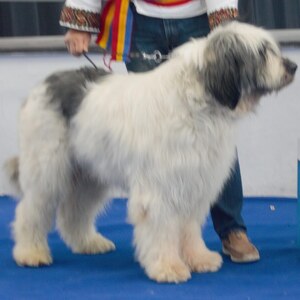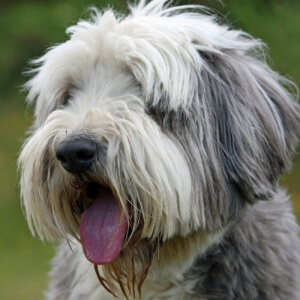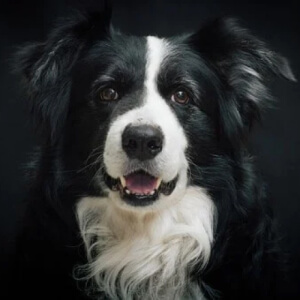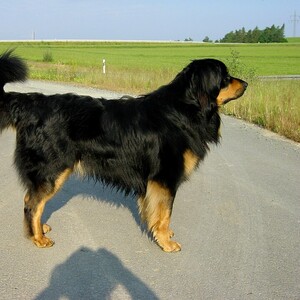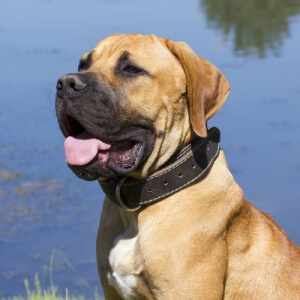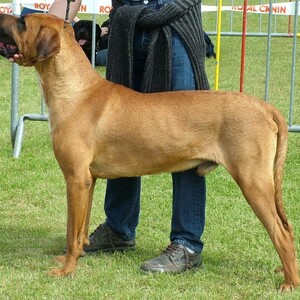
Central Asian Shepherd DogCharacteristics, history, training and care
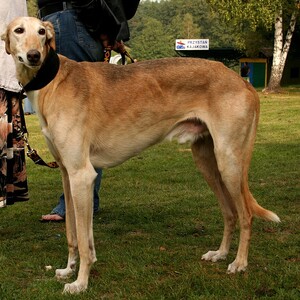
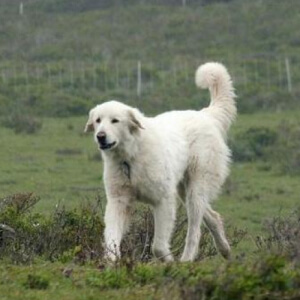
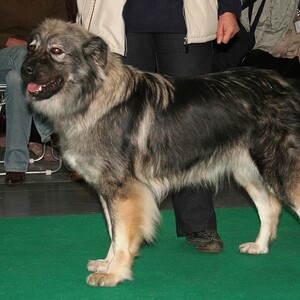
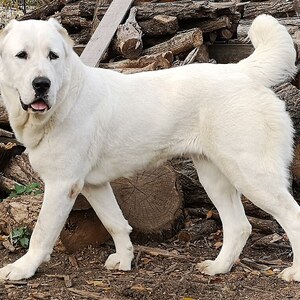
Central Asian Shepherd Dog. · Halalosirambankiskecskek / Wikimedia Commons, CC BY-SA 4.0. Cropped and resized.
The Central Asian Shepherd Dog, also called the Alabai, is a giant guard dog shaped by natural selection over more than 4,000 years, between the Caspian Sea and China. It guarded flocks, caravans and homes. It is calm, self-confident, brave and very protective, so it is not for beginners.
Quick facts
| Common name | Central Asian Shepherd Dog (Alabai, Sredneasiatskaya Ovcharka) |
| Scientific name | Canis lupus familiaris |
| Country of origin | USSR (the regions of Central Asia); patronage: Russia |
| Official recognition | FCI, definitively since 25 January 1989 (group 2, mountain molossoid breeds; standard no. 335); also recognised by the AKC |
| Lifespan | No published data for the breed; very large breeds live 8–13 years on average |
| Size (males) | at least 70 cm at the withers; at least 50 kg |
| Size (females) | at least 65 cm at the withers; at least 40 kg |
| Coat type | Abundant, straight, harsh, with a well-developed undercoat; short (3–5 cm) or longer (7–10 cm) |
| Common colours | Any colour except genetic blue and genetic brown, and a black mantle on tan |
| Energy level | Moderate |
| Suited to an apartment? | No |
| Temperament | Self-confident, balanced, calm, proud, independent |
| Tendency to aggression | High towards strangers; a serious guard dog |
| Good with children | Average; with supervision |
| Good with other animals | Average |
| Genetic predispositions | Fewer hereditary diseases than many man-made breeds; hip dysplasia |
- Primary category:Dog breeds
- Explore this animal's categories:
History and origin
The Central Asian Shepherd Dog is one of the oldest dog breeds. It was shaped by natural selection over more than 4,000 years, across a huge territory stretching from the Caspian Sea to China and from the southern Ural Mountains to Afghanistan.
It was not created by a particular person or country, but by the climate and the harsh life of nomadic peoples. It guarded flocks, caravans and homes against wolves and other large predators. In Turkmenistan, where it is called the Alabai, it is considered a symbol of national pride.
How the breed developed
- More than 4,000 years – The dogs are shaped by natural selection in Central Asia.
- 25 January 1989 – The FCI recognises the breed.
- 1990 – Turkmenistan approves the standard for the “Turkmen Wolfhound” breed.
- 13 October 2010 – The current FCI standard is published.
- 2020 – A gilded statue of an Alabai is unveiled in Turkmenistan.
Breed rating
| Feature | Stars |
|---|---|
| Training and intelligence | ★★★☆☆ |
| Easy to train | ★★★★☆ |
| Intelligence | ★★★★☆ |
| Independence | ★★★★★ |
| Stubbornness | ★★★★☆ |
| Behaviour and temperament | ★★★☆☆ |
| Affectionate with family | ★★★☆☆ |
| Friendly with children | ★★★☆☆ |
| Good with other dogs | ★★★☆☆ |
| Good with cats and other animals | ★★★☆☆ |
| Loyalty | ★★★★★ |
| Tendency to be aggressive | ★★★★☆ |
| Tendency to bark | ★★★☆☆ |
| Needs and care | ★★★☆☆ |
| Shedding | ★☆☆☆☆ |
| Needs frequent grooming | ★★☆☆☆ |
| Activity and lifestyle | ★★★☆☆ |
| Energy level | ★★★☆☆ |
| Daily exercise needs | ★★★☆☆ |
| Suited to apartment life | ★☆☆☆☆ |
| Health and longevity | ★★★☆☆ |
| Life expectancy | ★★★☆☆ |
| Predisposition to genetic diseases | ★★☆☆☆ |
| Working abilities and uses | ★★★★★ |
| Good guard dog | ★★★★★ |
| Good companion dog | ★★★☆☆ |
Indicative rating: 5 stars means the highest level. It is based on the ratings the American Kennel Club gives the breed and on the FCI standard.
Physical characteristics
It is a very large, powerful and massive dog. Great size is desirable, but the body must remain well proportioned. Males and females are clearly different.
General appearance
The oval, brown eyes are set well apart and look straight ahead. The thick, triangular ears hang down. The tail, thick at the base, is carried in a sickle or a loose ring. The coat may be short or longer, with a mane on the neck and feathering.
| Feature | Central Asian Shepherd Dog |
|---|---|
| Size | Very large |
| Height at the withers | males: at least 70 cm; females: at least 65 cm |
| Weight | males: at least 50 kg; females: at least 40 kg |
| Coat | Harsh, with undercoat; short or longer |
| Eyes | Oval, dark brown to hazel |
| Tail | Sickle-shaped or a loose ring |
The standard accepts any colour except genetic blue and genetic brown in any combination, and a black mantle on a tan background.
Training and socialisation
The AKC says it is extremely independent and intelligent, and obedience training can be difficult, but not impossible. It is brave and has a natural instinct to defend its territory.
It is a protective breed that needs supervision throughout its life and is not suitable for first-time dog owners.
Tips for effective training
- Socialise it intensively as a puppy. New people, dogs and situations, all the time.
- Be calm and consistent. It needs a self-confident owner.
- Use the lead and the fence. The AKC recommends always keeping it fenced in or on a lead.
- Do not leave it unsupervised with strangers. It is very protective of its family and home.
Activity needs and lifestyle
The AKC describes it as a low-energy dog, but with good stamina on walks and hikes. It knows how to conserve its energy.
| Activity | How often | Why it matters |
|---|---|---|
| Lead walks | daily | Exercise and stamina |
| Time in a large, fenced yard | daily | It guards its territory |
| Hikes | occasionally | It has good stamina |
Tips for a balanced life
- The fence must be very solid.
- It is not suitable for inexperienced owners.
- Indoors it is usually calm.
Care and health
Coat and skin care
The coat should be brushed now and then, and more often during moulting periods. An occasional bath keeps it clean. The nails grow quickly and must be trimmed regularly.
Common health problems
The AKC says it has fewer hereditary diseases than most man-made breeds, but breeders should test their dogs for hip dysplasia. As with any very large dog, the stomach is also worth watching.
| Condition | Description | Common symptoms |
|---|---|---|
| Hip dysplasia | The hip joint forms incorrectly and, over time, arthritis develops | Limping, difficulty getting up or jumping, hip pain |
| Gastric dilatation-volvulus (bloat) | The stomach fills with gas and may twist; this is a veterinary emergency | Swollen belly, trying to vomit without success, drooling, restlessness |
Other care
- Check the ears regularly.
- Brush its teeth regularly.
- Wipe its mouth: it drools moderately.
Diet and nutrition
The AKC recommends a food for giant breeds, chosen together with the vet and the breeder.
Tips for a healthy diet
The table gives a starting estimate, calculated with the formula from the Merck Veterinary Manual. The first two calorie columns show the calories per day for a healthy adult dog. The last column shows what this means in dry food with 3,500–4,000 kcal per kilogram.
| Dog's weight | Calories per day (neutered) | Calories per day (not neutered) | Dry food per day (approximate) |
|---|---|---|---|
| 40 kg | 1,780 kcal | 2,000 kcal | 440–570 g |
| 55 kg | 2,260 kcal | 2,540 kcal | 560–730 g |
| 70 kg | 2,710 kcal | 3,050 kcal | 680–870 g |
- Split the food into two meals a day to reduce the risk of bloat.
- Puppies need growth food suited to very large breeds.
- A dog is at the right weight when you can feel its ribs under the coat without pressing hard.
Foods to avoid
Some human foods are dangerous for dogs: chocolate, coffee, grapes and raisins, onions, garlic, xylitol (a sweetener used in chewing gum), macadamia nuts and alcohol.
Reproduction and development
Physical and emotional maturity
In dogs, sexual maturity usually comes between 6 and 12 months, but in large breeds it can be delayed until about two years. Very large breeds become adults only at around 2 years.
Mating and pregnancy
Pregnancy lasts about 63 days, counted from ovulation. Mating a female on her first heat is not recommended. The FCI standard requires that only healthy dogs of typical breed appearance are used for breeding.
Caring for the puppies
In large breeds, a litter has around 7 puppies on average. The puppies grow very fast, so they need growth food suited to large breeds. Socialisation starts in the first weeks.
Interesting facts
- Created by nature. It was not created by people, but by the climate and the harsh life of the nomads.
- It has a gilded statue. In 2020 a gilded statue of an Alabai was unveiled in Turkmenistan.
- Many names. It is called the Alabai, the Tobet or the “Turkmen wolfhound”.
- On the Silk Road. The AKC says its history can be traced along the old Silk Road.
- It conserves its energy. It stays calm until a real danger appears.
In popular culture
The golden statue in Turkmenistan
In Turkmenistan, the Alabai is considered a symbol of national pride and heritage. In 2020 a gilded statue of a dog of this breed was unveiled there.
Frequently asked questions
What is an Alabai?
It is the Turkmen name for the Central Asian Shepherd Dog.
How big does it get?
Males measure at least 70 cm and weigh at least 50 kg; females at least 65 cm and 40 kg.
Is it suited to beginners?
No. The AKC says it is not a breed for first-time dog owners.
How old is the breed?
It was shaped by natural selection over more than 4,000 years.