ZanderSander lucioperca — habitat, diet and reproduction
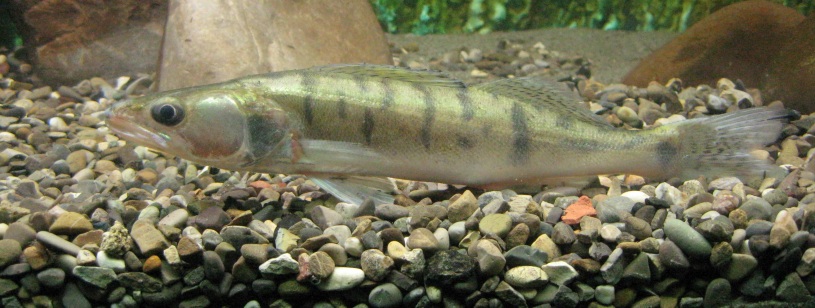
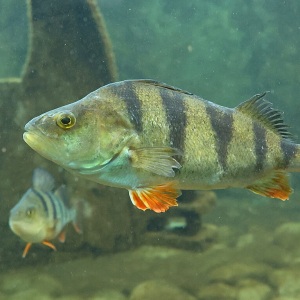
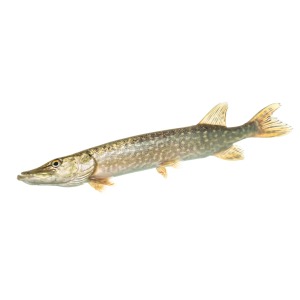
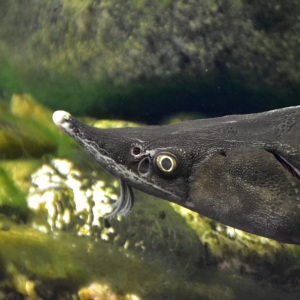
Zander (Sander lucioperca) with its elongated body and large eyes. · Basilicofresco / Wikimedia Commons / CC BY-SA 4.0 (https://creativecommons.org/licenses/by-sa/4.0/). Cropped and resized. Source: https://commons.wikimedia.org/wiki/File:Sander_lucioperca,_Acquario_del_Po.jpg
Zander (Sander lucioperca) are predatory fish with large eyes, elongated bodies and two dorsal fins. They hunt effectively in dim light and inhabit lakes, large rivers and some slightly salty coastal waters. They are familiar members of the Danube’s fish community.
Quick facts
| Common name | Zander |
| Scientific name | Sander lucioperca |
| Lifespan | Can exceed 10 years; FishBase reports a maximum age of 17 years |
| Length | Often about 40–70 cm, with larger individuals |
| Weight | Often around 0.5–2.5 kg in Finnish accounts; large fish exceed this range |
| Diet | Carnivorous, mainly fish |
| Predators | Predatory fish and fish-eating birds, especially for juveniles |
| Conservation status | Least Concern (LC), globally |
| Distribution | Europe and western Asia; introduced elsewhere |
| Habitat | Large rivers, lakes and low-salinity coastal waters |
| Family | Percidae |
| Reproduction | Spring spawning; adhesive eggs in nests guarded by males |
Interesting facts
- Large eyes and a reflective layer behind the retina support dim-light vision.
- Large canine teeth help hold captured fish.
- Males clean and defend spawning nests.
- The name pike-perch refers to a distinct species, rather than a pike–perch hybrid.
Records and extremes
Zander commonly measure around 40–70 cm. Fish exceeding 10 kg are rare in Finnish accounts. Growth depends on habitat, food and age.
FishBase reports a maximum recorded age of 17 years. This is a longevity record, while populations contain many younger and smaller fish.
Characteristics
The body has a grey-green back, pale belly and dark side markings. A pointed head carries a mouth with many small teeth and several large canines.
The two dorsal fins are separate. The first is spiny and the second mainly soft-rayed. Small scales give the body a rough surface.
Behaviour
Zander can feed at dusk, at night and in water with reduced visibility. Vision is central to locating nearby prey.
A study of Finnish lake fish compared zander, pike, perch and roach. Zander showed high visual sensitivity associated with large eyes and a reflective tapetum. This layer sends light back towards the light-sensitive cells.
Adults move towards spawning grounds during the breeding season. Males defend the area around their nests.
Habitat and distribution
The native range covers European and western Asian basins, including those of the Baltic, Black and Caspian seas. Introductions have extended this distribution.
In Romania, zander occur in the Danube and its delta. Research from the Danube Delta institute documents their presence in the region’s fish resources.
Sand, gravel and exposed roots can provide spawning surfaces. Water quality and oxygen availability matter for adults and developing eggs.
Diet and feeding
Adults mainly eat small fish, including species moving through open water. Their teeth help retain slippery prey.
Larvae initially consume tiny organisms in the water. As juveniles grow, fish become increasingly important in their diet. Young zander can themselves be eaten by other predatory fish.
Reproduction and life cycle
Spawning takes place in spring, with regional differences. The male cleans a shallow nesting area over sand, gravel or roots. Adhesive eggs are fertilised externally.
The male guards the eggs and fans them with his fins. After development, larvae leave the nest and begin life in open water.
Maturity is often reached around four years, although timing varies between populations. Temperature influences both spawning and egg development.
Name and history
Linnaeus described the species in 1758. Its current name is Sander lucioperca, in the perch family, Percidae.
People have moved zander into additional waters for fisheries. Vorarlberg’s fisheries association records introduction to Lake Constance in 1883. The history of each basin determines whether its population is native or introduced.
Conservation and threats
Zander are globally classified as Least Concern. Suitable spawning habitat, prey and water conditions remain important for local populations.
In some introduced ranges, zander predation reduces native fish populations. Assessments from the United States and Spain document these ecological concerns.
Protecting native populations and managing introduced predators are separate conservation tasks. Maintaining healthy river and lake habitats supports the wider fish community.
Frequently asked questions
Are zander a hybrid of pike and perch?
They are a distinct species, Sander lucioperca, belonging to the perch family.
Why do the eyes look reflective?
A reflective layer behind the retina helps the eye use limited light.
How many dorsal fins do they have?
Two separate dorsal fins, with spines in the first.
Do they live only in freshwater?
They also occupy some low-salinity coastal waters and use suitable freshwater spawning habitats.
Which parent guards the eggs?
The male defends the nest and fans the eggs.
What do young zander eat?
They begin with tiny aquatic organisms and increasingly consume fish as they grow.