DeerInteresting facts and information
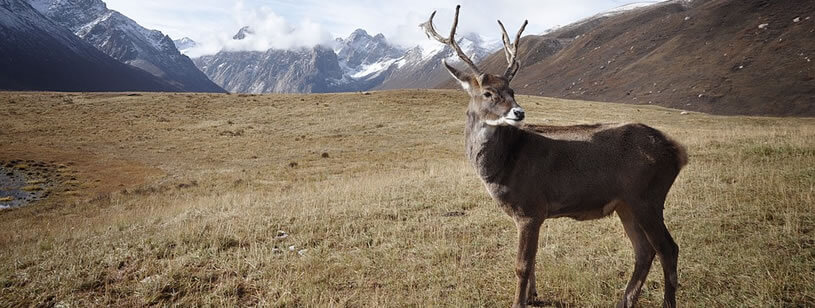
Deer are hoofed mammals in the family Cervidae. The family includes animals as different as roe deer, red deer, reindeer and moose. Most species have antlers in males, but there are important exceptions, so one description does not apply to every deer.
Deer feed on plants and affect the habitats they use. Their predators, distribution and conservation status differ between species; the whole family cannot be assigned one population trend.
Quick facts
| Common name | Deer |
| Scientific name | Cervidae |
| Typical lifespan | Often 10-15 years in the wild; 20 years or more in captivity |
| Maximum speed | Many deer can run at about 50-60 km/h |
| Height | From about 35-40 cm (pudu) to about 2 m at the shoulder (moose) |
| Length | From about 80 cm to about 3 m (depending on the species) |
| Weight | From about 10 kg (pudu) to over 600 kg (moose) |
| Diet type | Herbivore (grass, leaves, shoots, fruit, bark) |
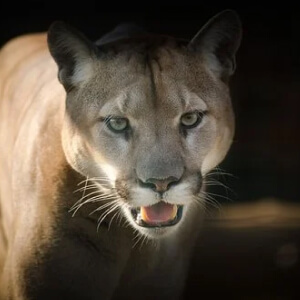
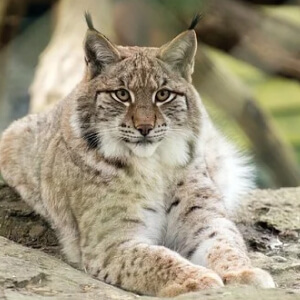
| Main predators | Wolves, bears, lynxes, pumas, tigers, humans |
| Conservation status | Assess separately by species and population; different taxa and regions have different needs |
| Main species | Red deer (Cervus elaphus); fallow deer (Dama dama); sika deer (Cervus nippon). Carpathian red deer are regional red deer. |
| Distribution | Native to Europe, Asia, the Americas and North Africa; introduced to Australia and New Zealand |
| Habitat | Temperate forests, grasslands, mountains, tundra, tropical forests |
- Primary category:Mammals
- Explore this animal's categories:
Interesting facts
- Antlers can grow rapidly and are shed and replaced in many deer species. Growth rates depend on species, age, nutrition and the measurement used.
- Deer communicate with sounds and smells - In the breeding season, males roar, bellow or grunt to attract females and warn rivals, and they use special scent glands to mark their territory.
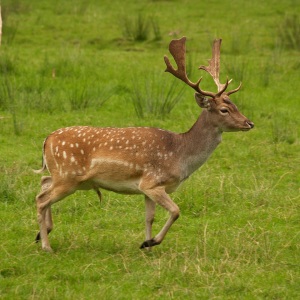
- Fallow deer have broad, flat antlers - Unlike most deer, fallow deer bucks have antlers shaped like wide shovels, called palmate antlers.
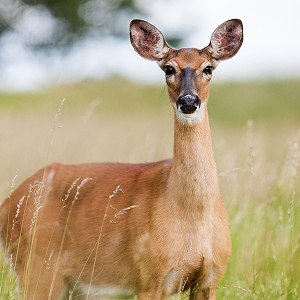
- Great jumpers - The white-tailed deer of North America can jump about 2.5-3 metres high and up to about 9 metres long.
- An excellent sense of smell - Deer use their keen sense of smell to detect predators and find food.
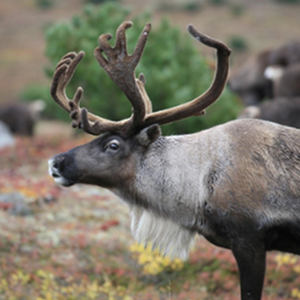
- Long migrations - Some reindeer, called caribou in North America, travel thousands of kilometres each year, one of the longest land migrations in the world.
Records and remarkable features
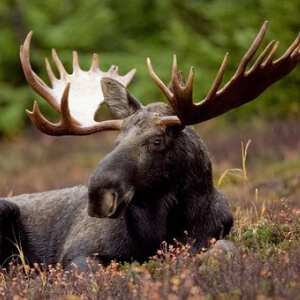
- The moose (Alces alces) is the largest living member of the deer family.
- The smallest deer are the pudus of South America, only about 35-40 cm tall at the shoulder.
- Antlers are among the fastest-growing tissues of any mammal, sometimes growing more than 2 cm a day.
- Reindeer are the only deer in which females usually grow antlers as well as males.
Characteristics
Deer are graceful mammals adapted to many habitats around the world. Their typical features include impressive antlers in males of most species, a slender, agile body and keen senses of smell and hearing.
Main physical characteristics
- Very different sizes - From the tiny pudu (Pudu puda), only about 35-40 cm tall at the shoulder, to the moose (Alces alces), which can be about 2 metres tall at the shoulder.
- Branched antlers - In most species, only males have antlers, which grow each year and are used in fights and displays; female reindeer also have antlers, while Chinese water deer have tusks instead.
- A seasonal coat - In many species, the coat is redder or lighter in summer and greyer and thicker in winter, which helps with camouflage and warmth.
- Strong, agile hooves - Allow deer to move easily over rough ground and in mountains.
- Eyes adapted to dim light - A reflective layer at the back of the eye, the tapetum lucidum, helps them see at dawn and dusk.
- Scent glands - Used to mark territory and communicate with other deer.
Special adaptations for survival
- Regrowing antlers - Deer are the only animals with antlers, which grow quickly, are covered in soft "velvet" while growing and fall off after the breeding season.
- An efficient stomach - Deer are ruminants: their stomach has four chambers that help them digest tough plant food.
- Seasonal camouflage - Their coat colour changes with the seasons to blend in with their surroundings.
Habits and behaviour
Deer behaviour varies with the species, the season and the environment. Many deer are social, but in the breeding season males become aggressive and territorial.
Social behaviour
- Seasonal groups - In many species, females and young live in herds, while adult males live alone or in small bachelor groups for most of the year.
- Hierarchies - In the breeding season, males compete for territories and access to females.
- Communication - Deer use calls, body postures and scent to express their intentions.
Breeding season
- The rut - In autumn, red deer stags roar loudly to attract females and intimidate rivals.
- Battles for dominance - Males lock antlers and push each other; the winners gain access to groups of females.
- Duration - The rut varies between species, but usually lasts a few weeks.
Defence and survival methods
- Speed and agility - Deer run fast and leap over obstacles to escape predators.
- Camouflage - Fawns have spotted coats that help them hide in vegetation.
- Tail signals - White-tailed deer raise their white tail as a warning flag when they run.
Habitat and geographic distribution
Deer live naturally in Europe, Asia, the Americas and North Africa, and people have introduced them to places such as Australia and New Zealand. They live in many habitats, from Arctic tundra to tropical forests.
Habitat types
- Temperate and northern forests - Home of red deer, including the Carpathian red deer. Related profile: Carpathian red deer.
- Grasslands and savannas - Home of species such as the pampas deer of South America and the barasingha of India.
- Mountains - Red deer, including Carpathian red deer, and wapiti often spend summer high in the mountains.
- The Arctic - Reindeer are adapted to the harsh conditions of the tundra.
Geographic distribution
| Region | Example species | Situation |
|---|---|---|
| Europe | Cervus elaphus (red deer), Dama dama (fallow deer), Capreolus capreolus (roe deer) | Common and often increasing |
| North America | Odocoileus virginianus (white-tailed deer), Cervus canadensis (wapiti) | Common; white-tailed deer are very numerous |
| Asia | Cervus nippon (sika deer), Rusa unicolor (sambar) | Varies; several species are threatened |
| South America | Mazama americana (red brocket), Hippocamelus bisulcus (huemul) | Some species are endangered |
| North Africa | Cervus elaphus barbarus (Barbary red deer) | Rare; Africa's only native deer |
Impact of climate change and human activities
- Rising temperatures - May push some species, such as reindeer, further north or higher up.
- Deforestation - The loss of forests reduces food and shelter.
- Roads and fences - They break up habitats and block migration routes.
Deer are important for the balance of ecosystems: they shape forests and are food for large predators.
Diet and feeding
Deer are herbivores with a digestive system adapted to process many kinds of plants. Their food changes with the season and habitat.
Main food
- Grass and leaves - A large part of their diet, especially in summer.
- Young shoots and twigs - Important in winter, when there is less grass.
- Fruit and seeds - Apples, acorns, chestnuts and berries are eaten in autumn.
- Bark - Especially in winter, deer strip bark from trees.
Diet by season
| Season | Main food |
|---|---|
| Spring | Buds, young leaves, fresh grass |
| Summer | Grass, leaves, wild flowers, clover |
| Autumn | Fruit, seeds, acorns, mushrooms |
| Winter | Bark, twigs, evergreen leaves, lichens (for reindeer) |
Feeding methods
- Choosing food - Deer pick the most nutritious plants and usually avoid toxic ones.
- Chewing the cud - Like other ruminants, deer bring food back up from their stomach and chew it again to digest it better.
- Dawn and dusk feeding - Many species feed mainly early in the morning and in the evening.
Reproduction and life cycle
Most deer breed once a year, and the young are born when food is plentiful.
Mating
- The rut - In many temperate species, it takes place in autumn, usually between September and November.
- Male behaviour - Males become territorial, call loudly and compete for females.
- Fights - Males clash with their antlers to show their strength, and the winners mate with the females.
Pregnancy and birth
- Pregnancy - Usually about 6-8 months, depending on the species; roe deer have delayed implantation, so their pregnancy lasts longer.
- Number of young - Females usually give birth to one or two fawns.
- Place of birth - Females give birth in dense vegetation, where the young can hide from predators.
Development of the fawns
- Spotted coats - Fawns are usually born with white spots, which help camouflage them and fade as they grow.
- Hiding - For the first weeks, fawns lie hidden while their mother feeds nearby, and they nurse for several months.
- Independence - At around one year old, young deer usually become independent.
Longevity
- In the wild - Often 10-15 years, although many die younger because of predators, hunting and harsh winters.
- In captivity - Some can live 20 years or more.
Name and history
Deer have appeared in myths, stories and symbols for thousands of years, linked with nobility, strength and nature.
Origin of the name
- The English word "deer" comes from Old English dēor, which originally meant any wild animal.
- The scientific name Cervidae comes from the Latin cervus, "deer".
Taxonomic classification
| Taxonomic category | Name |
|---|---|
| Kingdom | Animalia |
| Phylum | Chordata |
| Class | Mammalia |
| Order | Artiodactyla |
| Family | Cervidae |
| Main genera | Cervus, Odocoileus, Alces, Rangifer, Capreolus, Dama |
| Notable species | Cervus elaphus, Odocoileus virginianus, Alces alces |
Discovery and documentation
- Prehistory - Deer appear in many cave paintings, such as those at Lascaux in France, and their antlers were used to make tools.
- The Middle Ages - Hunting deer was a sport of kings and nobles, and royal forests were created to protect deer for hunting.
- The 19th and 20th centuries - Scientific studies of deer led to laws and plans for managing their populations.
Deer in mythology and symbolism
- Norse mythology - Several stags are said to live around the world tree Yggdrasil.
- European folklore - In many cultures, the deer is seen as a messenger from the forest and a symbol of renewal.
- Christian legends - Saint Hubert and Saint Eustace are said to have seen a stag with a cross between its antlers, which led them to change their lives.
Deer remain powerful symbols in modern culture, admired for their grace and strength.
Cultural significance and mythology
Throughout history, deer have been honoured and celebrated in myths, linked with nobility, spirituality and nature. They appear in religions and symbols around the world.
Deer in mythology and religion
- Celtic mythology - The antlered god Cernunnos was linked with wild animals, nature and fertility.
- Greek mythology - The deer was sacred to Artemis, goddess of hunting and wild nature. In one myth, the hunter Actaeon was turned into a stag by Artemis and killed by his own dogs.
- Hinduism - In the Ramayana, a demon disguised as a golden deer lures Rama away, leading to the kidnapping of Sita.
- Buddhism - The Buddha gave his first teaching in the Deer Park at Sarnath, and in some stories of his past lives he was born as a golden deer.
- Norse mythology - Four stags (Dáinn, Dvalinn, Duneyrr and Duraþrór) were said to feed on the branches of the world tree Yggdrasil.
Deer symbolism in different cultures
- Nobility and power - In heraldry, stags appear on the coats of arms of many noble families and towns.
- Renewal - Because antlers fall off and grow back every year, deer are symbols of the cycles of nature.
- Guides - In many fairy tales, a white deer leads heroes into magical lands or adventures.
Conservation status and threats
Most deer species are doing well, but some are threatened by habitat loss, poaching and climate change.
Conservation status
- Red deer (Cervus elaphus) - Least Concern overall; common in much of Europe, but some local subspecies are rare.
- Fallow deer (Dama dama) – Population management and conservation needs depend on the region.
- Reindeer (Rangifer tarandus) - Listed as Vulnerable, because many populations have declined, partly because of climate change and habitat loss.
- Southern pudu (Pudu puda) - Near Threatened, because of deforestation, dogs and hunting.
- Visayan spotted deer (Rusa alfredi) – A threatened Philippine deer; an undated exact wild population total is not retained.
Main threats
- Habitat loss - Deforestation and urban growth reduce the areas where deer can live and feed.
- Overhunting - Deer are hunted for meat, antlers and trophies, and poaching is a problem in some regions.
- Fragmented populations - Roads and fences block the natural movements of deer.
- Climate change - Changing seasons affect food supplies, especially for reindeer.
Conservation efforts
- Nature reserves and national parks - Protecting habitats is essential for many deer populations.
- Hunting rules - In many countries, laws control deer hunting to keep populations healthy.
- Saved from extinction - Père David's deer died out in the wild in China, but was saved by a herd kept in England and has been returned to China since the 1980s.
In popular culture
Deer appear in many stories, films, cartoons and symbols, often linked with grace, nobility and mystery.
Deer in film and animation
- Bambi (Disney, 1942) - One of the most famous deer characters, based on a 1923 novel by Felix Salten.
- The Chronicles of Narnia: The Lion, the Witch and the Wardrobe (2005) - The White Stag, which grants wishes to whoever catches it, leads the children back to their own world.
- Frozen (2013) - Sven, Kristoff's loyal reindeer, is one of the film's funniest characters.
- Rudolph the Red-Nosed Reindeer - The famous reindeer, created in 1939, became a Christmas classic in songs and films.
Deer in literature
- The Lion, the Witch and the Wardrobe (C. S. Lewis, 1950) - The magical White Stag leads the grown-up children back through the wardrobe.
- Harry Potter (J. K. Rowling) - Harry's Patronus is a stag, like the animal form of his father, James Potter.
- Romanian folklore - In traditional Romanian carols and tales, a magical stag often appears as a noble and mysterious creature.
Deer in video games
- The Legend of Zelda: Breath of the Wild - Players often meet deer in the forests and meadows of Hyrule.
- Red Dead Redemption 2 - Deer are common animals in the game's wild landscapes.
Deer as symbols
- Logos - The stag's head with a cross from the legend of Saint Hubert appears on the label of Jägermeister.
- Sport - The Milwaukee Bucks basketball team in the NBA has a deer as its mascot.
- Heraldry - In many European countries, stags appear on the coats of arms of nobles and towns.