Cirneco dell’EtnaCharacteristics, history, training and care
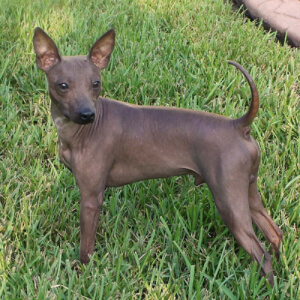
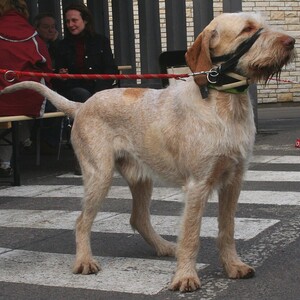
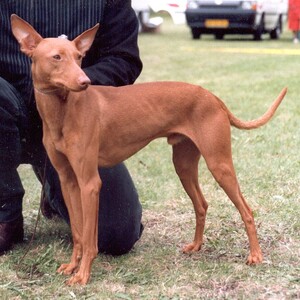
Cirneco dell'Etna · Jan Eduard, Pleple2000 / Wikimedia Commons, CC BY-SA 3.0. Cropped and resized.
The Cirneco dell'Etna is a medium-sized primitive dog from Sicily, slender and elegant, with large, erect ears. It is named after the volcano Etna and has been used for centuries to hunt wild rabbits, mainly by scent. It is determined, affectionate and very attached to its owner.
Quick facts
| Common name | Cirneco dell'Etna (Cirneco) |
| Scientific name | Canis lupus familiaris |
| Country of origin | Italy (Sicily) |
| Official recognition | FCI, definitively since 9 March 1956 (group 5, primitive type hunting dogs, with working trial in Italy; standard no. 199); also recognised by the AKC |
| Lifespan | 15–16 years, according to the AKC |
| Size (males) | 46–50 cm at the withers; 10–13 kg |
| Size (females) | 44–48 cm at the withers; 8–11 kg |
| Coat type | Short on the head and legs, semi-long (about 2.5 cm) and close-lying on the body, harsh |
| Common colours | Fawn in all shades, with or without white |
| Energy level | Moderate to high |
| Suited to an apartment? | Yes, if it gets enough exercise |
| Temperament | Determined, affectionate, alert, very attached to its owner |
| Tendency to aggression | Low |
| Good with children | Good |
| Good with other animals | Good with dogs; be careful with cats and small animals |
| Genetic predispositions | No breed-specific diseases are known |
- Primary category:Dog breeds
- Explore this animal's categories:
History and origin
The Cirneco has lived in Sicily since very ancient times. The FCI standard says it probably descends from the hunting dogs of ancient Egypt and was brought to the Mediterranean basin by the Phoenicians. Old coins, engravings and mosaics from before Christ show it on the island.
The first written description of the modern breed was published in 1932 by Maurizio Migneco, a vet from Adrano, on the slopes of Etna. The Sicilian noblewoman Agata Paternó Castello read the article, bought a few dogs and began breeding them in 1934. The Italian Kennel Club recognised the breed in 1939.
How the breed developed
- Antiquity – Similar dogs appear on coins and mosaics in Sicily.
- 1932 – Maurizio Migneco publishes the first description of the breed.
- 1934 – Agata Paternó Castello begins breeding the dogs.
- 1939 – The Italian Kennel Club (ENCI) recognises the breed.
- 9 March 1956 – The FCI definitively recognises the breed.
- 30 October 2016 – The current FCI standard is published.
Breed rating
| Feature | Stars |
|---|---|
| Training and intelligence | ★★★★☆ |
| Easy to train | ★★★★☆ |
| Intelligence | ★★★★☆ |
| Independence | ★★★★☆ |
| Stubbornness | ★★★☆☆ |
| Behaviour and temperament | ★★★★☆ |
| Affectionate with family | ★★★★☆ |
| Friendly with children | ★★★★☆ |
| Good with other dogs | ★★★★☆ |
| Good with cats and other animals | ★★☆☆☆ |
| Loyalty | ★★★★★ |
| Tendency to be aggressive | ★★☆☆☆ |
| Tendency to bark | ★★☆☆☆ |
| Needs and care | ★★★★☆ |
| Shedding | ★☆☆☆☆ |
| Needs frequent grooming | ★☆☆☆☆ |
| Activity and lifestyle | ★★★★☆ |
| Energy level | ★★★☆☆ |
| Daily exercise needs | ★★★★☆ |
| Suited to apartment life | ★★★★☆ |
| Health and longevity | ★★★★☆ |
| Life expectancy | ★★★★☆ |
| Predisposition to genetic diseases | ★☆☆☆☆ |
| Working abilities and uses | ★★★★☆ |
| Good hunting dog | ★★★★☆ |
| Good companion dog | ★★★★☆ |
Indicative rating: 5 stars means the highest level. It is based on the ratings the American Kennel Club gives the breed and on the FCI standard.
Physical characteristics
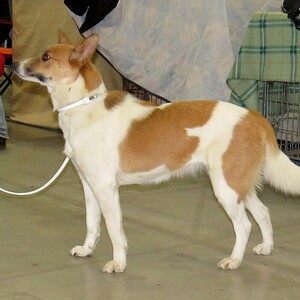
The standard describes it as a medium-sized, elegant and slender primitive dog, yet compact and strong, with erect ears and always alert. The body is square: its length equals the height at the withers.
General appearance
The ears are set very high and close together, erect, stiff and triangular. The eyes are fairly small and ochre, amber or hazel. The low-set tail is carried like a sabre at rest and raised in a sickle when the dog is alert.
| Feature | Cirneco dell'Etna |
|---|---|
| Size | Medium |
| Height at the withers | males: 46–50 cm; females: 44–48 cm |
| Weight | males: 10–13 kg; females: 8–11 kg |
| Coat | Short and semi-long, close-lying |
| Ears | Large, erect, triangular |
| Eyes | Ochre, amber or hazel |
The coat is fawn in all shades, from dark to light. Fawn and white is also accepted: a white blaze on the head and chest, white feet, white tail tip and belly. An all-brown, black or brindle coat disqualifies.
Training and socialisation
The standard describes it as willing, determined, affectionate and alert, very attached to its owner. It is first and foremost a hunting dog that works by scent, but also an excellent companion.
The AKC says it responds well to gentle methods and can be trained for obedience, rally, agility and tracking. Many Cirnechi love lure coursing.
Tips for effective training
- Use gentle methods. Rewards work much better than harshness.
- Be careful around cats. It has a strong hunting instinct; introductions must be made carefully.
- Practise recall. On a rabbit's trail it may forget commands.
- Start socialising it as a puppy. Puppy classes help it become a well-balanced dog.
Activity needs and lifestyle
The AKC gives it an average score for energy. It needs daily walks and free running in a securely fenced area.
| Activity | How often | Why it matters |
|---|---|---|
| Walks | daily | Exercise and new smells |
| Free running in a fenced area | several times a week | It is very fast |
| Lure coursing or scent games | weekly | Use its instincts |
Tips for a balanced life
- The fence must be high: it is a good jumper.
- In winter, its short coat gives it little protection from the cold.
- Keep it on a lead in open areas.
Care and health
Coat and skin care
The short, smooth coat needs very little care. The AKC recommends gentle brushing once a week with a soft brush or a grooming mitt, and a bath only when needed.
Common health problems
The AKC says the breed is very hardy and healthy. There are no known hereditary diseases specific to the breed. As with any active dog, the joints are worth watching:
| Condition | Description | Common symptoms |
|---|---|---|
| Patellar luxation | The kneecap slips out of place | Suddenly holds a hind leg up for a few steps, then uses it again |
Other care
- Check the ears weekly for signs of infection.
- Brush its teeth often, with dog toothpaste.
- Trim the nails if they do not wear down on their own.
Diet and nutrition
A slender, active dog needs a good-quality food suited to its age. Make sure it does not get fat: it must keep its slim figure.
Tips for a healthy diet
The table gives a starting estimate, calculated with the formula from the Merck Veterinary Manual. The first two calorie columns show the calories per day for a healthy adult dog. The last column shows what this means in dry food with 3,500–4,000 kcal per kilogram.
| Dog's weight | Calories per day (neutered) | Calories per day (not neutered) | Dry food per day (approximate) |
|---|---|---|---|
| 8 kg | 530 kcal | 600 kcal | 130–170 g |
| 10 kg | 630 kcal | 710 kcal | 160–200 g |
| 13 kg | 770 kcal | 860 kcal | 190–250 g |
- Give it its food in two meals a day.
- Training treats count towards the daily portion.
- A dog is at the right weight when you can feel its ribs without pressing hard.
Foods to avoid
Some human foods are dangerous for dogs: chocolate, coffee, grapes and raisins, onions, garlic, xylitol (a sweetener used in chewing gum), macadamia nuts and alcohol.
Reproduction and development
Physical and emotional maturity
In dogs, sexual maturity usually comes between 6 and 12 months. Most breeds become adults at around 13–15 months.
Mating and pregnancy
Pregnancy lasts about 63 days, counted from ovulation. Mating a female on her first heat is not recommended. The FCI standard requires that only healthy dogs of typical breed appearance are used for breeding.
Caring for the puppies
In dogs, a litter has 5–6 puppies on average, and the number rises with the size of the breed. Socialisation starts in the first weeks: gentle handling, everyday noises and new people.
Interesting facts
- The name comes from ancient Libya. “Cirneco” comes from the Latin “cyrenaicus”, linked to Cyrenaica, in North Africa.
- It is named after a volcano. The second part of the name comes from Etna, around which the breed developed.
- Saved by a noblewoman. Agata Paternó Castello began breeding the dogs in 1934.
- The working trial. In Italy, registering a Cirneco depends on passing a hunting trial.
- A relative of the Kelb tal-Fenek. A 2021 genomic study found it closest to the Maltese rabbit dog.
In popular culture
On ancient coins
The FCI standard notes that the breed's presence in Sicily is proven by images on coins, engravings and mosaics dating from centuries before Christ.
Frequently asked questions
What does “Cirneco dell'Etna” mean?
“Cirneco” comes from the Latin “cyrenaicus”, and “dell'Etna” means “of Etna”, the volcano in Sicily.
How big does it get?
Males measure 46–50 cm and weigh 10–13 kg; females measure 44–48 cm and weigh 8–11 kg.
Is it a family dog?
Yes. It is affectionate and very attached to its owner, but has a strong hunting instinct.
How long does it live?
The AKC gives a life expectancy of 15–16 years.