AlpacaInteresting facts and information
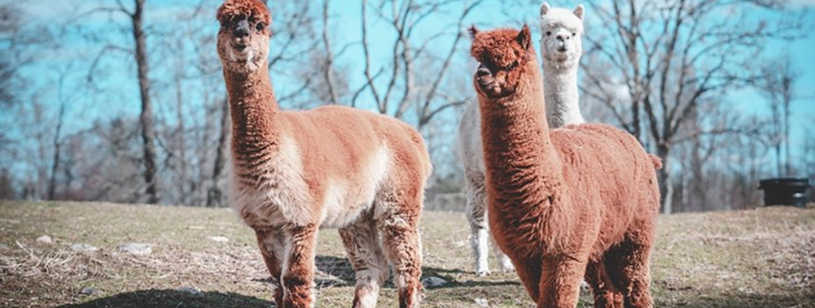
The alpaca (Vicugna pacos) is a domesticated camelid associated with the high Andes of South America. People raise alpacas mainly for their fibre, which is used in clothing and other textiles.
Alpacas are social, grazing animals. They are smaller than llamas, and their ancestry is closely connected with the wild vicuña. Alpacas are now also kept on farms outside South America.
Quick facts
| Common name | Alpaca |
| Scientific name | Vicugna pacos |
| Typical lifespan | Usually 15-20 years; some live 25 years or more |
| Maximum speed | Speed varies with the animal and conditions; no general record is given here |
| Height to shoulder | About 80 - 100 cm |
| Length | About 1.2 - 2 m |
| Weight | About 50 - 85 kg |
| Diet type | Herbivore (grasses, hay, other plants) |
| Main predators | Pumas, Andean foxes, dogs; condors may take young |
| Conservation status | Domestic animal; wild-species threat categories do not describe individual alpaca breeds |
| Habitat | Andes of South America; farms around the world |
Interesting facts
- Luxurious fibre - Alpaca fibre is soft, light and warm, and it contains no lanolin, so it is popular for high-quality clothing.
- Less spitting than you think - Alpacas can spit, but they usually do it at other alpacas, during disputes over food or when a female rejects a male.
- Many colours - Alpaca fibre comes in about 22 recognised natural colours, from white and fawn to brown, grey and black.
- Tidy animals - Alpacas in a herd use shared dung piles, which makes them easy to keep clean.
- Soft feet - Alpacas have no hooves; each foot has two toes with toenails and a soft pad, which is gentle on pastures.
- Hardy grazers - They are adapted to the thin, poor pastures of the high Andes and need less food than many other livestock of their size.
- Many sounds - Alpacas hum to each other, give a shrill alarm call when they see danger, and males make a gurgling "orgle" sound when mating.
Records and remarkable features
- Extremely fine wool - The vicuña, the wild ancestor of the alpaca, produces fibre only about 12-13 micrometres thick, one of the finest natural animal fibres.
- Alpaca farming – Peru is an important centre of alpaca husbandry; exact global shares require current agricultural data.
- Long lives - Alpacas often live 15-20 years, and some have lived for more than 25 years.
Physical characteristics and adaptations
The alpaca is a domestic camelid adapted to life in the high Andes, where the air is thin and nights are cold.
Distinctive appearance
- Dense, soft fleece - It protects against the cold and is one of the most valued animal fibres.
- Two types - Huacaya alpacas have fluffy, crimped fleece, while Suri alpacas have long, silky locks that hang down.
- A small head and short face - Alpacas are smaller than llamas and have shorter faces and short, spear-shaped ears.
- Padded feet - Two toes with soft pads help them walk on rocky ground without damaging the vegetation.
Survival adaptations
- Blood adapted to altitude - Their red blood cells carry oxygen efficiently in the thin air of the high mountains.
- Special teeth - They have incisors only in the lower jaw, which press against a hard dental pad in the upper jaw to cut grass.
- A three-chambered stomach - Microbes in the stomach help them digest tough, fibrous plants.
Habits and behaviour
The alpaca is a gentle herd animal; living in a group helps protect it from predators.
Social behaviour and hierarchy
- Herd animals - Alpacas feel safe only in a group and become stressed if kept alone.
- Hierarchy - There is a pecking order in the herd, and males may fight by pushing and biting.
- Communication - They use sounds, ear and tail positions and spitting to communicate.
Activity patterns
- Alpacas are active by day and graze for many hours, often resting and chewing the cud in between.
- Shared toilets - All members of a herd use the same dung piles.
Interaction with humans and other animals
- Gentle animals - Alpacas are usually calm and are kept as pets, for fibre and in animal-assisted therapy.
- Guard animals - In some countries, alpacas are kept with sheep and chickens, because they chase away foxes.
Habitat and geographic distribution
The alpaca comes from the Andes of South America, but today it is raised in many countries around the world.
Geographic distribution
| Country | Population |
|---|---|
| Peru | By far the largest population, several million animals |
| Bolivia | Hundreds of thousands |
| Chile | Tens of thousands |
| USA and Canada | Raised on many farms since the 1980s |
| Australia and New Zealand | Raised for fibre and as guard animals |
| Europe | Popular in the UK, Germany and other countries |
Habitat types
- The high Andes (about 3,500-5,000 m) - Their original home, with cold nights, strong sun and wet grasslands called bofedales.
- Farms - Alpacas are raised for fibre and as pets in many countries.
- Temperate grassland - They adapt well to cool, temperate climates.
Habitat pressures
- Climate change - Melting glaciers and drought can dry out the high pastures and wetlands they depend on.
- Overgrazing - Too many animals can damage fragile mountain pastures.
- Competition - In some areas, alpacas share pastures with sheep and cattle.
Diet and feeding
The alpaca is a herbivore that eats mainly grasses and other plants. Its special stomach helps it digest poor-quality food.
What does the alpaca eat?
| Food type | Examples |
|---|---|
| Grasses | Mountain grasses, pasture grasses, hay |
| Other plants | Herbs, sedges and low shrubs |
| Fodder | Hay and small amounts of feed on farms |
| Minerals | Mineral supplements on farms |
| Water | Fresh water every day, though they need relatively little |
Adaptations for feeding
- Digesting fibre – Alpacas have a three-compartment stomach in which microbes help process fibrous plant food.
- They can live on low-quality grazing in high mountains.
- Their lower incisors and upper dental pad let them nibble grass close to the ground without pulling it out by the roots.
Eating Behavior
- Alpacas spend many hours a day grazing and chewing the cud.
- They prefer soft, tender plants and avoid tough or thorny ones.
- On farms, they are fed hay and mineral supplements when grazing is poor.
Reproduction and life cycle
In the Andes, most alpaca young are born in the rainy season, when grass is plentiful.
Breeding and birth
| Characteristic | Details |
|---|---|
| Sexual maturity | About 12-24 months (females), 2-3 years (males) |
| Gestation | About 11-11.5 months |
| Number of young | 1 (twins are very rare) |
| Weight at birth | About 6-9 kg |
| Weaning | About 6 months |
| Independence | About 6-12 months |
- Alpacas mate lying down, in a position called "cush".
- Females do not have regular cycles; mating triggers ovulation (induced ovulation).
- Most births happen in the morning, giving the young time to dry and warm up before the cold night.
Raising young
- A baby alpaca is called a "cria"; it usually stands and walks within about an hour of birth.
- Mothers are very protective, and the herd helps watch for danger.
- Crias drink milk for the first months and soon start nibbling grass.
Longevity
- Alpacas usually live about 15-20 years.
- With good care, some live 25 years or more.
Name and history
The alpaca was domesticated in the Andes thousands of years ago and has been important to Andean peoples ever since.
Origin of the name
- "Alpaca" comes through Spanish from the Aymara word allpaqa.
- The scientific name Vicugna pacos shows that the alpaca is a domestic descendant of the vicuña.
Taxonomic classification
| Kingdom | Animalia |
|---|---|
| Phylum | Chordata |
| Class | Mammalia |
| Order | Artiodactyla |
| Family | Camelidae |
| Genus | Vicugna |
| Species | Vicugna pacos |
History and domestication
- Alpacas were domesticated from wild vicuñas in the Andes about 6,000-7,000 years ago, long before the Inca Empire.
- In the Inca Empire, the finest cloth, made from alpaca and vicuña fibre, was reserved for nobles and religious use.
- After the Spanish conquest, alpaca numbers fell sharply, and the best herds survived mainly in remote highlands.
Cultural significance and mythology
Alpaca in Andean culture
| Culture | Meaning |
|---|---|
| Incas | A source of fine cloth, wealth and status; also used in religious offerings |
| Aymara and Quechua herders | The basis of life in the high Andes, providing fibre, meat, dung for fuel and income |
| Modern Andean traditions | Festivals and rituals for the fertility and health of the herds |
Traditions and beliefs
- Herd rituals - Andean herders hold ceremonies in which they decorate their alpacas and llamas with coloured tassels and ask Pachamama (Mother Earth) for healthy herds.
- Textiles - Weaving with alpaca fibre is an important tradition in the Andes, with patterns passed down through generations.
Conservation status and threats
The alpaca is a domestic animal and is not endangered. Its wild ancestor, the vicuña, was nearly wiped out in the 20th century but has recovered thanks to protection.
Main threats to alpaca herding
- Climate change - Drought and melting glaciers threaten high Andean pastures.
- Vicuña poaching - Wild vicuñas are still sometimes killed illegally for their valuable fibre.
- Changes in farming - Crossbreeding with llamas and the loss of traditional herding can reduce the quality of alpaca fibre.
Conservation status
| Species | Status |
|---|---|
| Vicugna pacos (alpaca) | Domestic animal; not assessed by the IUCN |
| Vicugna vicugna (vicuña) | Least Concern (IUCN), after a strong recovery |
Conservation efforts
- Trade rules - International trade in vicuña fibre is controlled, and only fibre from live-shorn animals can be sold.
- Protected areas - Reserves in Peru, Bolivia, Chile and Argentina protect vicuñas and their habitat.
- Breeding programmes - Farmers and researchers work to keep alpaca breeds healthy and their fibre fine.
In popular culture
Thanks to their friendly faces and fluffy coats, alpacas have become very popular around the world.
Alpacas in media
- Social media - Photos and videos of alpacas, often with dramatic haircuts after shearing, are widely shared online.
- Children's books - Alpacas are popular characters in picture books.
- Confusion with llamas - Alpacas are often confused with their larger relatives, the llamas.
Alpacas in marketing and tourism
- Mascots - Alpacas are used as mascots for clothing, toy and tourism brands.
- Luxury - Alpaca fibre is associated with premium knitwear.
- Alpaca walks - On many farms in Europe and North America, visitors can go for walks with alpacas.
Alpacas as symbols
- Calm and gentleness - Alpacas are often used as a symbol of calm and kindness.
- Peru - The alpaca is one of the best-known symbols of Peru and the Andes.
- Plush toys - Soft alpaca toys are popular souvenirs in Peru and elsewhere.