English Cocker SpanielCharacteristics, history, training and care
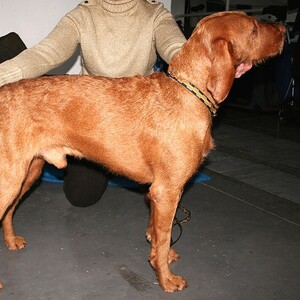
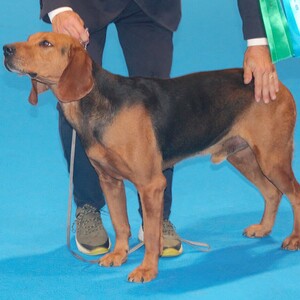
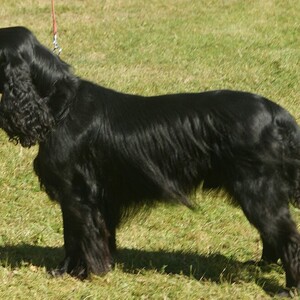
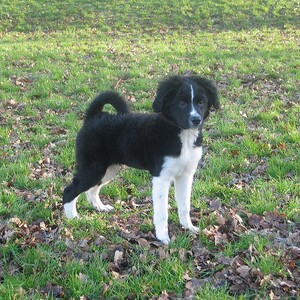
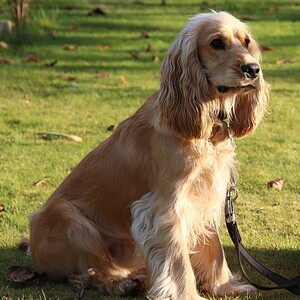
English Cocker Spaniel. · Jean-Pol GRANDMONT / Wikimedia Commons, CC BY 4.0. Cropped and resized.
The English Cocker Spaniel is a compact, cheerful gundog, called the “merry spaniel” because its tail never stops wagging. The name comes from the woodcock, the bird it flushed from the undergrowth. It is affectionate, playful, easy to train and very good with children.
Quick facts
| Common name | English Cocker Spaniel (Cocker Spaniel) |
| Scientific name | Canis lupus familiaris |
| Country of origin | United Kingdom |
| Official recognition | FCI, definitively since 10 April 1963 (group 8, flushing dogs, with working trial; standard no. 5); also recognised by the AKC |
| Lifespan | 12–14 years, according to the AKC |
| Size (males) | about 39–41 cm at the withers; 13–14.5 kg |
| Size (females) | about 38–39 cm at the withers; 13–14.5 kg |
| Coat type | Flat, silky, with feathering on the legs and body |
| Common colours | Black, red, golden, liver; bicolour, tricolour, roan |
| Energy level | Moderate |
| Suited to an apartment? | Yes, if it goes out every day |
| Temperament | Merry, affectionate, playful, eager to please its owner |
| Tendency to aggression | Low |
| Good with children | Very good |
| Good with other animals | Very good with dogs; hunting instinct towards birds |
| Genetic predispositions | Progressive retinal atrophy, hip dysplasia, luxating patella, familial nephropathy |
History and origin
Spaniel-type dogs have appeared in art and literature for almost 500 years. Wikipedia says that at first the spaniels of England were divided into land and water spaniels, and the land spaniels were later separated by weight. Around 1840, Cockers weighed 5.5–9 kg, and Cockers and Springers could be born in the same litter.
The FCI standard says the Cocker Spaniel was recognised as a breed separate from the Field and Springer Spaniels shortly after the Kennel Club was founded in 1873. The name comes from “cocking spaniel”, the dog that flushed woodcock. Today there is a difference between working dogs and show dogs, which are sturdier and heavier.
How the breed developed
- 16th century – Spaniel-type dogs appear in art and literature.
- Around 1840 – Cockers are distinguished from other spaniels by weight.
- 1873 – The Kennel Club is founded; the Cocker becomes a separate breed shortly afterwards.
- 10 April 1963 – The FCI recognises the breed.
- 8 September 2026 – the current FCI standard is published.
Breed rating
| Feature | Stars |
|---|---|
| Training and intelligence | ★★★★☆ |
| Easy to train | ★★★★☆ |
| Intelligence | ★★★★☆ |
| Independence | ★★★☆☆ |
| Stubbornness | ★★★☆☆ |
| Behaviour and temperament | ★★★★☆ |
| Affectionate with family | ★★★★★ |
| Friendly with children | ★★★★★ |
| Good with other dogs | ★★★★★ |
| Good with cats and other animals | ★★★☆☆ |
| Loyalty | ★★★★★ |
| Tendency to be aggressive | ★☆☆☆☆ |
| Tendency to bark | ★★★☆☆ |
| Needs and care | ★★★★☆ |
| Shedding | ★★★☆☆ |
| Needs frequent grooming | ★★★☆☆ |
| Activity and lifestyle | ★★★★☆ |
| Energy level | ★★★☆☆ |
| Daily exercise needs | ★★★★☆ |
| Suited to apartment life | ★★★★☆ |
| Health and longevity | ★★★★☆ |
| Life expectancy | ★★★★☆ |
| Predisposition to genetic diseases | ★★★☆☆ |
| Working abilities and uses | ★★★★☆ |
| Good hunting dog | ★★★★☆ |
| Good companion dog | ★★★★★ |
Indicative rating: 5 stars means the highest level. It is based on the ratings the American Kennel Club gives the breed and on the FCI standard.
Physical characteristics
The standard describes it as merry, sturdy, sporting, well balanced and compact. The height at the withers is roughly equal to the length from the withers to the base of the tail.
General appearance
The AKC says it has a softly contoured head and dark eyes with an alert, dignified expression, framed by full ears lying close to the head. The medium-length coat is silky to the touch.
| Feature | English Cocker Spaniel |
|---|---|
| Size | Medium |
| Height at the withers | males: about 39–41 cm; females: 38–39 cm |
| Weight | about 13–14.5 kg |
| Coat | Flat, silky, feathered |
| Eyes | Dark |
| Ears | Long, with abundant hair |
Solid colours (black, red, golden, liver, black and tan, liver and tan), bicolours (white with black, orange, liver or lemon), tricolours and roans are accepted. In solid colours, only a small white patch on the chest is tolerated.
Training and socialisation
The standard speaks of a merry nature, with the tail always wagging. The AKC says it was bred to follow instructions in the field and is still very eager to please its owner.
It is easy to train and enjoys working with its person, but only with positive methods. It reacts badly to harshness: it must love and respect its owner, not fear them.
Tips for effective training
- Use only positive methods. The AKC says harshness damages its trust.
- Start socialisation early. It helps it become a well-balanced dog.
- Keep it on a lead. The AKC says its hunting instinct remains strong.
- Be careful with treats. Some Cockers put on weight easily.
Activity needs and lifestyle
The AKC says it needs daily exercise for its physical and mental health: long walks, hikes or ball games in the garden. A fenced garden is recommended.
| Activity | How often | Why it matters |
|---|---|---|
| Long walks on the lead | daily | Exercise and scents |
| Ball games | daily | It loves retrieving things |
| Hikes | weekly | Burns off energy |
Tips for a balanced life
- Check the ears after every walk.
- The yard must be fenced.
- It suits families with children very well.
Care and health
Coat and skin care
The AKC says most English Cocker Spaniels have a full coat that must be thoroughly brushed and combed at least once a week to prevent tangles. In addition, the coat is tidied about once a month around the feet, on the face, under the neck and on the lower part of the ears.
Common health problems
The AKC says the breed is generally healthy, but a few genetic diseases can occasionally occur:
| Condition | Description | Common symptoms |
|---|---|---|
| Progressive retinal atrophy | An inherited disease that gradually destroys the retina | Sees less and less well at night, then in the daytime too |
| Hip dysplasia | The hip joint forms incorrectly and, over time, arthritis develops | Limping, difficulty getting up or jumping, hip pain |
| Patellar luxation | The kneecap slips out of place | Suddenly holds a hind leg up for a few steps, then uses it again |
| Familial nephropathy | A hereditary kidney disease in young dogs | Excessive thirst and urination, weight loss |
Other care
- Check and clean the ears regularly.
- Brush its teeth often.
- Trim the nails when they start to touch the floor.
Diet and nutrition
The AKC says some English Cocker Spaniels put on weight easily, so calories and weight should be monitored. Table scraps should be given very rarely or not at all.
Tips for a healthy diet
The table gives a starting estimate, calculated with the formula from the Merck Veterinary Manual. The first two calorie columns show the calories per day for a healthy adult dog. The last column shows what this means in dry food with 3,500–4,000 kcal per kilogram.
| Dog's weight | Calories per day (neutered) | Calories per day (not neutered) | Dry food per day (approximate) |
|---|---|---|---|
| 12 kg | 720 kcal | 810 kcal | 180–230 g |
| 13.5 kg | 790 kcal | 890 kcal | 200–250 g |
| 15 kg | 850 kcal | 960 kcal | 210–270 g |
- Give it its food in two meals a day.
- Use a narrow bowl, so that its ears do not end up in the food.
- A dog is at the right weight when you can feel its ribs without pressing hard.
Foods to avoid
Some human foods are dangerous for dogs: chocolate, coffee, grapes and raisins, onions, garlic, xylitol (a sweetener used in chewing gum), macadamia nuts and alcohol.
Reproduction and development
Physical and emotional maturity
In dogs, sexual maturity usually comes between 6 and 12 months. Most breeds become adults at around 13–15 months.
Mating and pregnancy
Pregnancy lasts about 63 days, counted from ovulation. Mating a female on her first heat is not recommended. The FCI standard requires that only healthy dogs of typical breed appearance are used for breeding.
Caring for the puppies
In dogs, a litter has 5–6 puppies on average, and the number rises with the size of the breed. Socialisation starts in the first weeks: gentle handling, everyday noises and new people.
Interesting facts
- The “merry spaniel”. It is called this because of its constantly wagging tail.
- Named after the woodcock. “Cocker” comes from “woodcock”, the bird it hunted.
- A relative of the American one. It is the foundation from which the American Cocker Spaniel was developed.
- Very varied litters. Wikipedia says the number of puppies in a litter varies a great deal in this breed.
- Two Cockers, two types. There are working lines and sturdier show lines.
Frequently asked questions
How does it differ from the American Cocker Spaniel?
They are separate breeds with different standards. Wikipedia says the English Cocker is the foundation of the American one.
How big does it get?
Males measure about 39–41 cm and females 38–39 cm; they weigh about 13–14.5 kg.
Is it good with children?
Yes, the AKC gives it top marks with children.
How long does it live?
The AKC gives 12–14 years.