Cape foxInteresting facts and information
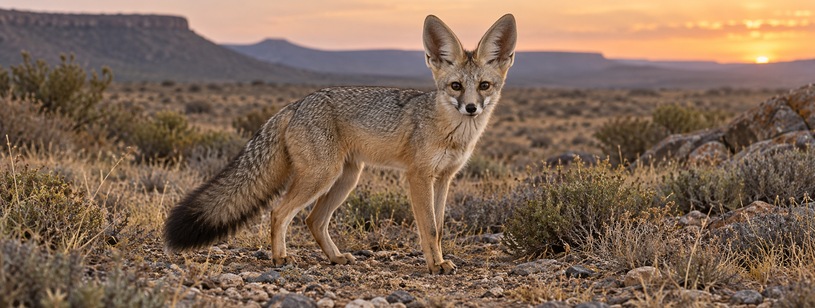
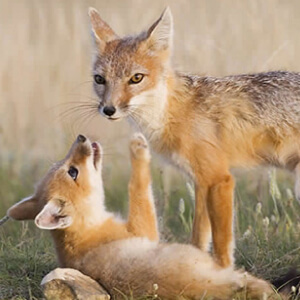
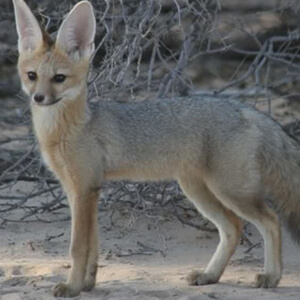
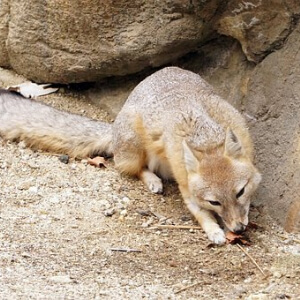
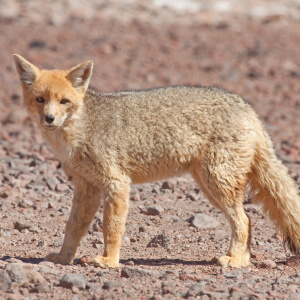
AI illustration of cape fox.
The Cape fox is a small southern African fox with silvery-grey fur, large ears and a black-tipped tail. It lives in open landscapes, from dry grasslands to semi-desert, and searches for food mainly at night.
Its scientific name is Vulpes chama. “Cape” refers to the Cape region, although the species also occurs elsewhere in South Africa, Namibia and Botswana.
Quick facts
| Species | Vulpes chama |
| Class / order / family | Mammalia / Carnivora / Canidae |
| Distribution | Southern Africa: South Africa, Namibia, Botswana and neighbouring countries |
| Habitat | Dry grasslands, savanna, scrub and semi-desert |
| Size | Approximately 2–4.2 kg; head and body around 51–62 cm |
| Diet | Omnivorous; rodents, insects, other small animals and some fruit |
| Reproduction | About 52 days’ gestation; 1–6 pups |
| Young | Born alive and raised in a den |
| Conservation | Least Concern (LC), global status |
Interesting facts
- It is southern Africa’s smallest canid species. Adults usually weigh just a few kilograms.
- It is the only Vulpes fox native to this region. The bat-eared fox belongs to a different genus.
- Its bushy tail has a black tip. This detail helps identification alongside the silvery coat.
- It can form a pair but forage alone. A bond between partners does not imply pack hunting.
- The father can bring food to the family. This helps while the mother stays close to very young pups.
Records and remarkable features
Small size is a notable feature of this species. The Canid Specialist Group reports approximately 2–4.2 kg for the adults described, with a head-and-body length of around 51–62 cm, excluding the tail.
Female and male size ranges overlap.
The ears and tail make the outline look bulkier than the body. Cape foxes are much smaller than jackals and have different proportions. Both are canids, but they are distinct species.
Characteristics
The back is silvery grey, sometimes with darker shades. The underside and legs have yellowish or reddish tones. The muzzle is pointed and the ears prominent.
| Feature | How to recognise it |
| Silvery back | A mixture of pale and dark hairs |
| Large ears | Raised clearly above the head |
| Bushy tail | Dark, often black tip |
| Small, slender body | Fine legs suited to moving across open ground |
It is distinct from the fennec. Fennecs are associated especially with North African deserts, have a different colour and even larger ears relative to the head. Being in Africa and having prominent ears are insufficient for identification.
The Cape fox belongs to Carnivora, but its diet also includes plant resources. It is therefore omnivorous, with an important animal-prey component.
Habits and behaviour
It is mainly nocturnal. It rests in shelter during the day and explores after dark. Night activity reduces exposure to heat and allows it to find small animals active at the same time.
Adults can maintain a pair bond without staying constantly beside one another. Small, scattered foods are often sought individually.
Dens become particularly important while raising pups. Do not follow a fox into a den entrance or try to bring it out for photographs: a family may be hidden nearby.
Like other canids, it communicates through scent, body posture and sounds. These signals maintain contact and convey information without a direct encounter on every journey.
Habitat and geographic distribution
Its distribution is southern African, extending beyond a single country. It uses parts of South Africa, Namibia and Botswana, particularly relatively open, dry landscapes.
It can live in grasslands, sparse vegetation, scrub and semi-desert. Some populations also use landscapes modified by people where food and refuges remain.
- Low vegetation allows movement and prey detection.
- Soils and shelters matter for denning.
- Patches of native vegetation support insects and small mammals.
- Connections between habitats allow partners to meet and young animals to disperse.
Dry country is not necessarily a landscape of dunes. Cape fox habitat illustrates the diversity of arid environments: grassland, shrubs, stones and exposed soil can form parts of the same landscape.
Diet and feeding
Small mammals, particularly rodents, are important foods. The menu can also include insects, birds, reptiles, carrion or fruit, depending on place and season.
It does not pursue the same prey in every region. Grassland resources differ from those of semi-desert. Dietary flexibility helps it use landscapes where food is unevenly distributed.
It searches near the ground, listening and investigating vegetation or hiding places. Small prey can be caught after a short approach without a long, spectacular chase.
Its presence near farms can lead to accusations over livestock losses. Predator identification should be based on evidence: several carnivores may live in the same area, and a fox near remains does not by itself prove that it killed the animal.
Reproduction and life cycle
Pups are born in a den or another protected shelter. The species monograph records gestation of approximately 52 days, documented in captivity, and litters of 1–6 pups.
Initially, pups need their mother’s milk and warmth. The male can bring food while the female stays close to them. As they grow, the pups begin coming out and exploring.
| Period | Main change |
| First days | Dependence on mother and shelter |
| Early growth | Development of senses and movement |
| First outings | Exploring ground around the den |
| Approaching independence | Movement and foraging across larger areas |
In southern Africa, most pups are born in late winter and spring, from about August to October.
Name and history
The English common name is Cape fox, referring to the Cape region. In Afrikaans it is called the silwervos, "silver fox".
The scientific name Vulpes chama clearly distinguishes it from red foxes, fennecs and bat-eared foxes. Common names vary between languages, while zoological identification remains linked to the species.
The species was scientifically described by the Scottish zoologist Andrew Smith in 1833.
Conservation status and threats
The global status is Least Concern (LC), according to the Canid Specialist Group.
Cape foxes are often wrongly blamed for killing lambs, and many are shot, trapped or poisoned by farmers. Road accidents and diseases such as rabies also kill them. Habitat change can also alter food and shelter availability.
Retaining native vegetation, reducing poison use and managing conflict carefully are useful measures. Monitoring helps distinguish a stable local presence from a population beginning to decline.
Discover other foxes
Read about Red fox or explore: Culpeo · Pale fox · Blanford's fox · Corsac fox · Tibetan sand fox · Swift fox · Kit fox · Bengal fox · Fennec fox · Arctic fox.
Frequently asked questions
- Where does the Cape fox live? In southern Africa, including South Africa, Namibia and Botswana. Its name recalls the Cape region without restricting the entire range to that area.
- How can it be recognised? By its small body, silvery-grey back, large ears and bushy, black-tipped tail. Distribution also matters, because several African canids have prominent ears.
- Is it southern Africa’s smallest fox? It is the region’s smallest canid species. The Canid Specialist Group reports approximately 2–4.2 kg for the adults described, varying between individuals and sexes.
- What does it eat? Rodents are important; insects, other small animals, carrion and fruit can also occur. Proportions vary by place and season, and the diet is omnivorous.
- Is it the same as the bat-eared fox? No. The Cape fox is Vulpes chama, whereas the bat-eared fox belongs to Otocyon. They are distinct species, although both occur in Africa.
- When is it active? Mainly at night. It may rest in shelter by day and often forage alone, even when adults maintain a pair bond.
- How long is gestation? The species monograph records approximately 52 days, documented in captivity, and litters of 1–6 pups. The male may help by bringing food.
- Is it at risk of extinction? Its global status is Least Concern. Persecution, poisons and road accidents can affect local populations.