CricketsGryllidae — chirping, food, hearing and life cycle
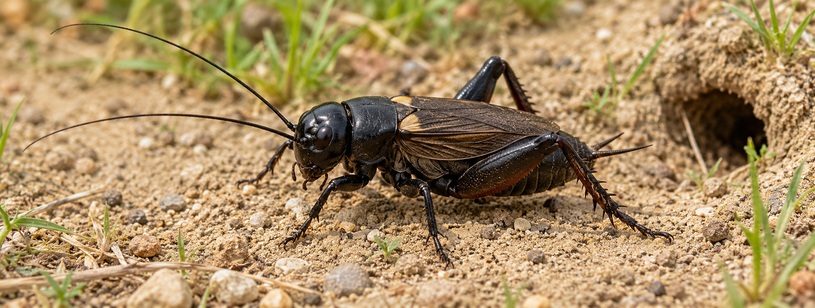
Field cricket, a representative of Gryllidae; habits differ between species.
Crickets are insects with long antennae and powerful hind legs. They are known for the sounds males make by rubbing their forewings together. True crickets belong to the family Gryllidae. They are related to grasshoppers but are a different group.
There are many species with different habits and habitats. The field cricket, Gryllus campestris, also occurs in Romania. The house cricket, Acheta domesticus, is another example, often associated with warm places near people.
Quick facts
| Common name | Cricket |
| Scientific name | Gryllidae — family |
| Typical lifespan | Varies by species. The field cricket usually has an annual cycle, with adulthood occupying only part of it. |
| Length | 17–23 mm in the field cricket, excluding antennae; varies between species. |
| Diet type | Many species are omnivorous. The field cricket feeds mainly on plants. |
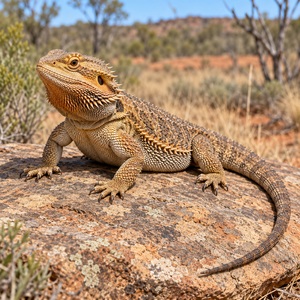
| Main predators | Spiders and lizards. |
| Conservation status | Varies by species and region. |
| Geographical distribution | Europe, Asia, Africa, the Americas and Australia, depending on species. |
| Habitat | Grassland, gardens and sheltered places, depending on species. |
| Activity | Many species are active in the evening and at night. Field crickets are also active by day. |
| Dominant colour | Glossy black in the field cricket; yellowish-brown in the house cricket. |
| Movement and flight | Jumps using the hind legs; flight varies by species. |
| Communication | Males of many species make signals by rubbing their forewings together. |
| Hearing | Tympanal organs on the front legs in species with this hearing system. |
| Reproduction | Eggs placed using an ovipositor, usually in soil in the examples discussed. |
| Development | Egg → nymph → adult; no pupal stage. |
| Ecological role | Consumes plants, remains or small animals and provides food for other animals. |
- Primary category:Insects
- Explore this animal's categories:Animals of AfricaAnimals of AsiaAnimals of AustraliaAnimals of EuropeAnimals of North AmericaAnimals of RomaniaAnimals of Romania’s gardens and parksAnimals of Romania’s grasslands and plainsAnimals of South AmericaArthropodsBurrowing animalsCEgg-laying animalsInsect-eating animalsInsectsInsects of RomaniaInvertebratesNocturnal animalsOmnivoresWild animals
Interesting facts
- The familiar song does not come from the mouth. Sound is made by rubbing structures on the forewings.
- Hearing involves the front legs. Thin membranes receive sound vibrations and pass them to sensory structures.
- A female’s long central appendage is not a sting. The ovipositor places eggs and may be visible between the two appendages at the abdomen tip.
- A young cricket is not a caterpillar. A nymph resembles a small adult, but its wings and reproductive organs are not fully developed.
- Not every cricket can fly. The field cricket has greatly reduced hindwings, while some other species can fly.
Records and extremes
How far can a cricket be heard?
A small body can produce a conspicuous sound. The British Orthoptera recording scheme reports that a male Gryllus campestris can be heard from up to around 100 metres away.
Distance depends on conditions, background noise and the listener’s hearing. It is not guaranteed for every cricket and is not a world record for all insects.
Why are antennae excluded from body length?
The same species account gives a body length of around 17–23 mm. Long antennae make the whole animal appear larger.
Comparisons need a clear measurement: body length alone or a span including appendages. Size by itself does not reliably identify a species.
Characteristics
What does a cricket look like?
The body has a head, thorax and abdomen. Three pairs of legs attach to the thorax. Enlarged segments in the hind legs provide force for jumping.
Long antennae help explore the surroundings. Two sensory appendages called cerci extend from the abdomen tip. Many adult females also have a visible ovipositor for laying eggs.
Cricket, grasshopper or bush-cricket?
| Insect group | Identification features |
|---|---|
| True crickets — Gryllidae | Usually very long antennae and a relatively compact body; males of many species rub the forewings together to produce sound |
| Short-horned grasshoppers — Caelifera | Shorter, more robust antennae; many species make sound by rubbing the hind legs against the wings |
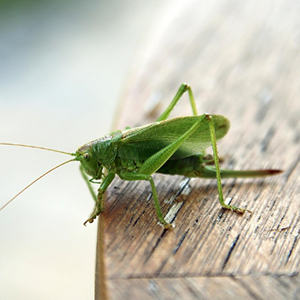
| Bush-crickets or katydids — Tettigoniidae | Also have long antennae but belong to another family; many have an elongated or leaflike body |
Green or black colour alone is insufficient for identification. Body shape, wings, antennae and other features need to be considered together.
Field cricket and house cricket
Gryllus campestris is robust and shiny black with a large head. The forewings have yellowish bases, and the undersides of the hind femora may be reddish.
Acheta domesticus is usually yellowish brown with dark bands on the head. A cricket found in a building is not automatically a house cricket: some wander in accidentally from outside.
Habits and behaviour
Why do crickets chirp?
The sounds are communication signals. Males may use them to attract females, during close courtship or in encounters with rival males.
Producing sound by rubbing structures together is called stridulation. Species have characteristic patterns, and researchers can use recordings to help identify them.
Are crickets active only at night?
Many species emerge in the evening and at night, but exceptions occur. The field cricket can be active and sing during the day in suitable conditions.
Temperature and local conditions affect activity. A quiet moment does not by itself show that crickets have disappeared from a site.
Shelter and encounters
The field cricket uses a burrow in soil and can sing near its entrance. The shelter offers a quick refuge when danger appears.
Males and females may meet at burrows during breeding. Such encounters do not mean a permanent family or a colony organised like that of ants.
Habitat and geographical distribution
Where do crickets live?
Gryllidae has representatives in Europe, Asia, Africa, the Americas and Australia. Different species use grassy land, gardens, litter, soil cracks and other sheltered places.
The field cricket favours sunny ground with short vegetation and bare patches. House crickets may use heated spaces and other warm places near people.
Crickets in Romania
Gryllus campestris is documented in Romania. Grasslands and open land with suitable shelter can support the species. Green spaces can also support crickets where food and refuges are available.
Not every summer insect sound comes from a true cricket. Bush-crickets and grasshoppers can produce sounds too. Both the insect’s appearance and a recording of its song can help establish identification.
Diet and feeding
What do crickets eat?
Many are omnivores, using both plant and animal food. Their diet can include leaves, seeds, fruit, organic remains and dead or weakened insects.
Proportions differ considerably. The British species account describes the field cricket as mainly herbivorous, whereas house crickets have a more varied diet. The same food in identical proportions cannot be assigned to every species.
What is their ecological role?
By feeding on plants, remains and small animals, crickets participate in the movement of material through ecosystems. In turn, they feed birds, reptiles, mammals and other invertebrates.
Some spiders can capture crickets, and lizards are among the predators observed taking wild field crickets.
Can they damage plants?
Some species eat seedlings and other plant parts, especially when numerous. That does not make every cricket observed a serious pest.
Accidental visitors to homes are often simply a nuisance. Identifying the species and checking actual damage is more useful than assuming all crickets cause identical problems.
Reproduction and life cycle
Mating and egg laying
In species communicating through song, a male’s call can help a female find him. After mating, she uses her ovipositor to place eggs in a suitable location, usually soil in the examples discussed.
The ovipositor is not a venomous sting. Egg numbers and hatching time depend on species and conditions.
Nymphs grow by moulting
Development has three stages: egg, nymph and adult. A nymph resembles the adult but is smaller and lacks fully developed wings.
Growth involves replacing the outer covering by moulting. There is no pupal stage like that of butterflies.
How do crickets survive winter?
| Species or situation | Overwintering and development |
|---|---|
| Gryllus campestris in the European conditions described by sources | Advanced nymphs overwinter in burrows; adults are seen in the warmer season |
| Some North American Gryllus species | Eggs can overwinter, with nymphs appearing in spring |
| Acheta domesticus in heated spaces | Warm conditions can permit development and reproduction indoors |
These differences explain why there is no single lifespan for all crickets. The field cricket usually has an annual cycle, but the months as an adult make up only part of its life.
Names and history
| Classification level | Name |
|---|---|
| Phylum | Arthropoda — arthropods |
| Class | Insecta — insects |
| Order | Orthoptera |
| Suborder | Ensifera |
| Family | Gryllidae |
What does Gryllidae identify?
Gryllidae is the family of true crickets. Gryllus campestris and Acheta domesticus are species names within that family.
In a two-part scientific name, the first word identifies the genus and the second distinguishes the species. The word “cricket” alone does not always establish which species is present.
Long-term research in the wild
The Wildcrickets project began in 2005, following field crickets in a meadow in northern Spain. The team associated with the University of Exeter uses video cameras to observe their natural lives.
Recordings have documented encounters, reproduction and predator attacks. Such observations test ideas about behaviour beyond what can be seen in a terrarium.
Cultural significance and mythology
The tradition of singing insects
In certain Asian traditions, people have appreciated insect songs and kept crickets in special containers. Museum collections preserve evidence of this practice.
The Metropolitan Museum of Art and British Museum hold Chinese cricket containers from the Qing dynasty. Their materials and forms show how an interest in these insects also entered decorative arts.
What does a song mean?
A cricket can suggest the quiet of a summer evening or approaching autumn in a story. These associations belong to human culture and experience.
In nature, calling has functions such as attracting a partner or signalling to a rival. It does not express a judgement about hard work or laziness.
Conservation and threats
Common species and vulnerable populations
There is no single conservation status for all crickets. A species can be widespread in one region and rare in another.
In southern England, the field cricket has received habitat restoration and reintroduction work following severe local declines. The British situation does not automatically describe its status in Romania or the whole family worldwide.
What can damage their habitat?
Grassland conversion, fragmentation and loss of suitable burrowing places can affect species dependent on those conditions. Requirements vary: vegetation becoming too dense does not necessarily help the field cricket.
- Retain varied habitat with vegetation and ground conditions suitable for local species.
- Observe without damaging burrows or forcing insects out.
- Do not release purchased crickets into places where they may not belong to the local fauna.
In popular culture
Balada unui greier mic
In the Romanian poem Balada unui greier mic, George Topîrceanu portrays a cricket surprised by autumn’s arrival. Cold, lack of provisions and fear become a small story with human emotions.
The character does not describe every species’ life cycle. Real crickets may pass through cold seasons in different stages, depending on species and climate.
The Talking Cricket in Pinocchio
In Carlo Collodi’s Pinocchio, the Talking Cricket advises the main character. The insect becomes a voice encouraging him to consider his choices.
Real crickets do not speak like people. They produce and detect signals suited to their lives, without the moral role assigned to the book’s character.
Frequently asked questions
Is a cricket a grasshopper?
Both are insects in the order Orthoptera, but true crickets belong to Gryllidae and differ from short-horned grasshoppers.
How does a cricket chirp?
Males of many species rub structures on the forewings together. The sound does not come from the mouth or from rubbing the legs against each other.
Do females sing too?
The familiar calling song is produced by males. In the familiar crickets discussed here, females listen and may approach the male.
Where are a cricket’s ears?
Tympanal organs are on the front legs in crickets using this hearing system. Thin membranes receive sound vibrations.
What do crickets eat?
Many eat plant and animal material, including remains and insects. The field cricket feeds mainly on plants.
Can all crickets fly?
No. Some have wings suitable for flight, while the field cricket has greatly reduced hindwings.
Can the female’s long appendage sting?
The ovipositor places eggs and is not a venomous sting. Do not grab or injure crickets to investigate.
How long does a cricket live?
It depends on species and conditions. The field cricket usually has an annual life cycle, of which adulthood occupies only a part.
Did you know? About crickets
- Males of many species chirp by rubbing their wings together.
- Hearing organs are located on the front legs.
- Nymphs grow by moulting, without a pupal stage.
- The field cricket also occurs in Romania.