Tibetan SpanielCharacteristics, history, training and care
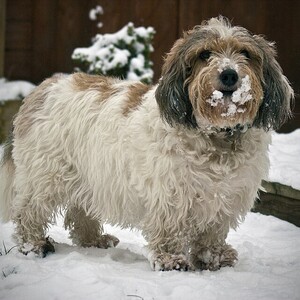
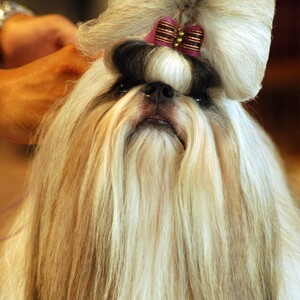
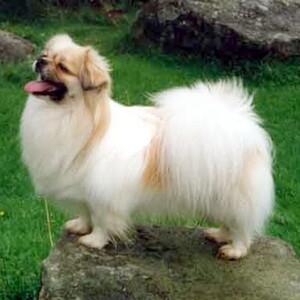
Tibetan Spaniel. · Wolfman1 / Wikimedia Commons, CC BY-SA 3.0. Cropped and resized.
The Tibetan Spaniel (Tibbie) is a small companion dog from Tibet, with a short muzzle, large, expressive eyes, a “lion's mane” around the neck and a plumed tail carried over the back. Wikipedia says it is not a spaniel in the usual sense, but a companion dog. The FCI standard describes it as cheerful and assured, highly intelligent, aloof with strangers, alert, loyal yet independent.
Quick facts
| Common name | Tibetan Spaniel (Tibbie) |
| Scientific name | Canis lupus familiaris |
| Country of origin | Tibet (China) |
| Official recognition | FCI, definitively since 22 August 1961 (group 9, companion and toy dogs; standard no. 231); also recognised by the AKC |
| Lifespan | 12–15 years, according to the AKC |
| Size (males) | about 25.4 cm at the withers; ideally 4.1–6.8 kg |
| Size (females) | about 25.4 cm at the withers; ideally 4.1–6.8 kg |
| Coat type | Silky, moderately long, with a fine, dense undercoat |
| Common colours | All colours except merle |
| Energy level | Medium |
| Suited to an apartment? | Yes |
| Temperament | Cheerful, assured, intelligent, loyal, independent |
| Tendency to aggression | Low |
| Good with children | Very good, according to the AKC |
| Good with other animals | Moderate |
| Genetic predispositions | Progressive retinal atrophy, cherry eye, patellar luxation |
- Primary category:Dog breeds
- Explore this animal's categories:
History and origin
Wikipedia says the small monastery dogs regarded as the ancestors of the Tibetan Spaniel faithfully followed their lama masters and were called “little lions”, because they resembled snow lions, which gave them great value and prestige. The dogs were sent as gifts to palaces in China and other Buddhist countries, and other “lion dogs” were sent back to Tibet, until 1908.
Because of these exchanges between palaces and monasteries, the breed probably shares ancestors with other Oriental breeds. The AKC says it recalls the ancient traditions that produced the Pekingese, the Pug and the Lhasa Apso.
How the breed developed
- Centuries ago – The “little lions” of Tibetan monasteries.
- Until 1908 – Dogs are exchanged between Tibet and the Chinese palaces.
- 22 August 1961 – The FCI recognises the breed.
Breed rating
| Feature | Stars |
|---|---|
| Training and intelligence | ★★★★☆ |
| Easy to train | ★★★★★ |
| Intelligence | ★★★★★ |
| Independence | ★★★☆☆ |
| Stubbornness | ★★★★☆ |
| Behaviour and temperament | ★★★★☆ |
| Affectionate with family | ★★★★☆ |
| Friendly with children | ★★★☆☆ |
| Good with other dogs | ★★★★☆ |
| Good with cats and other animals | ★★★☆☆ |
| Loyalty | ★★★☆☆ |
| Tendency to be aggressive | ★★☆☆☆ |
| Tendency to bark | ★★★☆☆ |
| Needs and care | ★★★☆☆ |
| Shedding | ★★★☆☆ |
| Needs frequent grooming | ★★★☆☆ |
| Activity and lifestyle | ★★★☆☆ |
| Energy level | ★★★★☆ |
| Daily exercise needs | ★★★☆☆ |
| Suited to apartment life | ★★★★☆ |
| Health and longevity | ★★★★☆ |
| Life expectancy | ★★★☆☆ |
| Predisposition to genetic diseases | ★★☆☆☆ |
| Working abilities and uses | ★★★☆☆ |
| Good companion dog | ★★★☆☆ |
| Good companion dog | ★★☆☆☆ |
Indicative rating: 5 stars means the highest level. It is based on the ratings the American Kennel Club gives the breed and on the FCI standard.
Physical characteristics
The standard describes it as small, active and alert, well balanced, slightly longer than it is tall, with a head small in proportion to the body, carried proudly. The AKC says it has a short muzzle, large, expressive eyes, a “lion's mane” around the neck and a plumed tail curving elegantly over the back.
General appearance
The topcoat is silky, smooth on the face and the front of the legs, moderately long on the body and lying flat. The undercoat is fine and dense. The ears and the back of the forelegs are feathered, and the tail and rump carry longer hair.
| Feature | Tibetan Spaniel |
|---|---|
| Size | Toy |
| Height at the withers | about 25.4 cm |
| Weight | ideally 4.1–6.8 kg |
| Coat | Silky, with a mane |
| Tail | Plumed, over the back |
| Type | Companion dog |
The standard accepts all colours and mixtures of colours, except merle.
Training and socialisation
The standard describes it as cheerful and assured, highly intelligent, aloof with strangers, alert, loyal yet independent. The AKC says it is clever, eager to please and can excel at agility, scent work, rally and obedience.
The AKC warns that it has a very independent mind and decides for itself whether and when to do what it is asked, so training should start early and be made fun. Socialising the puppy is a must.
Tips for effective training
- Start early. It is very independent.
- Make lessons fun. That is what the AKC recommends.
- Socialise it. It is aloof with strangers.
- A fence is essential. The AKC calls it a “must”.
Activity needs and lifestyle
The AKC says it enjoys a daily walk and is just as happy lounging around the house or running about the yard. It can keep up with its owner on long walks or runs. A fenced yard is a must.
| Activity | How often | Why it matters |
|---|---|---|
| Walk | daily | Fitness |
| Play in the yard | daily | Energy |
| Agility or scent work | occasionally | A busy mind |
Tips for a balanced life
- It suits an apartment.
- Comb the area behind the ears.
- The fence must be secure.
Care and health
Coat and skin care
The AKC says it is a natural breed that is not trimmed, apart from the hair under the feet, for cleanliness. The area behind the ears tangles and must be combed often; otherwise the coat does not mat easily. Regular brushing and baths keep it looking good.
Common health problems
The AKC says it is a relatively healthy breed, and responsible breeders check their dogs for:
| Condition | Description | Common symptoms |
|---|---|---|
| Progressive retinal atrophy | Genetic eye disease | Poor night vision, then blindness |
| Cherry eye | Inflammation of a gland near the eye, usually treated with surgery | Red swelling in the corner of the eye |
| Patellar luxation | The kneecap slips out of place | Suddenly holds a hind leg up for a few steps, then uses it again |
Other care
- Ask for the parents' eye tests.
- Trim the hair under the feet.
- Go for yearly check-ups.
Diet and nutrition
The AKC says that, with dry food, it prefers small kibble. Good-quality food suited to its age is enough, with an eye on its weight.
Tips for a healthy diet
The table gives a starting estimate, calculated with the formula from the Merck Veterinary Manual. The first two calorie columns show the calories per day for a healthy adult dog. The last column shows what this means in dry food with 3,500–4,000 kcal per kilogram.
| Dog's weight | Calories per day (neutered) | Calories per day (not neutered) | Dry food per day (approximate) |
|---|---|---|---|
| 4.1 kg | 320 kcal | 360 kcal | 80–103 g |
| 5.5 kg | 400 kcal | 450 kcal | 100–130 g |
| 6.8 kg | 470 kcal | 530 kcal | 120–150 g |
- Treats count towards the daily portion.
- Split the food into two meals a day.
- A dog is at the right weight when you can feel its ribs under the coat without pressing hard.
Foods to avoid
Some human foods are dangerous for dogs: chocolate, coffee, grapes and raisins, onions, garlic, xylitol (a sweetener used in chewing gum), macadamia nuts and alcohol.
Reproduction and development
Physical and emotional maturity
In dogs, sexual maturity usually comes between 6 and 12 months. Small breeds become adults faster than large ones, usually at around one year.
Mating and pregnancy
Pregnancy lasts about 63 days, counted from ovulation. Mating a female on her first heat is not recommended. The FCI standard requires that only healthy dogs of typical breed appearance are used for breeding.
Caring for the puppies
In small breeds, a litter has 3–4 puppies on average. The puppies are very small and fragile in the first weeks, so they must be kept warm and handled with care. Socialisation starts early: gentle handling, everyday noises and new people.
Interesting facts
- The “little lion”. It resembled the Tibetan snow lions.
- Not a spaniel. It is not a hunting dog.
- A palace gift. It was sent as a gift to the palaces of China.
- Related to the Pekingese? They probably share ancestors.
- It makes up its own mind. The AKC says it has an independent mind.
In popular culture
The snow lions
Wikipedia says the small monastery dogs were called “little lions” because they resembled snow lions, a version of the Chinese guardian lions.
Frequently asked questions
Is it a true spaniel?
No; it is a companion dog, not a hunting dog.
Is it good with children?
Yes; the AKC gives it top marks.
Does it need trimming?
No, only the hair under the feet.
How long does it live?
The AKC gives 12–15 years.