Italian GreyhoundCharacteristics, history, training and care
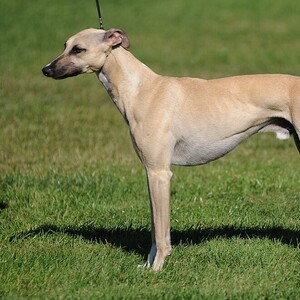
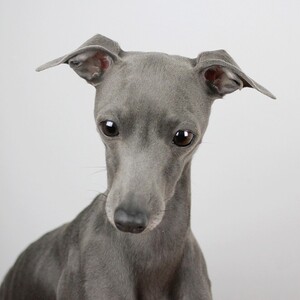
Italian Greyhound. · Tesori di Carli / Wikimedia Commons, CC BY-SA 4.0. Cropped and resized.
The Italian Greyhound (Piccolo Levriero Italiano) is a slender, elegant sighthound in miniature, regarded by the FCI standard as a model of grace and distinction. It descends from the small sighthounds of the pharaohs' court and flourished most at the courts of Renaissance nobles. It is lively, affectionate and docile.
Quick facts
| Common name | Italian Greyhound (Piccolo Levriero Italiano) |
| Scientific name | Canis lupus familiaris |
| Country of origin | Italy |
| Official recognition | FCI, definitively since 22 October 1956 (group 10, short-haired sighthounds; standard no. 200); also recognised by the AKC |
| Lifespan | 14–15 years, according to the AKC |
| Size (males) | 32–38 cm at the withers; maximum 5 kg |
| Size (females) | 32–38 cm at the withers; maximum 5 kg |
| Coat type | Short, silky, fine, no fringes |
| Common colours | Black, grey, isabella (yellowish beige), in all shades |
| Energy level | Moderate |
| Suited to an apartment? | Yes |
| Temperament | Lively, affectionate, docile, sensitive |
| Tendency to aggression | Very low |
| Good with children | Average; it is fragile |
| Good with other animals | Very good with dogs |
| Genetic predispositions | Legg-Calvé-Perthes disease, autoimmune thyroiditis, luxating patella, eye disease, leg fractures |
History and origin
The FCI standard says the small Italian sighthound descends from the small sighthounds at the court of the pharaohs in ancient Egypt. Passing through Laconia, in Greece, where it appears on many vases and bowls, the breed reached Italy at the beginning of the 5th century BC. It reached its greatest development in the Renaissance, at the courts of the nobility.
It is not rare to see it in the paintings of great Italian and foreign masters. Wikipedia says that those who kept such dogs included the D’Este, Medici and Visconti families and the French kings Louis XI, Charles VIII, Charles IX, Louis XIII and Louis XIV.
How the breed developed
- Ancient Egypt – Small sighthounds live at the court of the pharaohs.
- 5th century BC – The breed reaches Italy via Greece.
- The Renaissance – The breed flourishes at the courts of the nobility.
- 22 October 1956 – The FCI recognises the breed.
- 13 November 2015 – The current FCI standard is published.
Breed rating
| Feature | Stars |
|---|---|
| Training and intelligence | ★★★★☆ |
| Easy to train | ★★★★☆ |
| Intelligence | ★★★★☆ |
| Independence | ★★★☆☆ |
| Stubbornness | ★★★☆☆ |
| Behaviour and temperament | ★★★★☆ |
| Affectionate with family | ★★★★★ |
| Friendly with children | ★★★☆☆ |
| Good with other dogs | ★★★★★ |
| Good with cats and other animals | ★★★☆☆ |
| Loyalty | ★★★★★ |
| Tendency to be aggressive | ★☆☆☆☆ |
| Tendency to bark | ★★★☆☆ |
| Needs and care | ★★★★☆ |
| Shedding | ★★★☆☆ |
| Needs frequent grooming | ★☆☆☆☆ |
| Activity and lifestyle | ★★★★☆ |
| Energy level | ★★★☆☆ |
| Daily exercise needs | ★★★☆☆ |
| Suited to apartment life | ★★★★☆ |
| Health and longevity | ★★★★☆ |
| Life expectancy | ★★★★★ |
| Predisposition to genetic diseases | ★★★☆☆ |
| Working abilities and uses | ★★★☆☆ |
| Good watchdog | ★★★☆☆ |
| Good companion dog | ★★★★★ |
Indicative rating: 5 stars means the highest level. It is based on the ratings the American Kennel Club gives the breed and on the FCI standard.
Physical characteristics
The standard describes it as slender, with a square body: although small, it is a true sighthound in miniature, the prototype of refinement and elegance, a model of grace and distinction. The AKC says it has long, fine-boned legs.
General appearance
The head is long and narrow. The coat is short, silky and fine all over the body, with no trace of fringes. The AKC calls it a miniature Greyhound, more slender but just as graceful and elegant.
| Feature | Italian Greyhound |
|---|---|
| Size | Small |
| Height at the withers | 32–38 cm |
| Weight | maximum 5 kg |
| Coat | Short, silky, fine |
| Legs | Long, fine-boned |
| Shape | Square, slender |
The standard accepts solid colours: black, grey and isabella (light yellowish beige), in all shades. White is tolerated only on the chest and feet.
Training and socialisation
The standard describes it as lively, affectionate and docile. The AKC says it is intelligent and sensitive and responds best to reward-based training, not punishment.
The trainer must be firm with commands and generous with praise. Rewards should be small but immediate. Harsh methods do not work with these dogs.
Tips for effective training
- Use small rewards. But give them immediately.
- Do not let it off the lead in open spaces. The AKC says it may run after anything.
- Take care of its legs. They can break easily in jumps or falls.
- Brush its teeth daily. The AKC says this is the most important grooming tip.
Activity needs and lifestyle
The AKC says it is an active breed that needs regular exercise. Most of the time, play is enough, especially if it has another dog. It enjoys walks on the lead. Even when trained, it should not be let off the lead outdoors in unfenced places.
| Activity | How often | Why it matters |
|---|---|---|
| Walks on the lead | daily | It loves them |
| Play with another dog | daily | Basic exercise |
| Sprints in a fenced area | several times a week | Sighthound instinct |
Tips for a balanced life
- In winter it needs a coat: it has little fat and a short coat.
- Dog parks are risky without areas for small dogs.
- Watch out for jumps off the furniture.
Care and health
Coat and skin care
The AKC says the most important grooming tip is regular tooth brushing, ideally daily, plus a yearly cleaning at the vet. Baths are rarely needed, and the nails should be trimmed regularly.
Common health problems
The AKC says Italian Greyhounds are generally healthy and long-lived, but the following can occur:
| Condition | Description | Common symptoms |
|---|---|---|
| Legg-Calvé-Perthes disease | The head of the femur deteriorates from a lack of blood supply | Lameness, hip pain |
| Autoimmune thyroiditis | The body attacks the thyroid gland | Weight gain, tiredness |
| Patellar luxation | The kneecap slips out of place | Suddenly holds a hind leg up for a few steps, then uses it again |
| Fractures | The fine leg bones can break easily | Sudden lameness, pain |
Other care
- Brush its teeth daily.
- Trim the nails regularly.
- Protect it from falls and big jumps.
Diet and nutrition
The AKC says it gains weight easily, so calories and weight must be watched. A small sighthound should stay slim.
Tips for a healthy diet
The table gives a starting estimate, calculated with the formula from the Merck Veterinary Manual. The first two calorie columns show the calories per day for a healthy adult dog. The last column shows what this means in dry food with 3,500–4,000 kcal per kilogram.
| Dog's weight | Calories per day (neutered) | Calories per day (not neutered) | Dry food per day (approximate) |
|---|---|---|---|
| 3 kg | 260 kcal | 290 kcal | 65–83 g |
| 4 kg | 320 kcal | 360 kcal | 80–103 g |
| 5 kg | 370 kcal | 420 kcal | 92–120 g |
- Feed puppies several times a day.
- Choose small kibble.
- In a sighthound at the right weight, the ribs are easy to feel.
Foods to avoid
Some human foods are dangerous for dogs: chocolate, coffee, grapes and raisins, onions, garlic, xylitol (a sweetener used in chewing gum), macadamia nuts and alcohol.
Reproduction and development
Physical and emotional maturity
In dogs, sexual maturity usually comes between 6 and 12 months. Small breeds become adults faster than large ones, usually at around one year.
Mating and pregnancy
Pregnancy lasts about 63 days, counted from ovulation. Mating a female on her first heat is not recommended. The FCI standard requires that only healthy dogs of typical breed appearance are used for breeding.
Caring for the puppies
In small breeds, a litter has 3–4 puppies on average. The puppies are very small and fragile in the first weeks, so they must be kept warm and handled with care. Socialisation starts early: gentle handling, everyday noises and new people.
Interesting facts
- The dog of kings. The Medici and D’Este families and several French kings owned it.
- A miniature Greyhound. This is how the AKC describes it.
- In the paintings of the masters. It often appears in the paintings of the great masters.
- On Greek vases. Its ancestors appear on vases from Laconia.
- It lives a long time. The AKC gives a life expectancy of 14–15 years.
In popular culture
The dog of royal courts
The FCI standard says the Italian Greyhound often appears in the paintings of great Italian and foreign masters. Wikipedia says a 2nd-century AD marble statue, found at Lanuvium in 1774 and now in the Vatican Museums, probably shows two such sighthounds or their ancestors.
Frequently asked questions
Is the Italian Greyhound a small Greyhound?
It is a separate breed, but the AKC describes it as a miniature Greyhound.
How big does it get?
It measures 32–38 cm at the withers and weighs no more than 5 kg.
Can it live in a block of flats?
Yes, it is suitable for a flat.
How long does it live?
The AKC gives 14–15 years.