MarmotInteresting facts and information
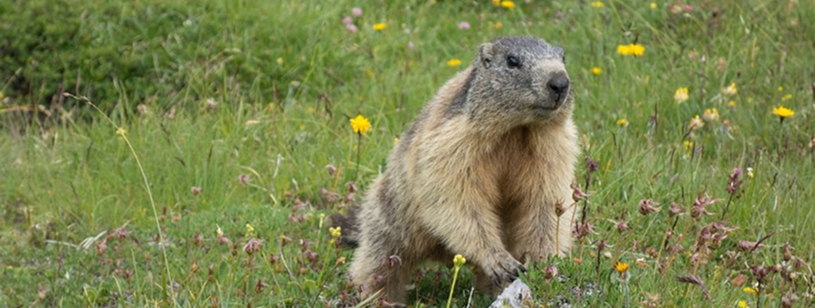
Marmots (Marmota) are large members of the squirrel family. They dig burrows, feed mainly on plants and hibernate. Habitats and social behaviour differ between species, from mountain meadows to other open grasslands.
The best-known marmot in North America is the groundhog, the star of Groundhog Day, a tradition according to which it can predict the coming of spring by seeing or not seeing its shadow.
Quick facts
| Common name | Marmot |
| Scientific name | Marmota spp. |
| Typical lifespan | About 6-15 years in the wild, up to about 20 years in captivity |
| Maximum speed | Varies with species or individual, distance and conditions |
| Size | About 40 - 80 cm (including tail) |
| Weight | About 2 - 9 kg (by species and season) |
| Diet type | Herbivore (grasses, leaves, flowers, roots, seeds) |
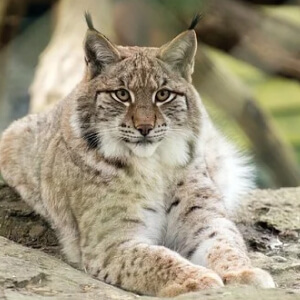
| Main predators | Golden eagles, foxes, wolves, lynxes, bears, badgers |
| Conservation status | Assess separately by species and population; different taxa and regions have different needs |
| Habitat | Alpine meadows, mountain areas, steppes, fields |
| Distribution (continents) | North America, Europe, Asia |
- Primary category:Mammals
- Explore this animal's categories:
Interesting facts
- Long winter sleep - Alpine marmots hibernate for about six months a year, sometimes longer; their heart rate falls to a few beats a minute and their body temperature to about 5 °C.
- Burrow systems - Marmot burrows can have many entrances and tunnels several metres long, with special chambers for sleeping and hibernation.
- Loud whistles - When they see a predator, marmots give sharp whistles that warn the rest of the group.
- Standing guard - Marmots often sit upright on their hind legs to watch for danger.
- Fat for the winter - Before hibernation, a marmot can gain a lot of weight, and it may lose a third or more of its weight by spring.
Records and remarkable features
- Marmots (Marmota) are large members of the squirrel family. They dig burrows, feed mainly on plants and hibernate. Habitats and social behaviour differ between species, from mountain meadows to other open grasslands.
- The groundhog of North America (Marmota monax) is also a marmot.
Physical characteristics and adaptations
Marmots are sturdy rodents well adapted to cold climates and to life in burrows.
Distinguishing physical appearance
- A stocky body - Marmots have a round body and short legs, and they build up a thick layer of fat before winter.
- Thick fur - Their fur is usually brown, grey or yellowish, which helps them blend in with rocks and grass.
- A bushy tail - Their tail is about 15-25 cm long.
- Strong claws - Their front paws have strong, curved claws for digging burrows.
- Ever-growing teeth - Like all rodents, marmots have front teeth that keep growing and are worn down by chewing.
Adaptations for survival
- Deep hibernation - During hibernation, body temperature and heart rate drop sharply to save energy.
- Burrows - Burrows have chambers for sleeping, hibernating and raising young.
- Communication - Marmots use whistles, chirps and body postures to communicate.
- Cold tolerance - Some marmots live high in the mountains, above 3,000 metres in Asia, where winters are very cold.
Habits and behaviour
Many marmots live in family groups, although some species, such as the groundhog, live alone.
Life mode and daily routine
- Active in the morning and evening - Marmots feed mainly in the cooler hours and often rest in their burrows in the midday heat.
- Sunbathing - They often bask on rocks to warm up in the morning.
- Fattening up - In late summer, they eat a lot to build up fat for hibernation, when they do not eat at all.
Social behaviour and interactions
- Some marmots, including Alpine marmots (Marmota marmota), live in social groups. Group size varies.
- Family groups - An Alpine marmot group usually includes a dominant pair and their young of different ages.
- Hibernating together - Alpine marmots hibernate together in one burrow, and the adults help keep the young warm.
Defence strategies
- Lookouts - Group members watch for danger from rocks or burrow entrances.
- Quick escape - When they hear an alarm whistle, marmots run straight into their burrows.
- Fighting back - If cornered, marmots can bite and scratch hard.
Habitat and geographic distribution
There are about 15 species of marmots in North America, Europe and Asia, living in mountain meadows, steppes and open grassland.
Geographical distribution
| Region | Examples and habitats |
|---|---|
| North America | Groundhog in fields and woodland edges; hoary and yellow-bellied marmots in the mountains |
| Europe | Alpine marmot in the Alps, the Tatras and the Carpathians, where it was reintroduced in Romania |
| Asia | Bobak and Mongolian (tarbagan) marmots in steppes; Himalayan marmot in high mountains |
Habitats
- Mountain meadows - Alpine marmots live in high pastures, usually above the tree line.
- Species such as the Siberian marmot (Marmota sibirica) use steppe and other open habitats.
- Fields and woodland edges - The groundhog lives in lowland fields, gardens and woodland edges.
Habitat threats
- Changes in land use - Ploughing of steppes and changes in grazing can destroy marmot habitats.
- Climate change - Warmer winters and less snow can affect hibernation and the survival of young.
- Hunting - In parts of Asia, marmots are hunted for meat, fur and fat.
Diet and feeding
Marmots are mainly herbivores and eat a lot in summer to build up fat for hibernation.
What do marmots eat?
| Food type | Examples |
|---|---|
| Grasses and leaves | Clover, dandelion, mountain grasses |
| Flowers and buds | Mountain flowers and young shoots |
| Seeds and fruits | Seeds and berries when available |
| Roots | Roots and bulbs |
| Insects (occasionally) | Grasshoppers, beetles, larvae |
Food behaviour
- Feeding hard in summer - Marmots eat a lot in summer and autumn to prepare for hibernation.
- Choosing the best plants - They prefer young, nutritious plants, such as flowers and fresh leaves.
- No winter stores - Marmots do not store food; they live on their fat during hibernation.
- Little drinking - They get most of the water they need from plants and dew.
Reproduction and life cycle
Marmots breed slowly, usually once a year at most, but their young are well protected in the burrow.
Breeding and birth
| Characteristic | Details |
|---|---|
| Sexual maturity | About 2-3 years |
| Breeding season | Spring, soon after hibernation |
| Gestation | About 30-35 days |
| Number of young | Usually 2-6 |
| Nursing | About 5-7 weeks |
| Leaving the burrow | Young first come out of the burrow at about 6 weeks old |
Reproductive behaviour
- Breeding pairs - In Alpine marmots, usually only the dominant pair of a group breeds.
- Birth in the burrow - The young are born naked and blind and depend completely on their mother.
- Growing up - Young Alpine marmots often stay with their family for two or three years before leaving.
Longevity
- In the wild, marmots usually live about 6-15 years.
- In captivity, they can live up to about 20 years.
Name and history
Origin of the name "Marmot"
- The word comes from the French marmotte, probably from the Latin mus montis, "mountain mouse".
Taxonomic Classification
| Kingdom | Animalia |
|---|---|
| Phylum | Chordata |
| Class | Mammalia |
| Order | Rodentia |
| Family | Sciuridae |
| Genus | Marmota |
History and documentation
- Fossils - Marmots have lived in the cold, open landscapes of the Northern Hemisphere for millions of years.
- Groundhog Day - In the USA and Canada, a groundhog is said to predict the end of winter on 2 February.
- Folk medicine - In the Alps, marmot fat was traditionally used as a remedy for aching joints.
- Romania - Alpine marmots were reintroduced to the Romanian Carpathians, for example in the Rodna and Făgăraș Mountains, in the 1970s.
Cultural significance and mythology
Marmots are linked with traditions about the weather, hibernation and the end of winter.
Marmots in traditions and popular beliefs
- Groundhog Day - On 2 February in the USA and Canada, people watch a groundhog: if it sees its shadow, winter is said to last six more weeks. The most famous groundhog is Punxsutawney Phil in Pennsylvania.
- Folk remedies - In the Alps, marmot fat was used in traditional ointments for rheumatism.
- Mongolia - Marmots are traditionally hunted for meat and fur, and eating raw or undercooked marmot meat has been linked with outbreaks of plague.
- Alpine symbol - The marmot is one of the best-known animals of the Alps and often appears in tourist images and stories.
Marmot in cultural symbolism
| Culture | Meaning |
|---|---|
| USA and Canada | Weather forecasting (Groundhog Day) |
| European Alps | A symbol of mountain life and folk medicine |
| Mongolia | A traditional source of meat and fur |
| Everyday language | "To sleep like a marmot" means to sleep very deeply in several European languages |
Conservation status and threats
Most marmots are common, but a few species are threatened by hunting and habitat loss.
Main threats
- Habitat loss - Ploughing of steppes and changes in grazing reduce suitable areas.
- Climate change - Warmer temperatures and changes in snow cover affect hibernation and food supply.
- Hunting - In parts of Asia, marmots are hunted heavily for meat, fur and fat.
- Predators - Small, isolated populations can be badly affected by predators.
Conservation status (IUCN)
| Species | Status |
|---|---|
| Alpine marmot (Marmota marmota) | Least Concern |
| Bobak marmot (Marmota bobak) | Least Concern |
| Mongolian marmot, or tarbagan (Marmota sibirica) | Endangered |
| Vancouver Island marmot (Marmota vancouverensis) | Critically Endangered |
Conservation efforts
- Protected areas - Many marmots live in national parks in North America, Europe and Asia.
- Captive breeding - In Canada, Vancouver Island marmots are bred in captivity and released into the wild.
- Hunting rules - In some countries, marmot hunting is banned or limited to certain seasons.
In popular culture
Thanks to their funny behaviour and the traditions linked with them, marmots appear in films, books and online.
Marmot in films and television
- "Groundhog Day" (1993) - A classic comedy in which a weatherman relives the same Groundhog Day over and over again.
- "The Big Lebowski" (1998) - In a famous scene, a marmot is thrown into the hero's bathtub.
- Nature documentaries often show marmots whistling and playing in mountain meadows.
Marmot in literature and folklore
- Children's books - Many picture books tell the story of Groundhog Day.
- Alpine stories - Marmots appear in folk tales and children's stories from the Alps.
Marmot in digital culture
- Viral videos - Videos of marmots "screaming" (actually giving alarm whistles) have become popular online.
- Brands - The outdoor clothing company Marmot is named after the animal.