WeaselInteresting facts and information
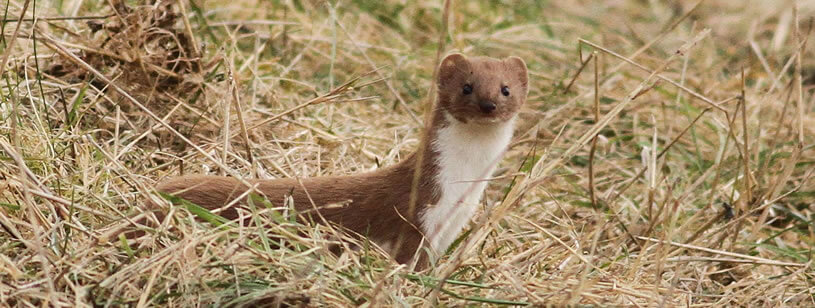
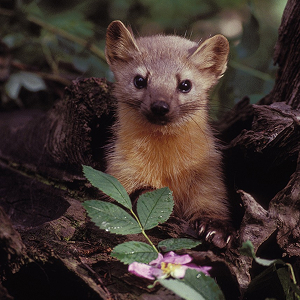
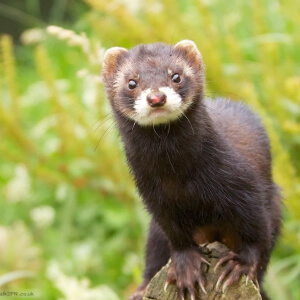
The least weasel (Mustela nivalis) is a small mammal in the family Mustelidae. Its slender body helps it pursue small prey through narrow spaces. Coat colour and body size vary across its range.
Because of its very fast metabolism, the weasel must eat often, and it is an effective predator that helps control rodents. Although it is tiny, it is bold and fierce and can attack prey larger than itself. Weasels live in many habitats, from woods and grasslands to farms and villages, across Europe, Asia, North America and North Africa.
Quick facts
| Common name | Least weasel |
| Scientific name | Mustela nivalis |
| Typical lifespan | Usually 1-2 years in the wild; up to about 10 years in captivity |
| Maximum speed | Quick and agile; exact speed not well measured |
| Height | Very short legs; only a few centimetres tall at the shoulder |
| Length | About 17-26 cm (without tail); the tail is about 3-10 cm |
| Weight | About 30-250 g (males are much larger than females) |
| Diet type | Carnivore (mainly voles and mice; also birds, eggs, insects) |
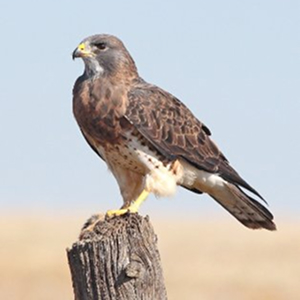
| Main predators | Owls, hawks, foxes, cats, stoats, snakes |
| Conservation status | Least Concern (IUCN) |
| Geographical distribution | Europe, Asia, North America and North Africa; introduced to New Zealand |
| Social behaviour | Solitary, territorial |
| Special adaptations | Long, thin body for hunting in burrows, fast metabolism, white winter coat in the north |
- Primary category:Mammals
- Explore this animal's categories:
Interesting facts
- The smallest carnivore in the world - The least weasel is the smallest member of the order Carnivora; small females weigh only about 30-40 grams.
- A super-fast metabolism - It burns energy so quickly that it must eat about a third to half of its body weight every day.
- A seasonal coat - In cold northern regions, the weasel turns pure white in winter, which camouflages it in the snow.
- A fearless predator - It can attack prey larger than itself, such as young rabbits and birds.
- Quick and agile - Weasels move in fast bounds and can squeeze into holes the size of a wedding ring.
- Short rests - Because of its high metabolism, a weasel alternates short periods of rest with hunting, day and night.
- "Little bride" - In several European languages, including Romanian (nevăstuică), the weasel's name means "little bride" or "little wife".
Records and remarkable features
- The least weasel (Mustela nivalis) is a small mammal in the family Mustelidae. Its slender body helps it pursue small prey through narrow spaces. Coat colour and body size vary across its range.
- It is one of the most widespread carnivores in the Northern Hemisphere, living in Europe, Asia, North America and North Africa.
Characteristics
The least weasel (Mustela nivalis) is a tiny carnivore with a long, flexible body built for hunting in tight spaces. Its agility and fast metabolism make it a very effective predator.
Appearance
- Small size - Weasels are about 17-26 cm long, with a tail about 3-10 cm long.
- Light weight - The smallest weigh only about 30-40 g, and the largest about 250 g; males are much bigger than females.
- A changing coat - In summer, the fur is brown on the back and white on the belly; in cold regions, it turns completely white in winter.
- A long, flexible body - This shape lets the weasel follow prey into underground burrows and narrow gaps.
- Short legs - With sharp claws, useful for climbing and holding prey.
- A small head and pointed snout - With keen senses of smell and hearing.
Special adaptations
- Seasonal camouflage - In the north, the weasel's coat changes colour to match the landscape.
- High metabolism - It uses energy very quickly and must hunt often.
- A deadly bite - It kills prey with a bite to the back of the head or neck.
- A super-flexible body - It can slip into spaces where most predators cannot follow.
Habits and behaviour
The weasel is a solitary predator that can be active at any time of day or night. Because it constantly needs food, it spends much of its time hunting.
Social behaviour
- Solitary and territorial - Weasels mark their territory with scent and chase away intruders.
- Meeting only to mate - Males and females do not live together, and the young become independent quickly.
- Sounds and smells - They communicate with trills, hisses and squeals, and with scent from their glands.
Hunting techniques
- Hunting in tunnels - Weasels follow voles and mice into their burrows and tunnels under the snow.
- A bite to the back of the head - It kills prey quickly.
- Storing food - If it catches more than it can eat, it stores the extra prey in its den.
- Speed and agility - It moves in quick bounds and zigzags, so it is hard to catch.
Survival strategies
- Changing coat colour - Helps it hide from predators and prey.
- Avoiding open ground - It prefers cover such as long grass, hedges and stone walls, where birds of prey cannot easily see it.
- Borrowed homes - Weasels usually do not dig their own dens, but take over the burrows of the rodents they eat.
Habitat and geographic distribution
The least weasel is one of the most widespread members of the weasel family and lives in many habitats on several continents.
| Region | Situation | Preferred habitat |
|---|---|---|
| Europe | Widespread (absent from Ireland and Iceland) | Woods, fields, hedgerows, farms |
| Asia | Widespread in the north and centre | Steppes, mountains, forests |
| North America | Alaska, Canada and the northern USA | Grasslands, forests, tundra |
| North Africa | Smaller populations in Morocco, Algeria and Egypt | Farmland, scrub |
Types of habitat
- Woods and meadows - Weasels prefer places with plenty of cover for hiding and hunting.
- Farmland - They are common on farms, where they hunt mice and rats.
- Mountains and tundra - They live high in the mountains and in the far north, where they turn white in winter.
Human impact and threats
- Pesticides and habitat loss - Intensive farming reduces the number of rodents for weasels to eat.
- Persecution - Some weasels are killed because they attack poultry.
- Natural predators - Owls, hawks, foxes, cats and stoats hunt weasels.
Diet and feeding
The weasel is a carnivore that plays an important role in controlling rodents. Because of its very fast metabolism, it must eat about a third to half of its body weight every day.
What do weasels eat?
Weasels eat mainly small rodents, but also birds, eggs, insects and amphibians, depending on the season and what is available.
| Type of food | Examples |
|---|---|
| Rodents | Voles, field mice, house mice, young rats |
| Small birds | Sparrows, larks, nestlings, birds' eggs |
| Amphibians and reptiles | Frogs, lizards |
| Insects and other invertebrates | Beetles, grasshoppers, earthworms |
| Other | Young rabbits, carrion |
Feeding techniques
- Active hunting - Weasels search through dense vegetation and underground tunnels for prey.
- A precise bite - A bite to the back of the head kills prey quickly and reduces the risk of injury.
- Storing food - When it catches more than it needs, the weasel stores the extra prey in its den.
- Eating the whole prey - It often eats small prey almost entirely, including bones and fur.
Adapting to the food supply
- A flexible diet - When rodents are scarce, weasels hunt more birds, insects or reptiles.
- Frequent meals - Because of its fast metabolism, a weasel cannot go long without food.
- Active all year - The weasel does not hibernate; in winter, it hunts voles in tunnels under the snow.
Reproduction and life cycle
Weasels breed quickly, and in years when voles are plentiful they can have more than one litter. This helps their populations recover quickly after hard times.
| Feature | Details |
|---|---|
| Age at maturity | About 3-4 months |
| Breeding season | Spring and summer (about March - August) |
| Pregnancy | About 34-37 days |
| Young per litter | Usually 4-6, sometimes up to 12 |
| Independence | At about 8-12 weeks |
| Lifespan | Usually 1-2 years in the wild, up to about 10 years in captivity |
Breeding process
- Mating - Males travel widely to find females in the breeding season and may fight each other.
- Pregnancy lasts just over a month, and the female makes a nest in an old burrow, lined with grass and the fur of her prey.
- Birth - The young, called kits, are born blind, deaf and almost hairless, and depend completely on their mother.
- Learning to hunt - At about 6-8 weeks, the young start hunting with their mother.
- Independence - At about 2-3 months, the young leave and find their own territory.
Survival strategies
- Fast breeding - Young females can breed in their first summer, which makes up for the weasel's short life.
- Breeding linked to food - When rodents are plentiful, a female may have two litters in a year.
- Fierce mothers - A mother weasel defends her young fiercely, even against much larger animals.
Name and history
People have known the weasel since ancient times. In different cultures, it has been seen as a clever helper that kills mice or as a sly and unlucky animal.
Origin of the name
- The English word "weasel" comes from Old English wesle, a Germanic word.
- The scientific name Mustela nivalis comes from Latin: mustela means "weasel", and nivalis means "snowy", referring to the white winter coat of northern weasels.
The weasel in human history
- Ancient Greece and Rome - Before cats became common, people sometimes kept weasels in their homes to catch mice.
- The Middle Ages - Medieval bestiaries claimed that the weasel was the only animal that could kill the deadly basilisk.
- East Asia - In Japanese folklore, the kamaitachi is a "sickle weasel" spirit, and in northern China the Yellow Weasel Spirit was both feared and worshipped.
The weasel in folklore
- A farmer's friend - Many farmers welcomed weasels because they killed rats and mice.
- A bad omen - In parts of Europe, meeting a weasel was considered unlucky.
- "Little bride" - In many European languages, the weasel's name means "little bride", perhaps to flatter an animal that people feared.
Cultural significance and mythology
The weasel has been an important symbol in many cultures, seen either as a protector of homes and crops or as a sign of bad luck. Its agility, cunning and hunting skills have made it a frequent character in myths, legends and superstitions.
The weasel in mythology and folklore
- Greek mythology - When Galanthis tricked the goddesses who were trying to stop the birth of Heracles, she was turned into a weasel as a punishment.
- The basilisk - Ancient and medieval writers believed that the weasel was immune to the gaze of the basilisk and could kill it.
- Japan - The kamaitachi, a weasel spirit riding on the wind, was blamed for mysterious cuts on people's legs.
- Romania - The weasel, called nevăstuica ("little bride"), appears in folk tales and beliefs about luck.
The weasel in symbolism and heraldry
- Speed and agility - In many cultures, the weasel stands for cleverness and quick thinking.
- Ermine fur - The white winter fur of the stoat, a close relative of the weasel, called ermine, was used on the robes of kings and judges.
- Purity - In medieval symbolism, the ermine was said to prefer death to having its white coat soiled, so it became a symbol of purity.
Superstitions and folk beliefs
- A protector of the farm - Some farmers believed that a weasel living in the barn protected the grain from mice.
- "Weasel words" - In English, this phrase means words chosen to mislead or avoid a clear answer.
- Shape-shifting witches - In the Middle Ages, some people believed that witches could turn into weasels.
Conservation status and threats
The least weasel (Mustela nivalis) is listed as Least Concern by the IUCN. In some regions, however, populations are affected by habitat loss and pesticides.
| Status | Population | Regions |
|---|---|---|
| Least Concern (LC) | Widespread; numbers rise and fall with rodent populations | Europe, Asia, North America, North Africa |
| Local declines | Fewer weasels in some intensively farmed areas | Parts of Western Europe |
Main threats
- Rat and mouse poisons - Weasels can be poisoned by eating poisoned rodents.
- Habitat loss - The loss of hedgerows, meadows and wild field margins reduces their hunting grounds.
- Trapping - In some areas, weasels are trapped because they kill poultry or game birds.
- Natural predators - Owls, hawks, foxes, cats and stoats kill weasels.
Conservation efforts
- Protecting hedgerows and field margins - Gives weasels safe places to live and hunt.
- Controlling pesticides - Limiting rodent poisons helps protect weasels and other natural predators.
- Education - Farmers are encouraged to see weasels as useful predators that control mice and rats.
In popular culture
Weasels appear in books, films and songs, often as sly villains but sometimes as funny characters.
Literature and fables
- The Wind in the Willows (Kenneth Grahame, 1908) - Weasels and stoats are the villains who take over Toad Hall.
- The Redwall series (Brian Jacques) - In these fantasy novels, weasels are often among the villains.
- "Pop Goes the Weasel" - A famous old English nursery rhyme and song.
Films and cartoons
- Ice Age: Dawn of the Dinosaurs (2009) - Buck, a one-eyed, adventurous weasel, is one of the most popular characters in the series.
- Who Framed Roger Rabbit (1988) - The Toon Patrol, a gang of weasels, are the villain's henchmen.
- The Animals of Farthing Wood (1993-1995) - A British animated series in which Weasel is a clever, cheeky member of the group.
The weasel in language
- "Weasel words" - Words used to avoid saying something directly.
- "To weasel out" - To avoid doing something you promised, in a sly way.