Russian ToyCharacteristics, history, training and care
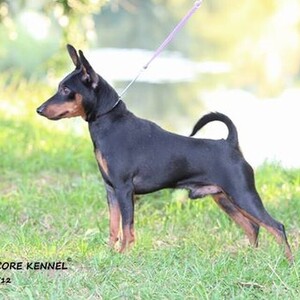
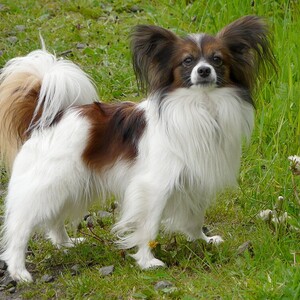
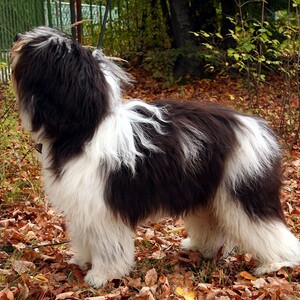
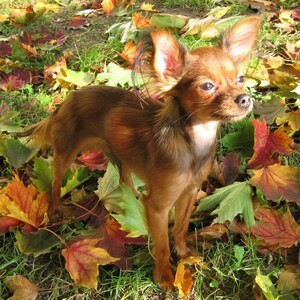
Russian Toy. · Caronna / Wikimedia Commons, public domain. Cropped and resized.
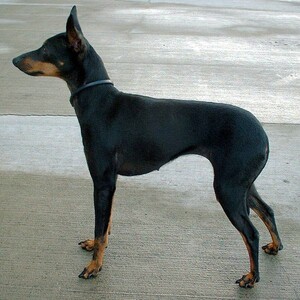
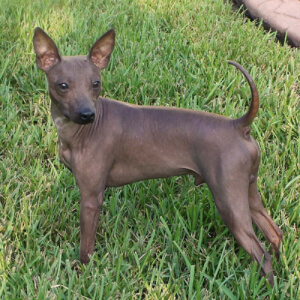
The Russian Toy (Russkiy Toy) is a very small, elegant dog with long legs, fine bones and large ears, weighing no more than 3 kg. It comes in two varieties: smooth-coated and long-haired, with fringes on the ears. The standard describes it as active, very cheerful, neither fearful nor aggressive, always curious and very devoted to its owner.
Quick facts
| Common name | Russian Toy (Russkiy Toy) |
| Scientific name | Canis lupus familiaris |
| Country of origin | Russia |
| Official recognition | FCI, definitively since 7 November 2017 (group 9, companion and toy dogs; standard no. 352); has an AKC breed profile |
| Lifespan | 12–14 years, according to the AKC |
| Size (males) | 22–27 cm at the withers (25 cm preferred); no more than 3 kg |
| Size (females) | 22–27 cm at the withers (25 cm preferred); no more than 3 kg |
| Coat type | Short and glossy, or long (3–5 cm) with fringes |
| Common colours | Black, brown, blue or lilac and tan; red; fawn; cream |
| Energy level | Moderate to high |
| Suited to an apartment? | Yes |
| Temperament | Active, very cheerful, curious, devoted |
| Tendency to aggression | Low; neither fearful nor aggressive |
| Good with children | Average; it is a very small dog |
| Good with other animals | Average |
| Genetic predispositions | Retained baby teeth, periodontal disease |
- Primary category:Dog breeds
- Explore this animal's categories:
History and origin
The FCI standard says that at the beginning of the 20th century the English Toy Terrier was one of the most popular small dogs in Russia. Between 1920 and 1950 its breeding almost stopped, and the number of dogs fell to a critical level. Only in the mid-1950s did Russian breeders begin to restore the breed, mostly with dogs that had no pedigree.
On 12 October 1958, two smooth-coated dogs produced a puppy with spectacular fringes on its ears and legs. The trait was kept, and this is how the long-haired variety came about, then called the “Moscow Long-haired Toy Terrier”.
How the breed developed
- Early 20th century – The English Toy Terrier is very popular in Russia.
- 1920–1950 – Breeding of the breed almost stops.
- Mid-1950s – Restoration of the breed begins.
- 12 October 1958 – The first long-haired puppy is born.
- 7 November 2017 – The FCI recognises the breed.
Breed rating
| Feature | Stars |
|---|---|
| Training and intelligence | ★★★★☆ |
| Easy to train | ★★★★☆ |
| Intelligence | ★★★★☆ |
| Independence | ★★★☆☆ |
| Stubbornness | ★★★★☆ |
| Behaviour and temperament | ★★★★☆ |
| Affectionate with family | ★★★★★ |
| Friendly with children | ★★★☆☆ |
| Good with other dogs | ★★★☆☆ |
| Good with cats and other animals | ★★★☆☆ |
| Loyalty | ★★★★★ |
| Tendency to be aggressive | ★☆☆☆☆ |
| Tendency to bark | ★★★★☆ |
| Needs and care | ★★★☆☆ |
| Shedding | ★★☆☆☆ |
| Needs frequent grooming | ★★★☆☆ |
| Activity and lifestyle | ★★★☆☆ |
| Energy level | ★★★☆☆ |
| Daily exercise needs | ★★★★★ |
| Suited to apartment life | ★★★★☆ |
| Health and longevity | ★★★★☆ |
| Life expectancy | ★★★☆☆ |
| Predisposition to genetic diseases | ★★☆☆☆ |
| Working abilities and uses | ★★★★☆ |
| Good guard dog | ★★★☆☆ |
| Good companion dog | ★★★★★ |
Indicative rating: 5 stars means the highest level. It is based on the ratings the American Kennel Club gives the breed and on the FCI standard.
Physical characteristics
The AKC describes it as a small, elegant and lively dog with long legs, fine bones and lean muscles. The head is small in relation to the body, light and lean, and wedge-shaped when seen from above.
General appearance
The smooth-coated variety has short, close-lying, glossy hair with no undercoat. The long-haired variety has hair 3–5 cm long on the body, straight or slightly wavy, with visible fringes on the backs of the legs and on the tail, and the ears are covered with long, thick hair.
| Feature | Russian Toy |
|---|---|
| Size | Very small |
| Height at the withers | 22–27 cm (25 cm preferred) |
| Weight | no more than 3 kg (2.3 kg preferred) |
| Coat | Short, or long with fringes |
| Legs | Long, fine |
| Head | Small, wedge-shaped |
The accepted colours are black, brown, blue or lilac and tan, red (plain or with black, blue, brown or lilac), fawn and cream.
Training and socialisation
The standard describes it as active, very cheerful, neither fearful nor aggressive, always curious about the world around it and very devoted to its owner.
The AKC says it is generally agreeable and eager to please, and therefore easy to train. But it is still a terrier at heart: it can be stubborn and tries to be the boss. Its clownish antics make it well suited to agility and tricks.
Tips for effective training
- Be consistent. It tries to be the boss.
- Use small rewards. It is eager to please.
- Try tricks. The AKC says it is a good candidate.
- Use a harness, not a collar. The AKC says small dogs have fragile necks.
Activity needs and lifestyle
The AKC says it has moderately high energy. It loves walks with its people and running and playing until it flops, worn out, into your arms. As it is small, an ordinary yard or a long walk is enough.
| Activity | How often | Why it matters |
|---|---|---|
| Walks | daily | Energy |
| Play | daily | It loves to run |
| Tricks or agility | weekly | Mental stimulation |
Tips for a balanced life
- It suits an apartment very well.
- In winter, dress it warmly.
- Keep it from jumping down from heights.
Care and health
Coat and skin care
The AKC says the long-haired variety needs more grooming: brushing two or three times a week and combing the fringes. The smooth-coated variety is very easy to care for.
Common health problems
The AKC says it is a healthy breed, and the main problem, as with many small breeds, is the teeth:
| Condition | Description | Common symptoms |
|---|---|---|
| Retained baby teeth | The baby teeth stay next to the permanent ones | Crowded teeth; they often have to be removed by 9 months |
| Periodontal disease | Tartar builds up early, from one year of age | Bad breath, red gums |
| Patellar luxation | The kneecap slips out of place | Suddenly holds a hind leg up for a few steps, then uses it again |
Other care
- Brush its teeth every day.
- Use a harness on walks.
- Trim the nails regularly.
Diet and nutrition
The AKC recommends good-quality food with very small kibble. Some dogs gain weight easily, so calories should be watched.
Tips for a healthy diet
The table gives a starting estimate, calculated with the formula from the Merck Veterinary Manual. The first two calorie columns show the calories per day for a healthy adult dog. The last column shows what this means in dry food with 3,500–4,000 kcal per kilogram.
| Dog's weight | Calories per day (neutered) | Calories per day (not neutered) | Dry food per day (approximate) |
|---|---|---|---|
| 1.5 kg | 150 kcal | 170 kcal | 38–49 g |
| 2.3 kg | 210 kcal | 240 kcal | 52–69 g |
| 3 kg | 260 kcal | 290 kcal | 65–83 g |
- Feed it three small meals a day.
- Treats count towards the daily portion.
- Choose very small kibble.
Foods to avoid
Some human foods are dangerous for dogs: chocolate, coffee, grapes and raisins, onions, garlic, xylitol (a sweetener used in chewing gum), macadamia nuts and alcohol.
Reproduction and development
Physical and emotional maturity
In dogs, sexual maturity usually comes between 6 and 12 months. Small breeds become adults faster than large ones, usually at around one year.
Mating and pregnancy
Pregnancy lasts about 63 days, counted from ovulation. Mating a female on her first heat is not recommended. The FCI standard requires that only healthy dogs of typical breed appearance are used for breeding.
Caring for the puppies
In small breeds, a litter has 3–4 puppies on average. The puppies are very small and fragile in the first weeks, so they must be kept warm and handled with care. Socialisation starts early: gentle handling, everyday noises and new people.
Interesting facts
- One of the smallest. It weighs no more than 3 kg.
- A puppy with fringes. The long-haired variety began with a puppy born in 1958.
- A terrier at heart. The AKC says it may try to be the boss.
- A clown. Its antics make it good at tricks.
- Recently recognised. The FCI recognised it in 2017.
Frequently asked questions
How much does it weigh?
No more than 3 kg; ideally around 2.3 kg.
What varieties are there?
Smooth-coated and long-haired.
Is it suited to an apartment?
Yes, very suitable.
How long does it live?
The AKC gives 12–14 years.