ParrotInteresting facts and information
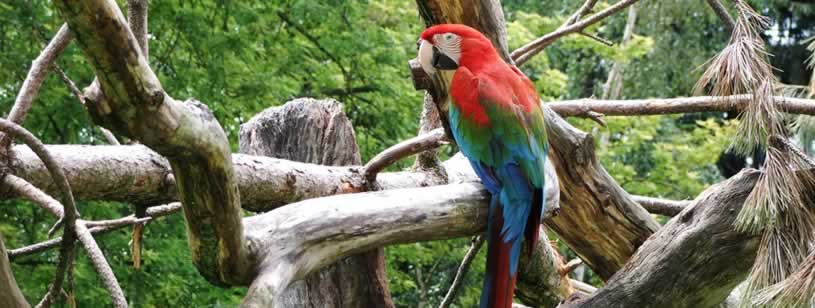
Parrots belong to the order Psittaciformes. Their curved bills and grasping feet help them handle food and move among branches. Species differ greatly in their size, diet, behaviour and ability to imitate sounds.
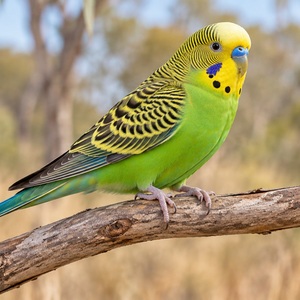
Parrots are often brightly coloured birds with strong beaks and agile feet, adapted to life in tropical forests, savannas and even mountains. Many are very sociable, live in flocks and communicate in complex ways. They have become popular pets, loved for their playful personalities and their ability to learn sounds.
However, many parrots are threatened by habitat destruction and the illegal pet trade, and some species are close to extinction.
Quick facts
| Common name | Parrot |
| Scientific name | Psittaciformes |
| Typical lifespan | About 10-80 years, depending on the species |
| Maximum speed | Many parrots are fast fliers; speed varies by species |
| Length | About 8-100 cm, depending on the species |
| Weight | From about 10 g to about 4 kg (kakapo) |
| Diet type | Mostly seeds, fruit, nuts, flowers and nectar; some insects |
| Main predators | Hawks, falcons, eagles, owls, snakes, monkeys, wild cats; humans (illegal trade) |
| Conservation status | Varies by species; parrots are among the most threatened bird groups |
| Geographical distribution | Central and South America, Africa, Asia, Australia, New Zealand and the Pacific; introduced in some cities of Europe and North America |
| Social behaviour | Live in pairs, family groups or flocks |
| Special adaptations | Ability to imitate sounds, powerful beak for cracking seeds, zygodactyl feet for grasping |
- Primary category:Birds
- Explore this animal's categories:
Interesting facts
- Parrots can imitate the human voice - Some African grey parrots learn hundreds of words, and Alex, a famous grey studied by scientist Irene Pepperberg, could name objects, colours and shapes.
- Some parrots live for over 80 years - Cookie, a Major Mitchell's cockatoo at Brookfield Zoo in the USA, lived to about 83, one of the oldest parrots on record.
- Parrots use their feet like hands - They have two toes pointing forwards and two pointing backwards (a zygodactyl arrangement), so they can grip branches and hold food.
- The kakapo is the only flightless parrot - This nocturnal parrot from New Zealand is also the heaviest parrot and one of the rarest birds in the world.
- Many parrots pair for life - They form strong pair bonds and show affection by touching beaks, feeding each other and preening.
- They see more colours than we do - Parrots can see ultraviolet light, which helps them find ripe fruit and recognise each other.
- The kea is a famous problem-solver - This mountain parrot from New Zealand is among the most intelligent birds, able to solve complex puzzles and use tools in experiments.
Records and remarkable features
- Parrots belong to the order Psittaciformes. Their curved bills and grasping feet help them handle food and move among branches. Species differ greatly in their size, diet, behaviour and ability to imitate sounds.
- The largest parrot by length is the hyacinth macaw of South America, about 1 m long, while the heaviest is the kakapo, which can weigh up to about 4 kg.
- The smallest parrot is the buff-faced pygmy parrot of New Guinea, only about 8 cm long and weighing about 10 g.
Characteristics
Parrots are adaptable and very intelligent birds with special features that help them survive in many environments. From their powerful beaks, which crack hard nuts, to their brilliant colours, each feature is suited to their way of life.
Appearance
- Varied sizes - Parrots range from about 8 cm to about 1 metre long, depending on the species.
- Colourful feathers - Most species are brightly coloured in green, blue, red or yellow, often in combination.
- A strong, curved beak - Adapted for cracking seeds, cutting fruit and even helping the bird climb.
- Zygodactyl feet - Two toes point forwards and two backwards, so parrots can grasp objects and climb branches.
- Strong wings - Allow fast, agile flight, ideal for moving through forests.
- A thick, muscular tongue - Helps them handle food; lories and lorikeets have brush-tipped tongues for collecting nectar and pollen.
Special adaptations
- Imitating sounds - Some species can copy human speech and other sounds; in the wild, they use this skill to learn the calls of their flock.
- Camouflage - Many species are green, which helps them hide among leaves.
- A self-sharpening beak - It grows all the time and is kept in shape by constant use.
- Fast, agile flight - Helps them escape predators and move through dense forest.
Habits and behaviour
Parrots are very sociable, intelligent and active birds that often live in flocks and communicate in complex ways.
Social behaviour
- Flocks - Many parrots live in groups, which protects them from predators.
- Strong pair bonds - Many species pair for life and show affection by touching beaks, feeding each other and preening each other's feathers.
- Complex communication - They use calls, body movements and displays to interact with other members of the flock.
Defence techniques
- Fast flight - They fly away quickly from predators.
- Camouflage - Their green feathers help them hide in vegetation.
- Alarm calls - When a parrot spots danger, it screeches to warn the rest of the flock.
Interaction with people
- Pets - Some species, such as African grey parrots, cockatiels and budgerigars, are popular pets.
- Learning tricks - Pet parrots can learn to talk, whistle tunes and solve puzzles.
- Illegal trade - Rare species, such as some macaws and cockatoos, are captured and sold illegally.
Habitat and geographic distribution
Parrots live mainly in tropical and subtropical regions, but some species live in cooler or drier habitats.
| Region | Examples of parrots | Preferred habitat |
|---|---|---|
| Central and South America | Macaws, Amazon parrots, conures | Tropical forests, savannas |
| Australia and New Zealand | Cockatoos, lorikeets, budgerigars, kea, kakapo | Eucalyptus forests, dry areas, mountains |
| Africa and Asia | African grey parrots, lovebirds, Psittacula parakeets | Tropical forests, savannas, mangroves |
| Europe (introduced) | Rose-ringed parakeet, monk parakeet | Cities, parks |
Types of habitat
- Tropical and subtropical forests - Most parrots live in forests, where there is plenty of fruit and seeds.
- Savannas and dry areas - Some species, such as many Australian cockatoos and budgerigars, live in drier climates.
- Mountains - The kea lives high in the mountains of New Zealand, even in snow.
- Towns - Escaped parakeets have formed wild colonies in cities such as London and Brussels.
Human impact and threats
- Deforestation - The loss of forests destroys parrots' homes and nesting holes.
- Illegal trade - Many parrots are captured and sold illegally as pets.
- Introduced predators - Animals brought by people, such as cats, rats and stoats, eat parrot eggs and chicks.
Diet and feeding
Most parrots eat mainly seeds, fruit, nuts, flowers and nectar, and some also eat insects and larvae. Their powerful, curved beaks can crack hard seeds and nuts to reach the nutritious kernel.
What do parrots eat?
Parrots' diets vary with the species and habitat. Most eat a mix of seeds, fruit and flowers, but some also take animal food.
| Type of food | Examples |
|---|---|
| Seeds and nuts | Palm nuts, grass seeds, pine seeds, macadamia nuts |
| Fruit | Figs, berries, mangoes, palm fruit |
| Flowers and nectar | Eucalyptus flowers, coral tree flowers, pollen |
| Insects and larvae | Beetle grubs, caterpillars (eaten by some species, especially when breeding) |
| Leaves and bark | Some species eat leaves, buds and bark |
Feeding techniques
- Cracking nuts - A strong beak can open even very hard nuts; the hyacinth macaw can crack palm nuts that people can barely break with a hammer.
- Using their feet - Parrots hold food in one foot while they bite pieces off with their beak.
- Searching in flocks - In the wild, parrots travel in flocks to find new feeding sites.
Adapting to the food supply
- Flexible diets - Parrots living in towns also eat garden fruit and bird-table food.
- Nectar-feeders - Lories and lorikeets have special brush-tipped tongues for collecting nectar and pollen.
- Eating clay - In the Amazon, macaws and other parrots gather at riverbanks to eat clay, which may help protect them from toxins in seeds and provide salt.
Reproduction and life cycle
Most parrots are monogamous and form long-lasting pairs. Most species nest in holes in trees, rocks or the ground, and both parents usually care for the chicks.
| Feature | Details |
|---|---|
| Age at maturity | 1-7 years (depending on the species) |
| Breeding season | Varies with the climate, often spring or the rainy season |
| Incubation period | About 17-30 days |
| Eggs per nest | 1-8, depending on the species |
| Time to leave the nest | From about 1 month (small parrots) to 3-4 months (large macaws) |
| Lifespan | About 10-80 years, depending on the species |
Breeding process
- Forming pairs - Many parrots choose a partner for life.
- Laying eggs - Nests are usually in tree holes, rock crevices, termite mounds or burrows; monk parakeets are unusual in building large stick nests.
- Feeding the chicks - Parents regurgitate softened food for the chicks, which cannot crack seeds at first.
- Learning to fly - Depending on the species, chicks leave the nest after one to four months and gradually learn to find food.
Survival strategies
- Teamwork - In most species, both parents feed and protect the chicks.
- Hidden nests - Tree holes and rock crevices protect eggs and chicks from predators.
- "Names" for chicks - Some parrots, such as green-rumped parrotlets, give their chicks individual calls that work like names.
Name and history
People have admired parrots for thousands of years for their bright colours and ability to imitate human sounds. Parrots were kept by people in ancient India, China, the Mediterranean and the Americas.
Origin of the name
- The English word "parrot" may come from the French Perrot, a pet form of the name Pierre; in many other languages, such as German Papagei, the name comes from the Arabic babbaghā.
- The scientific name Psittaciformes comes from the Greek psittakos, "parrot".
Parrots in human history
- Ancient Greece and Rome - Parrots became known in Greece after the campaigns of Alexander the Great, and the Alexandrine parakeet is named after him; rich Romans kept parrots in fine cages.
- The Americas - The Maya and Aztecs prized brilliant macaw feathers for the clothing of nobles and priests, and macaws were traded far north to the peoples of the American Southwest.
- The age of exploration - In the 15th and 16th centuries, explorers brought exotic parrots to Europe, where they became symbols of wealth.
Parrots in folklore
- A symbol of intelligence and speech - In many cultures, parrots are seen as clever birds because they can imitate human speech.
- India - In Hindu tradition, Kama, the god of love, rides a parrot.
- Pirates - The image of the pirate with a parrot on his shoulder comes mainly from Long John Silver in Treasure Island.
Cultural significance and mythology
Parrots have been honoured in many cultures as symbols of intelligence, communication and the exotic. In modern culture, they are linked with adventure and the tropics.
Parrots in mythology and religion
- Hindu mythology - Kama, the god of love, is often shown riding a green parrot, a symbol of sweet words and love.
- The Maya and Aztecs - Bright macaw feathers were used in the clothing of priests and nobles and were seen as precious gifts.
- The Maya - The scarlet macaw was linked with the sun and fire, and the city of Copán had a ball court decorated with macaw heads.
- Buddhist stories - In some Jataka tales about the Buddha's past lives, the Buddha is born as a wise and loyal parrot.
Parrots in folklore
- A symbol of the tropics - Parrots are often used as symbols of exotic places and holidays.
- "Parroting" - In English, to "parrot" means to repeat someone's words without understanding them.
- Pirate companions - Thanks to Treasure Island, parrots became the classic companions of fictional pirates.
Conservation status and threats
Parrots are among the most threatened groups of birds in the world, and many species are at risk from deforestation and the illegal pet trade.
| IUCN status | Example species | Regions |
|---|---|---|
| Least Concern (LC) | Budgerigar (Melopsittacus undulatus); sulphur-crested cockatoo (Cacatua galerita); scarlet macaw (Ara macao) | Australia, Central and South America |
| Endangered (EN) | Kea (Nestor notabilis), African grey parrot (Psittacus erithacus) | New Zealand, Central Africa |
| Critically Endangered (CR) | Kakapo (Strigops habroptilus), blue-throated macaw (Ara glaucogularis) | New Zealand, Bolivia |
| Extinct in the wild, now being reintroduced | Spix's macaw (Cyanopsitta spixii) | Brazil |
Main threats
- Deforestation - Habitat loss in the Amazon, Africa and Asia has caused many parrot populations to fall sharply.
- Illegal trade - Parrots are among the most trafficked wild birds.
- Introduced predators - Cats, rats and stoats eat parrot eggs and chicks.
- Climate change - Extreme heat and droughts affect parrots' food supplies.
Conservation efforts
- Recovery programmes - The kakapo is protected on predator-free islands, where every bird is monitored; its numbers have risen from about 50 in the 1990s to about 250.
- Protected areas - Countries such as Brazil and Australia protect important parrot habitats.
- Trade controls - The CITES convention controls or bans international trade in many parrot species.
- Reintroduction - Spix's macaw, made famous by the film Rio, was released back into the wild in Brazil in 2022.
In popular culture
Thanks to their bright colours and ability to imitate the human voice, parrots are popular in films, books and games.
Literature and fables
- Robinson Crusoe (Daniel Defoe, 1719) - Crusoe teaches his parrot, Poll, to speak on his desert island.
- Treasure Island (Robert Louis Stevenson, 1883) - Long John Silver's parrot, Captain Flint, made parrots the classic pirate companion.
- "A Simple Heart" (Gustave Flaubert, 1877) - A famous story in which a parrot called Loulou is the beloved companion of a servant woman.
Films and cartoons
- Rio (2011, 2014) - Animated films about Blu, a pet Spix's macaw who travels to Brazil.
- Aladdin (Disney, 1992) - Iago, the sarcastic parrot, is the villain Jafar's sidekick.
- Monty Python's "Dead Parrot" sketch (1969) - A famous comedy sketch about a customer trying to return a dead parrot to a pet shop.
Video games
- Angry Birds Rio (2011) - A game based on the film Rio, featuring captured parrots.
The parrot as a symbol
- Dominica - The island nation of Dominica has its national bird, the Sisserou parrot, on its flag.
- The tropics - Parrots are widely used in advertising for holidays and exotic places.
- Soft toys - Parrot characters from films and cartoons are popular as toys.