AkitaCharacteristics, history, training and care
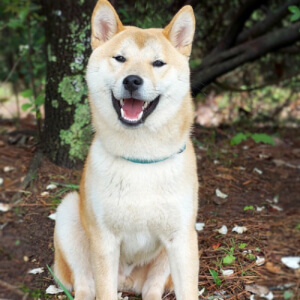
The Akita is a large, powerful spitz-type dog from the mountains of northern Japan, where its ancestors helped hunters track bears, wild boar and deer. It has a thick double coat, small erect ears and a full tail curled over its back.
Akitas are known for their deep loyalty to their family, made famous by the story of Hachikō. They are also independent, reserved with strangers and often intolerant of other dogs, so they suit experienced owners who can provide early socialisation and calm, consistent training. Individual temperament and health vary.
Quick facts
| Common name | Akita |
| Scientific name | Canis lupus familiaris |
| Country of origin | Japan |
| Official Recognition | The FCI recognises the Akita and American Akita separately |
| Typical lifespan | About 10-13 years |
| Dimensions (Male) | About 67 cm at the withers, with the FCI standard allowing a 3 cm variation |
| Dimensions (Female) | About 61 cm at the withers, with the FCI standard allowing a 3 cm variation |
| Weight (Male) | About 35-50 kg; American Akitas are often heavier |
| Weight (Females) | About 30-40 kg; American Akitas are often heavier |
| Coat type | Dense, weather-resistant double layer |
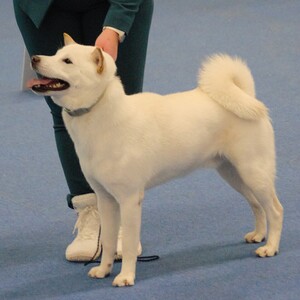
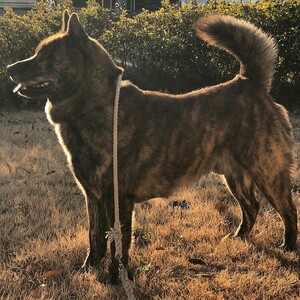
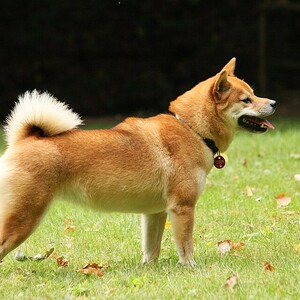
| Common colours | Japanese Akita: red-fawn, sesame, brindle or white; markings follow the relevant breed standard |
| Energy Level | Moderate |
| Suitable for apartment? | Requires suitable exercise, enrichment and secure space; housing suitability depends on the individual dog |
| Temperament | Loyal, brave, independent, reserved |
| Behaviour towards unfamiliar people and dogs | Often reserved with strangers and may not tolerate other dogs, especially of the same sex; socialisation matters |
| Compatibility with children | Depends on the individual; adult supervision and suitable handling are essential |
| Compatibility with other animals | Depends on socialisation, prey drive and the animals involved; often difficult with dogs of the same sex |
| Genetic predispositions | Hip dysplasia, hypothyroidism, autoimmune diseases, bloat |
- Primary category:Dog breeds
- Explore this animal's categories:
History and Origin
Evolution of the breed:
- Mountain hunting dogs: The Akita comes from the mountains of northern Japan, around Akita Prefecture, where its ancestors, the matagi dogs, helped hunters track bears, wild boar and deer.
- Modern Period: In the late 19th and early 20th centuries, local dogs were crossed with mastiffs, Tosas and other breeds to make them bigger, partly for dog fighting. In the 1920s and 1930s, Japanese breeders worked to restore the original type, and in 1931 the Akita was declared a Natural Monument of Japan.
- The American Akita: After World War II, American soldiers brought Akitas to the USA, where a separate, heavier line was developed. Today the FCI recognises the Akita (Japanese) and the American Akita as two breeds.
- Cultural symbol: In Japan, the Akita is a symbol of loyalty. Hachikō, the most famous Akita, went to Shibuya Station in Tokyo every day for about 9 years after his owner died, waiting for him to return. His story has inspired many films and books.
Breed Rating
The Akita is an impressive dog, but it is not suitable for every owner. This assessment shows its strengths and the challenges of living with it. These editorial ratings offer a general guide. Individual dogs vary with training, environment and health.
| Characteristic | Stars |
|---|---|
| Training and Intelligence | ★★★☆☆ |
| Easy to train | ★★☆☆☆ |
| Intelligence | ★★★★☆ |
| Level of independence | ★★★★★ |
| Level of stubbornness | ★★★★☆ |
| Behavior and Temperament | ★★★☆☆ |
| Affectionate with family | ★★★★★ |
| Friendly with children | ★★★☆☆ |
| Compatible with other dogs | ★★☆☆☆ |
| Compatible with cats and other animals | ★★☆☆☆ |
| Degree of loyalty | ★★★★★ |
| Tendency to be aggressive | ★★★☆☆ |
| Tendency to bark | ★★☆☆☆ |
| Needs and Care | ★★★★☆ |
| Shedding level | ★★★★★ |
| Requires frequent care | ★★★☆☆ |
| Activity and Lifestyle | ★★★☆☆ |
| Energy level | ★★★☆☆ |
| Daily exercise requirement | ★★★★☆ |
| Suitable for apartment living | ★★☆☆☆ |
| Health and Longevity | ★★★☆☆ |
| Life expectancy | ★★★☆☆ |
| Predisposition to genetic diseases | ★★★☆☆ |
| Work and Utility Features | ★★★★☆ |
| Good guard dog | ★★★★★ |
| Good companion dog | ★★★★☆ |
The Akita is very loyal and intelligent, but also independent and strong-willed, so it needs a calm, consistent and experienced owner.
Physical Characteristics
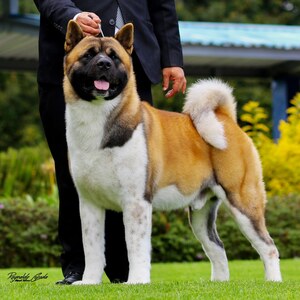
The Akita is a large, muscular and powerful spitz-type dog, built for strength and endurance, with a dignified, alert look.
General appearance:
- Body: Strong and well balanced, with a broad, deep chest.
- Coat: A thick double coat with a soft undercoat, which protects it from cold and wet weather.
- Head: Broad and powerful, with an alert expression.
- Ears: Small, thick, triangular and erect, tilted slightly forward.
- Eyes: Small, deep-set, dark brown and somewhat triangular.
- Tail: Large and full, carried curled over the back, one of the breed's typical features.
Differences between Japanese Akita and American Akita:
| Characteristic | Japanese Akita | American Akita |
|---|---|---|
| Body Structure | Lighter and more elegant | Heavier, with more bone |
| Head | Fox-like, narrower | Broad, bear-like, often with a black mask |
| Colours | Only red-fawn, sesame, brindle or white, with pale "urajiro" markings | Any colour, including pinto and patterns with a black mask |
| Tail | Curled over the back | Large and full, curled over the back |
The Akita combines strength, dignity and a calm presence, and suits experienced owners looking for a devoted and protective companion.
Training and Socialization
The Akita is intelligent but independent, which can make training a challenge. It has a strong will and often makes its own decisions, so it is harder to train than many other large breeds. It is not recommended for first-time owners, but for people experienced in training large, strong-willed dogs.
Recommendations for effective training:
✔ Early socialisation is essential – meeting people, other animals and different places from an early age helps prevent fearfulness and aggression. / ✔ Positive training methods work best – food rewards, praise and motivation work better than harsh methods. / ✔ Clear, consistent rules – The Akita will test limits, so rules must be applied calmly and consistently by the whole family. / ✔ Varied, interesting training – boredom can lead to disobedience or destructive behaviour. / ✔ Short sessions – the Akita quickly loses interest in repetitive exercises, so short, varied sessions work best.
Possible behavior problems if not properly trained:
- Aggression towards other dogs, especially those of the same sex.
- Ignoring commands when it does not see a reason to obey.
- Over-protecting the family and home, which can lead to aggression towards strangers.
Activity and Lifestyle Needs
The Akita is not a hyperactive breed, but it needs regular exercise to stay physically and mentally healthy. Too little activity can lead to behaviour problems such as destructiveness or frustration.
Optimal level of exercise:
| Activity | Recommended duration |
|---|---|
| Daily walks | About 45-60 min |
| Obedience training | About 15-20 min/day |
| Interactive games | About 15-30 min |
| Hikes | A few hours a week |
Recommendations for a healthy lifestyle:
- A securely fenced yard – The Akita does best with space and a secure fence, as it may chase animals or confront other dogs.
- Activities that stimulate its mind – puzzle toys, scent games or advanced obedience training.
- Careful socialisation – controlled contact with people and calm dogs throughout life.
- Leash walks – Because of its strength and prey drive, the Akita should usually be walked on a leash in public places.
Care and Health
The Akita has a thick double coat that sheds heavily, especially during seasonal shedding (usually spring and autumn). The breed is also prone to some inherited problems, so regular vet visits are important.
Fur care:
✔ Brushing 2-3 times a week – removes dead hair; daily brushing is needed during heavy shedding. / ✔ Bath only when needed – too many baths can dry out the skin. / ✔ Nails and paws – nails should be trimmed regularly and paws checked for cracks or irritation, especially in winter.
Predispositions to genetic diseases:
| Condition | Description | Common symptoms |
|---|---|---|
| Hip dysplasia | Abnormal development of the hip joint | Difficulty moving, limping |
| Hypothyroidism | Low thyroid hormone, which slows the metabolism | Tiredness, weight gain, coat problems |
| Sebaceous adenitis and other autoimmune diseases | The immune system attacks the skin or other organs; the Akita is also prone to uveodermatological syndrome | Dry, flaky skin, hair loss, red or painful eyes |
| Gastric dilatation-volvulus (bloat) | The stomach swells and may twist; an emergency | Swollen belly, drooling, restlessness, trying to vomit |
Other aspects of care:
- Regular veterinary checks – for early detection of problems.
- Ear and eye checks – to spot infections or eye problems early.
- Weight control – Akitas can put on weight if they are overfed.
Diet and Nutrition
The Akita's diet must be balanced and matched to its age, size and activity.
Recommendations for a healthy diet:
Choose a complete, balanced diet appropriate to the dog’s age, size and health. Home-prepared diets and supplements should be planned with a veterinarian qualified in nutrition. Raw pet food can carry harmful bacteria.
Recommended food plan:
| Food group | Daily Amount (Adults) | Frequency |
|---|---|---|
| Premium dry food | Individual amount; follow a complete diet’s guidance and veterinary advice | 2 meals/day |
| Home cooked food | Individual amount; follow a complete diet’s guidance and veterinary advice | 2 meals/day |
| Raw food: bacterial contamination is a concern | Individual amount; follow a complete diet’s guidance and veterinary advice | 2 meals/day |
Dangerous foods for Akitas:
⛔ Chocolate, grapes and raisins, xylitol - toxic to dogs. / ⛔ Onions and garlic - can damage red blood cells and cause anaemia. / ⛔ Cooked bones - can splinter and injure the gut. / ⛔ Salty or fried foods - can cause digestive upsets and pancreatitis.
Reproduction and Development
The Akita matures more slowly than many other dogs, both physically and emotionally. Growth should be managed carefully to protect the joints and support good behaviour.
Physical and emotional maturity
- Physical Maturity: The Akita reaches adult height at about 18-24 months, but continues to fill out until about 3 years of age.
- Emotional Maturity: Many Akitas are not fully mature in behaviour until 2-3 years and may test limits while young.
Mating and Gestation
- Breeding decisions – A veterinarian should assess health, maturity and relevant screening. A fixed age alone does not establish that a dog should be bred.
- Duration of Gestation: Approximately 63 days, as with most dog breeds.
- Average number of puppies: Usually about 5-8 puppies per litter.
Puppy Care
- First 4 weeks: Puppies feed on their mother's milk, and gentle handling by people can begin.
- Between 4-8 weeks: Solid food is introduced, and play with littermates and people helps develop social behaviour.
- Moving to a new home – Timing depends on health, development and local requirements. Continue careful socialisation and veterinary care.
Trivia and Interesting Facts
- A bear hunter – The Akita's ancestors were used by Japanese mountain hunters, the matagi, to hunt bears, wild boar and deer.
- Good-luck figurines – In Japan, small Akita figurines are traditionally given to wish good health, for example at the birth of a child or to someone who is ill.
- Hachikō – the most famous Akita – This dog waited every day at the station for about 9 years after his owner's death. A statue of him stands today in front of Shibuya Station in Tokyo.
- Helen Keller's Akita – In 1937, Helen Keller brought the first Akita to the United States, a gift from Japan.
- Made for the cold – The Akita's thick double coat protects it in very cold, snowy weather.
- Low heat tolerance – The Akita can struggle in hot summers and needs shade and fresh water.
- Quiet but watchful – Akitas usually bark little, often only when there is a real reason.
The Dog in Popular Culture
The Akita has become a worldwide symbol of loyalty and devotion, mainly thanks to the story of Hachikō.
Famous Movies and Stories
- “Hachikō Monogatari” (1987, Japan) – A Japanese film based on the true story of Hachikō.
- "Hachi: A Dog's Tale" (2009, USA) – An American remake of the story of Hachikō, starring Richard Gere.
- Akita in manga and anime – In the manga and anime Ginga: Nagareboshi Gin, the hero Gin is a brave Akita who fights a giant bear.
Akita as national symbol
- In Japan, Akita figurines are traditionally given to newborn babies and sick people as a wish for health and happiness.
- The Akita is a Natural Monument of Japan (since 1931), and Hachikō's statue at Shibuya is one of Tokyo's best-known meeting places.